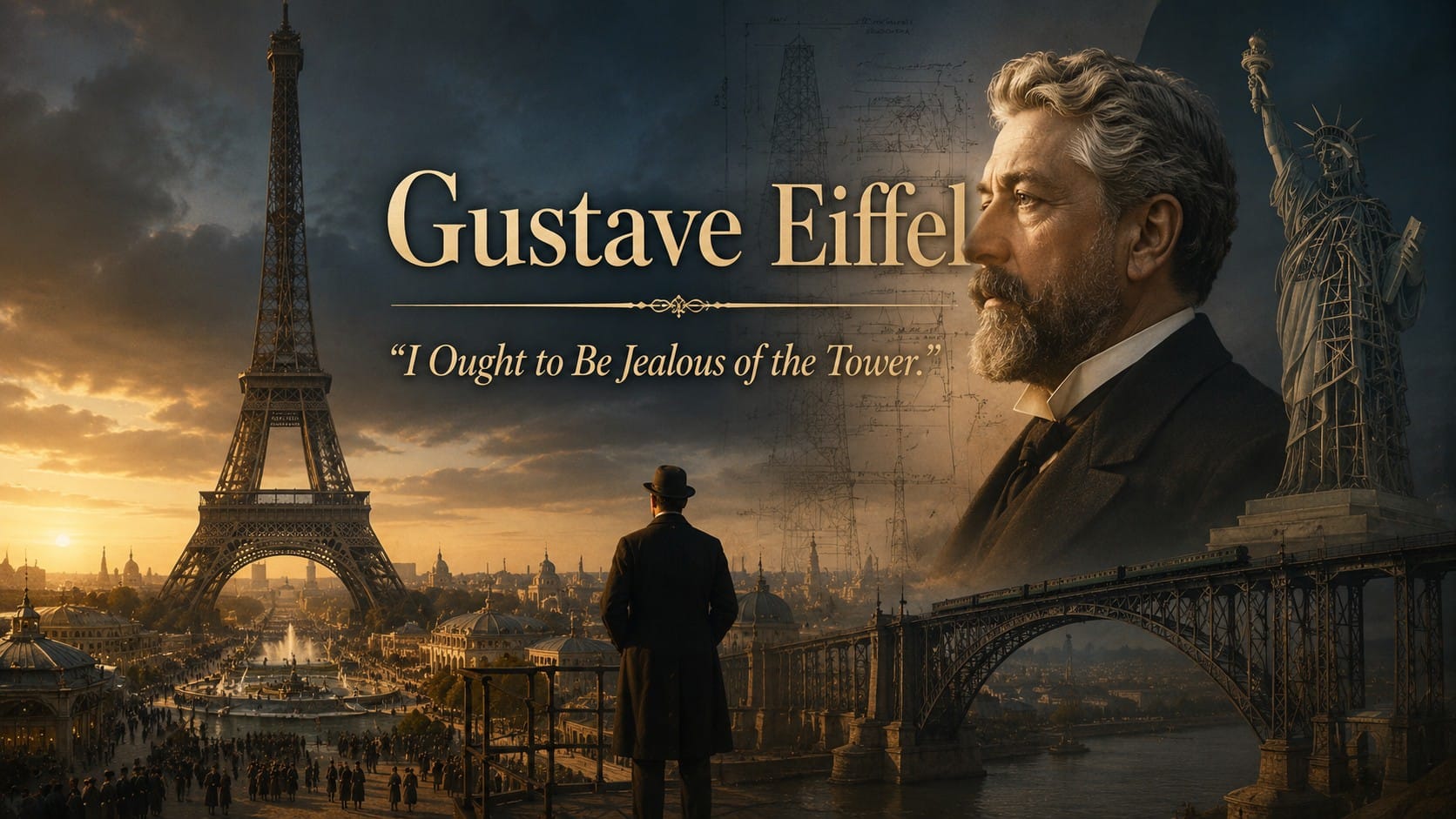
The man who built the Eiffel Tower spent his life becoming less famous than his own creation.
December 27, 1923.
A house on Rue Rabelais, Paris.
A weather chart sat on the desk beside his bed.
The man who had spent his whole life calculating wind was still recording the sky on his last day.
Before he died, he left behind a short sentence.
“I ought to be jealous of the Tower. It is more famous than I am.”
It sounds like a joke.
But once you know his life, it doesn’t.
What the World Remembers
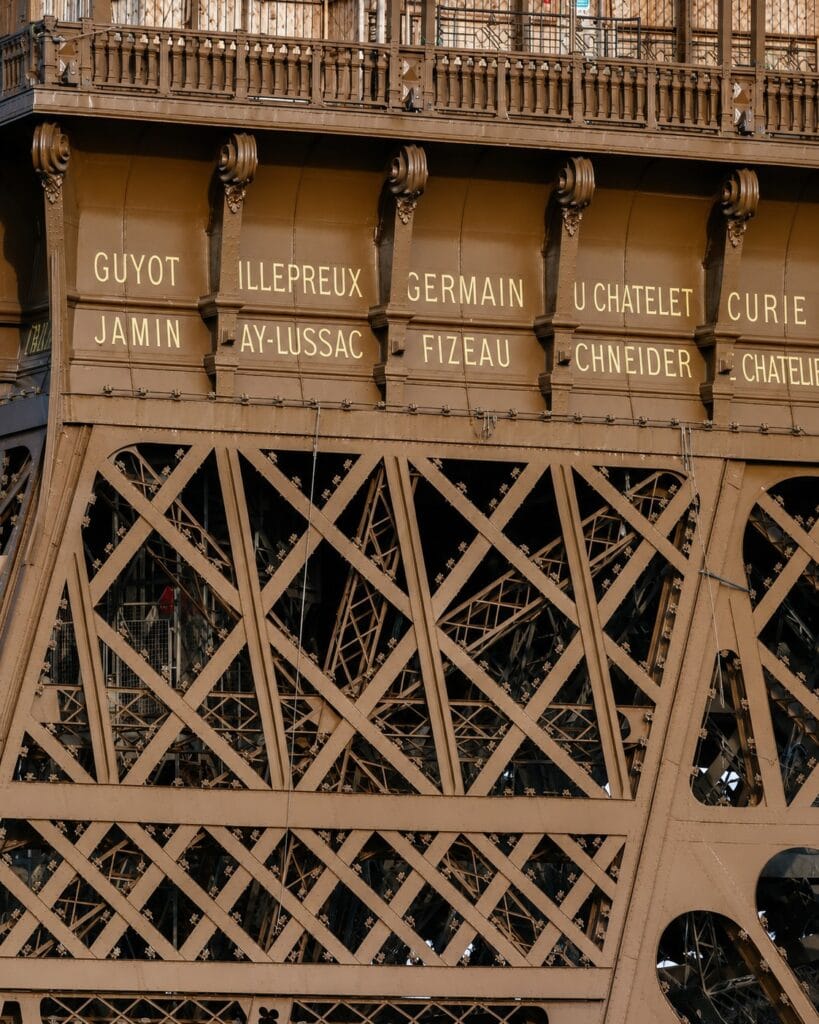
On the iron frame of the Eiffel Tower’s first floor, names are carved in gold.
GUYOT.
GAY-LUSSAC.
FIZEAU.
CURIE.
Seventy-two French scientists.
Gustave Eiffel chose every single one of them.
He didn’t make his own name the biggest thing on the tower.
He left science instead.
Millions of people walk past those names every single day.
Their cameras point up at the tower.
But not many stop to read what’s written below.
That image, strangely enough, looks a lot like Eiffel’s own life.
People remembered the tower.
The man who built it slowly disappeared.
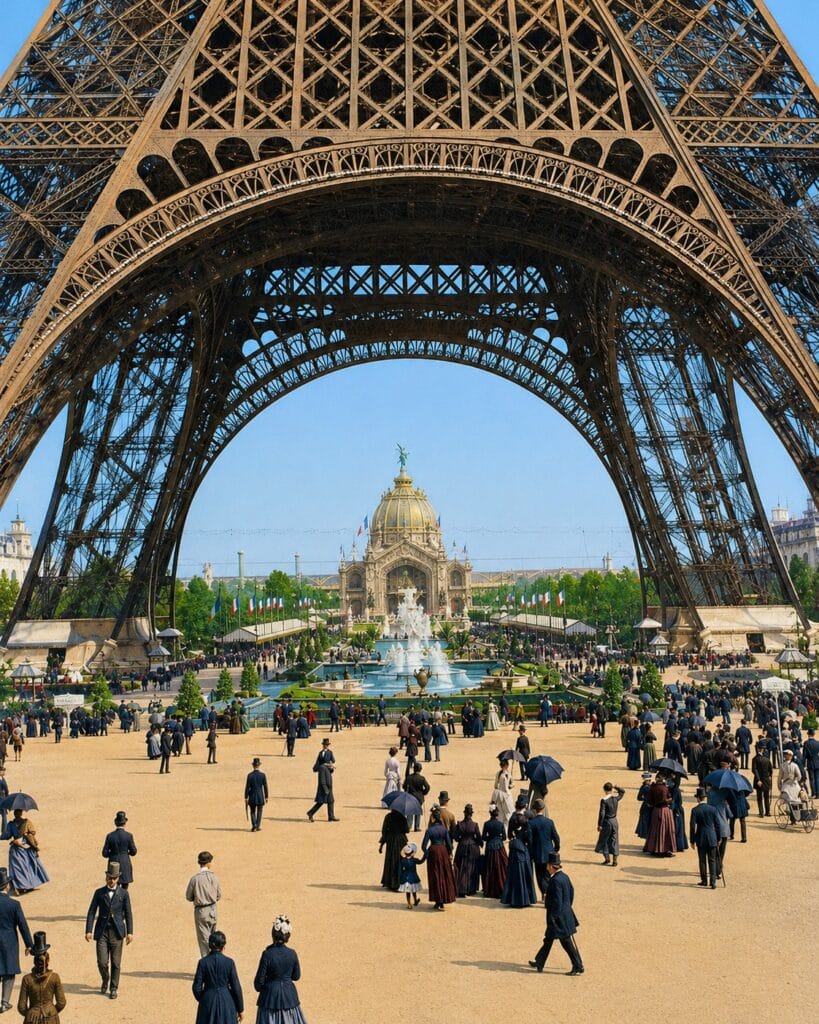
Spring, 1889.
Paris turned into one giant celebration.
The World’s Fair, marking the 100th anniversary of the French Revolution.
Railway companies slashed ticket prices, and people flooded in from all over the country just to see the new iron tower.
Within months of opening, the Eiffel Tower had become the face of the entire fair.
Newspapers wrote about it.
Artists painted it.
Tourists lined up in front of it for photos.
But the man who had raised all that iron was already getting smaller than his own creation.
Gustave Eiffel.
The world had started remembering his work before it remembered his name.
He Wasn’t Born Eiffel
Gustave Eiffel.
That wasn’t his name when he was born.
His real name was Bonickhausen dit Eiffel — the name of a family that had crossed over from the Eifel region of Germany to France back in the 1700s.
The name “Eiffel” became his official surname in 1880.
Nine years before the world attached it to a tower.
His mother, Catherine, ran a coal and timber business.
The house was always busy.
Young Gustave spent most of his time at his grandmother’s place.
He was alone a lot.
During those hours, instead of breaking things, he’d look at how they were put together first.
Every movement had a reason.
Every weight had a balance.
Everything that didn’t fall apart had a structure holding it up.
That was where it all started — a quiet kid who just liked to watch.
The One Who Left First
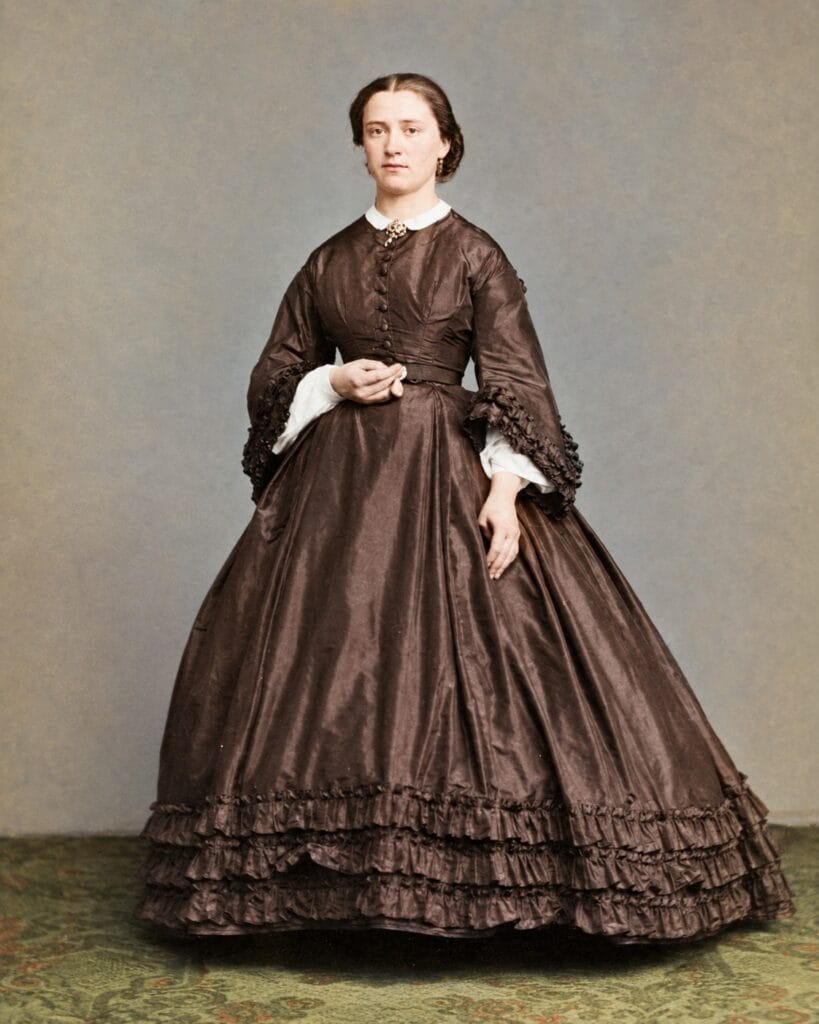
A brown silk dress.
A small brooch.
Two hands folded neatly in front.
Marie Gaudelet.
In 1862, she married a twenty-seven-year-old Gustave Eiffel.
They had five children.
The house was full of laughter.
It didn’t last.
1877.
Marie died at thirty-two.
Eiffel never remarried.
What was left was five kids and a house that suddenly felt too big.
A Fourteen-Year-Old Adult
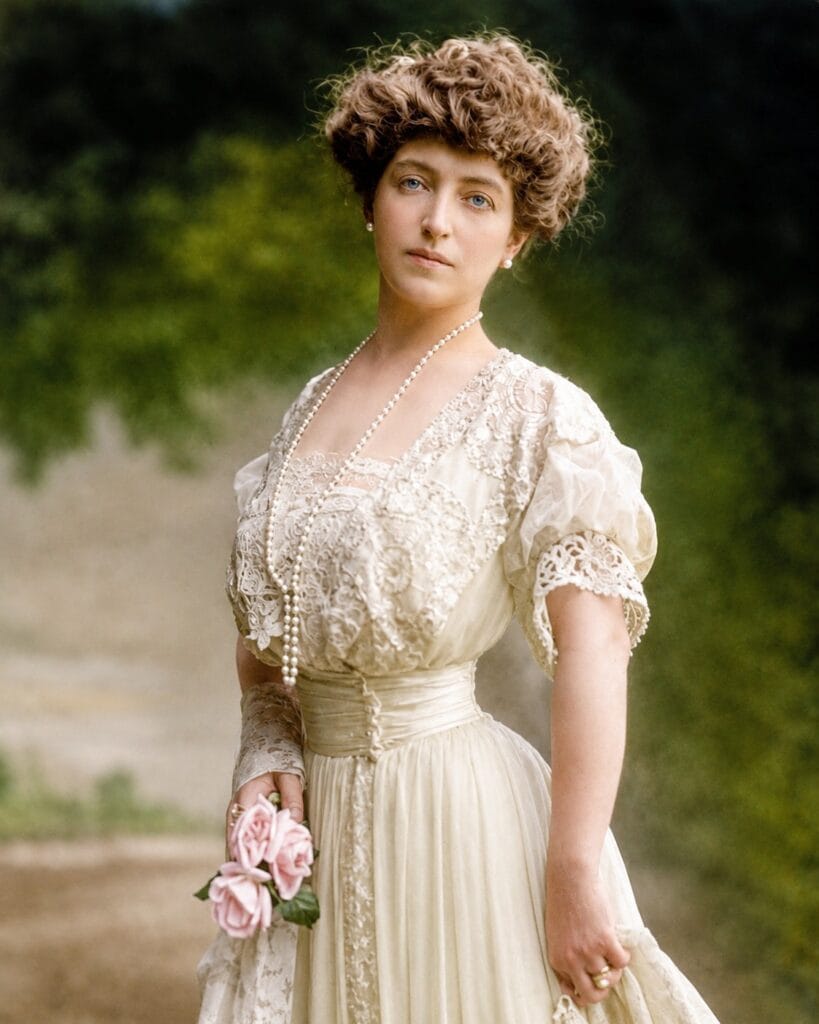
Claire was fourteen that year.
She had four younger siblings.
Two months after their mother died, their father couldn’t cancel a planned work trip to Portugal.
Claire went with him.
After that trip, things between them changed.
Claire wasn’t just a daughter anymore.
She became the person who helped hold the family together.
Decades later, Eiffel said this to her:
“You became the closest companion of my life, and gave me the most valuable advice in all my great enterprises.”
That wasn’t an exaggeration.
Claire was there at his highest moments, and she stayed right beside him at his lowest.
The Bridge That Shocked the World Before the Tower Did
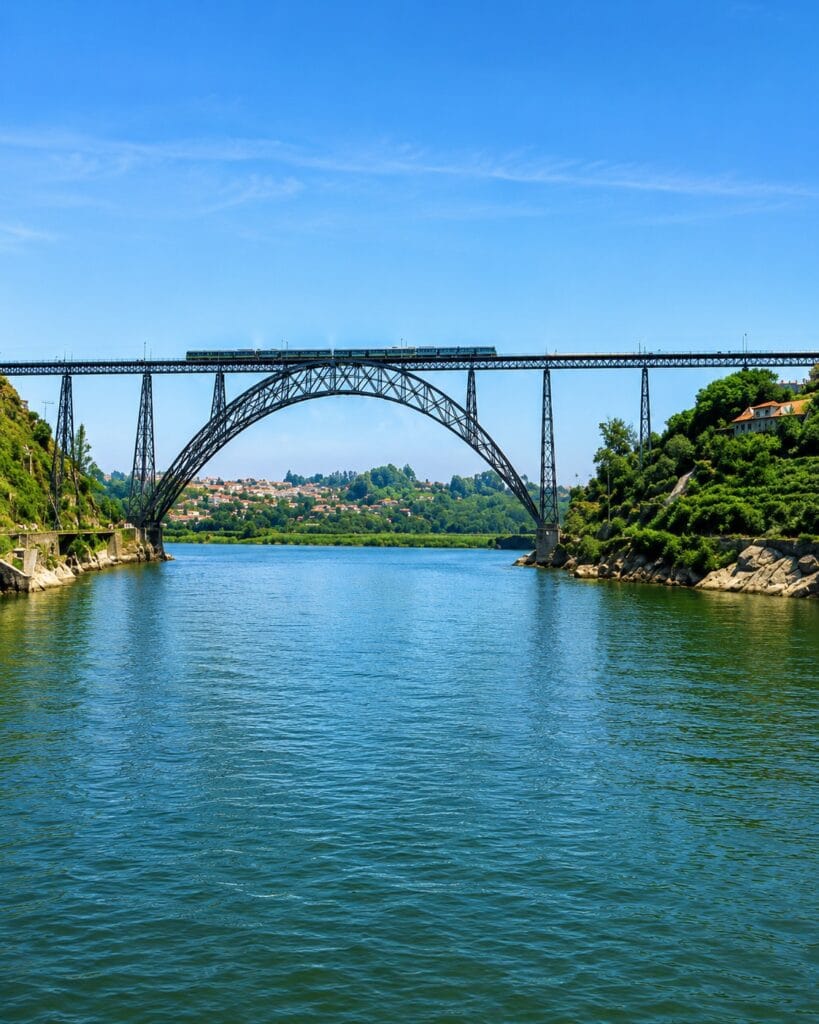
1877.
Porto, Portugal.
The Douro River wasn’t easy to cross.
The water was deep.
The current was strong.
And there was no way to plant a support column in the middle of it.
Most people said it couldn’t be done.
Eiffel asked a different question.
Does a column even have to go in the middle?
He pushed iron out from both cliffs.
Toward the river.
Into open air.
Toward each other.
And the two pieces of iron met in the middle of the river.
1877.
The Maria Pia Bridge was finished.
A single iron arch spanning 160 meters — one of the longest railway arches of its time.
People came from everywhere just to see it.
And for the first time, they started remembering a name.
Gustave Eiffel.
Twelve years before the tower.
Beauty That Lasts Longer
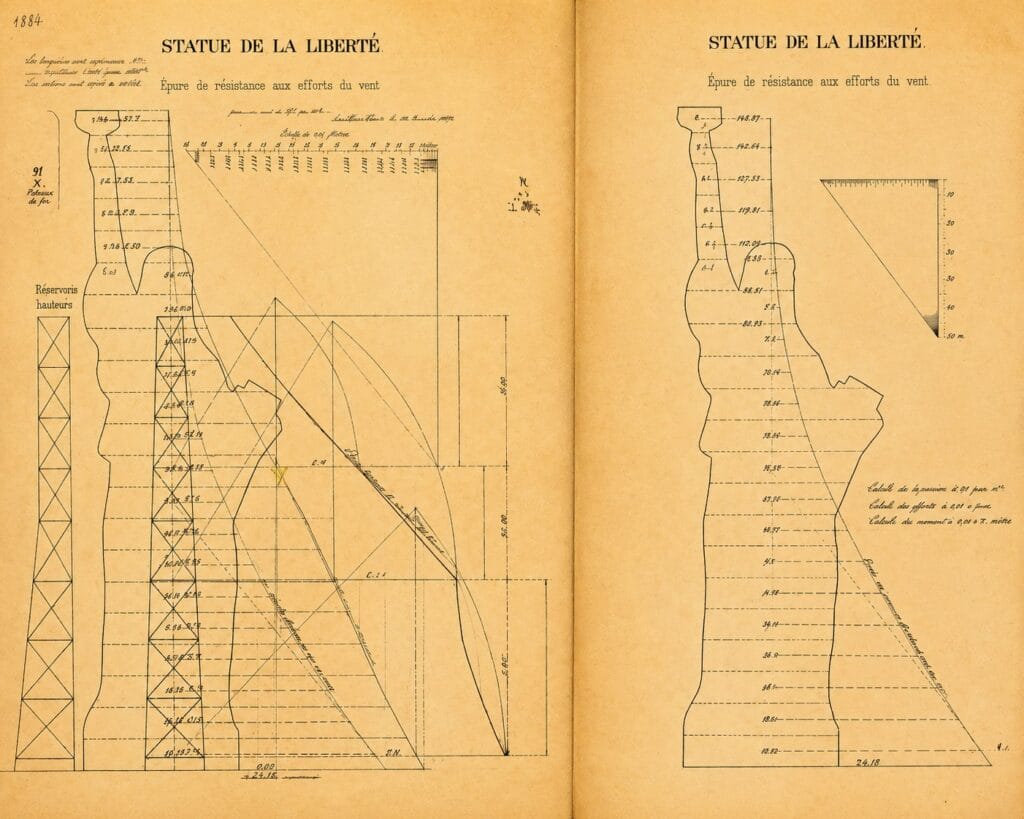
1884.
Across the top of the drawing, it read: STATUE DE LA LIBERTÉ.
In one corner, in French, were the words: “wind resistance calculations.”
Nowhere on the drawing was there a face.
No eyes.
No mouth.
No crown.
Just numbers.
Force directions.
Load.
Deformation.
Wind.
The world remembers the face of the Statue of Liberty.
Eiffel never drew that face.
What he drew was the invisible skeleton that kept it standing for over 130 years.
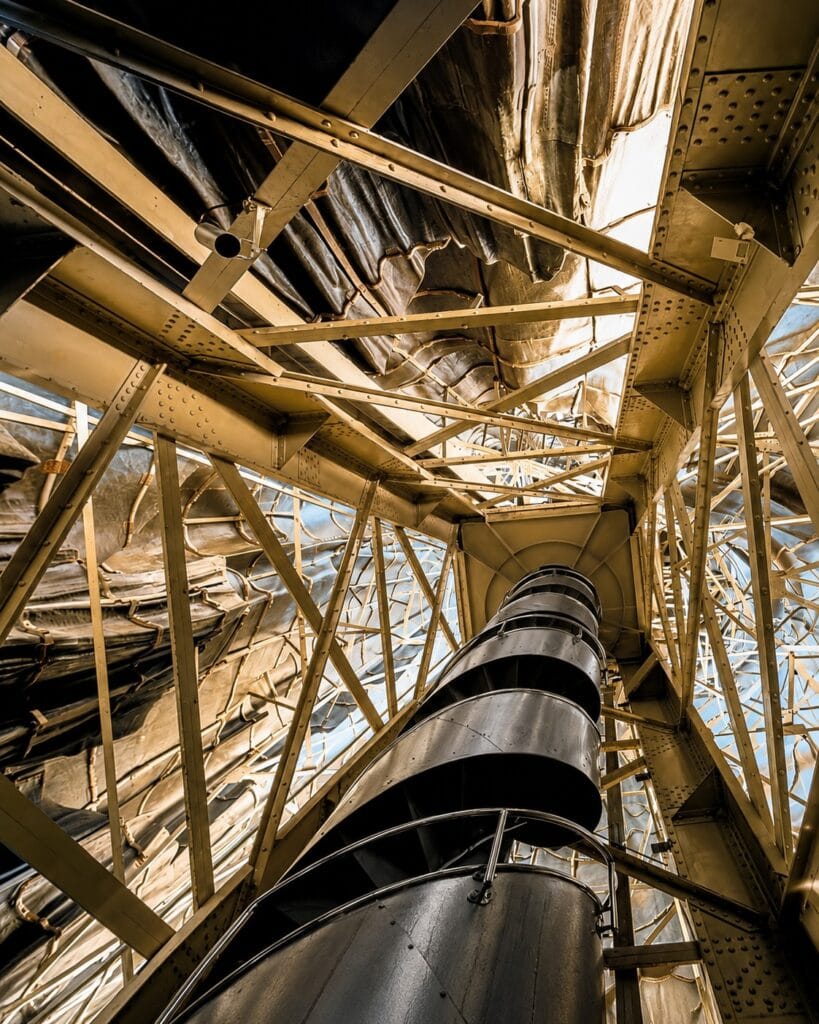
People see the Statue of Liberty.
Eiffel saw what was inside it.
Others shaped the outside.
Eiffel built the reason it wouldn’t collapse.
That difference is what made him Gustave Eiffel.
The Eiffel Tower worked the same way.
He didn’t sketch a beautiful curve first.
He calculated how iron handles wind — and the curve came out of that.
The official Eiffel Tower description puts it simply:
“It was designed like a bridge pier to resist the wind.”
A tower built to survive wind. That was Eiffel’s version of beautiful.
Numbers Don’t Lie
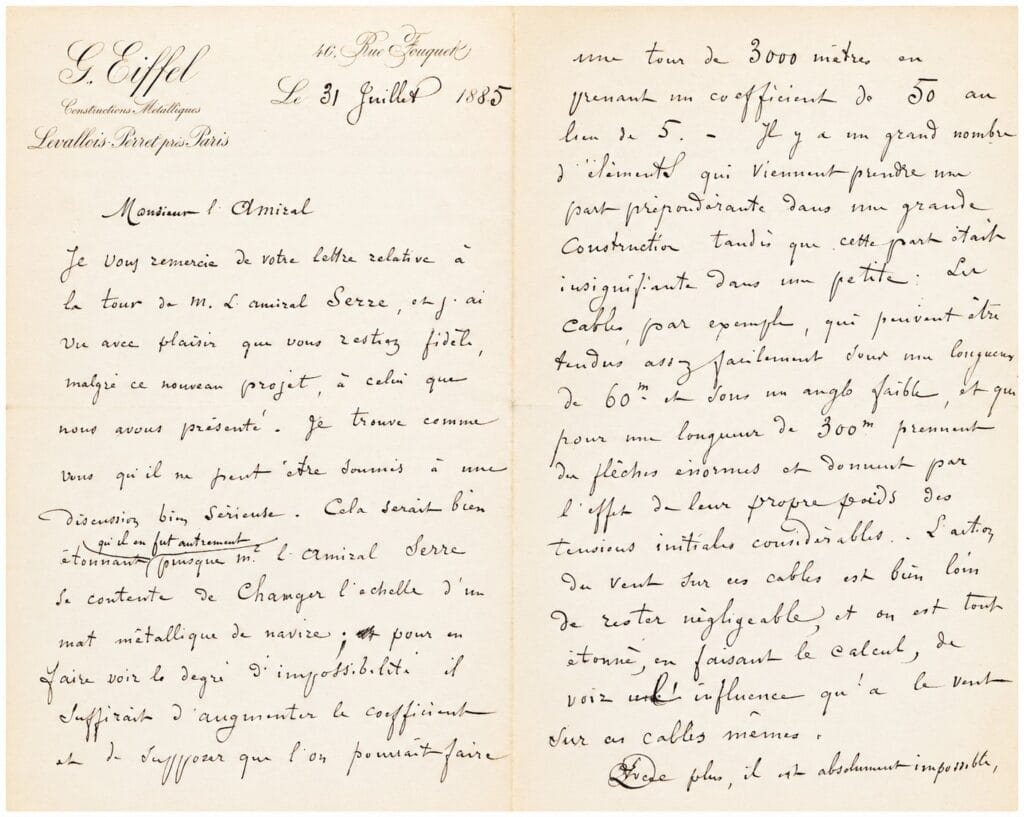
July 31, 1885.
Eiffel was going through a competitor’s tower design.
He didn’t mock the person.
He didn’t write a long rebuttal.
He finished his calculations, then wrote one line at the bottom.
The conclusion was a single line: “Absolutely impossible.”
That sentence wasn’t emotion.
It was a verdict.
For Eiffel, design wasn’t about taste.
It was about proof.
He didn’t try to convince anyone.
He let the math speak for itself.
The Tower Was Designed to Shake
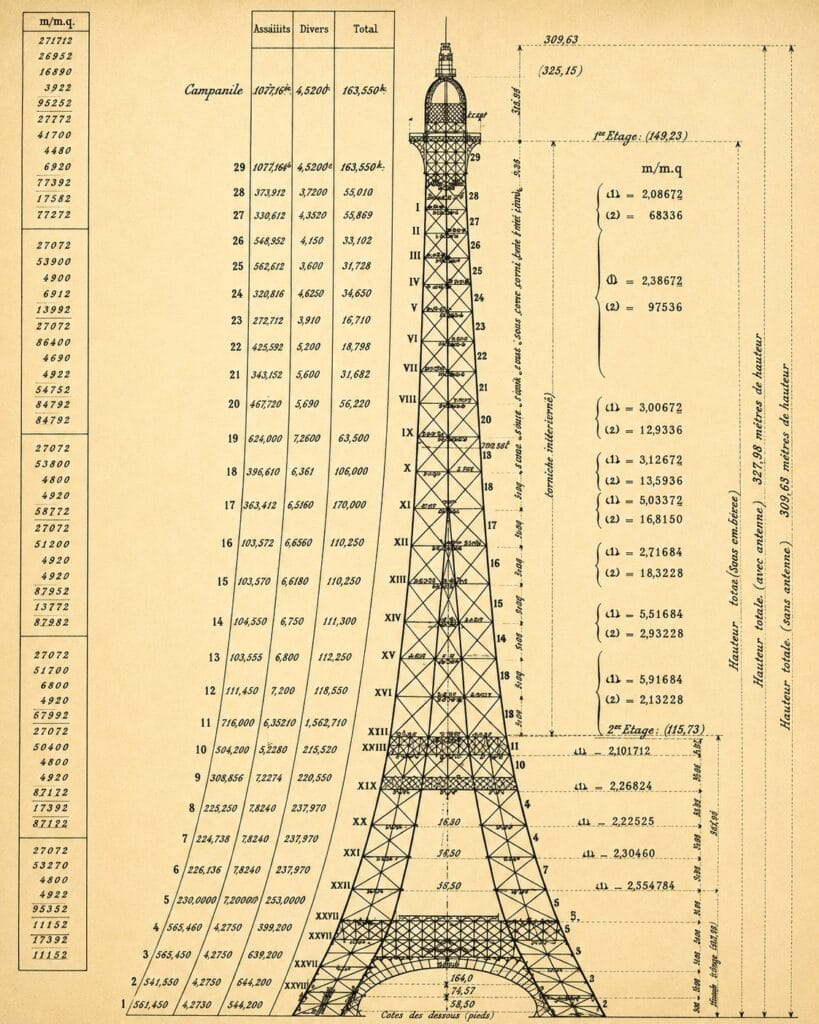
Open one sheet of the plans and the numbers go on forever.
Measurements for each floor.
The exact position of every rivet.
The thickness of each beam.
The order of assembly.
For Eiffel, a blueprint wasn’t a drawing.
It was a promise the factory had to fulfill in advance.
Forcing iron plates to fit on-site wasn’t an option.
If something didn’t fit, it went back to the factory.
His acceptable margin of error: 0.1mm.
About 18,000 iron pieces were cut to fit that precisely.
Around 2.5 million rivets were used in total.
Even today, the Eiffel Tower moves.
In strong wind, the top sways about 10 to 15 centimeters.
In summer heat, it expands by up to 15 centimeters.
Most people are surprised when they hear that.
Eiffel wasn’t.
All of that movement was already inside his 1889 calculations.
He didn’t try to build a tower that would never move.
He built one that could move and still never fall.
Nobody Called It a Tower Yet
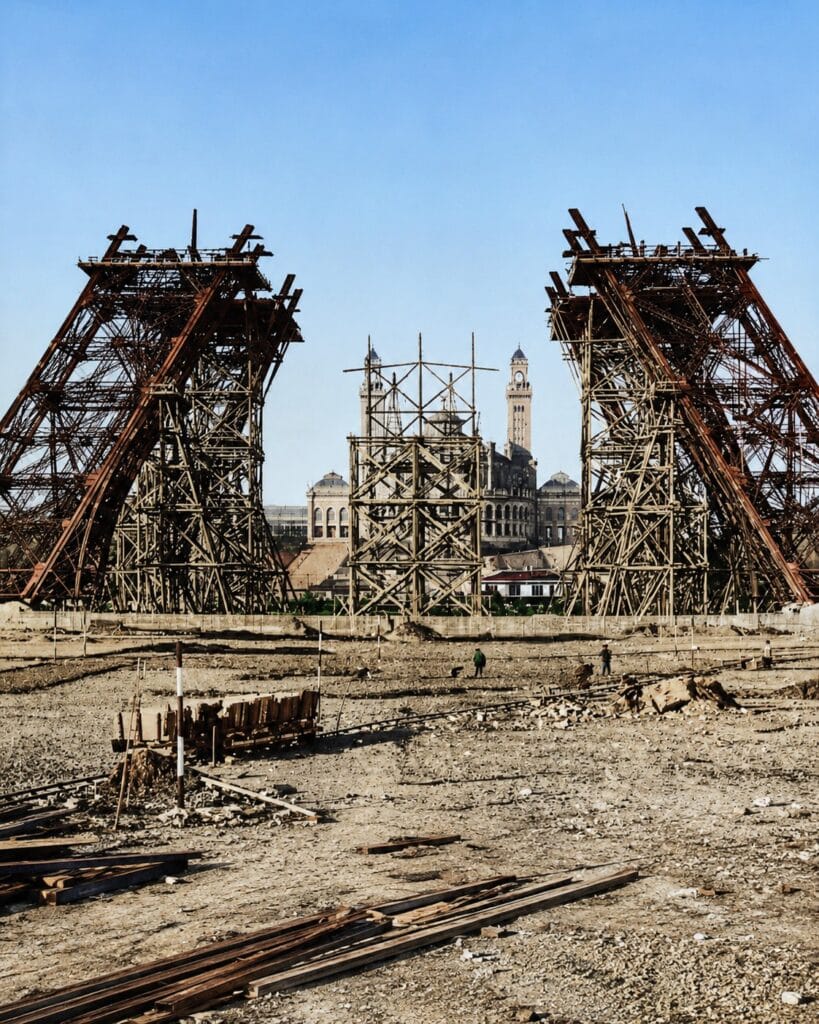
1887.
In the middle of Paris, four iron legs were rising out of the ground.
Nobody called it the Eiffel Tower yet.
The newspapers were brutal.
“Eiffel Suicide!”
“Gustave Eiffel has gone mad!”
Eiffel said nothing.
Two years later, the tower answered for him.
February 14, 1887.
A public protest letter ran in the French newspaper Le Temps.
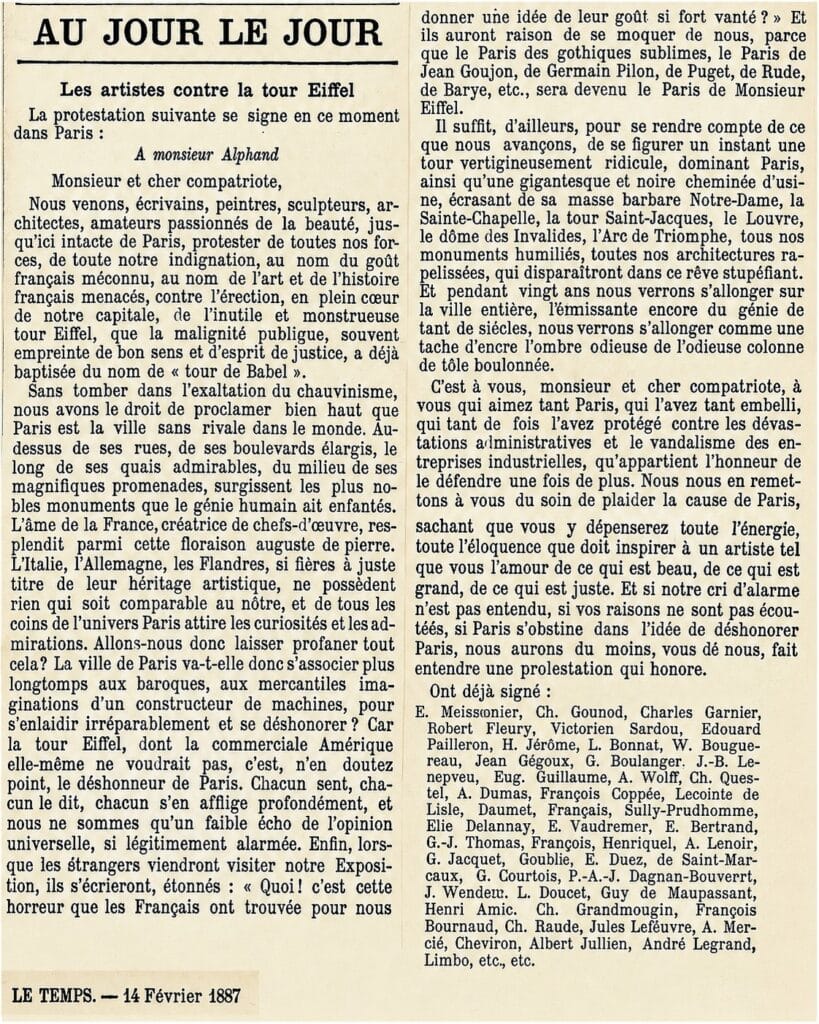
The people who signed it were more famous than the 300-meter iron structure at the time.
Guy de Maupassant, novelist.
Charles Gounod, composer.
Charles Garnier, the architect who designed the Paris Opera House.
They put their names on it openly.
The paper read: “Les artistes contre la tour Eiffel.” Artists against the Eiffel Tower.
They called it: “A useless and monstrous iron tower.”
Eiffel didn’t fight back in public.
He didn’t go after art.
He didn’t write a long defense.
He just kept doing what he always did.
Calculate. Build. Rise.
Two years later, that iron tower became the most visited place in Paris.
Maupassant never came around. But he ate at the restaurant inside the tower fairly often.
His reason: “It’s the only place in Paris where I can’t see the damn thing.”
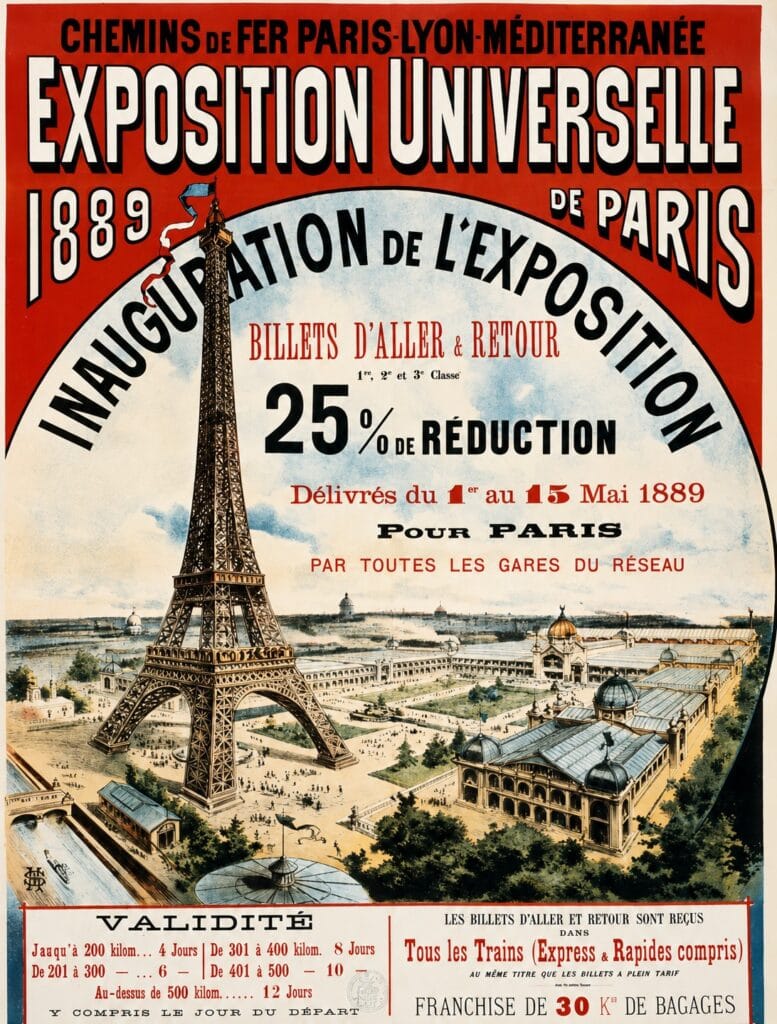
1889 World’s Fair.
PLM Railway cut round-trip ticket prices by 25 percent.
The Eiffel Tower was front and center on the poster.
The fair had barely started and the tower was already the face of it.
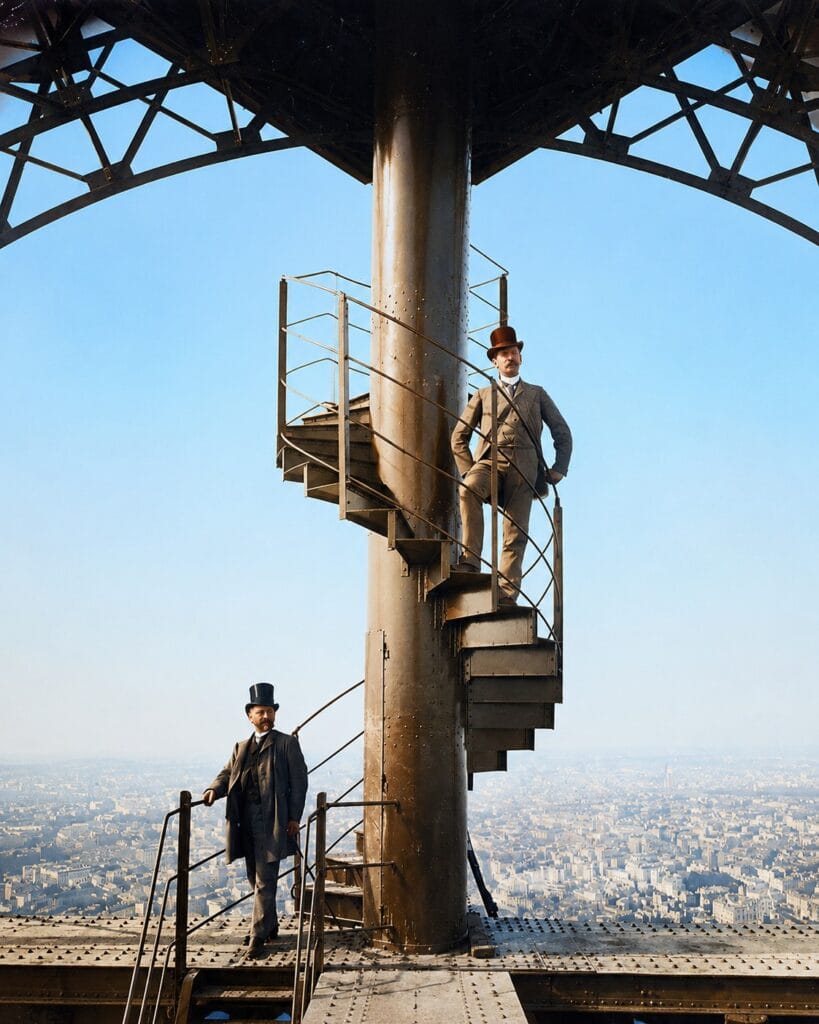
The top of the tower.
At the end of a spiral staircase stood Eiffel.
Paris stretched out below.
From first steel to completion: two years, two months, five days.
Not long after, a visitor came.
Thomas Edison.
A Visitor at the Top
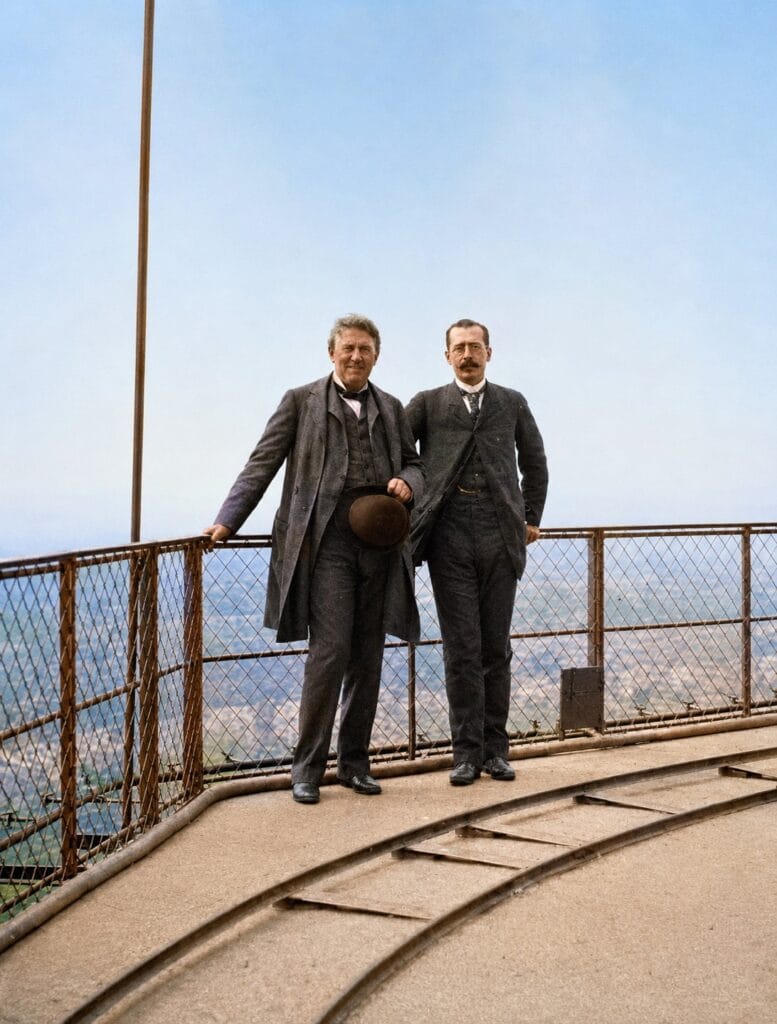
September 10, 1889.
Edison made it to the top of the tower.
Standing next to him was Adolphe Salles — Eiffel’s son-in-law, Claire’s husband, and the engineer who would later run the company.
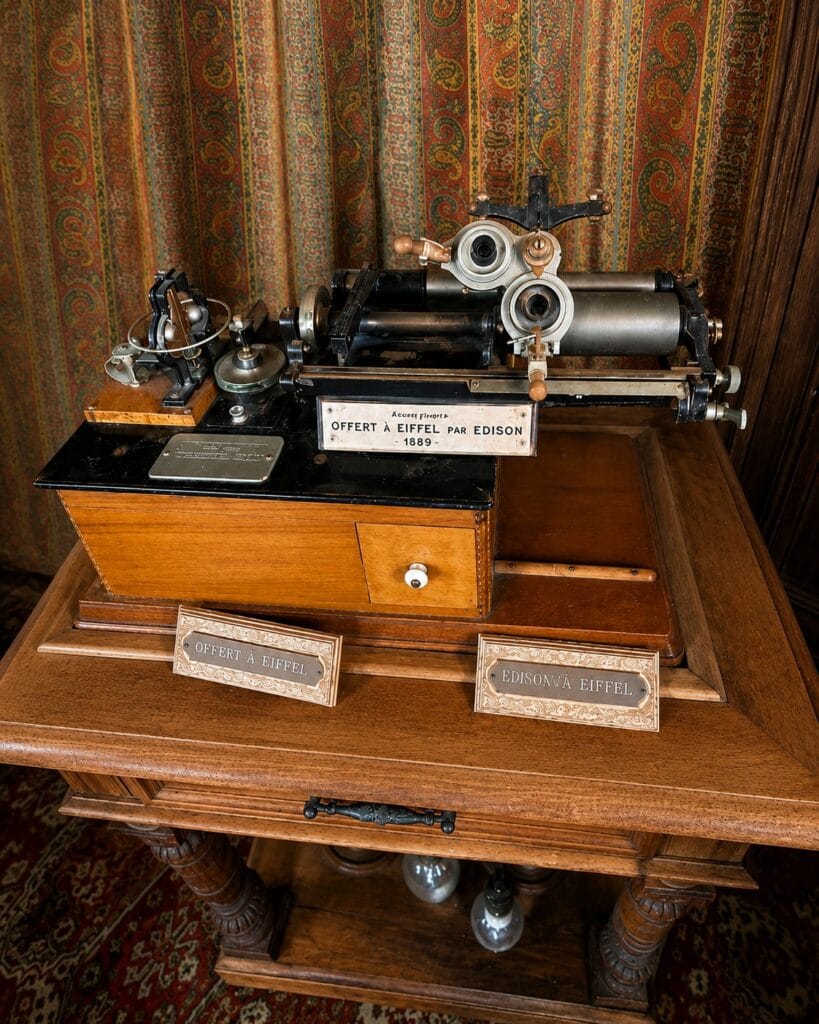
The brass plate reads: OFFERT À EIFFEL PAR EDISON — 1889.
The phonograph Edison gave Eiffel as a gift.
It’s still in the tower today.
That day, Edison wrote a short note in the guestbook:
“To the greatest engineer who ever built anything.”
Nobody else got to use that room.
Paris’s wealthiest people asked. Eiffel said no every time.
It wasn’t a lounge. It was a lab.
Barometers, wind gauges, rain gauges lined the windows. Every morning, Eiffel recorded the readings himself.
For tourists, the tower was a view. For Eiffel, it was a research station.
What People Were More Scared of Than the Tower
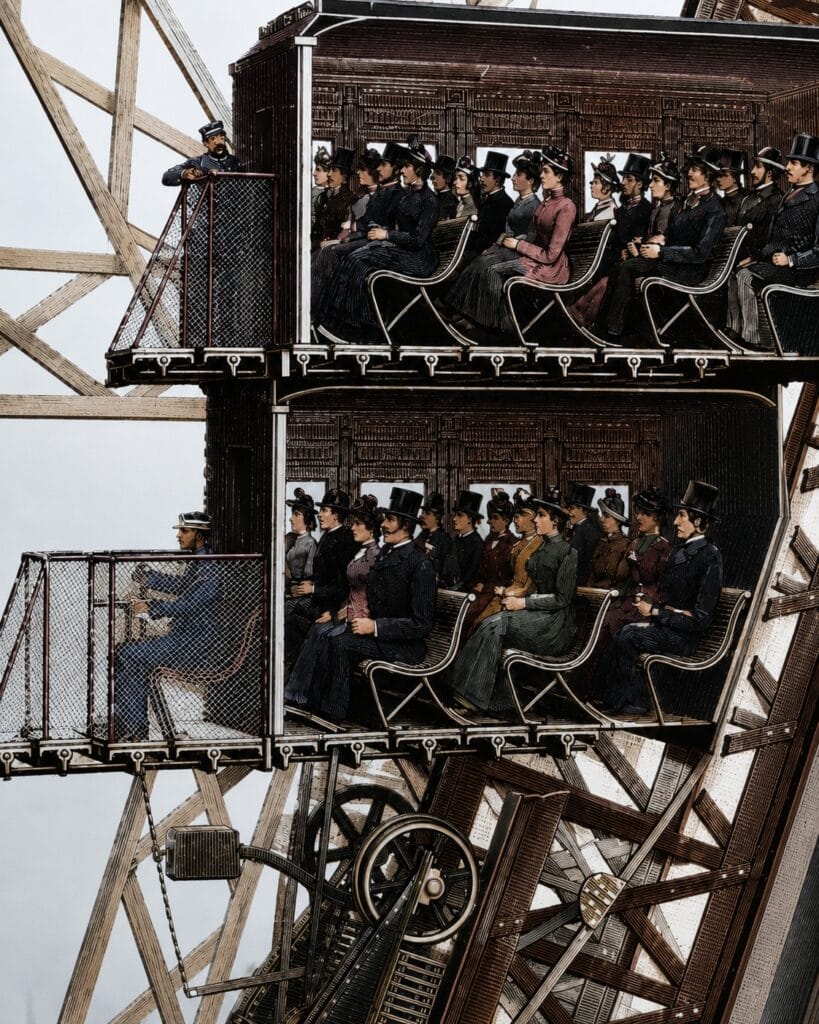
1889.
What made people hesitate wasn’t the 300-meter tower.
It was how to get up there.
The tower’s four legs angle out at about 54 degrees. A regular straight-up elevator wasn’t going to work.
A French engineering firm — Roux, Combaluzier et Lepape — designed a completely new kind of elevator, one that moved on a diagonal. It used a combination of chains and hydraulic cylinders — something no one had done before.
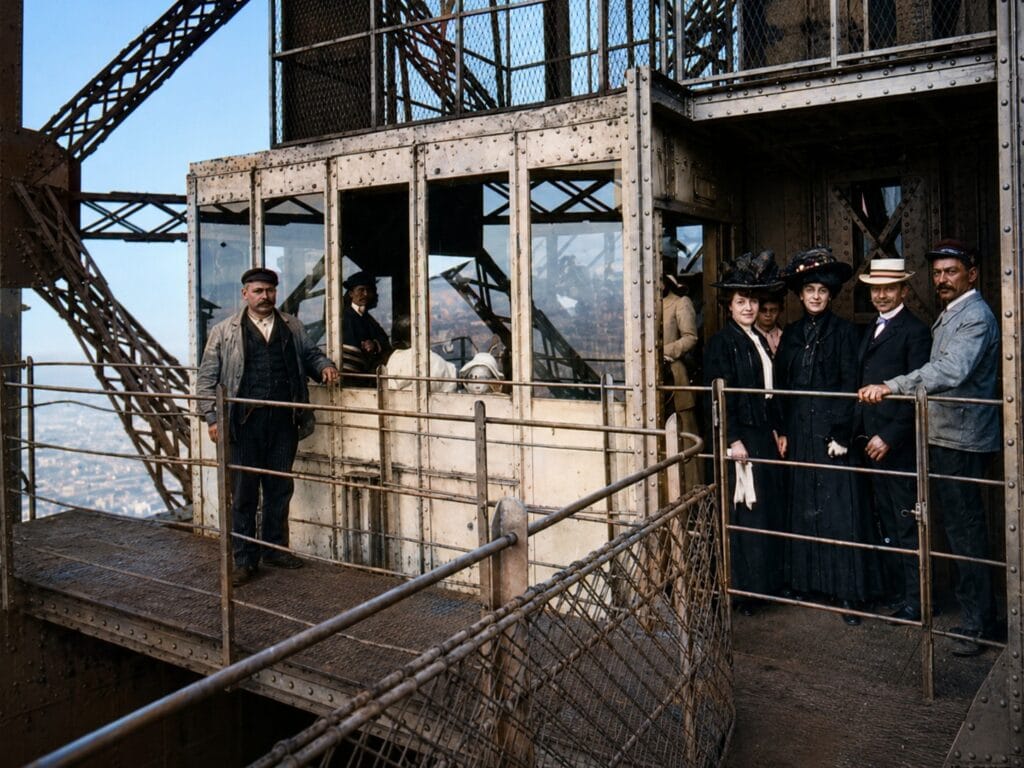
The operator took their seat. Passengers climbed in carefully. Paris slowly dropped away outside the windows.
The elevator company Otis ran a public safety test to calm people’s nerves. They loaded a car with 3,000 kilograms of lead, then cut the cable with an axe. The emergency brakes locked instantly. The car didn’t fall.
The technology was proven.
But fear takes longer to go away than a demonstration.
1889: Lifted Him Up. 1893: Put Him in Front of a Courtroom.
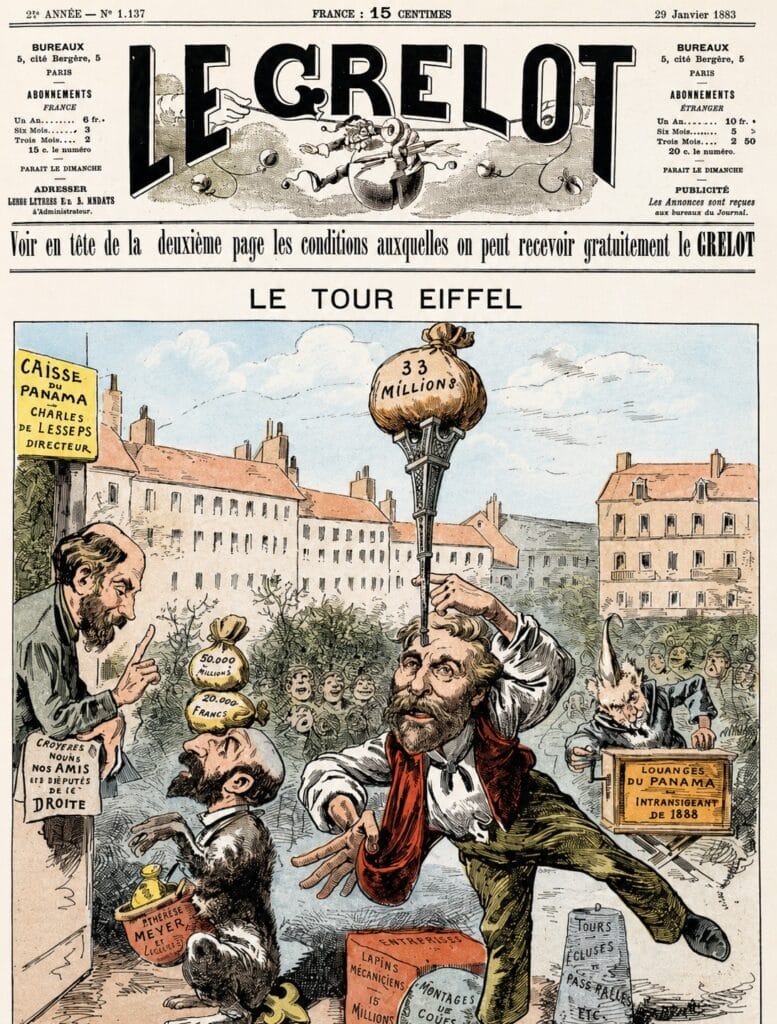
The cover of the satirical magazine Le Grelot.
The tower drawn as a giant magic wand, with a money bag labeled “33 million francs” dangling from the top. Below it, the words: “Panama funds.”
The headline wasn’t about the tower. It was aimed at the man.
“The most skilled trickster seen since the famous Vivier.”
Eiffel had taken a contract to design the lock gates for the Panama Canal. The company collapsed. Politicians and financiers were exposed for corruption. And Eiffel’s name ended up in court with them.
In his first trial, he was sentenced to two years in prison and a fine of 20,000 francs.
The verdict was later overturned.
Eiffel’s family records state clearly that he had no direct involvement in the misuse of funds.
But the image the newspapers built didn’t go away.
The verdict flipped.
People’s memory didn’t.
It Was Claire Again
When everyone turned their backs, Claire didn’t leave.
She had been the first one to see the empty space when her mother died — at fourteen.
Now she had to watch her father’s name get torn apart.
The company passed to Adolphe Salles.
Claire’s husband.
Eiffel stepped back from running the business.
But he didn’t step back from building things.
He went back up the tower.
Not as a builder this time.
As a researcher.
The Tower Was His Last Lab
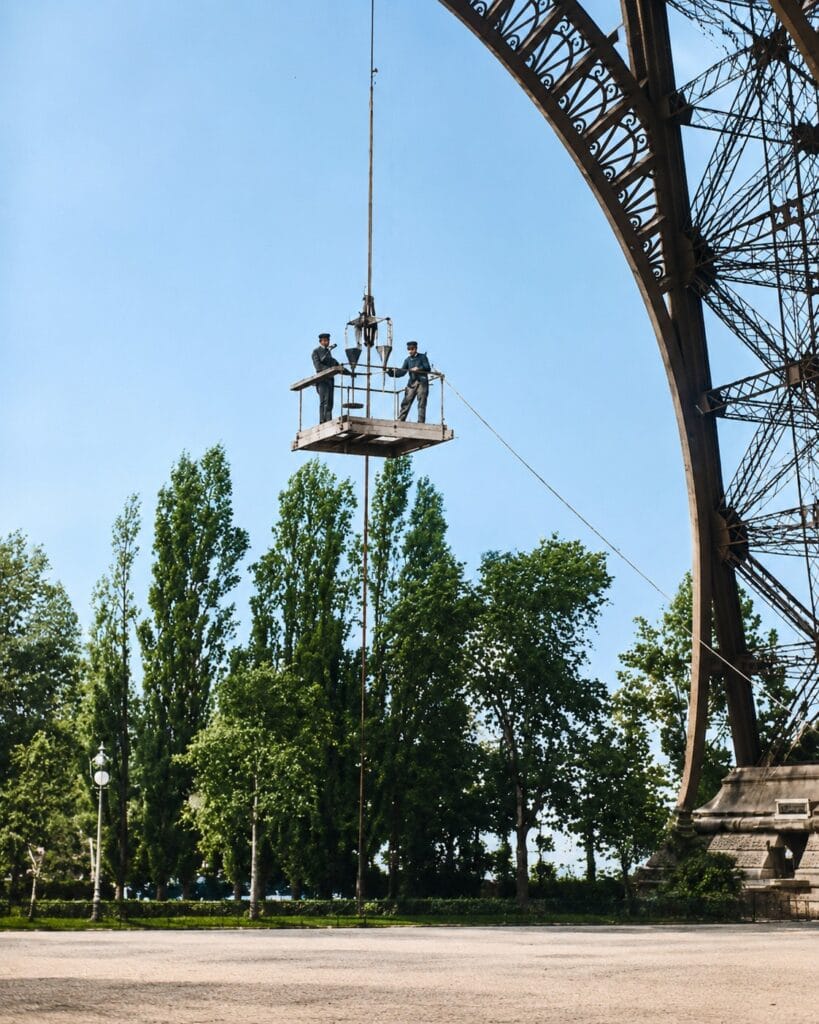
While people were visiting the tower as a tourist attraction, Eiffel was turning it into a lab.
A small platform hung below the arch.
Pulleys. Steel cables. Objects dropping one after another at different weights.
Visitors looked out over Paris.
Eiffel looked up at the falling objects.
He wasn’t interested in the fall itself.
He wanted to know how air grabbed onto things as they dropped.
1909.
The Eiffel Tower was supposed to be demolished.
It had been built as a temporary structure for the World’s Fair — the contract said it would come down after 20 years.
The city of Paris started looking at the timeline.
Eiffel didn’t hold a press conference.
He didn’t go to the politicians.
He just went up the tower every day.
Measuring air pressure.
Recording wind speed.
Tracking temperature.
Testing wireless communication.
His records made the case for why the tower had to stay.
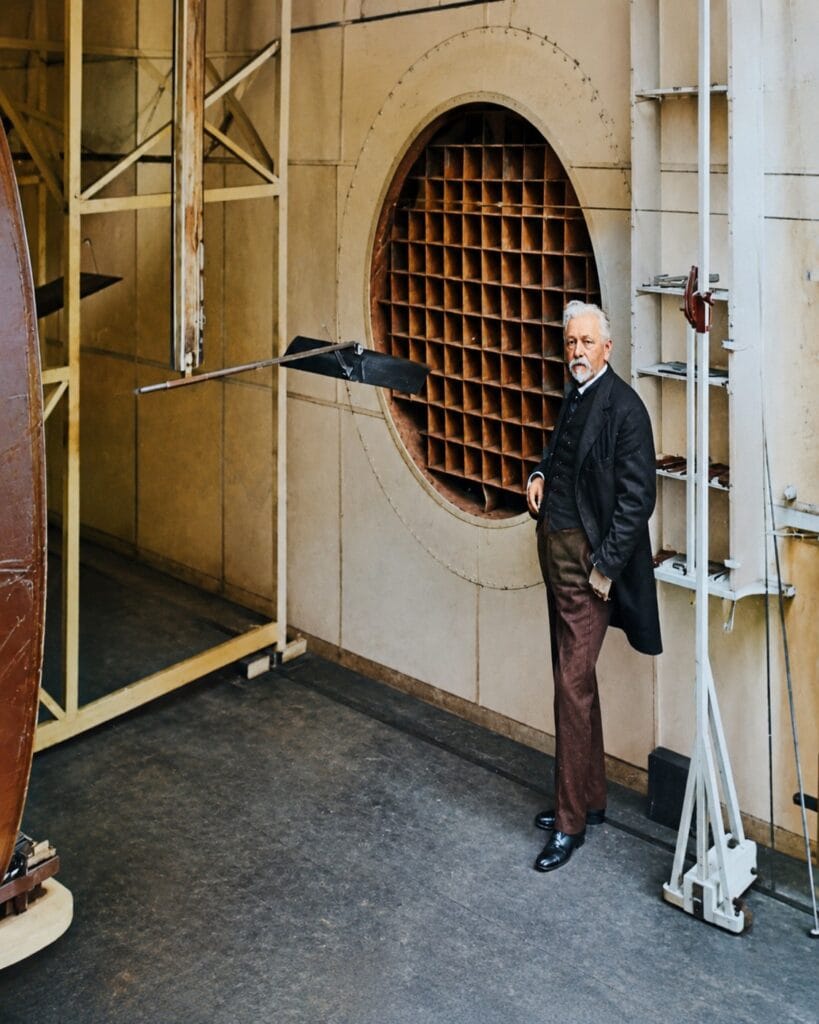
1909.
Eiffel built an aerodynamics lab at the Champ de Mars.
He soon moved to a larger facility in Auteuil.
Inside the circular wind tunnel, cars, airplane wings, and propellers all went through the same tests.
One question held everything together: how does air push back?
Researchers came from all over the world.
In 1913, the Smithsonian Institution gave him the Samuel P. Langley Medal.
Eiffel was already past seventy.
People were still looking up at the tower.
Eiffel, down below, was already working on the next generation of flight.
The Tower That Was Going to Be Torn Down Got an Antenna Instead
1903.
Captain Gustave Ferrié of the French Army came to see Eiffel.
One request: he wanted to put a military wireless antenna at the top of the tower.
Eiffel didn’t hesitate.
He covered most of the installation costs himself.
People thought someone was just putting a metal rod on top of an iron tower.
Eiffel was building the future.
1909.
The demolition deadline arrived.
This time it was the military that moved first.
The tower cannot come down, they said.
It had already become part of France’s communications network.
And that was how it survived.
Not because it was beautiful.
Because it was needed.
1914.
World War I.
The Battle of the Marne.
The antenna at the top of the tower picked up German wireless communications.
That intelligence was used in French military operations.
Later, the wireless intercepts connected to the spy case of Mata Hari were also traced through this network.
A tower that had once been a demolition target had become the country’s eyes and ears.
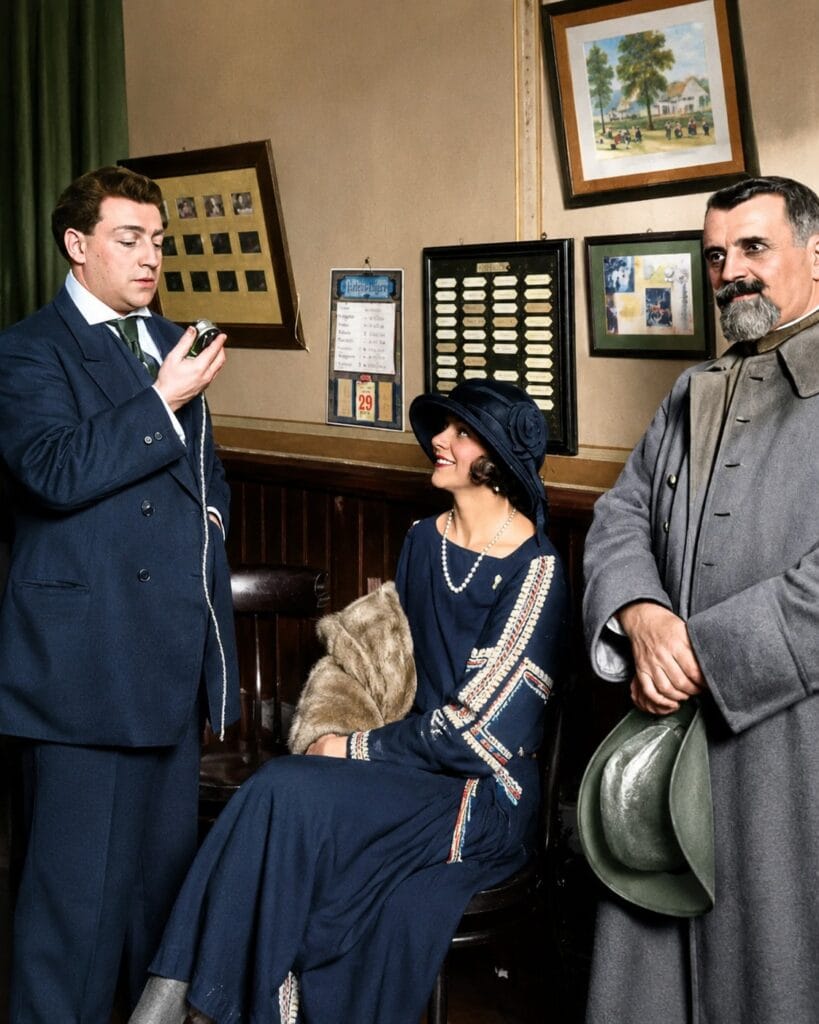
After the war, the antenna didn’t go quiet.
Military transmissions became civilian broadcasts.
1921.
Radio Tour Eiffel sent out its first signal from the top of the tower.
An actor stepped up to the microphone.
A playwright read from a script.
Music drifted out over the Paris sky.
The antenna built for war became one that carried people’s voices.
A tower that was supposed to disappear ended up becoming France’s voice.
The 150 Millionth Guest
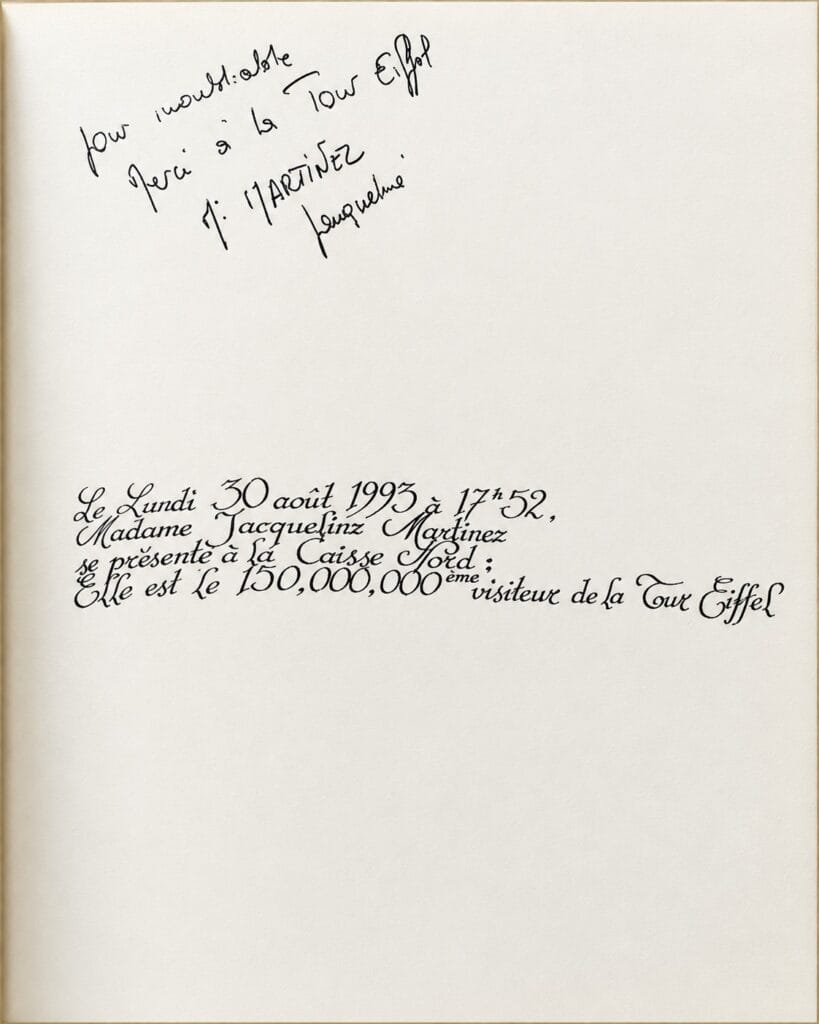
August 30, 1993.
5:52 p.m.
The ticket record reads:
Madame Jacqueline Martinez…
150,000,000th visitor to the Tour Eiffel.
Jacqueline Martinez.
That moment was written down.
Eiffel had already been gone for seventy years.
He was long gone.
But people kept climbing the stairs, riding the elevators, looking out from the top.
The tower was still welcoming everyone.
The Man Disappeared. The Tower Stayed.
Eiffel’s name is still on the tower.
But most people don’t stop to read it.
They just look up.
As time went on, the Eiffel Tower became the face of France itself — and Gustave Eiffel quietly faded behind it.
He was probably the first one to see that coming.
He spent his whole life building structures.
And in the end, the biggest one he ever built quietly covered his own name.
The Last Line
Before he died, Eiffel left behind something that sounds almost like a joke.
“I ought to be jealous of the Tower.
It is more famous than I am.”
You could laugh at that the first time you hear it.
But after going through his life — after the wife, the daughter, the courthouse, the wind tunnels — it lands differently.
Millions of people climb the Eiffel Tower today.
Some of them are in love.
Some of them are taking photos.
Some of them are just trying to remember Paris.
But not many stop to think about the man who ran the calculations for all that iron.
Gustave Eiffel built the most recognizable structure in the world.
And in doing so, he became someone whose creation is more famous than he is.
The world remembered the tower.
Now it’s time to also remember the one who built it.
Archive Notes
Was the Eiffel Tower really going to be torn down?
Yes. The tower wasn’t built to last forever. Eiffel was given a 20-year operating license, and the agreement said it would come down in 1909.
But he didn’t just leave it sitting there as a viewing platform. He kept running weather observations, aerodynamics tests, and wireless communication experiments — turning it into a functioning science facility.
The military also recognized the value of the wireless antenna. The demolition plan was eventually cancelled.
The tower we see today didn’t survive because it was beautiful. It survived because science made it useful.
What exactly did Eiffel build inside the Statue of Liberty?
Eiffel didn’t design the face. Sculptor Frédéric Auguste Bartholdi made the exterior.
What Eiffel designed was the internal iron framework — the skeleton that lets the massive copper shell stand up in New York Harbor winds without collapsing.
In 2018, original structural drawings from Eiffel’s personal files were found and made public in 2020. The calculations for wind load and weight distribution were still there on the paper.
The world sees her face. The iron holding it up for 130 years is Eiffel’s.
Is the phonograph Edison gave Eiffel still there?
It is. In 1889, Thomas Edison visited Gustave Eiffel at the top of the tower. He gave him a phonograph as a gift.
The brass plate on it still reads: OFFERT À EIFFEL PAR EDISON — 1889.
It’s on display today in the reconstructed Eiffel apartment at the top of the tower.
Eiffel’s way of fighting back through data — quietly, without press conferences — isn’t unlike the dedication of Robert Falcon Scott, who kept writing in his diary as he was dying in Antarctica. And the irony of a life’s work becoming more famous than the person behind it echoes the story of Maria Reiche, who spent decades alone protecting the Nazca Lines — and was largely forgotten too.
What You Now Know
Everyone knows the Eiffel Tower. Far fewer people know Gustave Eiffel.
We’ve remembered him as a tower.
But his life doesn’t fit inside one structure.
He was a husband who lost his wife too soon.
A father who had to lean on his fourteen-year-old daughter.
An engineer who answered mockery with math.
A defendant who stood in a courtroom.
And a scientist who was still studying wind on his last day alive.
He didn’t try to put his name above everything else on the tower.
Instead, he put the names of scientists he believed should be remembered before himself.
But over time, people stopped reading even those names.
What’s left is the tower.
So the sentence he left before he died sounds less like a joke now, and more like a confession.
“I ought to be jealous of the Tower.
It is more famous than I am.”
Millions of people look up at the Eiffel Tower today.
It’s still standing there, quietly holding onto one person’s name.
Gustave Eiffel.
Tip for Readers
The names of 72 French scientists chosen by Eiffel himself are engraved on the iron frame of the tower’s first floor. The full history of Eiffel’s life and the tower’s construction is available at the official Eiffel Tower website. Family records including Claire’s role are documented at the Association des Descendants de Gustave Eiffel.
Verified Sources
Société d’Exploitation de la Tour Eiffel — Official Eiffel Tower History Archive
Association des Descendants de Gustave Eiffel — Gustave Eiffel Biography and Family Records
Archives Nationales de France — Eiffel Tower Engineering Drawings
Smithsonian Institution — Samuel P. Langley Medal Records, 1913
Bibliothèque nationale de France / Gallica — Historical French Newspapers
Historical images sourced from public-domain archives and open-access repositories.
Some images have been digitally restored, colorized, or redesigned for editorial and storytelling purposes. Not part of any original archival dataset; created solely for narrative and illustrative use.