
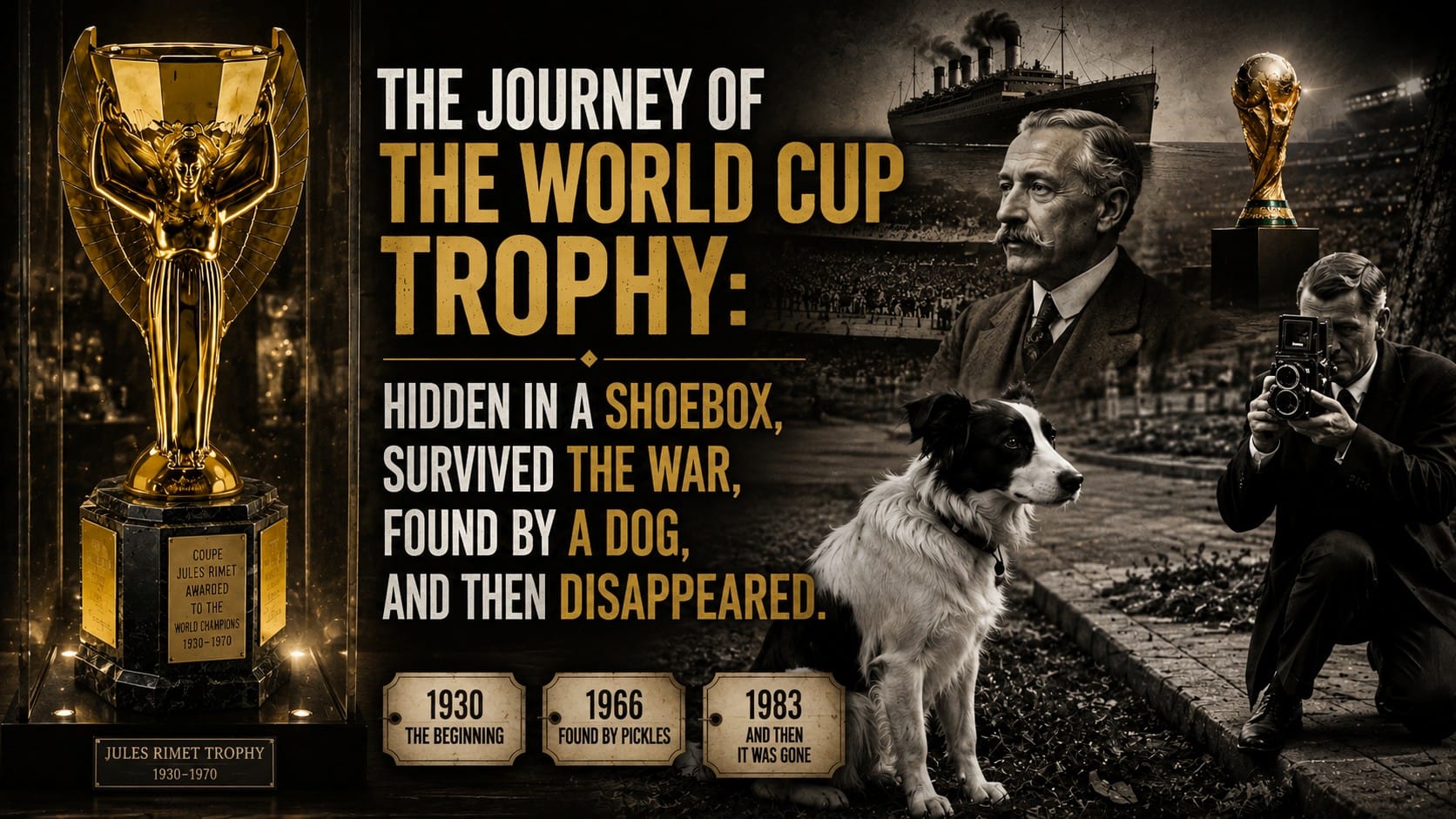
Billions of people watch the same trophy lift every four years. There’s only one real one in the world. But the original — the very first one — nobody knows where it is. It might not even exist anymore.
That trophy survived fifty years of wars, two thefts, and one dog. After the second theft, it never showed up again.
June 1930. An Italian ocean liner called the Conte Verde left a port near Nice and headed across the Atlantic. Somewhere on that ship, inside one man’s travel bag, sat a small golden statue. That was the first World Cup trophy. Nobody on board could have guessed that thing would one day hide under a bed from the Nazis, get sniffed out from under a bush by a dog in London, and finally disappear into a dark room forever.
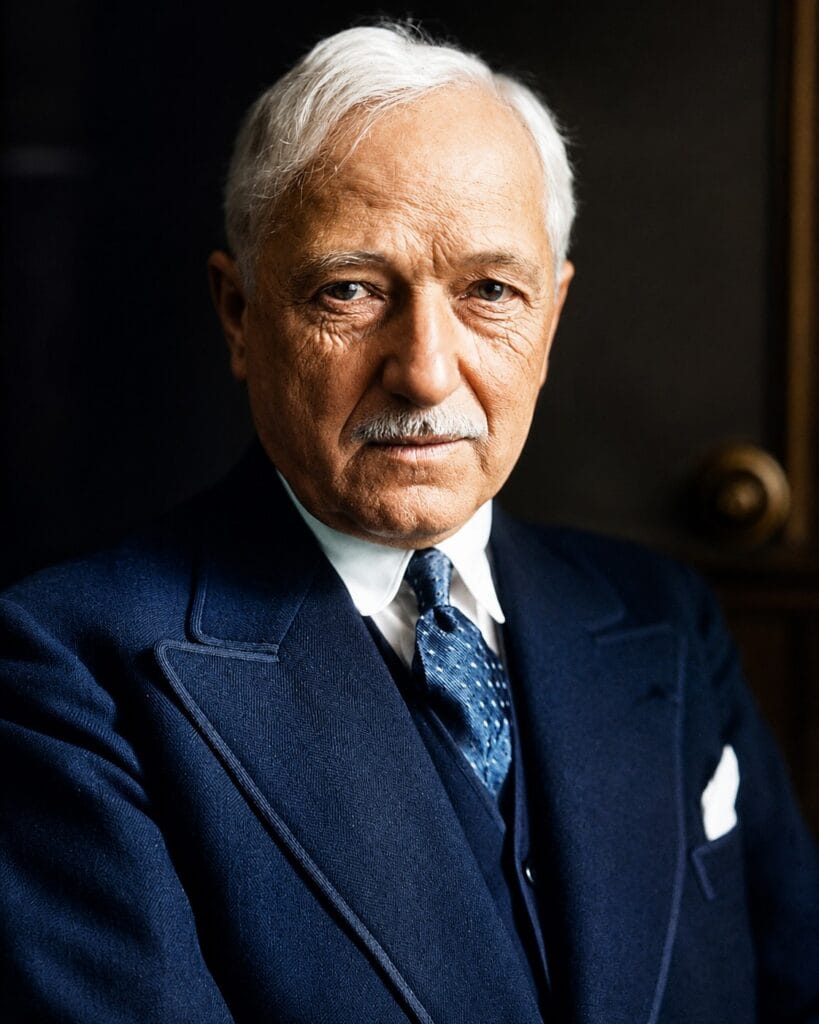
One Man Quit After Two Years. The Other Held On for Twenty-Six.
FIFA started in 1904. A French sports journalist named Robert Guérin (Robert Guérin) pulled it together — seven countries in one room, a big announcement about a global soccer tournament. Then nothing. He couldn’t get anyone to cooperate, couldn’t get funding, couldn’t get a single match off the ground. Two years in, he walked away. He figured the whole thing was never going to work.
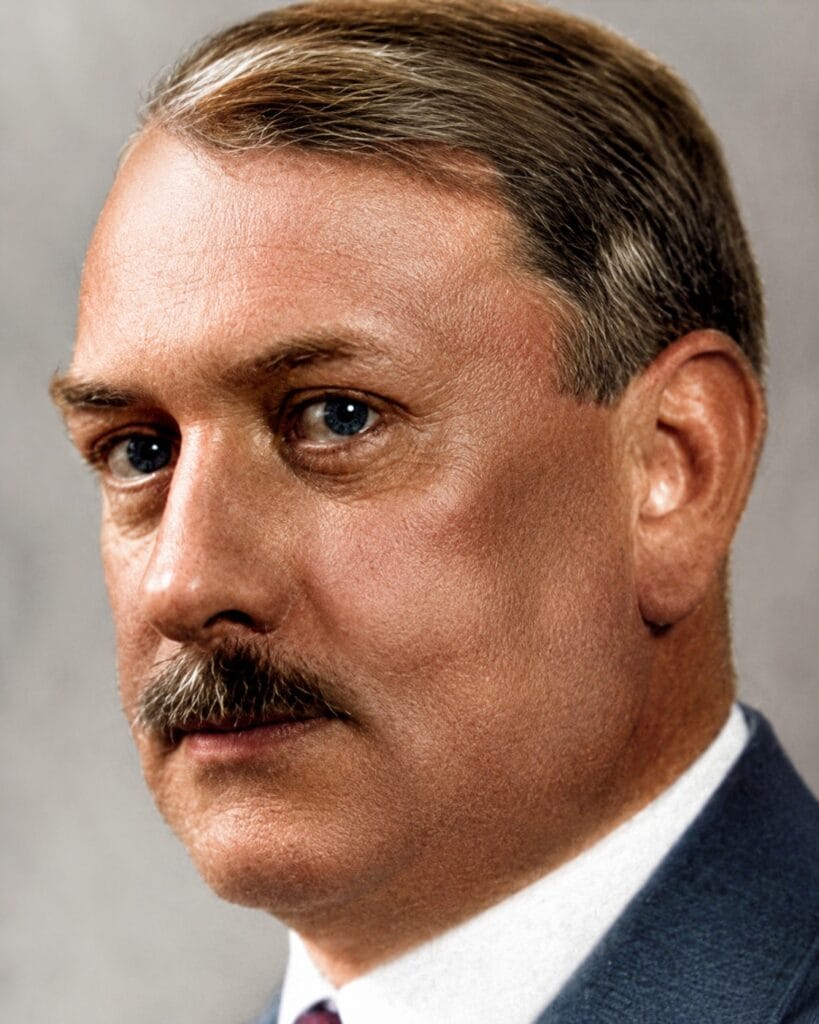
A man named Jules Rimet stepped in. He became FIFA’s third president in 1921. He picked up the same dream Guérin had dropped. Post-World War I Europe was full of hate — English associations were refusing to share a field with Germany or Austria. Rimet went door to door, country to country, trying to convince everyone to come back. He did that for thirteen years.
When he took the job, FIFA had 29 member nations. When he finally stepped down 33 years later, there were 85. The first World Cup happened in 1930 — twenty-six years after Guérin quit. Rimet was even nominated for the Nobel Peace Prize in 1956. And in June 1930, he put the trophy in his bag and got on that ship.
Nobody Wanted to Go. He Went Anyway — With the Trophy.
The first World Cup was set for 1930. Nobody from Europe wanted to make the trip. Two months by boat to South America during the Great Depression? Hard pass. Rimet spent his own money. He talked four countries into going — France, Belgium, Romania, Yugoslavia. He got on the boat himself.
His bag held a golden statue made by French sculptor Abel Lafleur. 35 centimeters tall. 3.8 kilograms. It looked solid gold but wasn’t — sterling silver underneath, 24-karat gold plating on the outside. Lapis lazuli base. It was called Victory.
If the original Jules Rimet Trophy showed up at auction today, what would it go for? The current FIFA trophy is valued at tens of millions of dollars. The one that survived a world war and two thefts? Way higher. That irony follows this trophy everywhere it went.
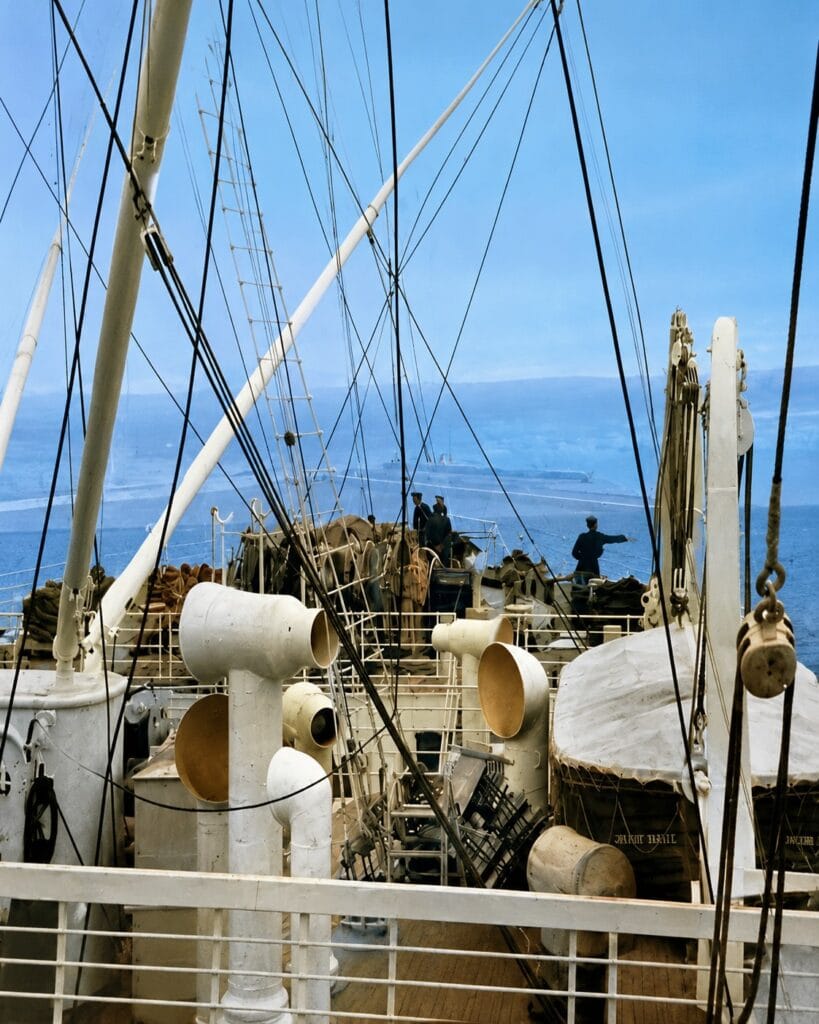
Two weeks later, the ship docked in Montevideo, Uruguay. July 30, 1930 — Uruguay beat Argentina 4–2 in front of 68,346 fans. Rimet handed the trophy to the president of the Uruguayan Football Association, Raúl Jude. The moment the first man said was impossible, Rimet watched happen in person. He was 57.
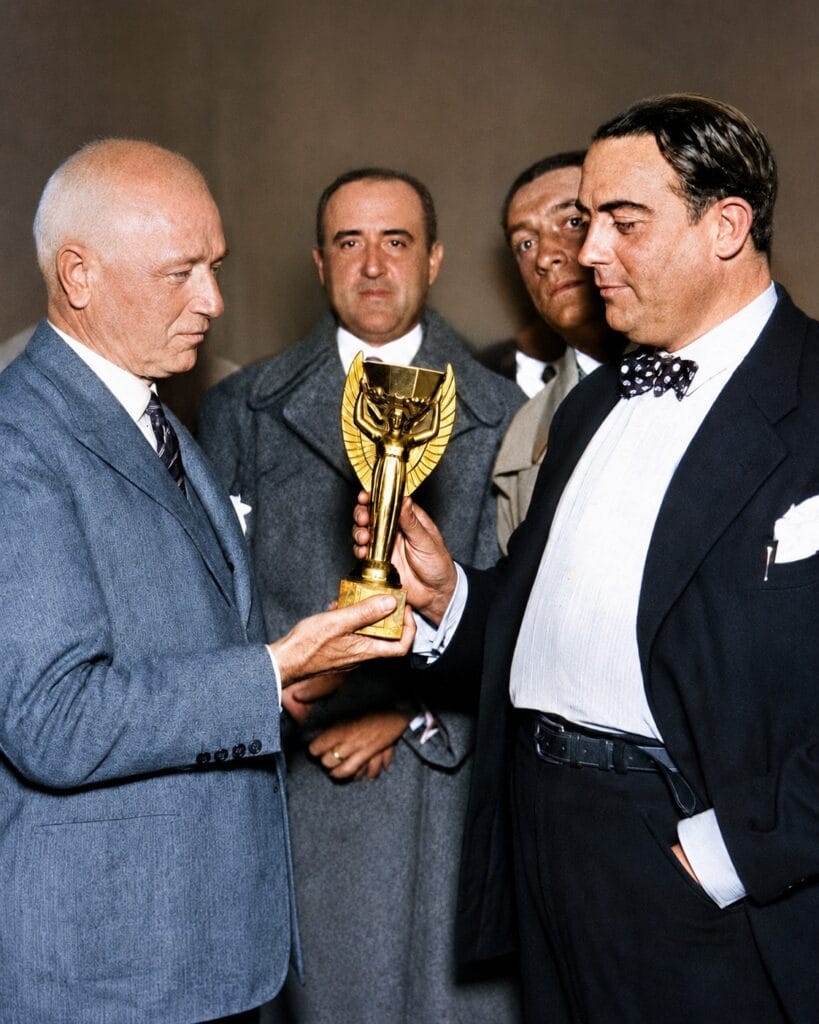
A Stadium Built in Nine Months. Fans Crossed a River to Get There.
Uruguay built a brand new stadium for the tournament to mark 100 years of independence. The Estadio Centenario — built from scratch in nine months. Capacity: 90,000. At the time, it was the largest soccer stadium outside the British Isles. Rimet called it “the temple of football.”
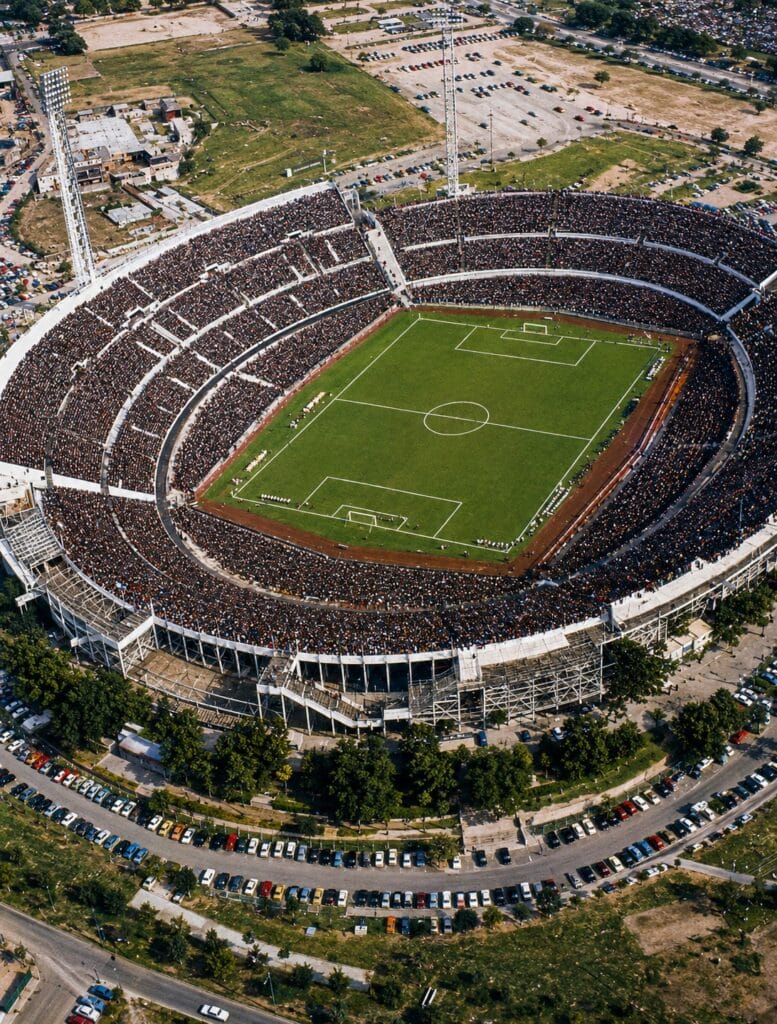
On the day of the final, Argentine fans crossed the Río de la Plata by boat. Ten boats weren’t enough — every vessel available packed the water. After the match, Uruguay declared a national holiday. Back in Buenos Aires, someone threw rocks at the Uruguayan consulate. That was how the first World Cup ended.
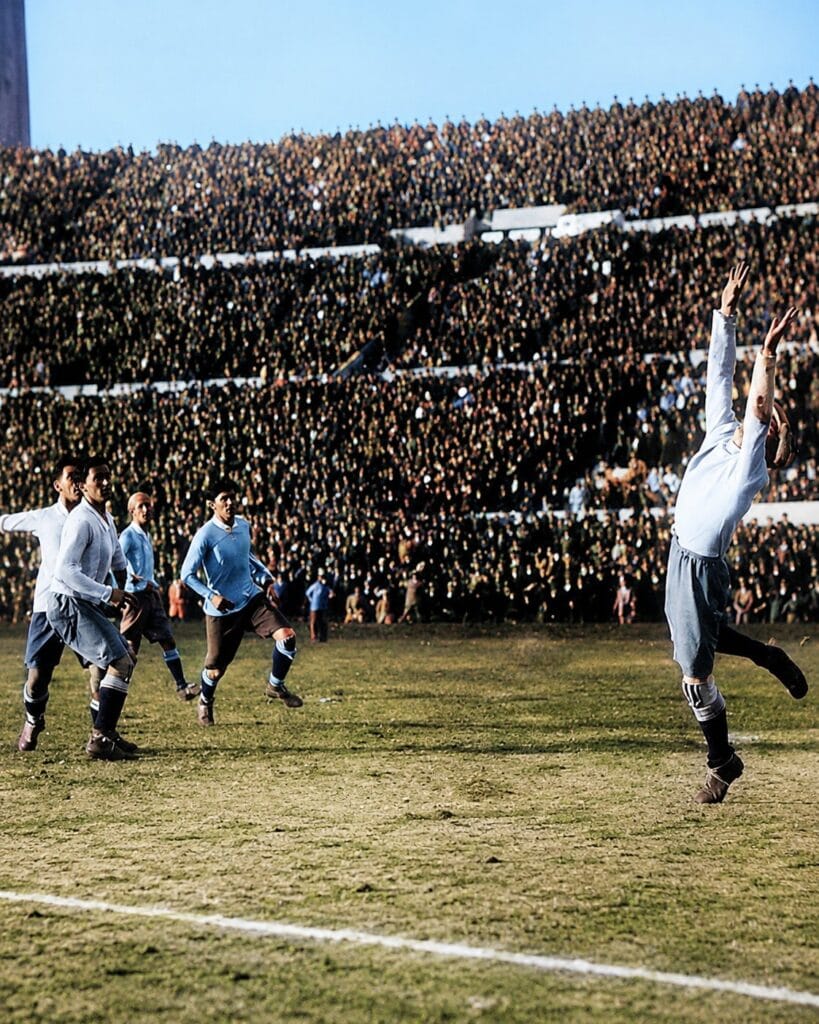
At the 1958 World Cup in Sweden, Brazilian captain Hilderaldo Bellini lifted the trophy high above his head after a photographer asked for a better shot. Every winning captain has done it ever since. The trophy was traveling the world. Then the war came.
The Nazis Searched the House. The Trophy Was Under the Bed.
Italy won the 1938 World Cup. The original Jules Rimet Trophy went into a bank vault in Rome. Then in 1939, World War II started. The Nazis took over Italy and started stripping valuables everywhere they went.
One man walked quietly into that bank. Ottorino Barassi — president of the Italian Football Federation (FIGC) and FIFA vice president. He took the trophy out. Put it in an old shoebox. Went home and slid it under his bed.
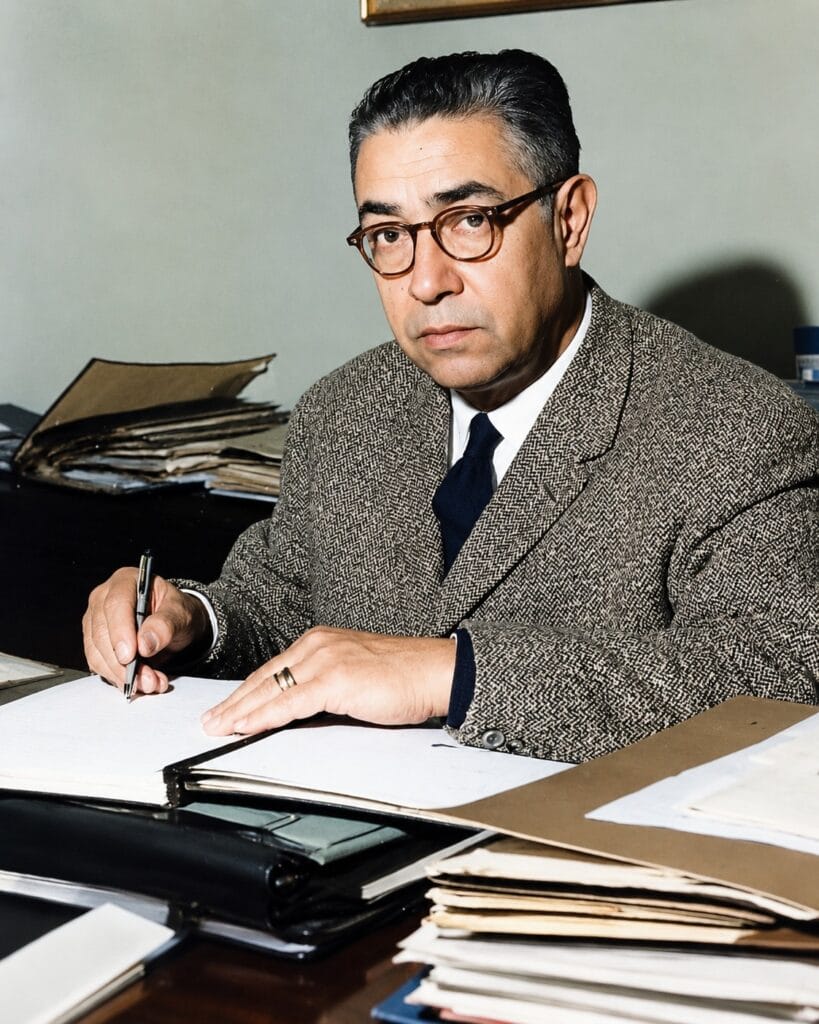
According to later biographies and memoirs, the Gestapo showed up and searched his house. They went through everything. They didn’t check under the bed. The original Jules Rimet Trophy sat in that shoebox and waited for the war to end.
In 1950, the trophy came out without a scratch. The World Cup resumed in Brazil. The shoebox chapter was over. But the trophy’s story was far from done.
In 1946, the Trophy Got a New Name — Quietly.
After the war, football officials got back together and made one unanimous decision: rename the trophy. Out with Victory. In with the Jules Rimet Trophy. It was FIFA’s 25th anniversary. Not named after the sculptor. Not after any champion. After an administrator.
Jules Rimet died on October 16, 1956. He was 83. Two days after his birthday. That same year, he’d been nominated for the Nobel Peace Prize. He died watching a trophy with his name on it travel the world.
Eighteen years after his death, in 1974, Nicaragua issued a postage stamp series honoring the first World Cup. The moment Rimet handed that trophy to Uruguay — printed on a one-cent stamp. Nine years before the original trophy vanished forever.
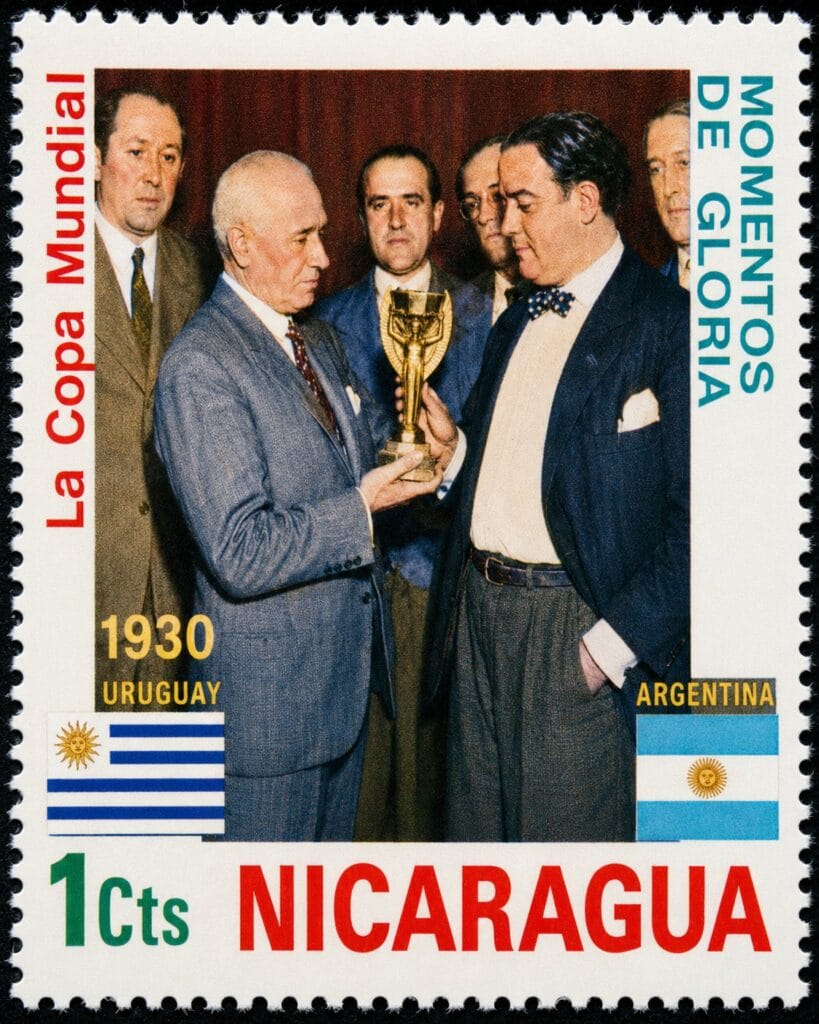
Ten years after Rimet was gone, the trophy disappeared again.
London Police Couldn’t Find It. A Dog Did.
March 20, 1966 — four months before England’s World Cup. The original Jules Rimet Trophy was on display at a stamp exhibition in Westminster Central Hall, London. Someone broke the case open. By noon, it was gone. The stamps on display were worth around £3 million. The thief only took the trophy.
Scotland Yard — London’s Metropolitan Police — was all over it. A man named Edward Betchley demanded £15,000. Police showed up with a bag full of fake money. Betchley spotted it and ran, then got caught. He said someone called “The Pole” had paid him £500 to be a middleman. He had no idea where the trophy was.
A week went by. Sunday evening, March 27. South London, a neighborhood called Upper Norwood. A 26-year-old dock worker named David Corbett was trying to clip a leash onto his collie, Pickles.
Pickles shoved his nose under a nearby hedge. There was something wrapped in newspaper. Heavy. Corbett tore it open. Gold. The words “Brazil 1962” were engraved on the base. Corbett ran to the police station.
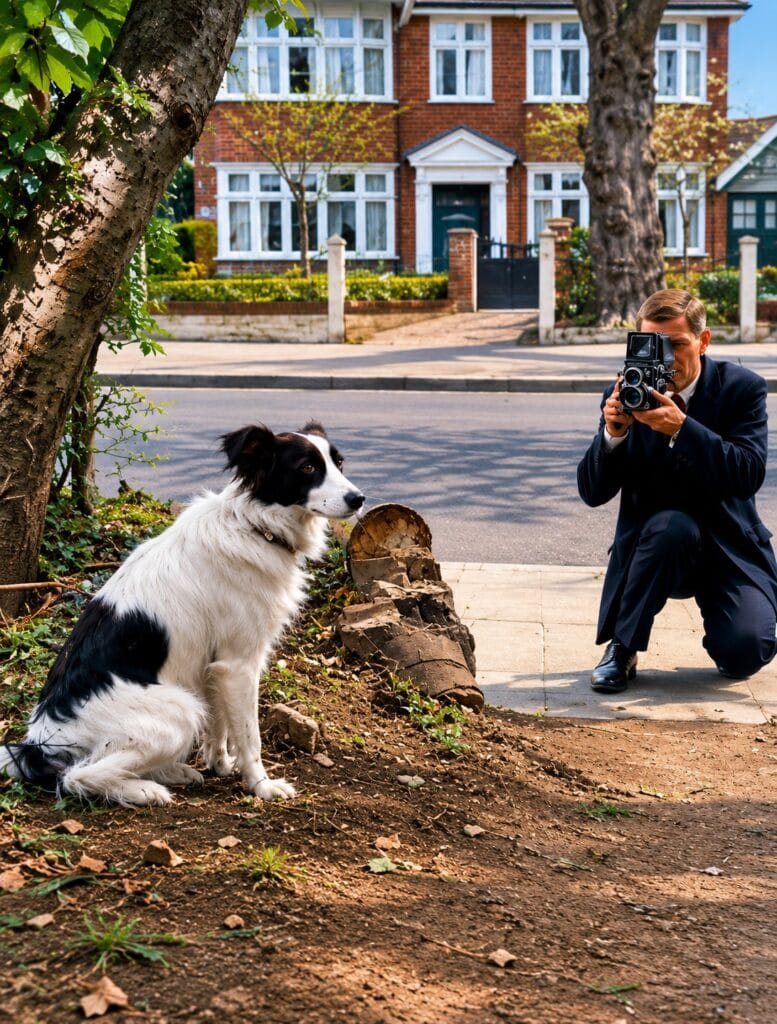
What Pickles found was the real thing. The original Jules Rimet Trophy. Corbett brought it in, and an English Football Association official confirmed it on the spot.
Pickles became a national hero overnight. BBC named him Dog of the Year. He got a silver medal, a year’s supply of free dog food, a movie role, an ad deal, and an invite to the official England victory banquet after they won that summer. His owner Corbett collected £6,000 in reward money. For comparison — each England player got £1,360 for winning the World Cup.
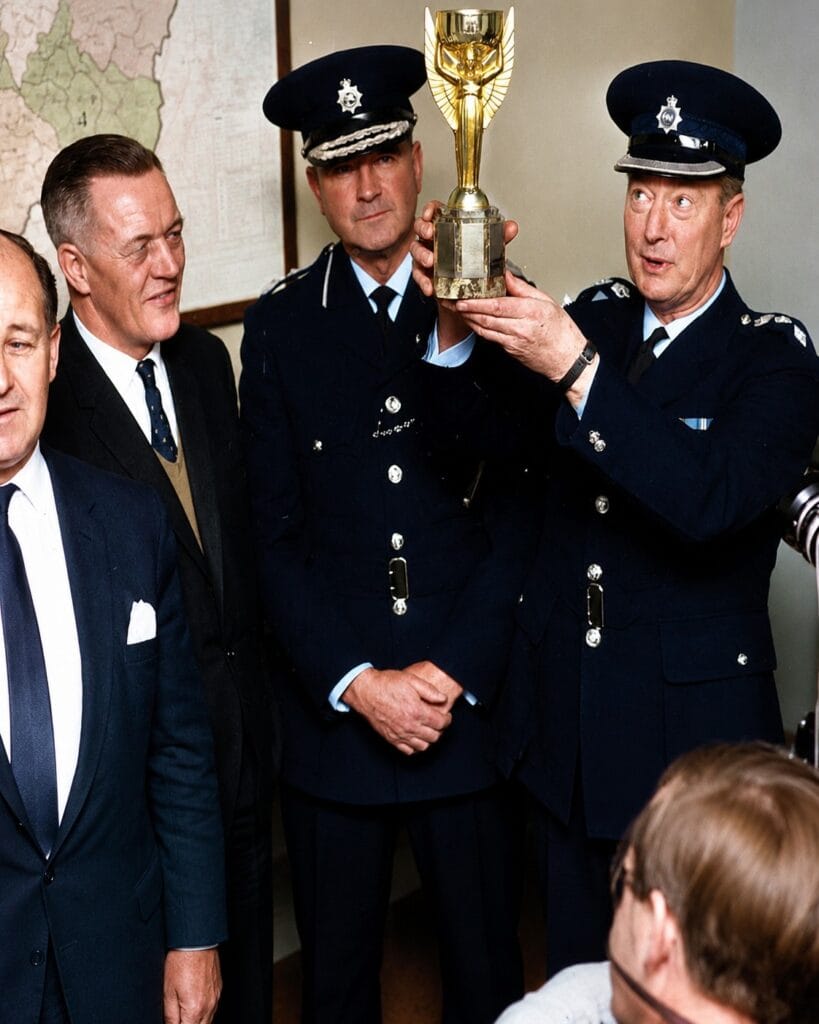
Once they had the trophy back, the English Football Association got nervous about it happening again. Without telling FIFA — who had explicitly banned any copying — they hired a jeweler named George Bird to make a replica. From 1966 to 1970, that replica was used at all public events. The real trophy stayed locked away in a secure location. In 1970, ahead of the Mexico World Cup, the English Football Association handed the original back to FIFA.
Brazil Got to Keep It Forever. It Lasted Thirteen Years.
Brazil won the 1970 World Cup in Mexico — their third title. FIFA president Jules Rimet had set a rule when the trophy was created: the first country to win three times gets to keep it permanently. The original Jules Rimet Trophy was shipped to the Brazilian Football Confederation headquarters in Rio de Janeiro. Front of the display case: bulletproof glass.
The back was thin wood.
December 19, 1983. Someone pried open that wood panel with a crowbar. Tied up the security guard. Walked out with the original Jules Rimet Trophy. The bulletproof glass was pointless.
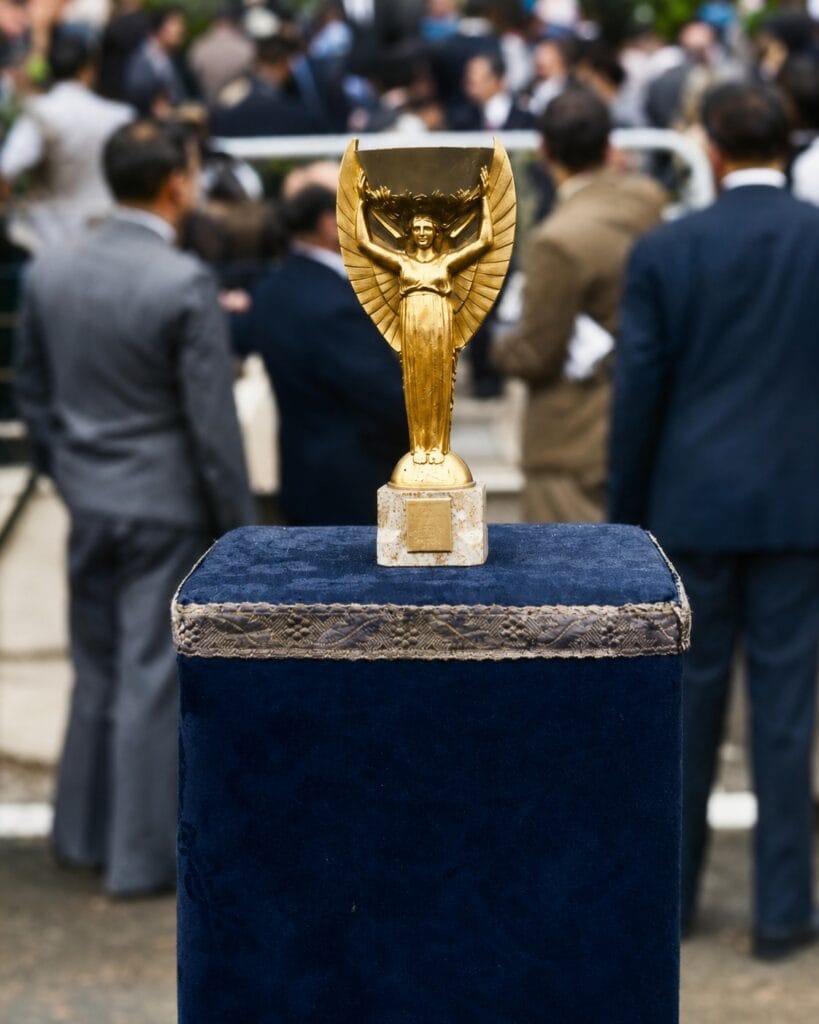
Brazilian police caught the suspects. The trophy was gone. They said they’d already melted it down. They wanted the gold.
Here’s the thing — the thieves thought it was solid gold. It wasn’t. Gold plating over silver. Melt the whole thing down and you’d get a few thousand dollars in scrap metal. The trophy that survived the Nazis and a London heist disappeared at the hands of people who had no idea what they actually had.
Whether they actually melted it is still unclear. Gold-plated silver doesn’t easily turn into gold bars. Some researchers think the original might still be out there somewhere. What’s certain is that it hasn’t been seen once since 1983.
In 1984, the Brazilian Football Confederation had a new replica made and presented it to the president of Brazil.
A Fake Sold for More Than Most People Expected
The replica George Bird made for the English Football Association — the one that had to stay hidden because FIFA banned copies — ended up at a Sotheby’s auction in 1997 after Bird died. It sold for £254,500. The buyer was FIFA. They thought it might be the real one. Ten times the estimated price.
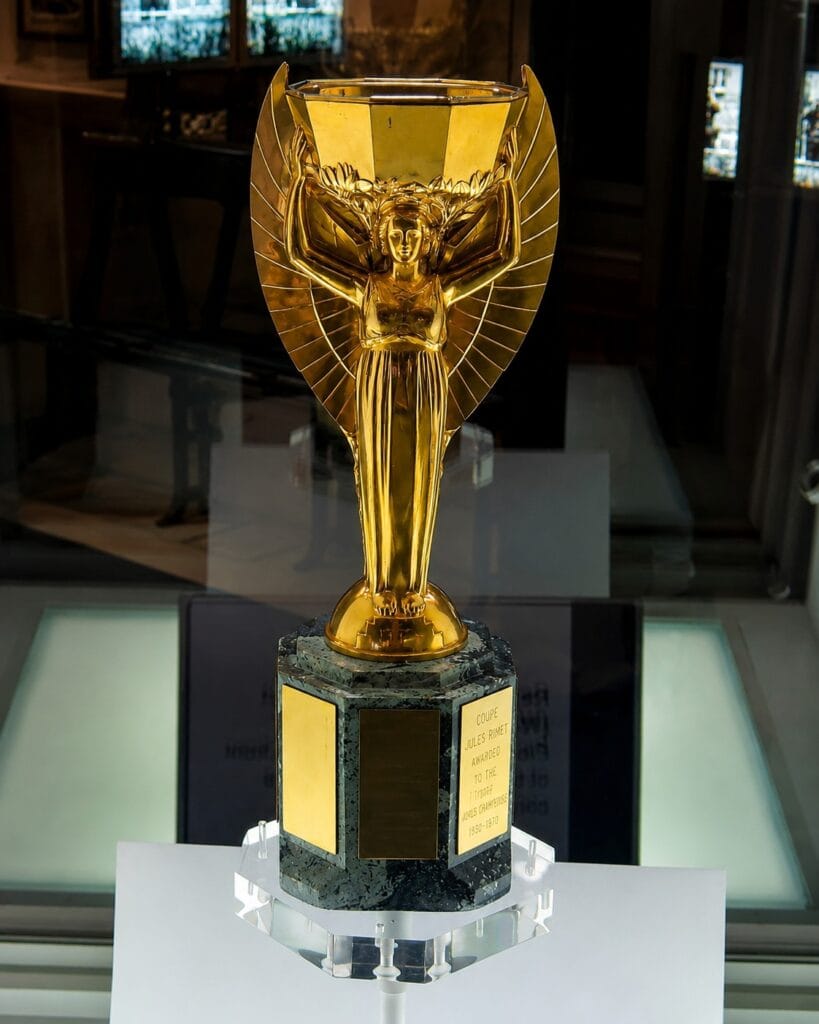
Researchers at the University of Manchester ran a CT scan and XRF analysis on it. No silver. Tin and lead. Fake. That replica now lives at the National Football Museum in Manchester.
The Trophy Changed. So Did the Rules.
After the original Jules Rimet Trophy was gone, FIFA commissioned a completely new one. Italian sculptor Silvio Gazzaniga won the design competition — 53 entries from seven countries.
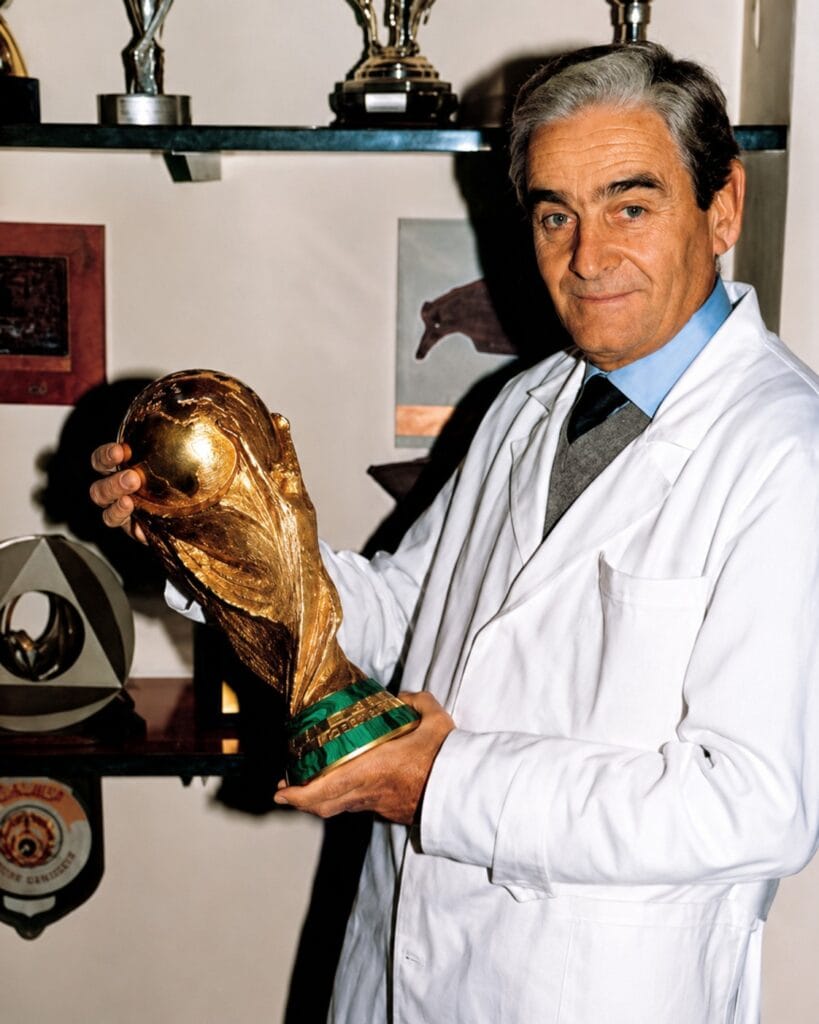
The new trophy debuted in 1974. 18-karat gold. 6.175 kilograms. 36.5 centimeters tall. Hollow — fill it solid gold and it’d weigh 70 to 80 kilograms, way too heavy to lift. Malachite bands on the base. Raw material value alone: around $713,000 according to Wikipedia.
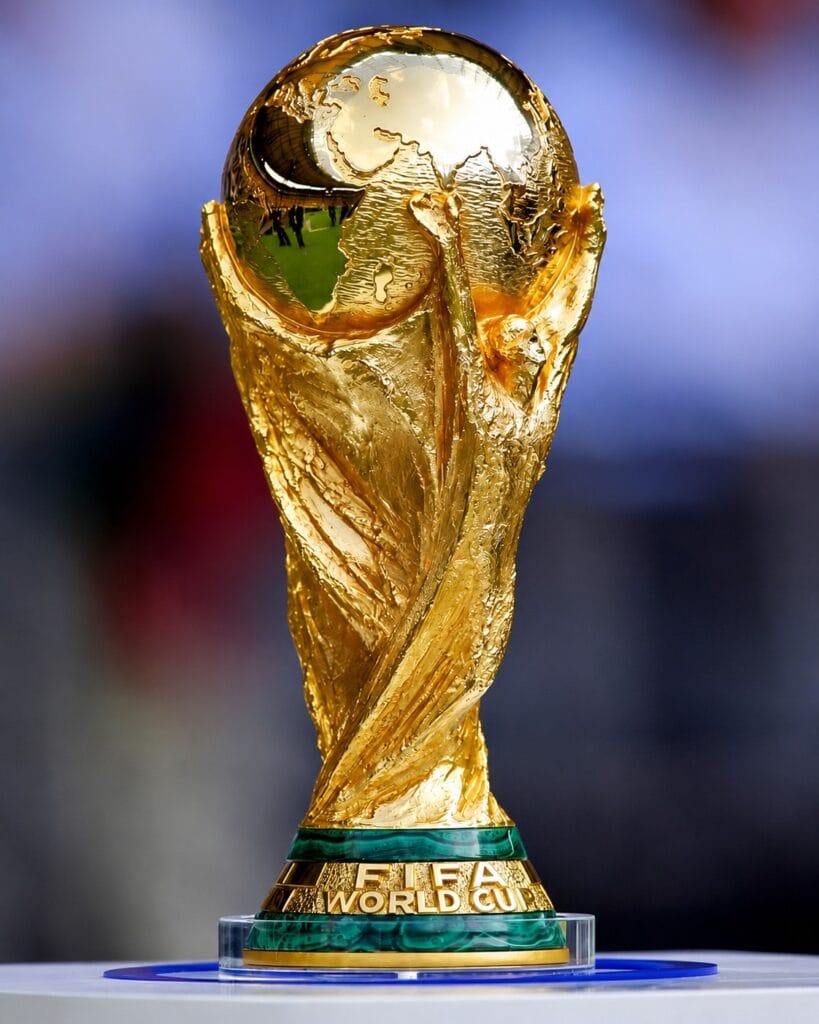
The rules Rimet wrote are gone. No country owns the real trophy permanently anymore. The winning team gets to hold the original at the ceremony. Then they fly home with a gold-plated bronze replica. The real one goes straight back to a vault under FIFA headquarters in Zurich. Those rules were written because of what happened to the Jules Rimet Trophy.
Only the Base Survived
In 2015, someone digging through the basement of FIFA headquarters in Zurich found a chunk of lapis lazuli. It was the original base of the Jules Rimet Trophy — the one sculptor Abel Lafleur made in 1930. In 1954, it had been swapped out for a taller base to fit more winners’ names, then forgotten in storage for over sixty years.
The body of the original Jules Rimet Trophy is gone. The base survived. It’s at the FIFA Museum in Zurich right now. The only physical piece of the original trophy left in the world.
The trophy is gone, but the trail it left behind is still there. A stone base sits behind museum glass in Zurich, and people are still looking for what came with it. The way one obsession outlasts everything — even the object itself — is something Nansen understood too. And the strange pull that one singular object has on the whole world is something you can also trace in the story of the World Cup ball itself.
Archive Notes
Was the Jules Rimet Trophy solid gold? And what would it be worth today?
No. The original was sterling silver (92.5% pure silver) with 24-karat gold plating. Lapis lazuli base. Total weight 3.8 kg, height 35 cm. The 1983 thieves thought it was solid gold — what they actually got in scrap metal was worth a few thousand dollars. The current FIFA trophy is valued at tens of millions of dollars in historical worth. The original, having survived a world war and two thefts, would be worth considerably more.
Was what Pickles found actually the real trophy?
Yes. Pickles found the original Jules Rimet Trophy, confirmed on the spot by an English Football Association official. After that, the English Football Association quietly commissioned a replica from jeweler George Bird — without FIFA’s knowledge, since FIFA had banned copies. The replica was used at public events from 1966 to 1970 while the original was kept in a secure location. In 1970, the English Football Association returned the original to FIFA, and Brazil received it permanently after their third World Cup win.
What was found in the FIFA storage room in 2015?
The original lapis lazuli base of the Jules Rimet Trophy, made by Abel Lafleur in 1930. It was separated from the trophy in 1954 when a taller base was installed, then sat forgotten in FIFA’s Zurich headquarters basement for over sixty years. The trophy’s body has never been found. The base is currently on display at the FIFA Museum in Zurich — the only surviving piece of the original trophy.
What You Now Know
The Jules Rimet Trophy wasn’t solid gold. The people who melted it got almost nothing. The Nazis couldn’t destroy it. The first London thieves couldn’t either. But people who didn’t know what it was — they managed it. All that’s left is a stone base and a story nobody’s finished telling.
Tip For Readers
The full history of the Jules Rimet Trophy is in the FIFA official archive. The original lapis lazuli base is on display at the FIFA Museum in Zurich. The George Bird replica is at the National Football Museum in Manchester.
Verified Sources
FIFA — The Story of the FIFA World Cup Trophy, fifa.com
FIFA — Jules Rimet and the Origins of the FIFA World Cup, inside.fifa.com
National Football Museum, Manchester — The Jules Rimet Trophy Replica
The University of Manchester, Henry Moseley X-ray Imaging Facility — Jules Rimet Trophy Material Analysis
The Irish Times — World Cup Moments: Pickles the Dog Saves the Day
Wikimedia Commons — Public Domain and Creative Commons Historical Images
Image restoration, colorization, enhancement, compositing, and editorial redesign by Vella Team for FramedTruth