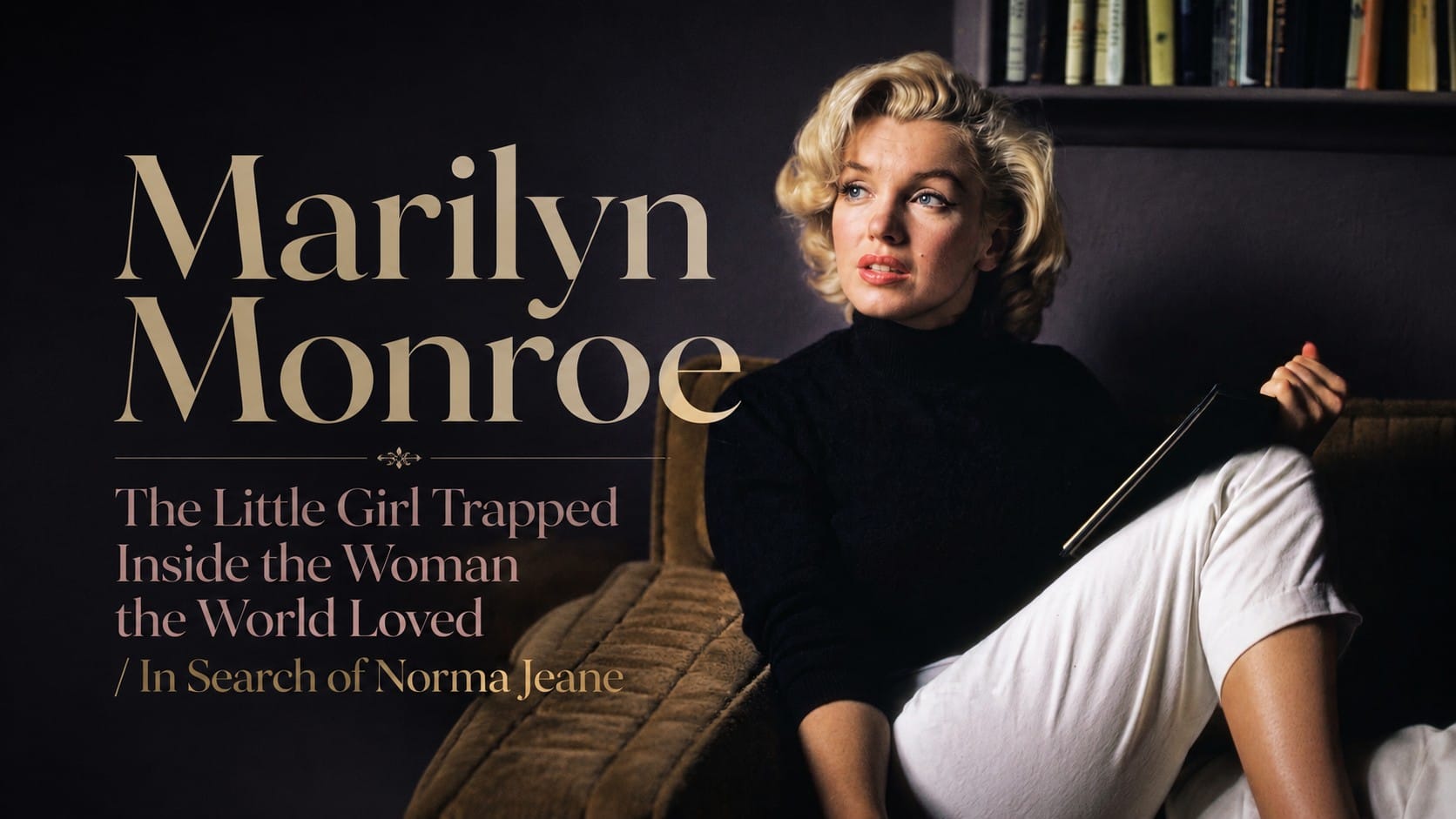
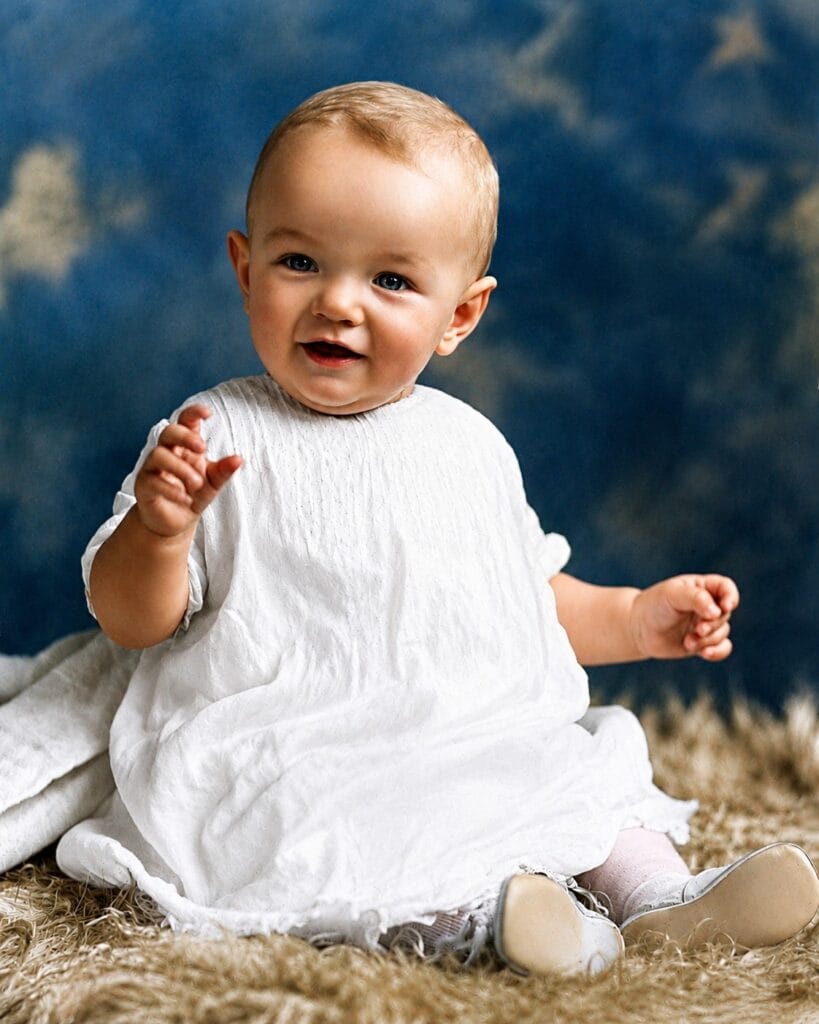
The paperwork the world handed her at birth had a name on it. Norma Jeane Mortenson. But the line for her father’s name was never clear. That blank followed her for the rest of her life. And the girl who started with nothing became one of the most famous women who ever lived.
The world loved Marilyn Monroe. But this isn’t a story about Marilyn Monroe. It’s a story about Norma Jeane. They lived in the same body their entire lives and were never the same person.
Saturday morning, August 4, 1962. A delivery truck pulled up outside her house in Brentwood. New furniture. That night, with the boxes still unopened and standing in her living room, she was gone. She was 36. It had been seven months since she bought that house — the first home she ever owned in her own name.
Her Father Was Never Really There
June 1, 1926. Los Angeles County Hospital. Name: Norma Jeane Mortenson. Mother: Gladys Monroe. The father’s line listed Edward Mortenson — but he had left before Gladys was even pregnant. Whether he was actually her father was never confirmed. A DNA analysis in 2022 pointed to a man named Charles Stanley Gifford. He never met her either.
That blank never went away. Gladys Monroe was admitted to a psychiatric facility not long after Norma Jeane was born. The baby was placed in foster care. Every time she moved to a new family, she had to start over and prove herself from scratch. By the time she was twelve, she was in an orphanage in Los Angeles. She learned early that people leave.
By the time the whole world wanted her, she already knew something most people never figure out. Being wanted and being understood are two completely different things.
In 1955, She Went and Got Her Own Birth Certificate
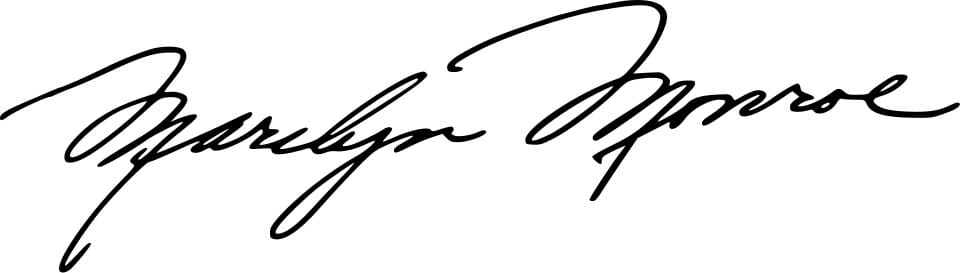
Years had passed since the entire world knew her as Marilyn Monroe. She had already legally changed her name. And yet she walked into the Los Angeles County Department of Public Health and requested an official certified copy of her birth record. Issued October 24, 1955. Three words in the name field. NORMA — JEANE — MORTENSON.
Nobody ever asked her why. The document answers for itself. At a time when the name Marilyn Monroe was everywhere — on posters, in headlines, on everyone’s lips — she pulled out the name Norma Jeane Mortenson and kept it somewhere safe. She didn’t throw it away. Maybe she just needed to hold the name she was born with one more time.
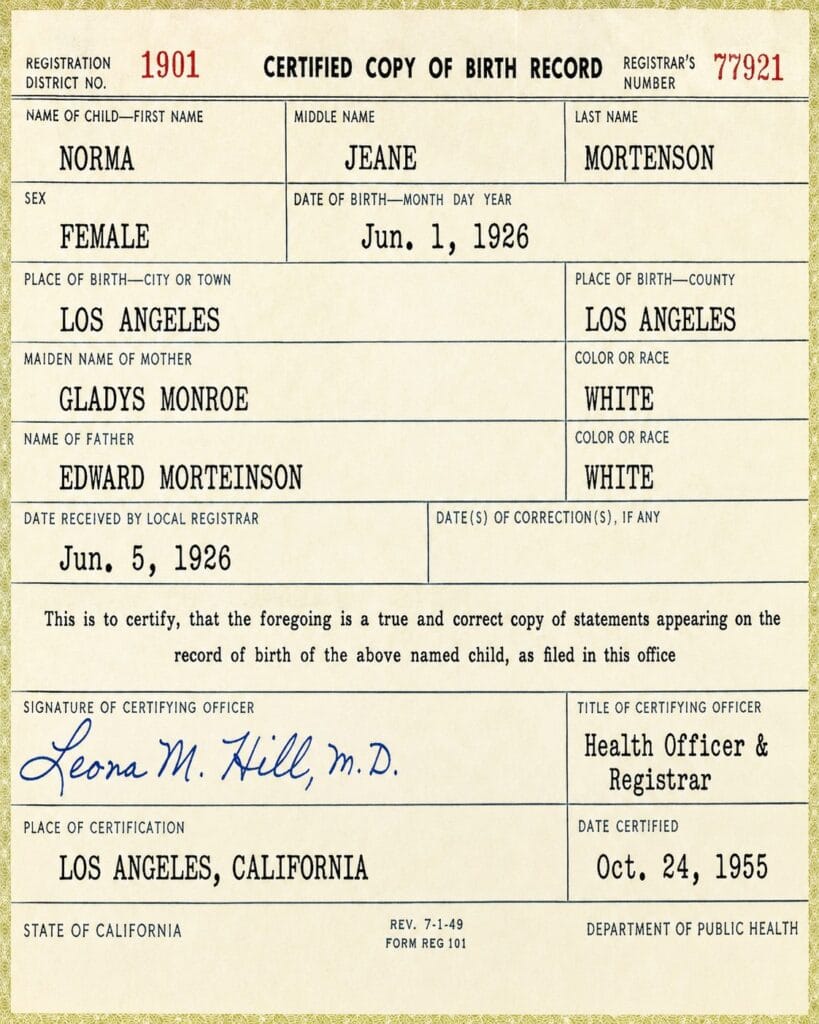
That document ended up in the Julien’s Auctions estate sale after she died. Somewhere in the pile of things the world sorted through and put price tags on, there was this single piece of paper. The one she had kept quieter and closer than almost anything else.
The Apartment Behind the Camera Had Plato and Freud on the Shelves
The world gave her a label. Dumb blonde. Sex symbol. The studios wanted it. The ads wanted it. The cameras wanted it. She gave them the pose. And the more she did, the further the real her got buried.
When people went through her things after she died, they opened the bookcase. More than 430 books. James Joyce’s Ulysses — one of the most difficult novels ever written. Plato’s Republic. Aristotle’s Metaphysics. Sigmund Freud’s psychology texts. They weren’t just sitting there for show. The margins were full of her handwriting. Underlines. Notes. Thoughts. All of it documented in the official estate catalogue from Christie’s auction in 1999.
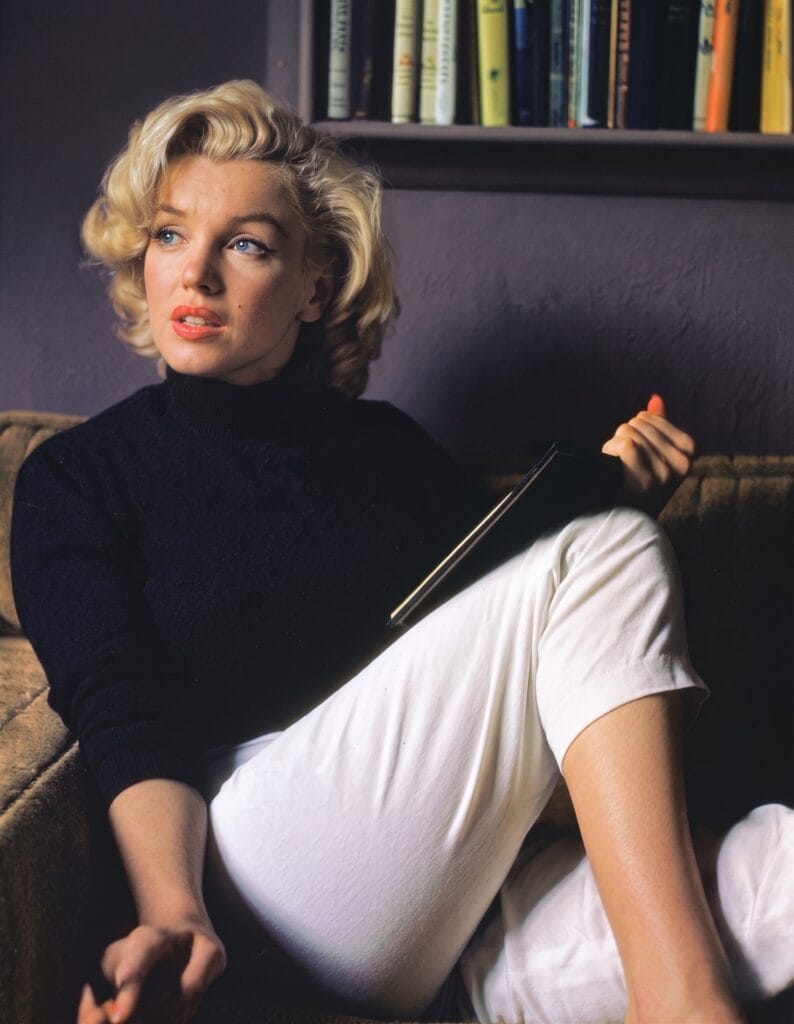
Her handwritten notes survived in a book published in 2010 — Fragments: Poems, Intimate Notes, Letters. One of them reads: “I have too often betrayed my own soul. If I had an acting ability, I’ve proved it can suffer.” And then there’s another note, just three words on a page. “Help. Help. Help.” During the day she was Marilyn in front of the camera. At night she was Norma Jeane writing things like that. Both of them living in the same body.
The Night a Black Woman Couldn’t Get on Stage, Marilyn Made a Phone Call
Sometime in the 1950s, a Las Vegas nightclub refused to book Ella Fitzgerald. The reason was simple and ugly: she was Black. One of the greatest voices in the history of jazz couldn’t get a stage because of the color of her skin.
Marilyn Monroe called the club herself. She made them an offer. Book Ella Fitzgerald, and she would personally sit in the front row every single night of the run. The club couldn’t say no. The show happened. Ella Fitzgerald thanked her publicly afterward.
No publicist set this up. There was no contract. The studio didn’t tell her to do it. Norma Jeane just did it. Not in front of a camera. When nobody was watching.
13,000 Soldiers, and for the First Time She Didn’t Feel Alone
February 1954. Korea. She had just gotten back from her honeymoon. She got on the plane alone. Joe DiMaggio didn’t go with her. When she stepped off the helicopter, she was wearing a thin purple sequined dress. It was below freezing. Someone handed her an army parka. She wore it until she walked on stage. Then she took it off.
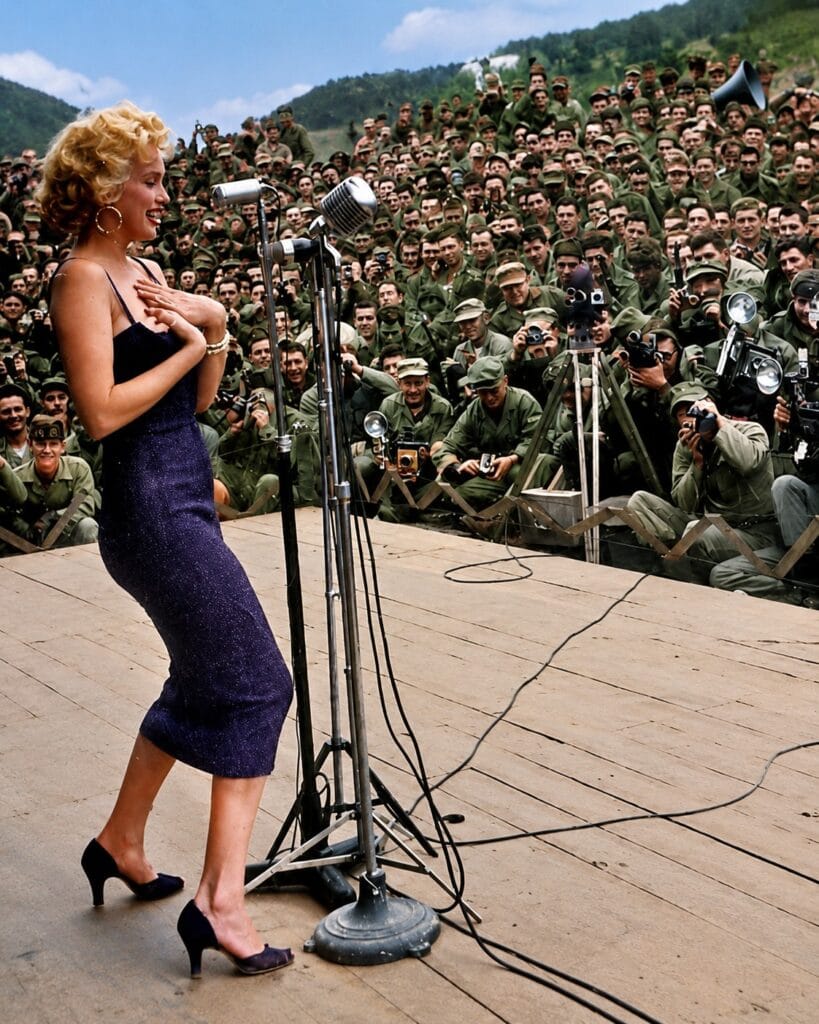
More than 13,000 soldiers packed into that hillside to see her. That moment is frozen in photographs held by the U.S. National Archives. She later called it one of the happiest moments of her life. Which is a strange thing to say. Why would standing in the middle of 13,000 screaming strangers be the happiest moment?
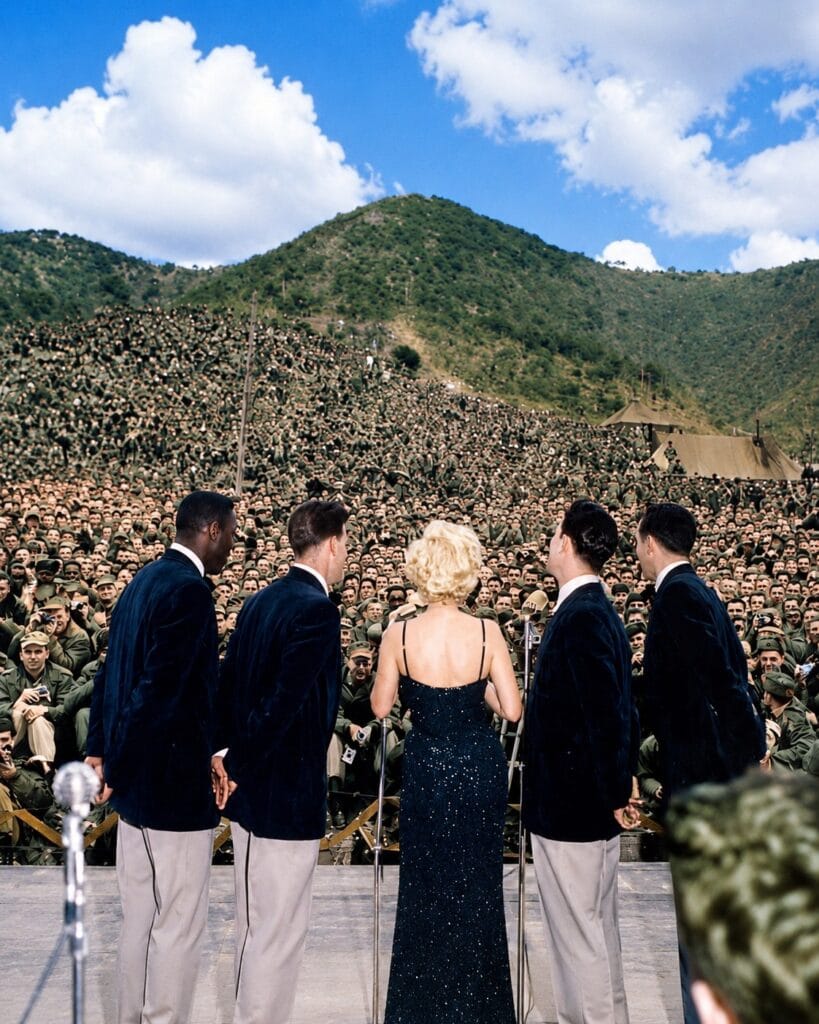
One account gives the answer. “For the first time in my life I felt no one would hurt me. I felt safe.” She had been carrying fear since she was a child. People who left. Foster families with unfamiliar faces. But these soldiers were different. They weren’t there because a studio told them to be. They just wanted to hear someone sing. For the first time, she felt like a person on that stage — not a character. Not a symbol. A person.
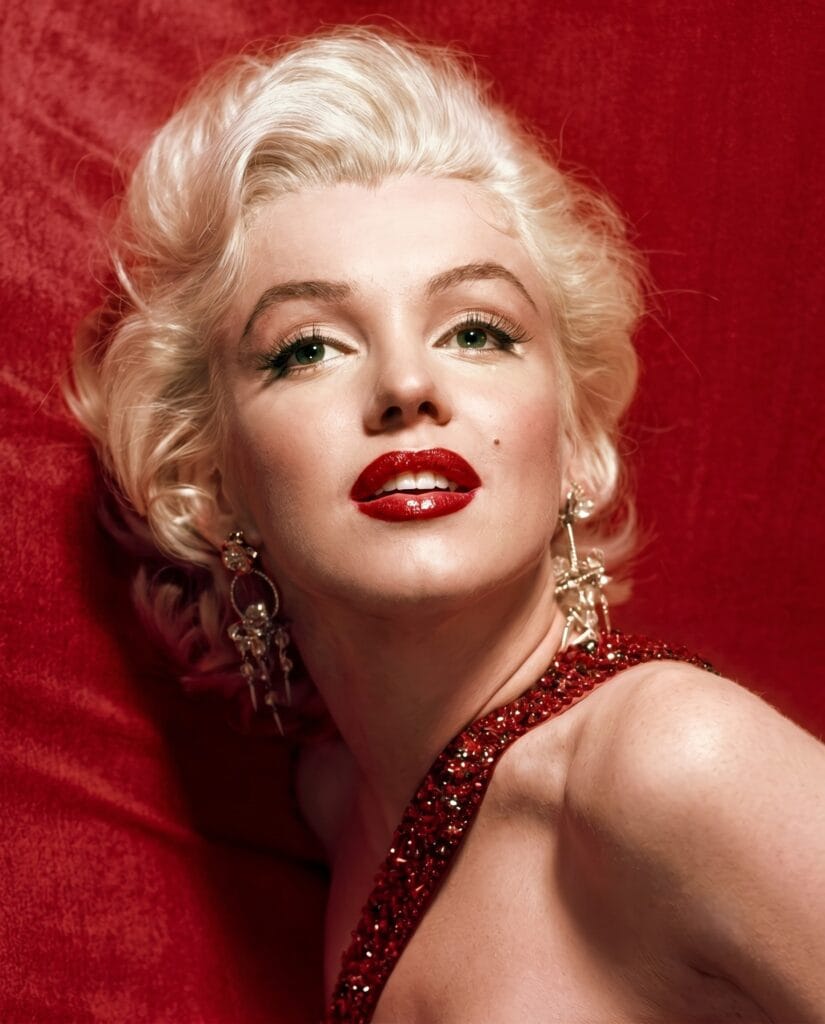
The Man She Thought Finally Understood Her Had a Notebook
1955. A subway grate on Lexington Avenue in New York City. A white dress flying up in the wind. The image the whole world pictures when they think of Marilyn Monroe. That one.
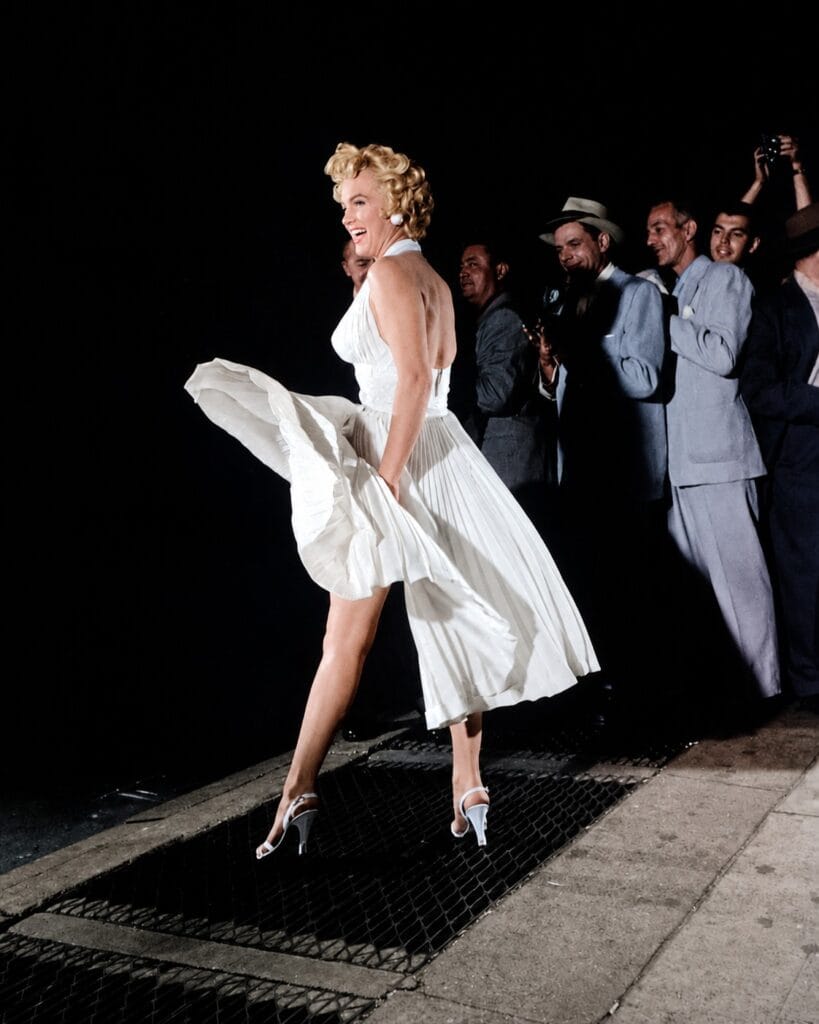
Her husband Joe DiMaggio was standing right next to her when it was taken. His face was stone cold. They divorced not long after. The photo the world loves most was the moment her marriage ended. What was going through Norma Jeane’s head never made it into the frame.
In 1956 she married Arthur Miller — one of the most respected playwrights of the era. People were shocked. The sex symbol and the intellectual. But for her it made complete sense. She thought she had finally found someone who would see her as a real person.
Then one day on set she opened his notebook by accident. She found something he had written. The gist of it: she was like a child, and he thought he had made a mistake. She didn’t know what he felt when she read it. What we do know is that it came from the one person she believed would understand her most.
After that, she leaned harder on sleeping pills. She had a miscarriage. She kept forgetting her lines on set. The industry called her unreliable. But through all of it, she kept filling notebooks. Pages and pages of writing, trying to figure out her own pain.
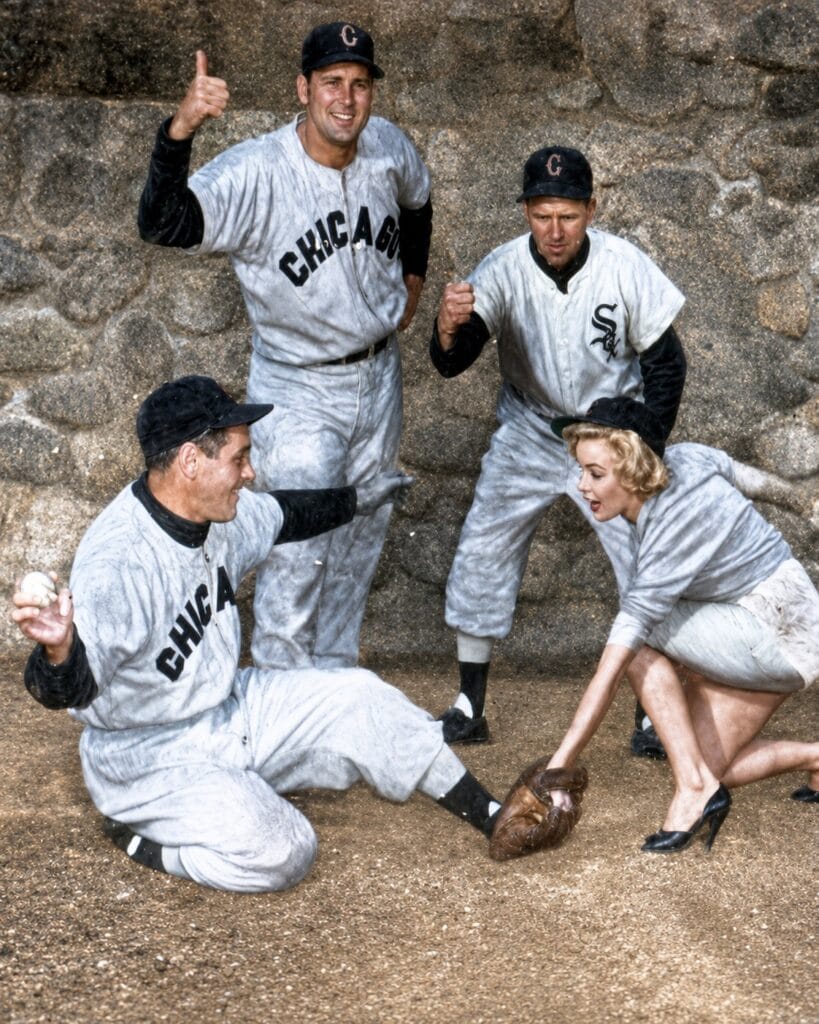
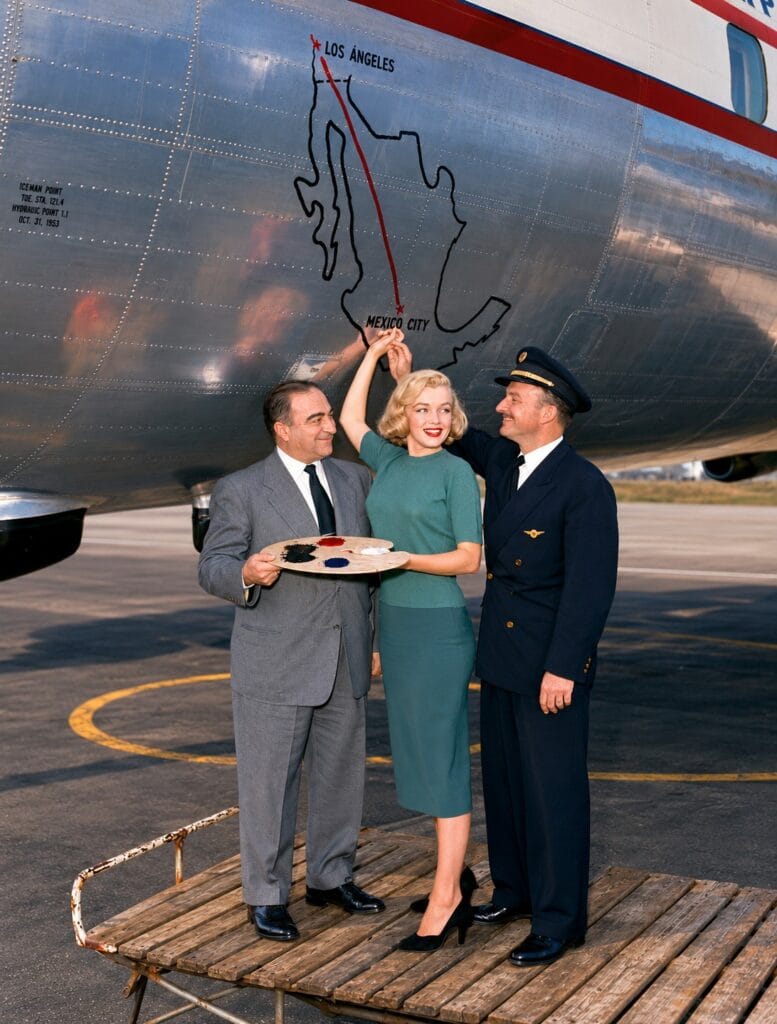
Airline promotions. Photos with baseball players. Magazine covers. In every single one, Marilyn is smiling. Nobody ever asked what Norma Jeane was doing behind that smile.
The Old Poet — The Closest Thing to a Father She Ever Found
The last two years of her life, she was surrounded by enemies. She was suing the studio. Her marriage had collapsed. The person she turned to most during that time wasn’t a young man. It was an eighty-year-old poet who had won the Pulitzer Prize three times. Carl Sandburg.
Sandburg said of her: “She has a kind of humor and a kind of wisdom which is uncommon in show business.” He gave her a copy of his poems with a personal inscription. They would sit in her New York apartment and talk for hours.
One day she showed up three hours late. Sandburg asked why. She said she had been at the salon. He looked closer. Her hair was different. Much lighter than her usual platinum blonde. Almost the same color as Sandburg’s pure white hair. Photographer Len Steckler was there and captured it. He kept those photos locked in a vault for 45 years before releasing them in 2010.
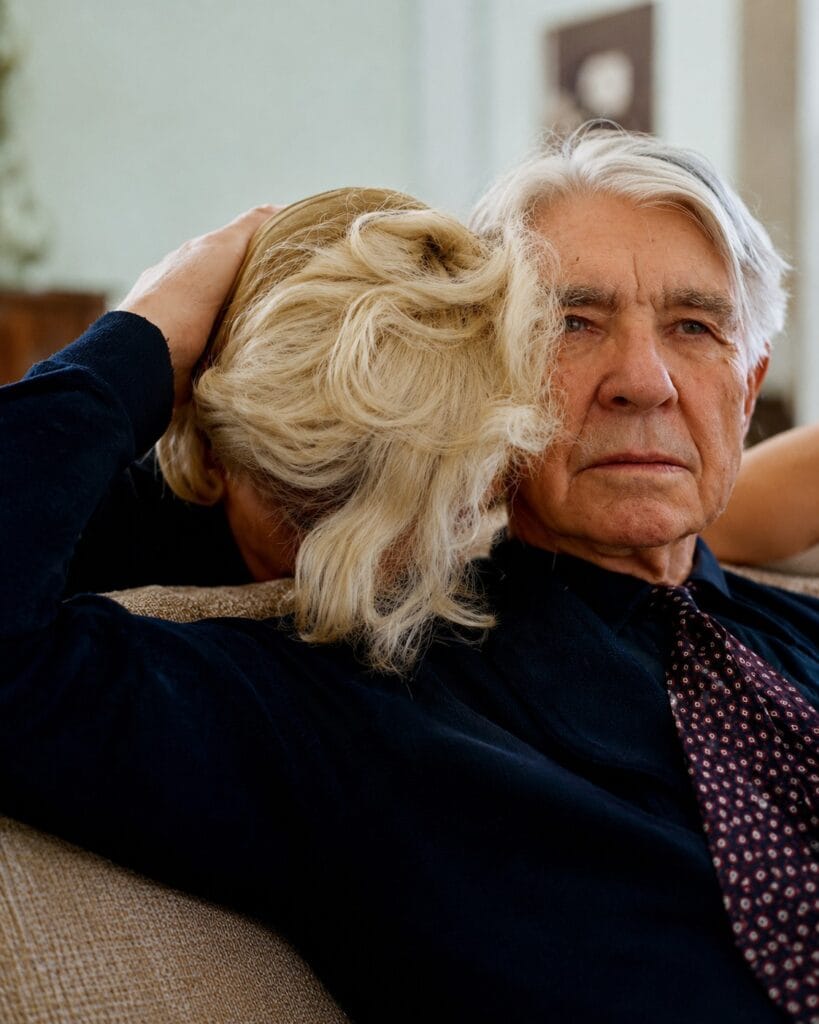
Carl Sandburg may have been something she had been looking for her whole life. She showed up three hours late, sat down next to an old man, and her hair was almost the same shade as his. Much lighter than her usual platinum blonde.
She Bought Her First House. She Had to Borrow the Down Payment.
January 1962. Brentwood, Los Angeles. 12305 Fifth Helena Drive. A single-story Spanish-style house with a swimming pool. The first home she ever bought in her own name.

The house cost $77,500. And despite being one of the highest-paid actresses in Hollywood, her bank account was nearly empty. Lawsuits and contract disputes with 20th Century Fox had drained everything. She had to take out a loan just to cover the $7,750 down payment. The most famous woman in the world had to borrow money to buy her first home. That’s in the Los Angeles Probate Court records — File #458-935.
She started decorating it herself. She traveled through markets in Mexico picking out hand-painted tiles one by one for the kitchen and bathrooms. The Julien’s Auctions catalogue notes: “Marilyn went to Mexico and picked these hand painted tiles out. It was one of her favorite places and she enjoyed the quiet country life.”
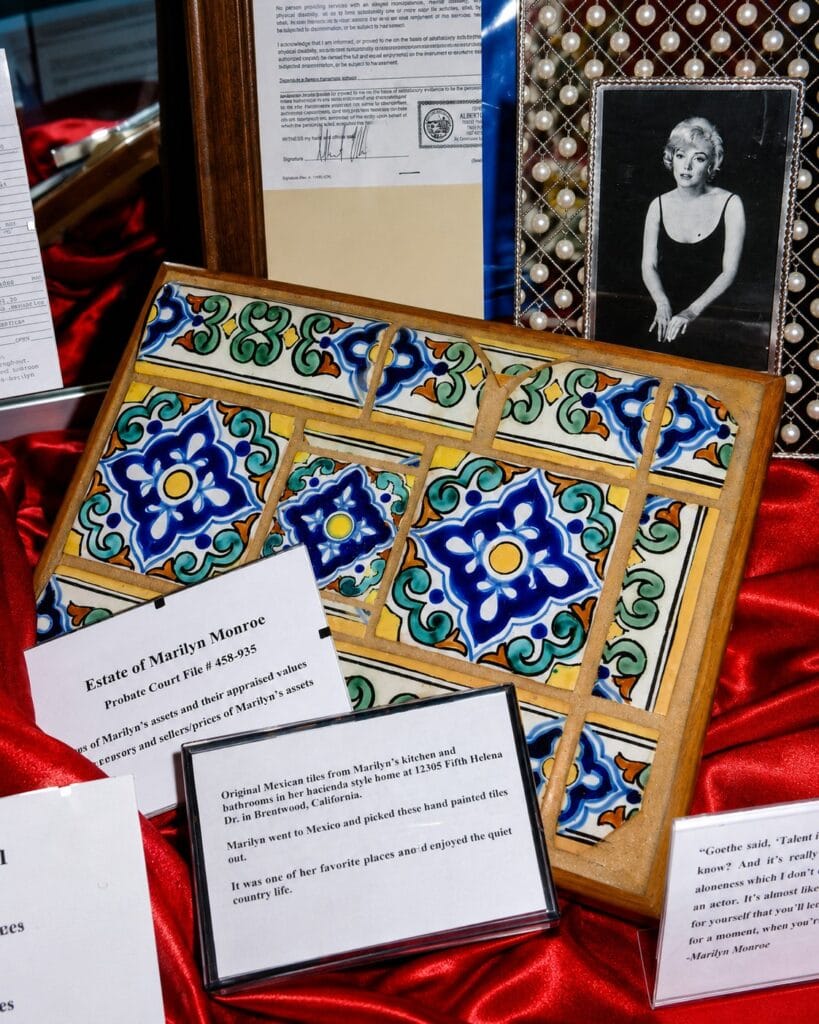
Above the entrance, there was a tile with Latin words already fixed to the wall by a previous owner: Cursum Perficio. It means “I complete my journey.” She left it there. People later tried to read it as a sign. But on the morning she died, she was still waiting for furniture to be delivered.
One Month Before She Died, She Said She Had So Much Left to Do
June 1962. About a month before she died. Life Magazine editor Richard Meryman sat with her in that Brentwood house for what would be her last interview. She talked about the future. New work she wanted to do. Plans she had. “There’s so much I want to do,” she said. That’s who showed up to that interview.
Then came July. A few weeks before she died. Santa Monica Beach. Photographer George Barris pressed the shutter. It was a quiet shoot. Barris wasn’t just a photographer — he was working on her autobiography with her. He was one of the few people actually listening to her story.
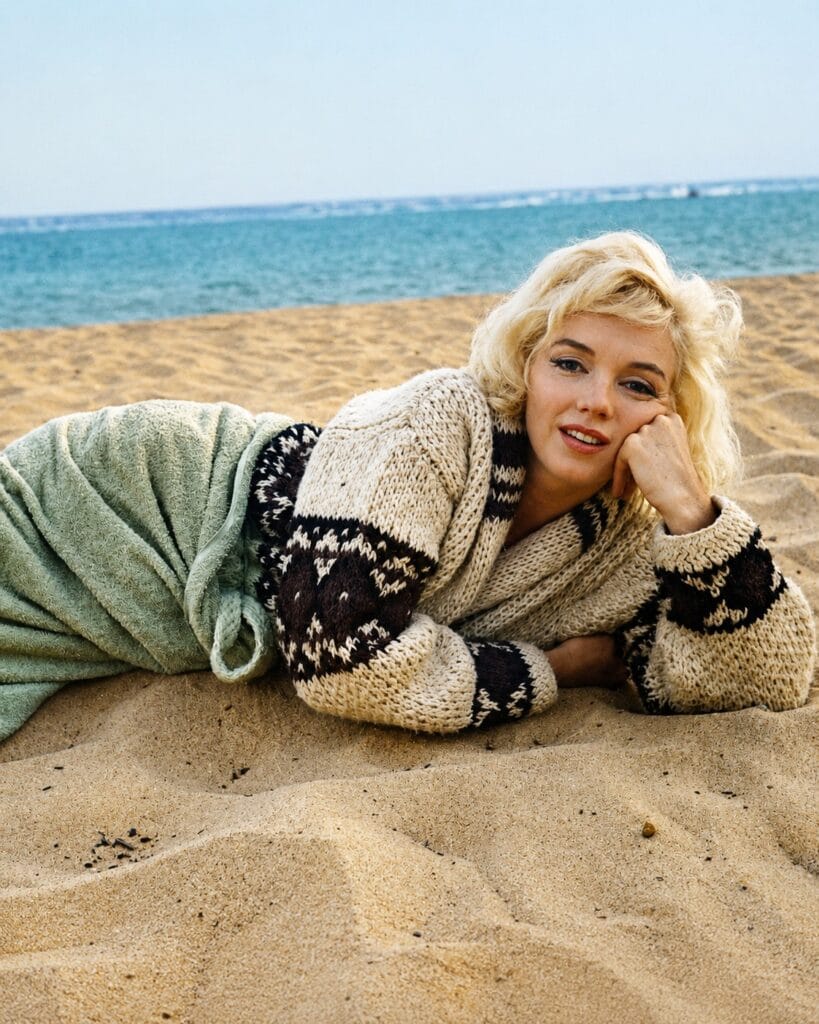
That day she wore almost no makeup. She lay face-down in the sand in a thick knit sweater. Her freckles showed. No studio lighting. No poses. And she looked at the camera and said, “This is the real me.” You can see it. Something in that look is more Norma Jeane than anything else she ever photographed.
Barris refused to publish those photos for decades. Turned down huge offers. He kept them away from the world for a long time. They weren’t released until the 21st century.
Saturday morning, August 4, 1962. The delivery truck arrived. Mirrors and dressers, custom-ordered from Mexico. They were still boxed up, standing in the room. People close to both of them said she and Joe DiMaggio had been planning to remarry the following week. Those boxes may have been part of that plan — furniture for a life she was about to start over.
Before midnight that night, Norma Jeane Mortenson was gone. Thirty-six years old. Seven months after she bought the only home she ever owned.
After She Died, the World Loved Her Even More — That’s the Problem
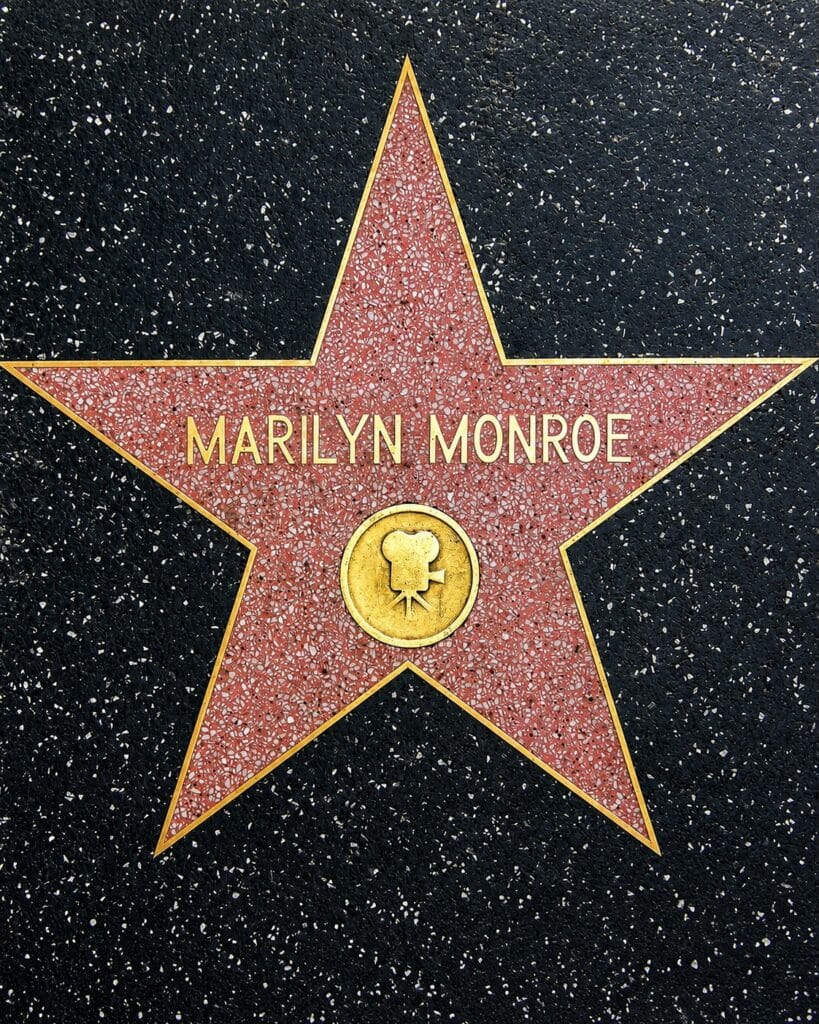
The world loved her more after she was gone. That’s the most uncomfortable part of this story. A star went up on the Hollywood Walk of Fame.
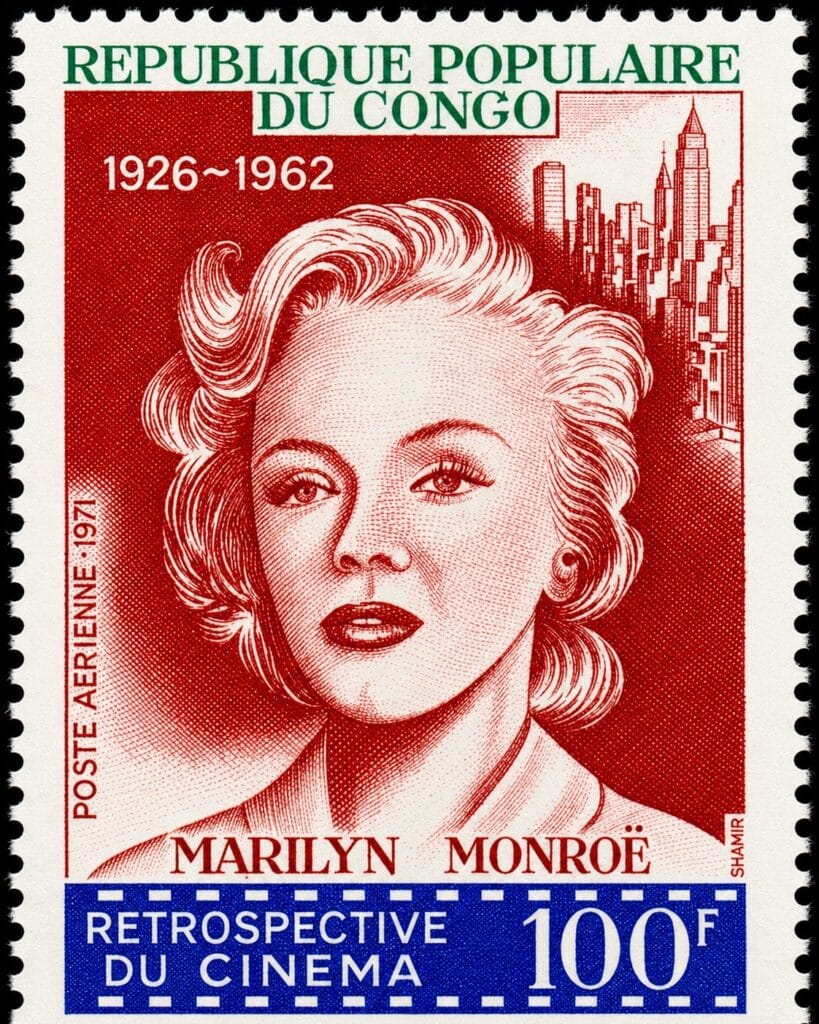
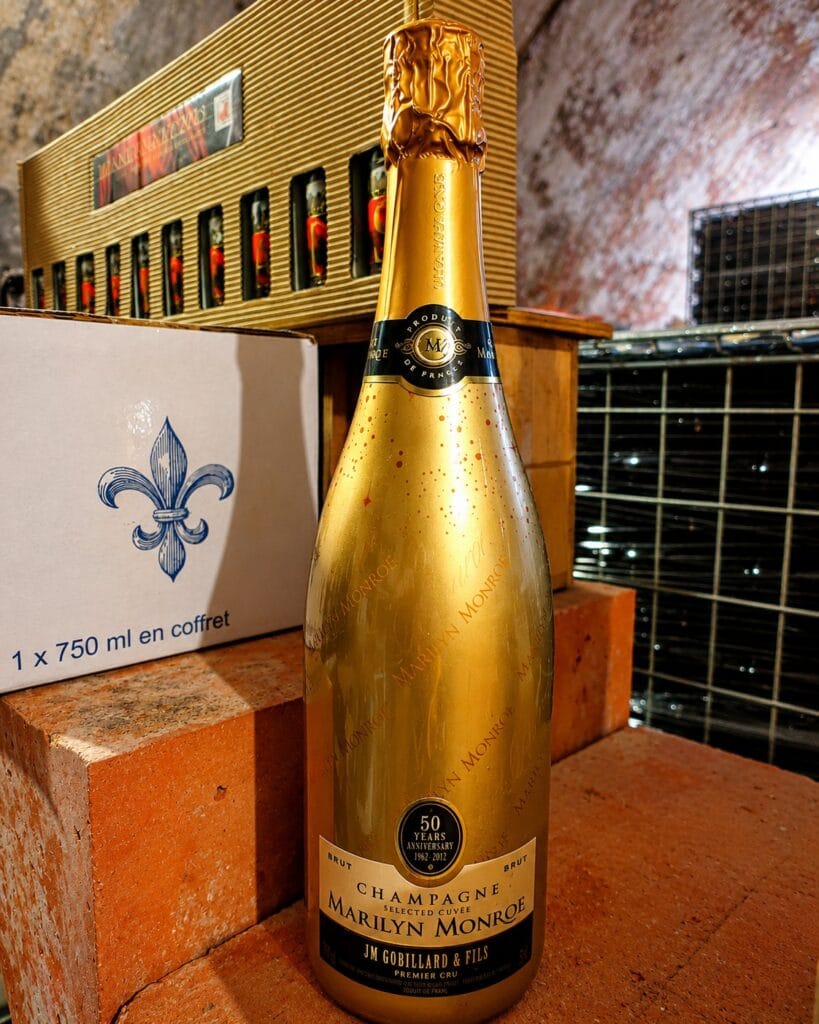
The Republic of Congo issued a postage stamp with her face on it in 1971. The word printed across it: “RETROSPECTIVE DU CINEMA.” Marilyn Monroe perfume. Marilyn Monroe champagne. Marilyn Monroe T-shirts.
A hybrid tea rose was even bred and named after her. Soft peach color. Beautiful. But that rose only borrowed her name. The woman who filled 430 book margins with her own handwriting — Norma Jeane Mortenson — never had a rose named for her.

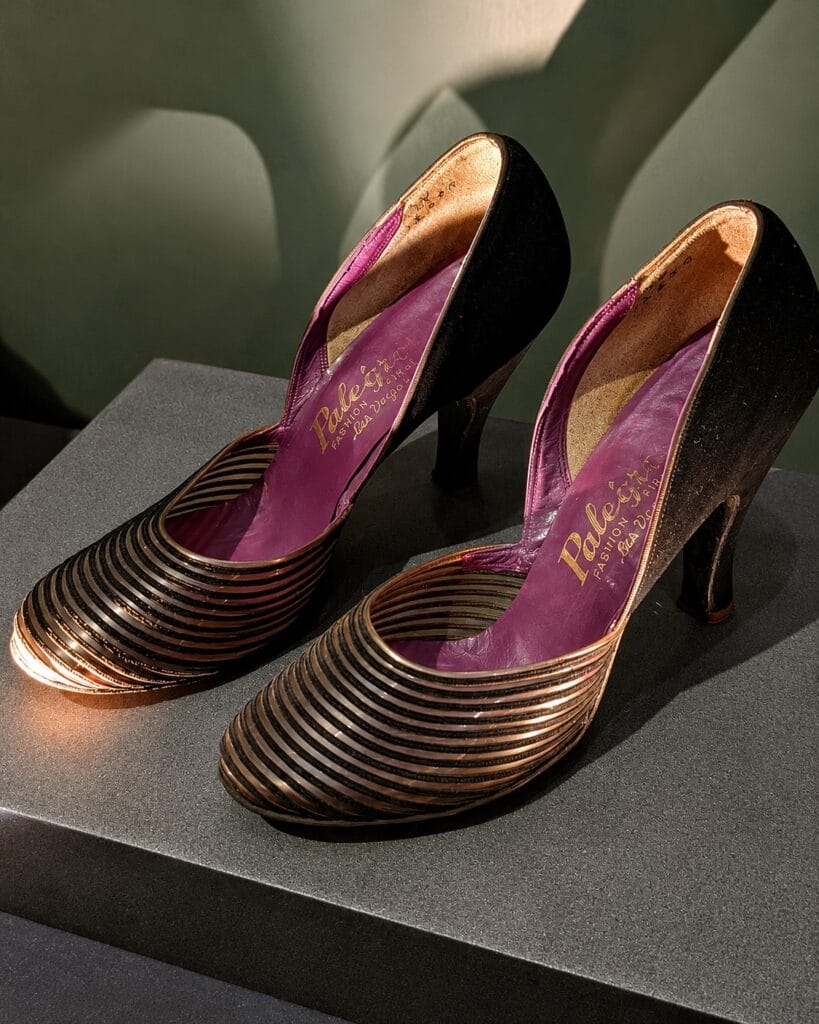
Her personal shoes have her initials stamped on the sole. MM. Even inside a pair of shoes, there’s only room for Marilyn. Norma Jeane’s name doesn’t fit.
Westwood Village Memorial Park Cemetery. Corridor of Memories. Crypt 24. The marble is covered in lipstick marks left by visitors over the decades. The nameplate reads MARILYN MONROE. 1926 — 1962.
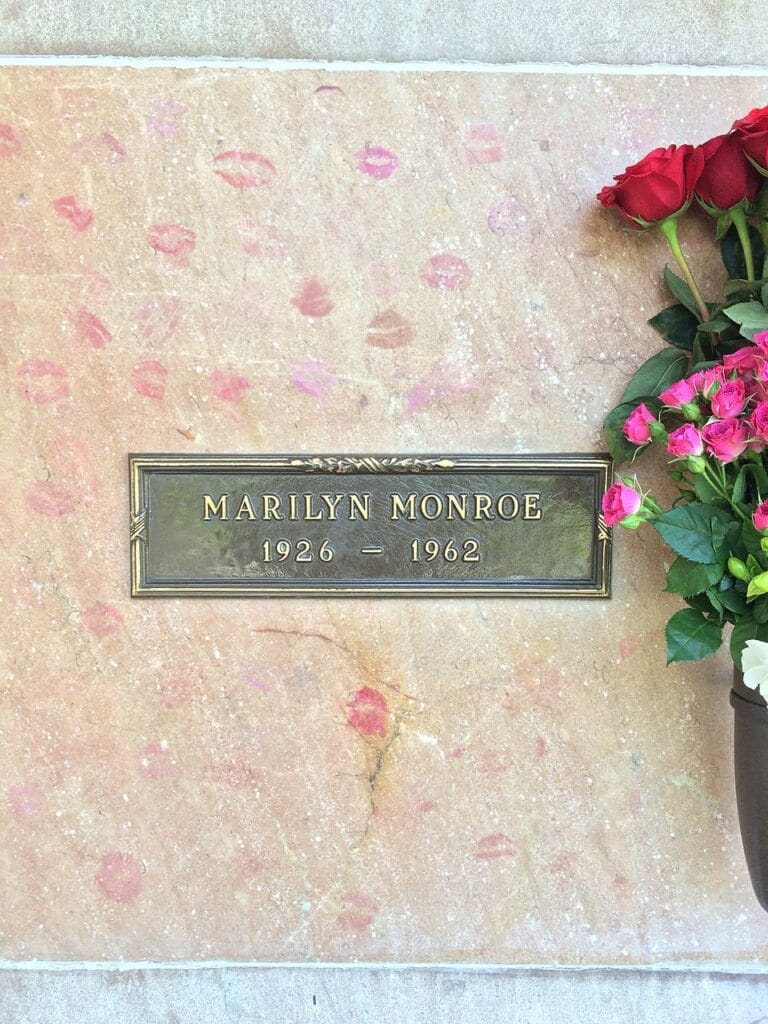
The name Norma Jeane Mortenson isn’t there. The girl who was born with a blank where her father’s name should have been was buried under a different name. Somewhere in between, the real Norma Jeane lived. In the eyes of a woman lying in the sand saying “this is the real me.” In a note that just said “Help. Help. Help.” In a salon chair, getting her hair bleached a little lighter so it matched an old poet’s white hair. In hand-painted tiles she picked out herself in a Mexican market. In a room with unopened boxes of furniture standing in the dark.
One question. If the world loved her this much, for this long, why did Norma Jeane never stop being alone? Maybe the answer is that the world didn’t actually love her. It loved the image it built out of her. And that’s not a story that only belongs to Marilyn Monroe. It’s a story that Michael Jackson lived too — a man who spent his whole career trying to survive the distance between what the world wanted from him and who he actually was. Maybe history always holds onto its most human truths the longest before letting them go. The way it did with Fridtjof Nansen, who gave everything away and left nothing in the bank.
Archive Notes
What is the legal difference between Norma Jeane Mortenson and Marilyn Monroe?
Norma Jeane Mortenson was the name registered at her birth on June 1, 1926. Edward Mortenson was listed as the father, but his paternity was never confirmed. A 2022 DNA analysis suggested Charles Stanley Gifford was the more likely biological father. She legally changed her name to Marilyn Monroe in 1956 before marrying Arthur Miller, following her conversion to Judaism. But in 1955, she had already requested and kept an official certified copy of her original birth certificate.
How big was the Korea USO tour?
The tour ran from February 16 to 19, 1954, covering multiple units including the 1st Marine Division. The largest single performance drew an estimated 13,000 troops. She flew to Korea alone immediately after her honeymoon — Joe DiMaggio did not join her. She performed in freezing temperatures in a thin sequined dress. Photographs from the tour are officially archived at the U.S. National Archives and Records Administration.
What was actually in her personal library?
The official estate catalogue from Christie’s 1999 auction listed over 430 books from her personal collection. These included James Joyce’s Ulysses, Plato’s Republic, Aristotle’s Metaphysics, Freud’s psychology texts, and works by Dostoyevsky, Walt Whitman, and Thomas Wolfe. Many of the books had her personal annotations and underlines written directly in the margins.
What You Now Know
The world remembers how Marilyn Monroe died. What we should remember is what was standing in her living room that morning. Mirrors and dressers from Mexico, still in their boxes. She wasn’t preparing for an ending. She was setting up a life she was about to start over. Norma Jeane was still there, right until the end.
Tip For Readers
Her handwritten notes, poems, and letters are collected in Fragments: Poems, Intimate Notes, Letters, edited by Bernard Comment (2010). Estate auction records from the Brentwood house are available through the Julien’s Auctions archive, and the 1999 personal property catalogue is searchable through Christie’s.
Verified Sources
Los Angeles County Department of Public Health — Birth and Vital Records
U.S. National Archives and Records Administration (NARA)
City of Los Angeles Historic-Cultural Heritage Records
Julien’s Auctions — Marilyn Monroe Estate and Property Records
Christie’s — The Personal Property of Marilyn Monroe (Auction Catalogue)
Life Magazine Archives and Contemporary Interviews
Bernard Comment (ed.), Fragments: Poems, Intimate Notes, Letters (2010)
Len Steckler Photographic Collection — The Visit Series
Public-domain archival materials and historical image collections
Wikimedia Commons (used as an access repository for selected public-domain archival images)
Image Credits & Restoration Note
Some historical photographs used in this article were obtained through public-domain archival repositories, including Wikimedia Commons and other archival collections.
Several images have been digitally restored, colorized, enhanced, cropped, or reformatted for editorial presentation by FramedTruth while preserving the historical content of the original photographs.
All original copyrights and archival attributions remain with their respective rights holders where applicable.