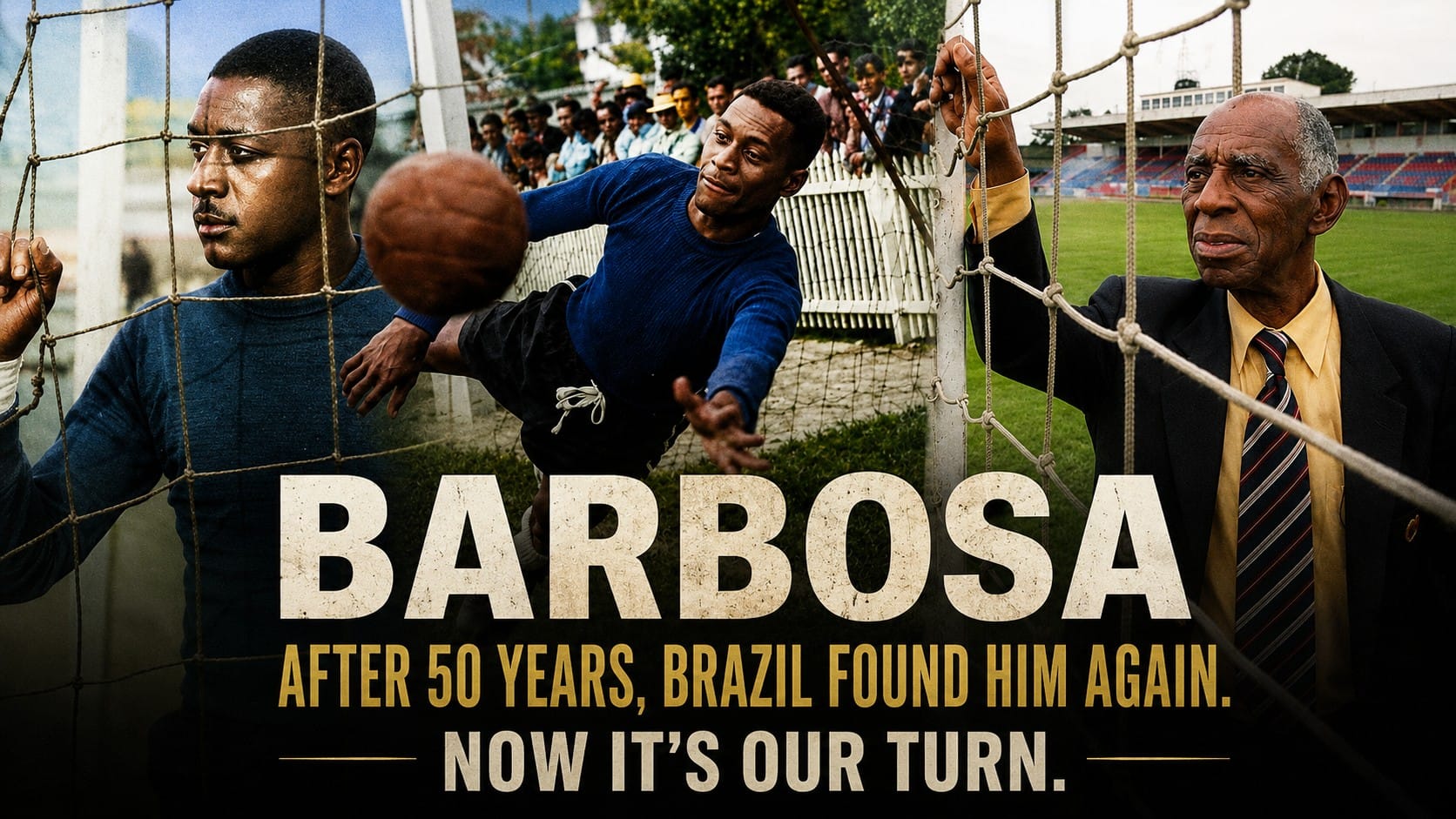
He never wore gloves. Not once. His whole career. He said he needed to feel the ball with his bare hands. He stopped tens of thousands of shots that way. But the one shot Brazil remembers — is the one that got through.
July 16, 1950. Uruguay 2, Brazil 1. From that day on, Moacyr Barbosa never escaped that moment. Brazil wouldn’t let him.
This isn’t a soccer story. It’s the story of a country that put fifty years of blame on one man — and a woman with no legal ties who finally changed that.
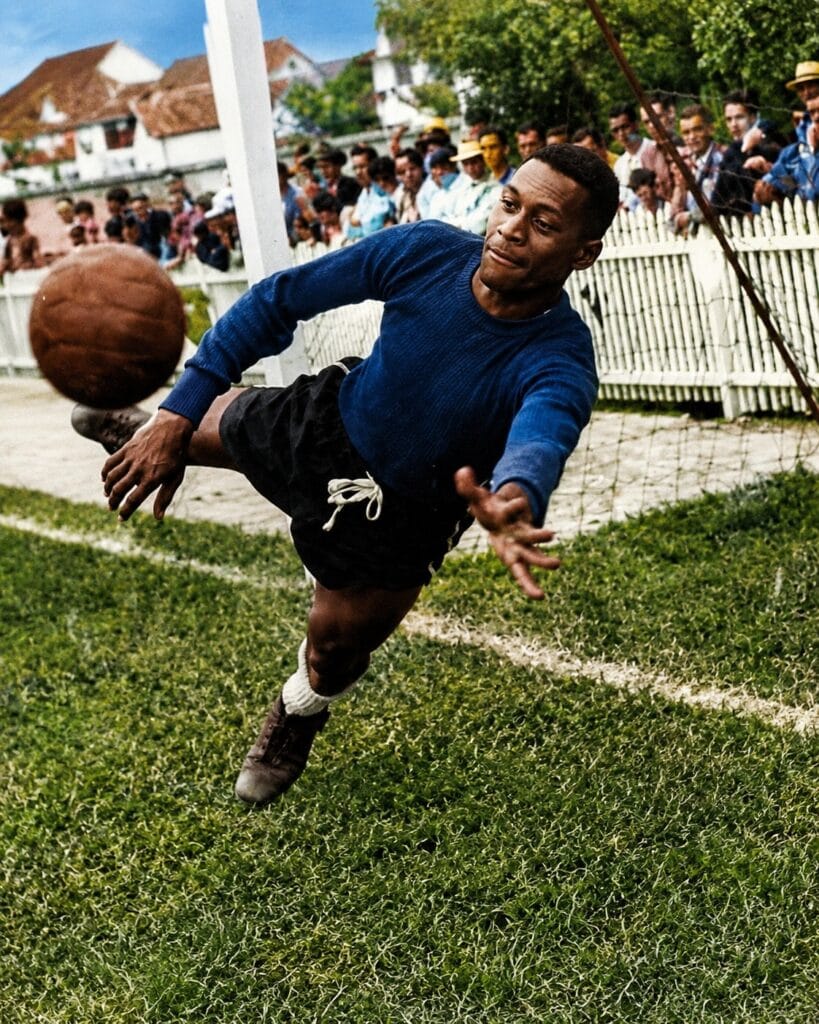
He Was Never Supposed to Be a Goalkeeper
March 27, 1921. Campinas, São Paulo state. Fifth child of Emídio and Isaura. Eleven siblings. Their address: 27 Major Solon Street. His father made a deal with him. “Good grades, you get to play.” Barbosa was out in the streets kicking a ball barefoot from the age of seven.
In 1935, his father Emídio was working on a farm when a horse kicked him. He died. Barbosa was fourteen. His brother Mário had already died at twenty — a freak accident in a local street game. Another brother died at fourteen. Two brothers gone before his father. Barbosa dropped out of school and moved to São Paulo to live with his older sister.
His first job was washing medicine bottles at a biology lab — the Laboratório Paulista de Biologia. Hundreds of bottles a day. He worked his way up to “head of the medicinal wine department.” In the afternoons, he played for the lab’s amateur soccer team. His position was right winger.
One day, the team’s goalkeeper didn’t show up. His brother-in-law — who coached a local team called Almirante Tamandaré — pointed at him. “Go stand in goal. I think you’ve got it.” Barbosa wasn’t sure. He walked in anyway. He never came back out. Forty-something years later, in a 1986 interview, he said: “I started as a winger and ended up in goal. I figured I’d get fewer kicks in the face back there. I was right. It worked from day one. I just kept going up, up, up — all the way to the national team.”
His lab team won the Liga Comercial three years in a row — 1939, 1940, 1941. He was between eighteen and twenty. He got picked for the São Paulo state amateur team. He even signed up for pilot school, but his mother talked him out of it. Word got around. Corinthians — the club with more fans than any other team in Brazilian soccer history — wanted him. So did São Paulo FC. His club, CA Ypiranga, refused to let him go to a local rival.
April 16, 1942. He signed his first professional contract. He was twenty-one. That original contract still exists — framed on the wall at CA Ypiranga. Researchers from the Museu do Futebol confirmed it in person in 2021.
The Best in South America — One Year Before Everything Fell Apart
It was the legendary Domingos da Guia who made the call. “That guy is the best goalkeeper in Brazil.” Vasco da Gama paid a big fee and brought him to Rio. 1945. Twenty-four years old. He broke his hand in training on the first day. Vasco already had six goalkeepers. A journalist who covered him back then wrote: “When he arrived, he was lean, fast, looked more like a striker. He outcompeted two much bigger guys for the starting spot.”
He finally became the starter in 1946. What came next was a record. 431 games. 282 wins. 16 titles. In 1948, he helped Vasco win the South American Club Championship — the competition that became the Copa Libertadores. In the final, he shut out River Plate. Argentina’s Revista River wrote: “Every time Barbosa caught the ball, the crowd cheered him like a champion.”
April 23, 1949. Copa América. Barbosa led Brazil to the title with a 7–0 win over Paraguay in the final. During the tournament, he sat down next to Chilean goalkeeper Sergio Livingstone for a photo. It ran in the Chilean sports magazine Estadio. Both men were considered the best goalkeepers in South America at that point. In the photo, they’re just smiling. It was before 1950.
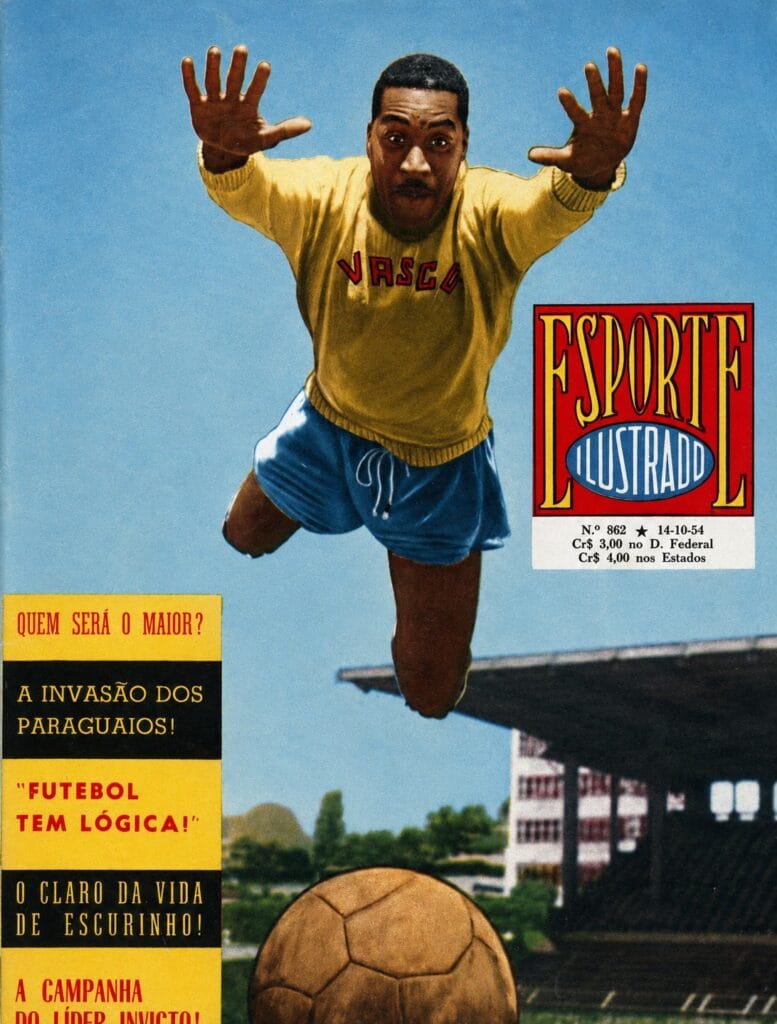
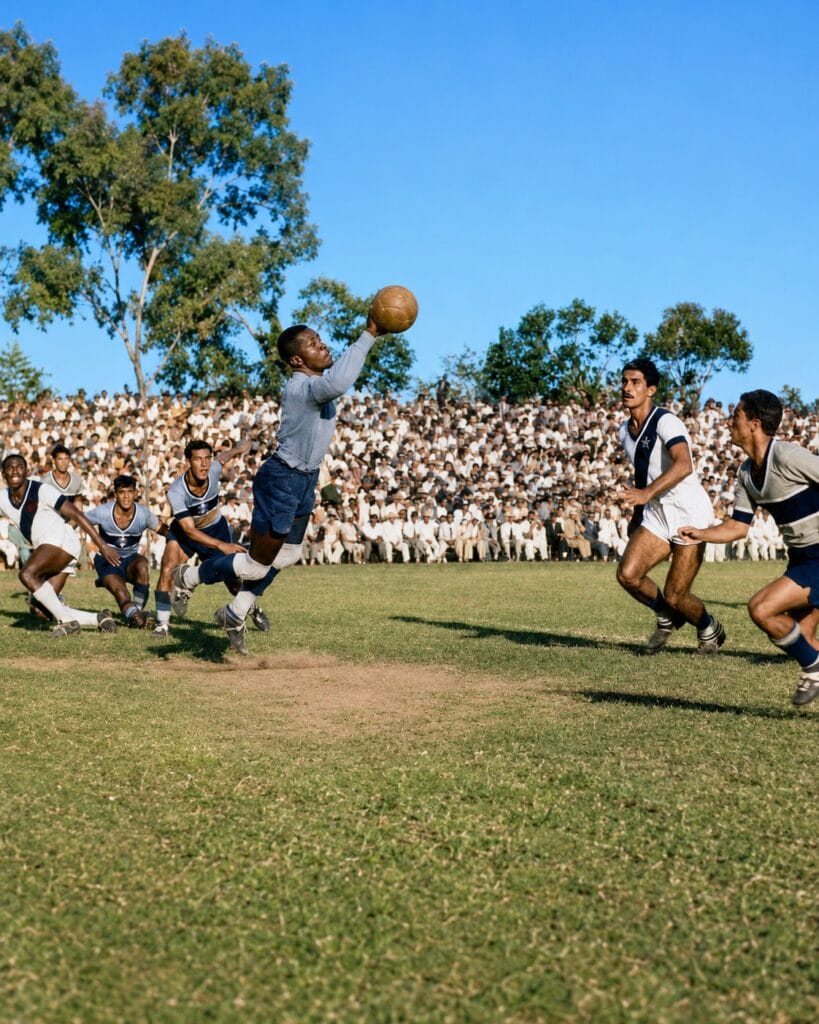
October 1954. The cover of Esporte Ilustrado, one of Brazil’s biggest sports magazines. Barbosa in a Vasco jersey, arms stretched wide, flying through the air. The headline: “Quem Será o Maior?” — Who Will Be the Greatest? Four years after Maracanã, but for Vasco fans, that question didn’t even need an answer.
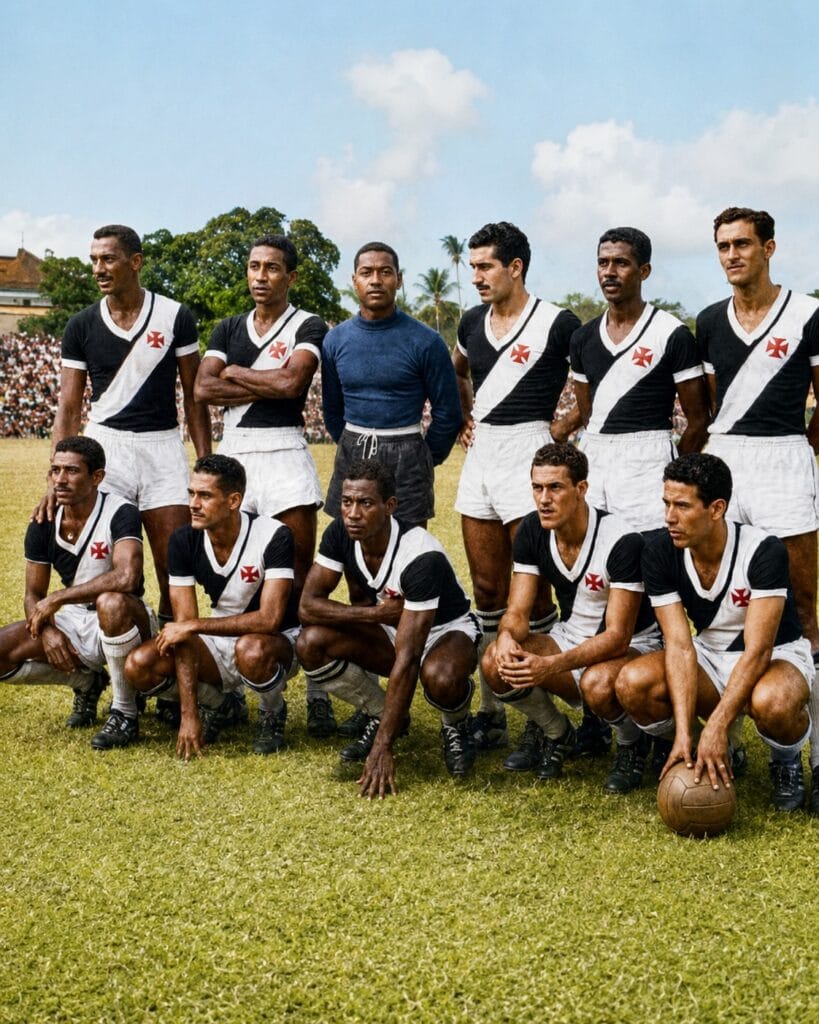
Barbosa stands in the middle of the back row. Goalkeeper jersey. The players around him were the core of what became known as the Expresso da Vitória — the Victory Express — one of the most celebrated club sides in Brazilian soccer history. When this photo was taken, nobody knew it was a picture of the last golden days.
The Newspaper Printed the Champions Before the Game Was Played
The 1950 World Cup was held in Brazil. The Maracanã stadium was built specifically for this tournament. Official capacity: 173,850. Estimated actual attendance for the final match: close to 200,000. Brazil had crushed Sweden 7–1 and Spain 6–1 in the final round. All they needed against Uruguay was a draw. It felt like a done deal.
The morning of the game, Rio daily O Mundo ran a photo of the Brazilian squad on the front page with the headline: “These Are the World Champions.” The game hadn’t started yet. FIFA president Jules Rimet had already written his victory speech — in Portuguese. Gold medals engraved with all 22 players’ names were ready to hand out. The mayor of Rio walked into the locker room before kickoff and told the players: “In a few hours, you will be called champions.”
The night before, Uruguay’s captain Obdulio Varela bought dozens of copies of O Mundo. He spread them across the locker room bathroom floor. He told his teammates to urinate on them. Then, before they walked out, he said: “What’s out there is just concrete. Inside that stadium, it’s only us and them.”
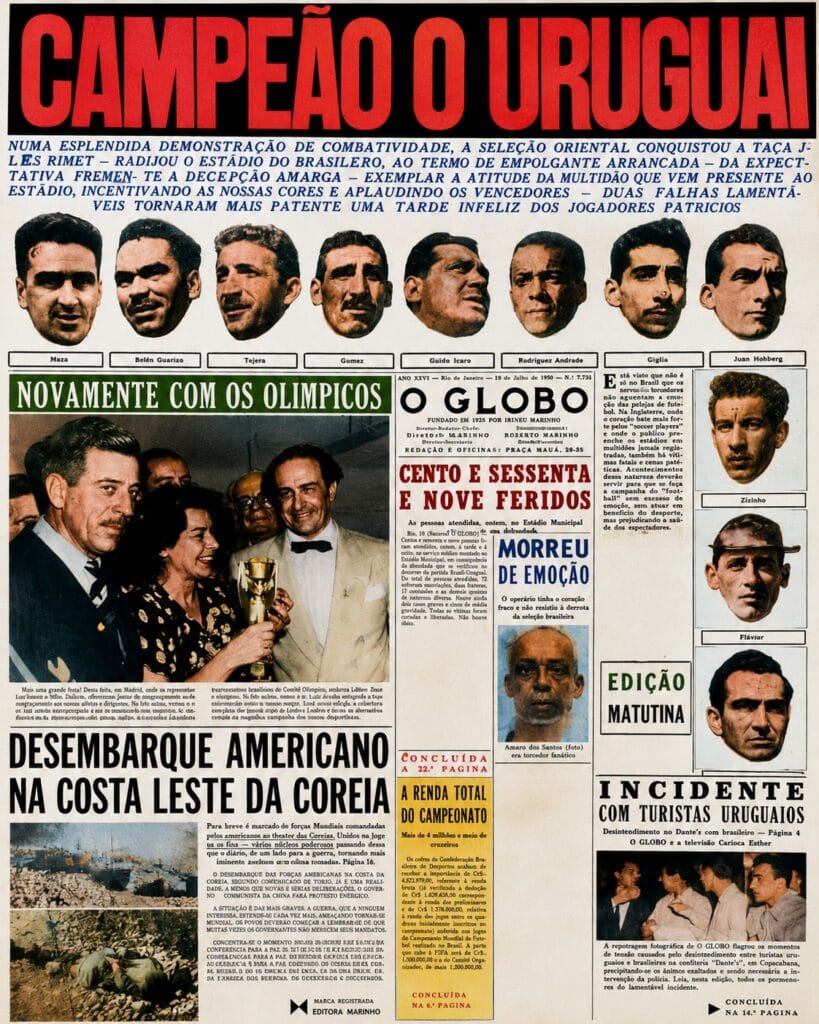
The next morning. O Globo, front page. “CAMPEÃO O URUGUAI.” Uruguay champion. Below that: “169 injured.” Third line: “Died of shock.” One fan died in the stadium. Brazil was not ready for this. Someone had to take the blame.
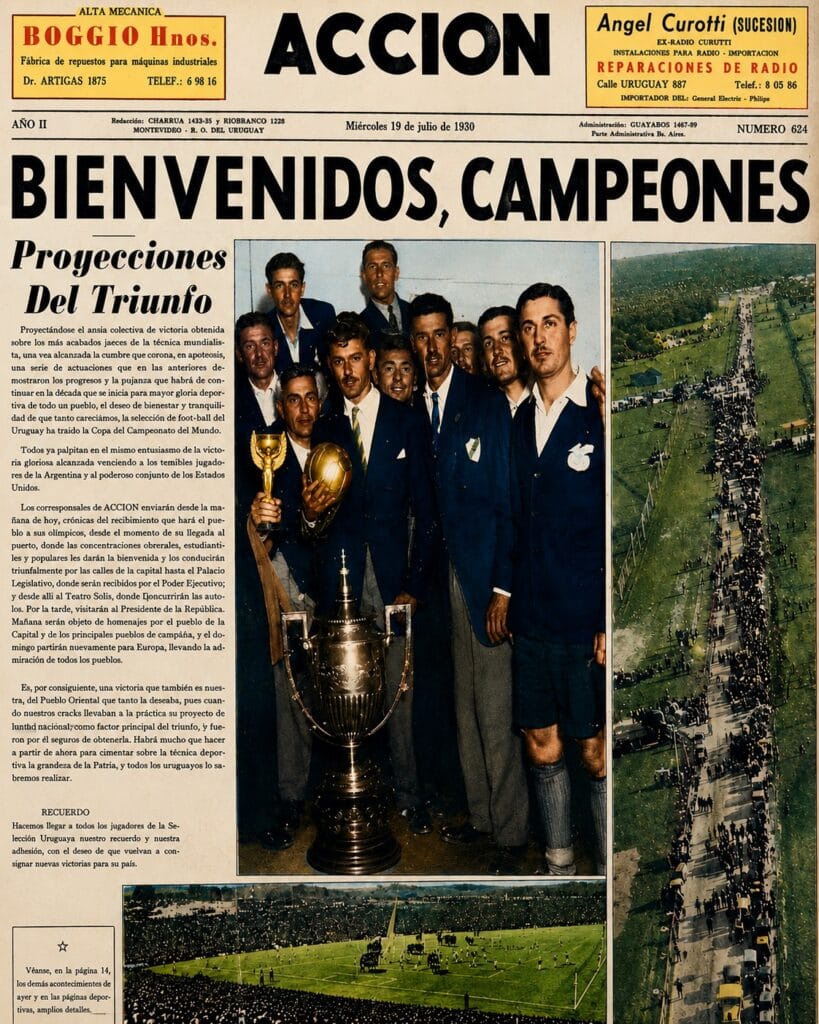
Same day. Montevideo. Uruguay’s Accion newspaper, front page. “BIENVENIDOS, CAMPEONES.” Welcome, champions. The Jules Rimet Trophy is right there in the photo. While Brazil went silent, Uruguay exploded. Two newspapers. Same game. Completely different worlds.
One Step. Fifty Years.
66th minute. Uruguay’s Alcides Ghiggia broke down the right side and crossed to Juan Alberto Schiaffino, who pulled it back to 1–1. Barbosa locked that moment in his eyes.
79th minute. Ghiggia came down the exact same line. Barbosa read it. Cross again. He stepped forward. Ghiggia shot instead — low and tight to the near post. Barbosa’s bare hand grazed the ball. It went in. The stadium stopped.
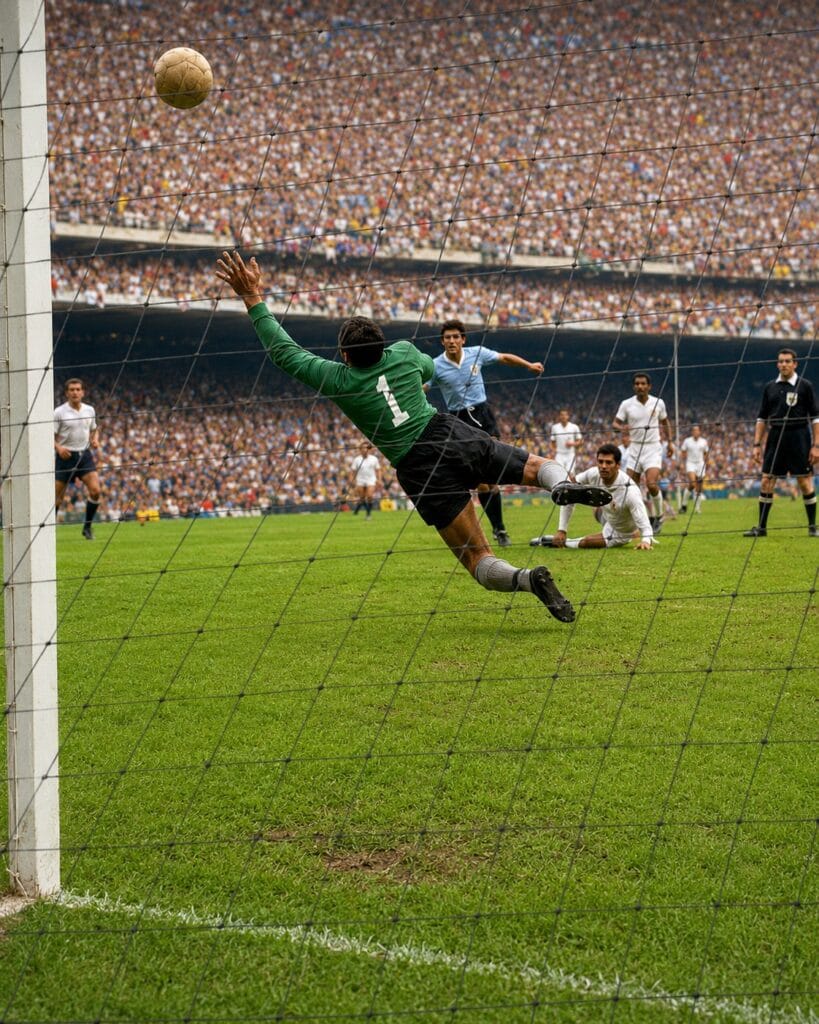
When this photo was taken, nearly 200,000 people went quiet at once. No screaming. Just silence. Ghiggia later said: “Only three people have ever silenced the Maracanã with a single move: Frank Sinatra, Pope John Paul II, and me.” International journalists covering the tournament named Barbosa the best goalkeeper of the 1950 World Cup. His own country started calling him the man who lost it all.
Brazilian writer Nelson Rodrigues called the defeat “our Hiroshima.” The press needed faces. They picked three. Defenders Bigode and Juvenal. Goalkeeper Barbosa. All three were Black. O Estado de S. Paulo wrote: “Barbosa failed to stop a shot that any second-rate goalkeeper would have saved.”
The sports establishment reached for an old line: Black players crack under pressure on big stages. That line landed on one man. For 56 years after 1950, Brazil did not field a Black goalkeeper as a World Cup starter. No written rule. But the wall was real. It wasn’t until 2006 that Dida finally stepped into that spot.
On the train home, Barbosa hid his face behind a newspaper. Two men nearby were talking. “If I ever meet that Black guy, I don’t know what I’ll do to him.” Barbosa stood up. “You looking for me?” The train pulled into a station. The men jumped off. There were rumors people planned to burn down his house. Barbosa and his wife Clotilde fled to the coastal town of Itacuruçá.
He Went Back to the Stadium That Broke Him
His playing career ended in 1962. He was forty-one. No coaching offers. No broadcasting work. Nowhere to go. So he went back to the Maracanã — the exact stadium where it all happened — and got a job there. He worked for the stadium’s operations department (ADEG). He cut the grass. He maintained the equipment. In the afternoons, he taught kids from the surrounding slums how to swim in the stadium pool. Later, he taught their mothers too. He came back every single day for more than twenty years.
In 1963, the Maracanã replaced its old wooden goalposts with metal ones. A friend at the stadium, Abelardo Franca, gave Barbosa the original posts as a gift. Barbosa took them home, called some friends over, sawed the wood into small pieces, soaked them in kerosene, and threw them in his barbecue pit. His friends noticed the strange white smoke and the smell of burning paint. Barbosa said later: “That was the best steak I ever cooked.”
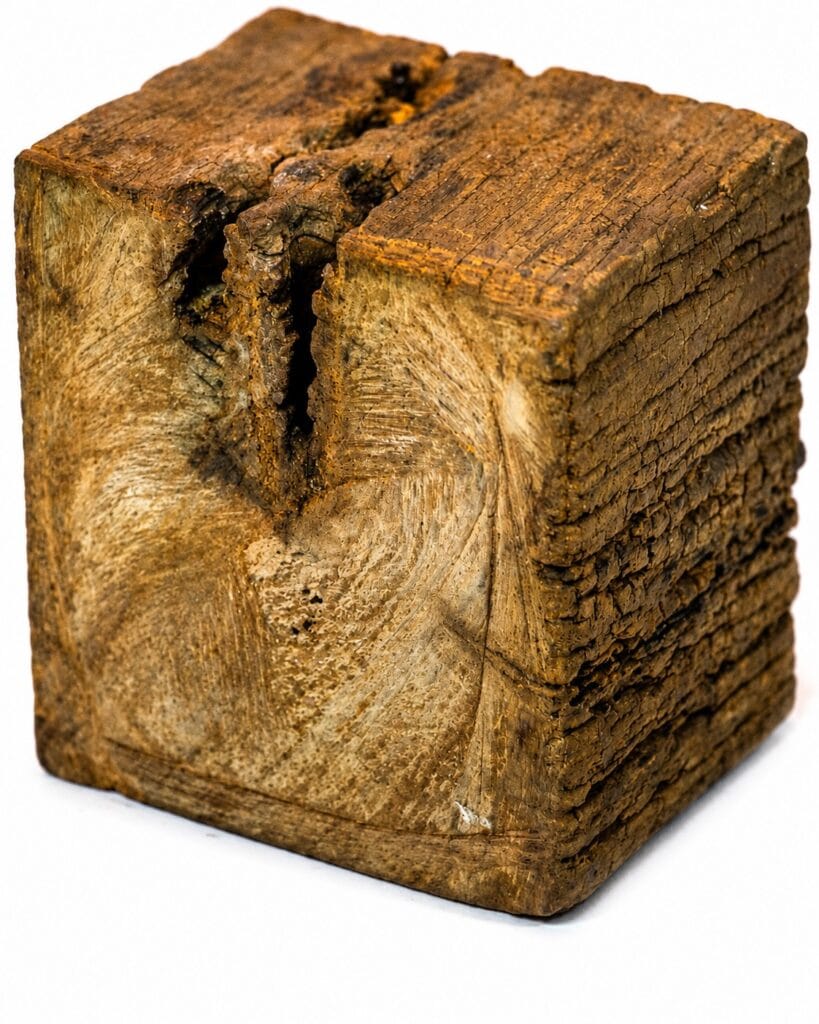
This is what’s left. A block of wood from the original Maracanã goalpost. The same kind of wood Barbosa burned. The other post survived. It ended up in a small town called Muzambinho in Minas Gerais state, used in an amateur stadium for decades. In 2014, the local cultural center donated it to Tereza Borba. In 2021, it went into a glass case at the Museu do Futebol in São Paulo.
In the 1980s, Barbosa volunteered at Dr. Eiras Hospital, teaching sports to patients with physical and mental disabilities. He said: “There’s nothing more meaningful than being able to give something to someone who has nothing.”
1993. Brazil’s national team was training at Granja Comary for the 1994 World Cup. Barbosa showed up to encourage the younger players. He was seventy-two. Copa América champion. Named best goalkeeper of the 1950 World Cup by the international press corps. The man who had cut Maracanã’s grass for over twenty years. Security radioed in. Entry denied. Reason: bad luck. Around the same time, CBF president Ricardo Teixeira blocked him from working as a TV commentator for national team matches. Inside, goalkeeper Taffarel was training.
Barbosa turned around and walked away from the fence.
He said this until the day he died: “The maximum sentence under Brazilian law is thirty years. I’ve been serving time for something I didn’t do for fifty.”
He Never Broke
Ghiggia’s goal was not a stupid mistake. Barbosa made a tactical read based on what he’d seen in the first half. Ghiggia chose to shoot at the last second. The ball grazed Barbosa’s outstretched hand by inches. One step. That was the whole difference. The Museu do Futebol stated clearly in its 2021 exhibition: the blame placed on Barbosa was something sports officials, journalists, and intellectuals built together. All eleven players lost that game. Only three Black players paid for it for the rest of their lives.
56 years without a Black goalkeeper starter for Brazil. No written rule. But the wall was there. Dida finally broke through in 2006.
The Daughter Who Shared No Blood
Praia Grande beach. After 1994. Barbosa sat at kiosk number 79 every single day. His wife Clotilde died of bone marrow cancer in 1997. They had been together for fifty-four years. The hospital bills took everything. No children. Barbosa was alone.
A man named Mauro Borba came up and talked to him first. “Barbosa of Vasco!” Not about 1950. About the golden years of Vasco in the 1940s. The kind of conversation Barbosa actually wanted to have. Mauro’s wife Tereza brought food. Cachaça and Cynar. Barbosa came back every day. One afternoon, he told Tereza: “If I’d had a daughter, I would have wanted her to be like you.” No paperwork. No legal process. Brazilian media and the Museu do Futebol often described them as having a father-and-daughter relationship.
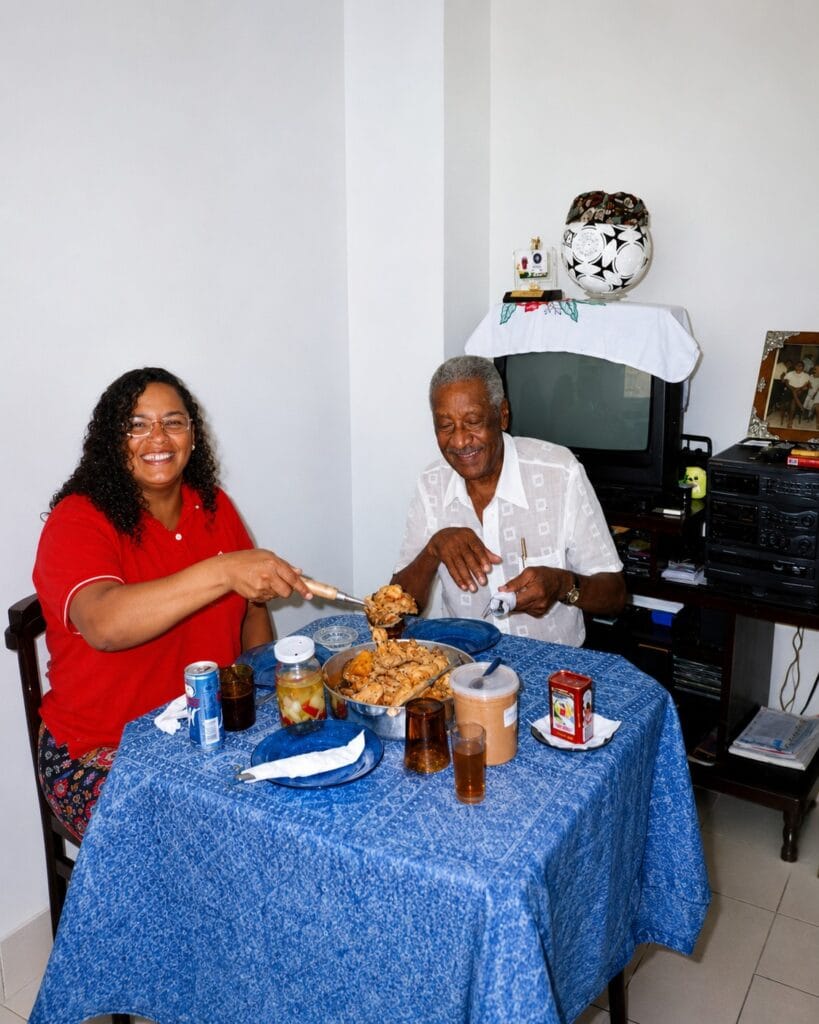
This is Barbosa’s last years. An old man in a white shirt. A woman laughing beside him. A soccer ball sitting on the shelf behind them. A framed photo next to the TV. 1950 is not in this room. This photo came from Tereza Borba’s personal collection. It became one of the key pieces in the 2021 museum exhibition.
At a bar in Rio, a mother once pointed at him and told her son: “That’s the man who made all of Brazil cry.” Barbosa went home and cried on Tereza’s shoulder. “I’m not guilty. There were eleven of us.” Tereza remembered: “He said that until the very end.”
March 27, 2000. His seventy-ninth birthday. Tereza threw him a party. White hair. Cachaça. People around him. There are photos. April 7 — he died of a stroke. Nothing left. What he gave Tereza: one jersey, more than two hundred photographs, one piece of wood. No one from the CBF came to the funeral. Tereza said: “Only Vasco fans never forgot him.” His cemetery plot number: 50.
Tereza Didn’t Stop
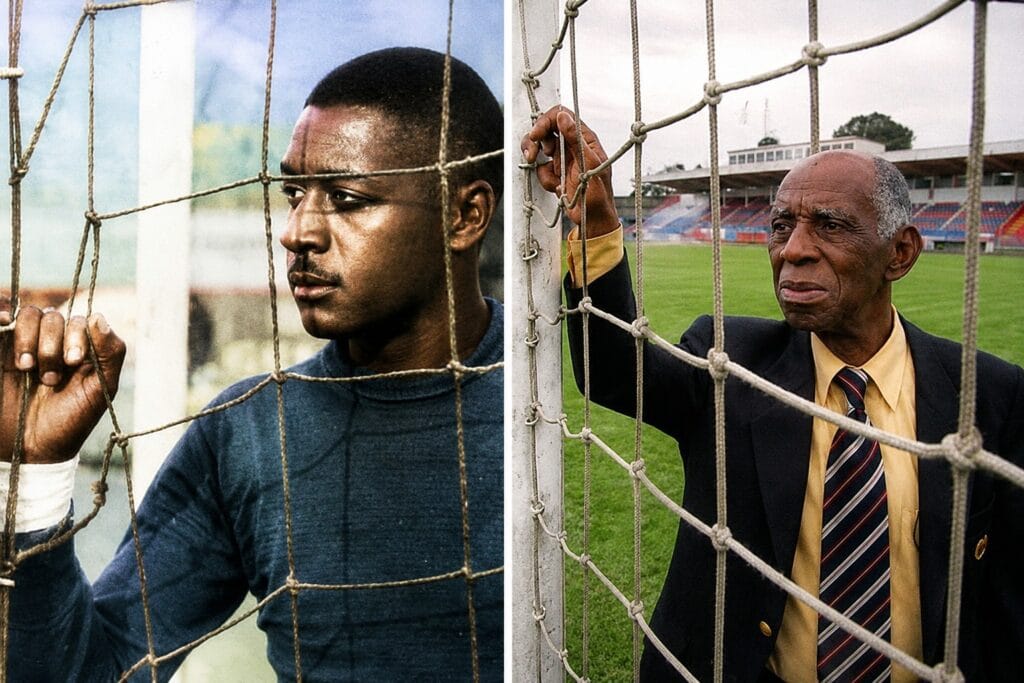
Left and right. Same person. Same net. Left is the player. Right is the old man. Decades apart. His hands changed. The net didn’t.
After Barbosa died, Tereza kept moving. She walked into Globo TV holding his jersey and stood in front of the cameras. She went to the Praia Grande city council every single day until they named a street after him. That street is called Rua Goleiro Barbosa — Goalkeeper Barbosa Street. She kept two hundred photos, his personal documents, and one piece of wood.
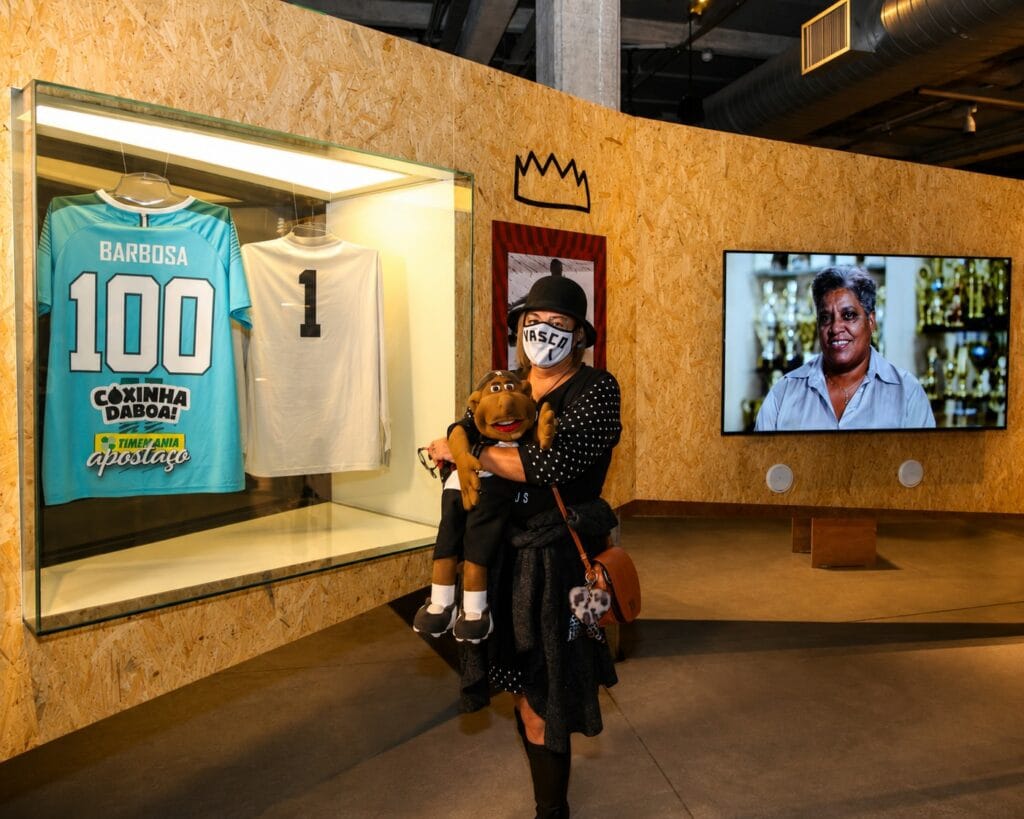
June 19, 2021. Museu do Futebol, São Paulo. “Reaction Time — Goalkeeper Barbosa’s 100th Birthday.” Tereza stands in front of the glass case. Inside: his jersey. She told interviewers: “Until the end, I will fight for his memory.”
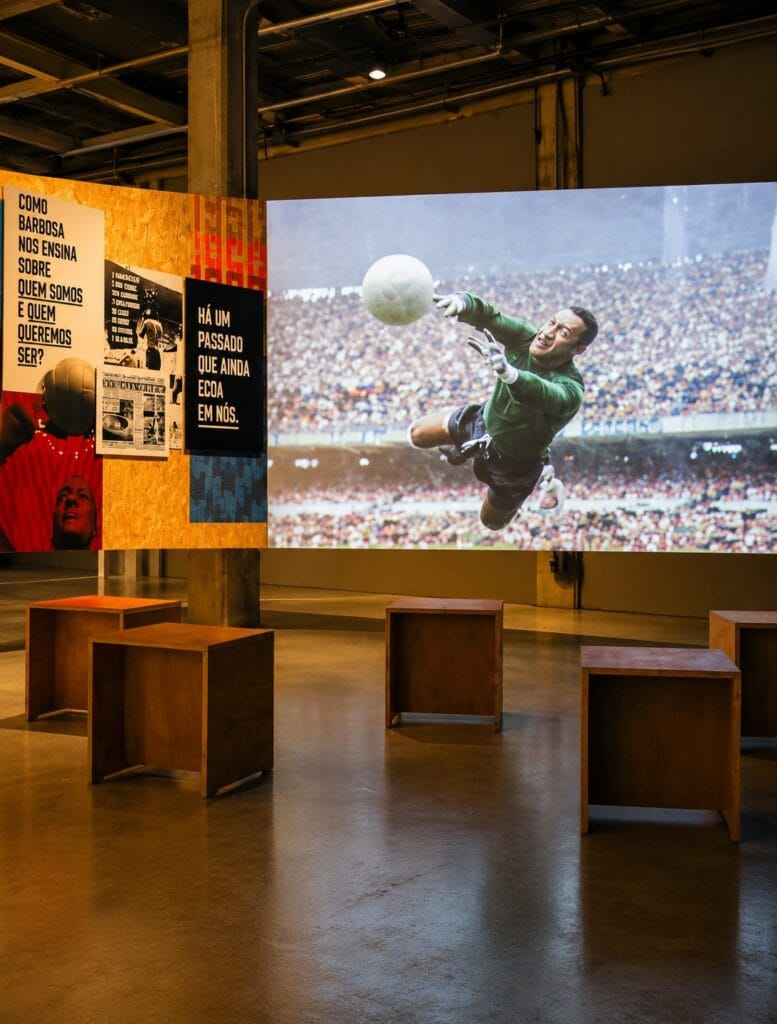
Inside the exhibition. A giant screen projects Barbosa making a diving save. On the wall in Portuguese: “Há um passado que ainda ecoa em nós” — There is a past that still echoes in us. The exhibition ran from June 2021 to January 2022. Tereza’s collection was the heart of it.
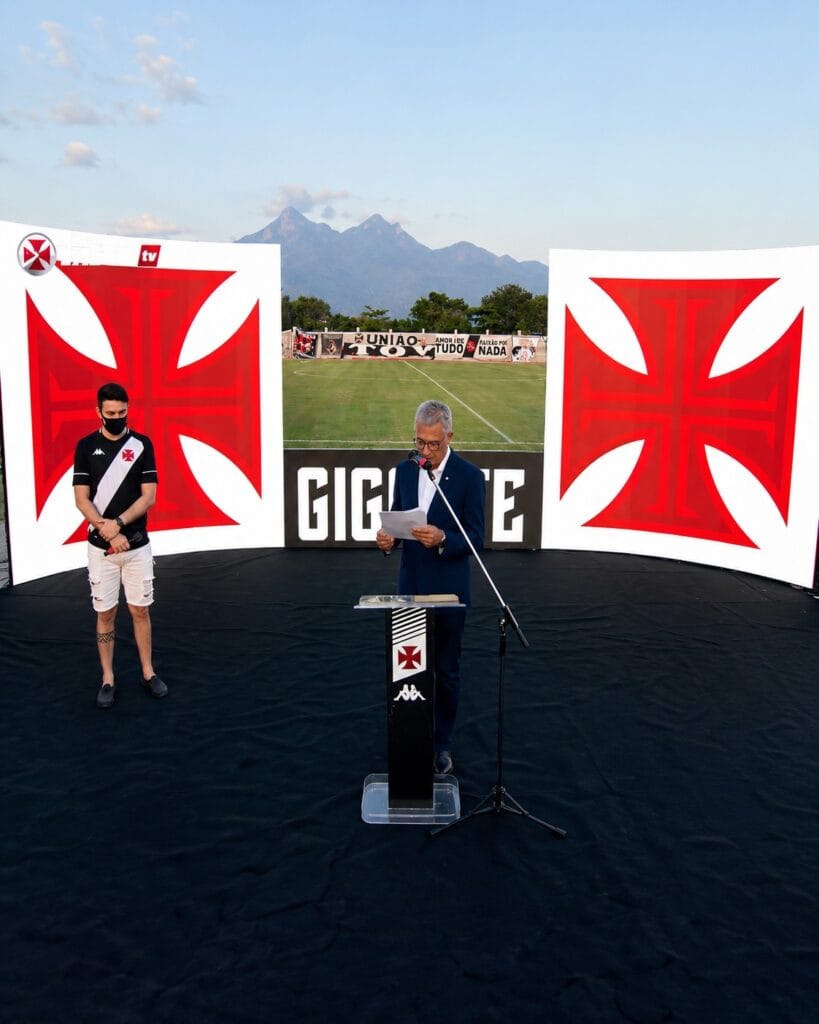
August 2020. Vasco da Gama’s new training center. The club president stood at the podium. Vasco’s cross crest on both sides of the stage. The facility’s new name: CT Moacyr Barbosa. Fans voted for it. Tereza was invited. The goalkeeper who was turned away at the fence in 1993 — his name is now on the building where Brazil’s next generation trains. Twenty years after his death. Seventy years after the curse started.
The world is ready to look at Barbosa again. Now it’s our turn.
The ball that rolled across that same Maracanã pitch has a stranger origin than you’d think — it was never made for football in the first place. And the trophy Uruguay lifted that day — it survived a war in a shoebox, got found by a dog, and then vanished forever.
Archive Notes
Was Ghiggia’s goal actually Barbosa’s mistake?
In the 66th minute, Ghiggia crossed from the right and set up Schiaffino’s equalizer. Thirteen minutes later, Ghiggia came down the exact same line. Barbosa read it as a cross and moved forward. Ghiggia shot low to the near post instead. The ball grazed Barbosa’s hand. It was a tactical read that didn’t work — not a technical error. International press at the tournament named Barbosa the best goalkeeper of the 1950 World Cup.
Why was Barbosa turned away from the training ground in 1993?
According to ESPN Brasil and multiple Brazilian media reports, when Barbosa visited Brazil’s national team training camp at Granja Comary ahead of the 1994 World Cup, he was denied entry because staff believed he brought bad luck. CBF president Ricardo Teixeira also blocked him from working as a TV commentator for national team matches during the same period. Barbosa was seventy-two at the time. An ESPN journalist described the incident as “a form of brutality.”
What did Tereza Borba do after Barbosa died?
Tereza preserved Barbosa’s jersey, over two hundred photographs, personal documents, and the piece of Maracanã goalpost from Muzambinho. That collection became the foundation of the Museu do Futebol’s 2021 centenary exhibition. She was invited to the renaming ceremony for Vasco’s training facility (CT Moacyr Barbosa) the same year. She also got a street named after him in Praia Grande — Rua Goleiro Barbosa. She told every interviewer the same thing: “Until the end, I will fight for his memory.”
What You Now Know
Brazil printed the front page before the game was played. When they lost, they needed a face. That face belonged to a man who had stopped the ball with his bare hands his entire life. He went back to the stadium that broke him and worked there for twenty years. He burned the goalpost and made steak. He got turned away at a fence. Brazil eventually came back around to him. Because one woman picked up his jersey and refused to put it down.
Tip For Readers
The full Barbosa centenary exhibition is available as a free virtual tour on Google Arts and Culture. The official research report and exhibition materials are published in English at Museu do Futebol.
Verified Sources
Museu do Futebol, São Paulo — Reaction Time: Goalkeeper Barbosa’s 100th Birthday (2021)
Google Arts and Culture — Museu do Futebol Virtual Exhibition: Reaction Time — Goalkeeper Barbosa’s 100th Birthday (2022)
Museu do Futebol — Barbosa, 100 Years Old: New Perspectives on the Centenary of a Great Goalkeeper
ESPN Brasil — Barbosa, 100 Anos: A Trajetória do Goleiro (2021)
NetVasco / Observatório da Discriminação Racial no Futebol — O Centenário de Barbosa (2021)
Trivela — 100 Anos de Barbosa, 100 Histórias (2021)
ESPN — Not His Country’s Keeper: The Tale of Moacyr Barbosa, Brett Forrest (2014)
World Soccer — The Sad Tale of Moacyr Barbosa (2013)
Roberto Muylaert — Barbosa: Um Gol Faz 50 Anos (2000)
Wikimedia Commons / Estadio Magazine Chile / Esporte Ilustrado — Historical Image References
Archival images restored, color-corrected, cropped, and editorially redesigned by FramedTruth for publication. Original rights and source attributions remain with their respective archives, publishers, museums, and collections.