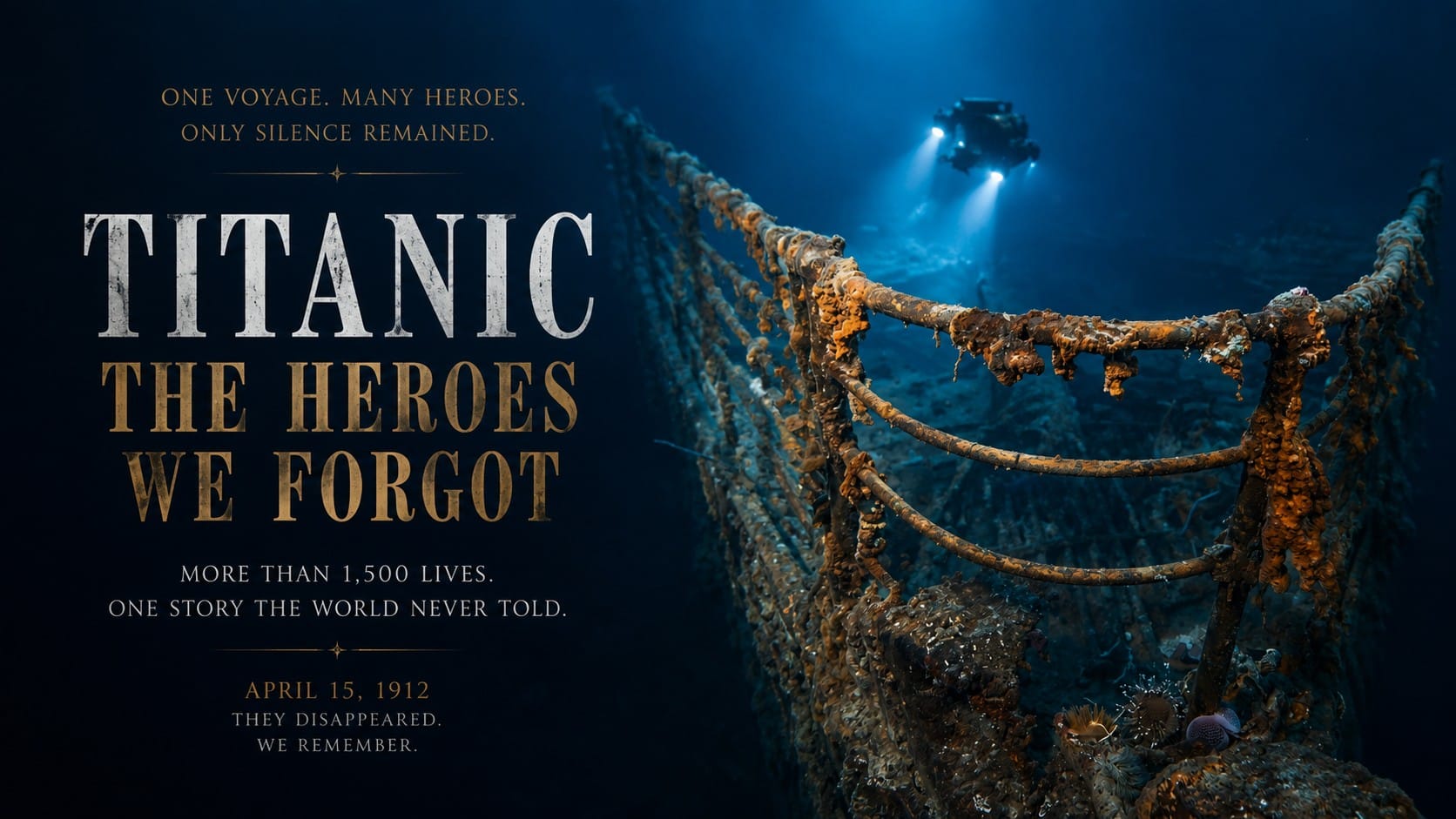
You already think you know this story. A ship hits an iceberg. People panic. The ship sinks. More than 1,500 people die. You’ve seen the movie. You know the ending. But there is one thing you may have never truly stopped to think about — the eight men who stayed behind on purpose. Not because they couldn’t leave. Because they chose not to.
This is not the story of the Titanic. This is the story of the men who kept playing as Titanic went down — and why, more than a century later, people still cannot forget the music.
The Ship That Made Humanity Believe It Had Won
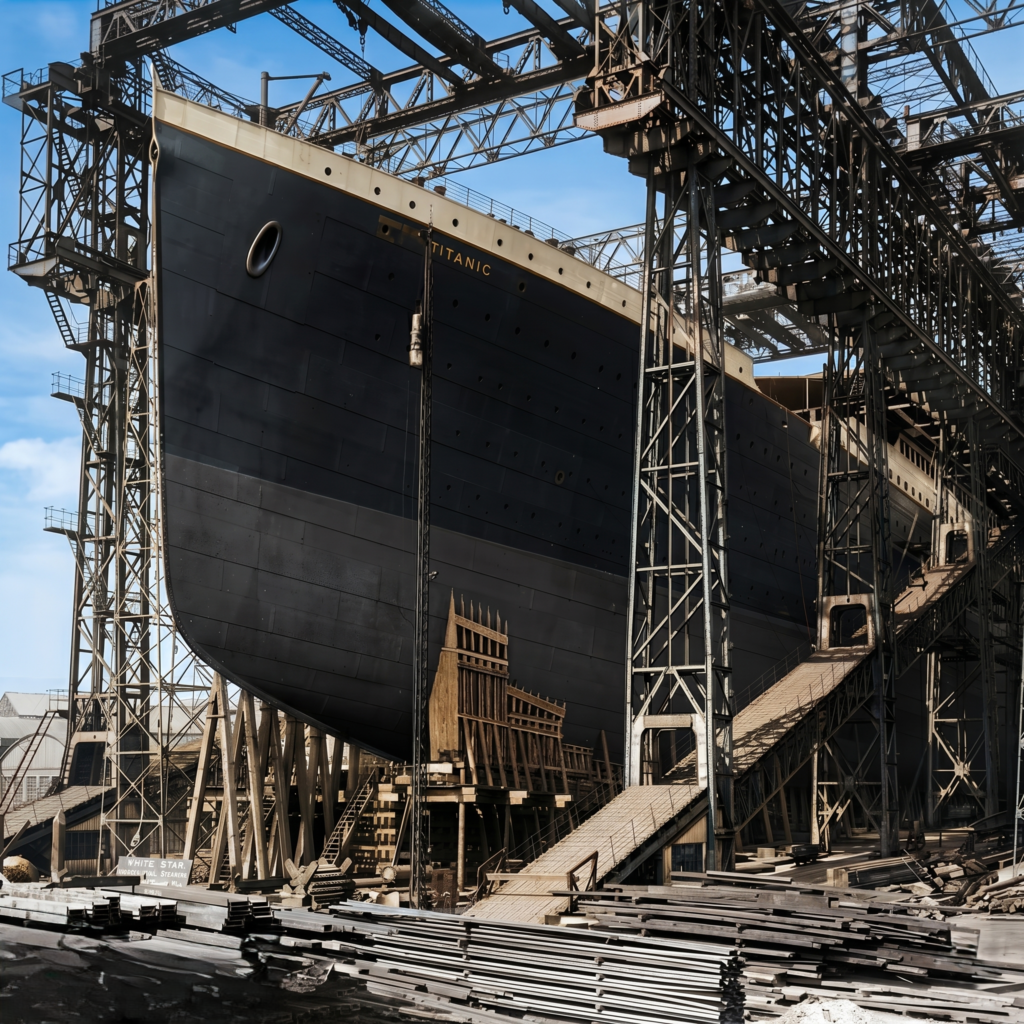
On March 31, 1909, in a shipyard in Belfast, Northern Ireland, the first steel plate was laid. Harland and Wolff employed roughly 15,000 workers over 1,098 days to build what many believed would become the most remarkable ship of its time. The finished ship stretched nearly 269 meters from bow to stern. It displaced 52,310 tons. It carried four funnels — one of them a dummy, installed purely for aesthetic effect, because passengers in 1912 associated more funnels with more power. Even the theater of it was calculated.
Inside, Titanic was not a ship. It was an argument. An argument that human civilization had crossed into a new era — one where nature could be managed, controlled, outwitted. There were electric elevators. Turkish baths. A squash court. A swimming pool. A gymnasium. Smoking rooms paneled in mahogany and inlaid oak. First-class suites priced at what would be roughly $100,000 today. The grand staircase descended through multiple decks beneath a wrought-iron and glass dome, carved oak banisters catching the glow of hundreds of electric lights. A journalist at the time described boarding Titanic as feeling “less like entering a ship and more like entering a civilization.”
White Star Line did not officially claim the ship was unsinkable. That particular sentence came from their promotional literature, from newspaper headlines, from the collective confidence of an era drunk on its own progress. Thomas Andrews, the ship’s chief designer, knew the truth. He had built in a margin of error. But the margin assumed a moderate collision. It did not assume what the Atlantic had waiting.
Nobody in 1912 imagined that something this large, this expensive, this elaborately built — could simply disappear. That was the particular cruelty of what was coming. The confidence was not stupidity. It was faith. Faith in engineering. Faith in progress. Faith that this time, at last, humanity had built something the sea could not take.
The sea had other plans.
The Last Peaceful Hours the World Would Ever See of Her
On April 10, 1912, Titanic departed Southampton at noon. Thousands lined the docks. One of them was a Jesuit priest named Father Francis Browne, who had been gifted a ticket for the first leg of the journey — Southampton to Queenstown, on the southern coast of Ireland. He spent two days aboard photographing everything: the promenade decks, the lounges, the passengers, the crew. A wealthy American couple offered to pay for his full passage to New York. His religious superior sent a telegram back: “GET OFF THAT SHIP.”
He got off the ship.
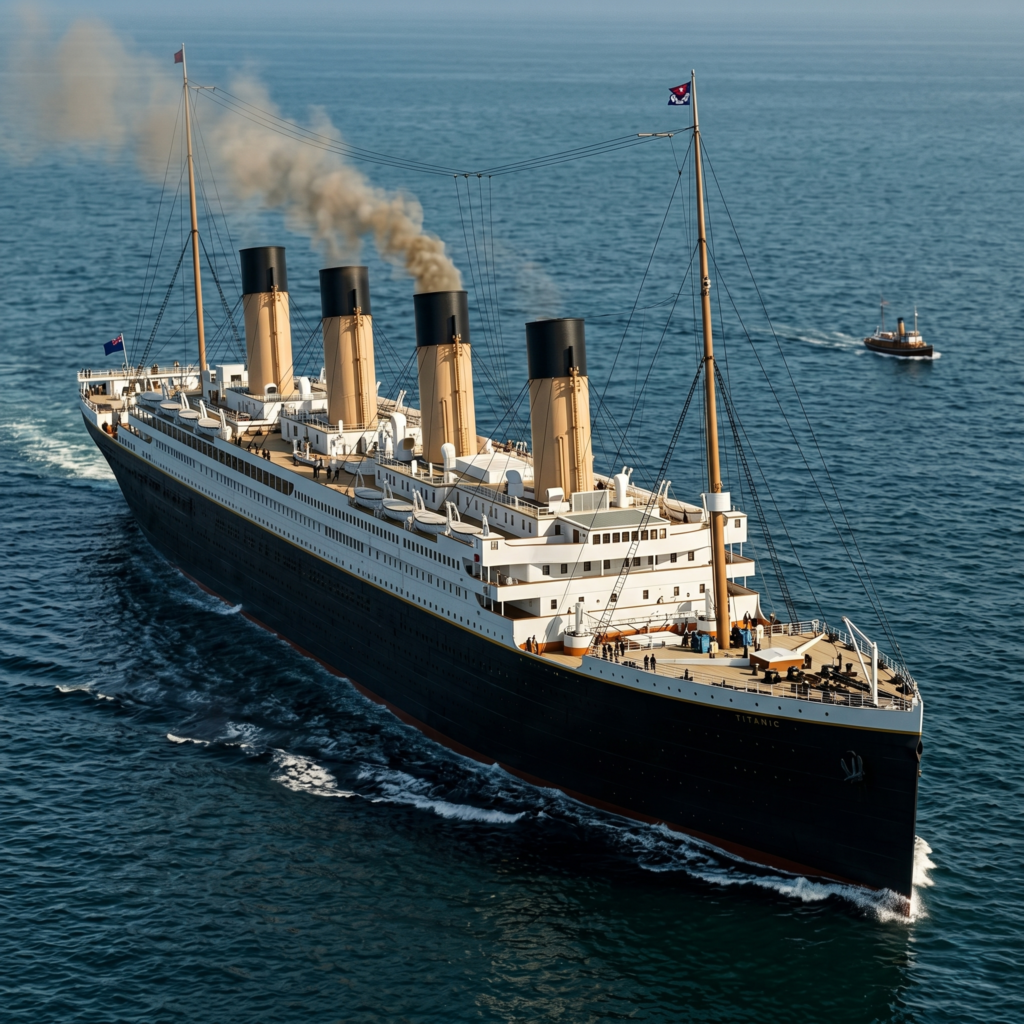
The photographs Francis Browne took in those two days became some of the last peaceful images ever taken of Titanic. They are haunting for one specific reason. Nothing looks wrong. The sea is calm. The passengers are at ease. Children lean against railings and squint into the afternoon sun. Men in dark suits smoke pipes near the stern. The ship sat on the water with the calm confidence of something that believed it would last forever.
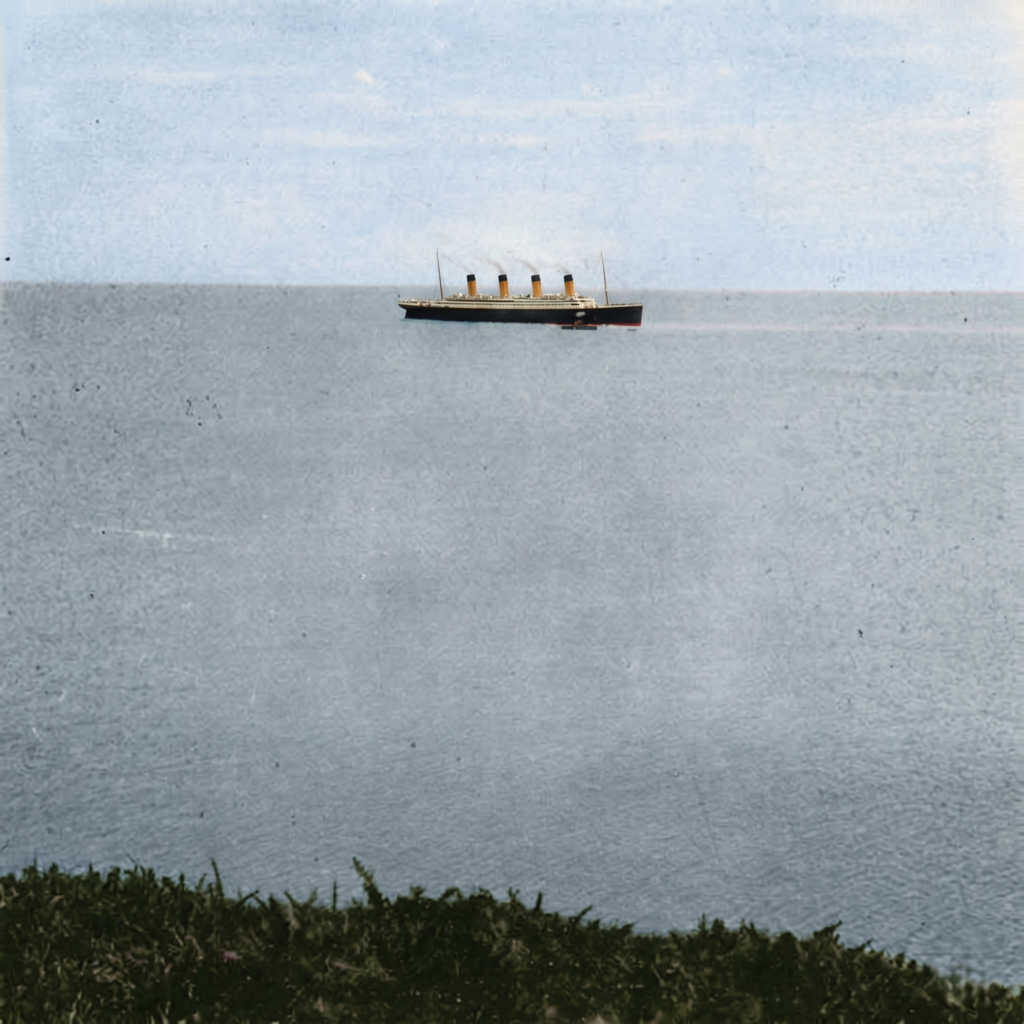
The sea was calm. The smoke drifted slowly behind her. Nobody on deck knew this was one of the last times the world would ever see Titanic alive.
After Queenstown, Titanic turned west into the open Atlantic. The next landfall should have been New York. There were 2,224 people aboard — 1,316 passengers and 908 crew. Among the passengers were some of the wealthiest individuals on Earth: John Jacob Astor IV, estimated worth $87 million at the time. Isidor Straus, co-owner of Macy’s department store. Benjamin Guggenheim. Margaret Brown, who would become famous after the sinking as “the unsinkable Molly Brown.” There were also hundreds of emigrants in third class — Irish, Scandinavian, Eastern European — carrying everything they owned toward new lives in America. They were not wealthy. They were hopeful.
And among the crew, tucked into their quarters, carrying instrument cases along corridors that smelled of fresh varnish and salt air, were eight musicians. Their names deserve to be read slowly, because the world would remember them.
Wallace Henry Hartley, bandleader, violin. Georges Krins, violin. Roger Bricoux, cello. Theodore Brailey, piano. John Woodward, cello. John Frederick Preston Clarke, bass viola. Jock Hume, violin. Percy Cornelius Taylor, cello.
They were not there to perform rescue operations. They were not officers. They were not wealthy. They were musicians hired to make a voyage feel like a dream. And for four days, that is exactly what they did.
The Last Dinner Before the World Changed
By the evening of April 14, 1912, the Atlantic crossing had settled into routine. Four days out of Southampton. Three days from New York. The sea that night was unusually calm — glass-flat, the sailors said. The air was cold, dropping toward freezing as the ship pushed west at roughly 22 knots. Wireless operators had received multiple ice warnings throughout the day from other vessels. The warnings were acknowledged, logged, and largely set aside. The ship’s speed was not reduced.
In the dining saloons, life continued at a pace that felt designed to make you forget there was an ocean outside the windows.
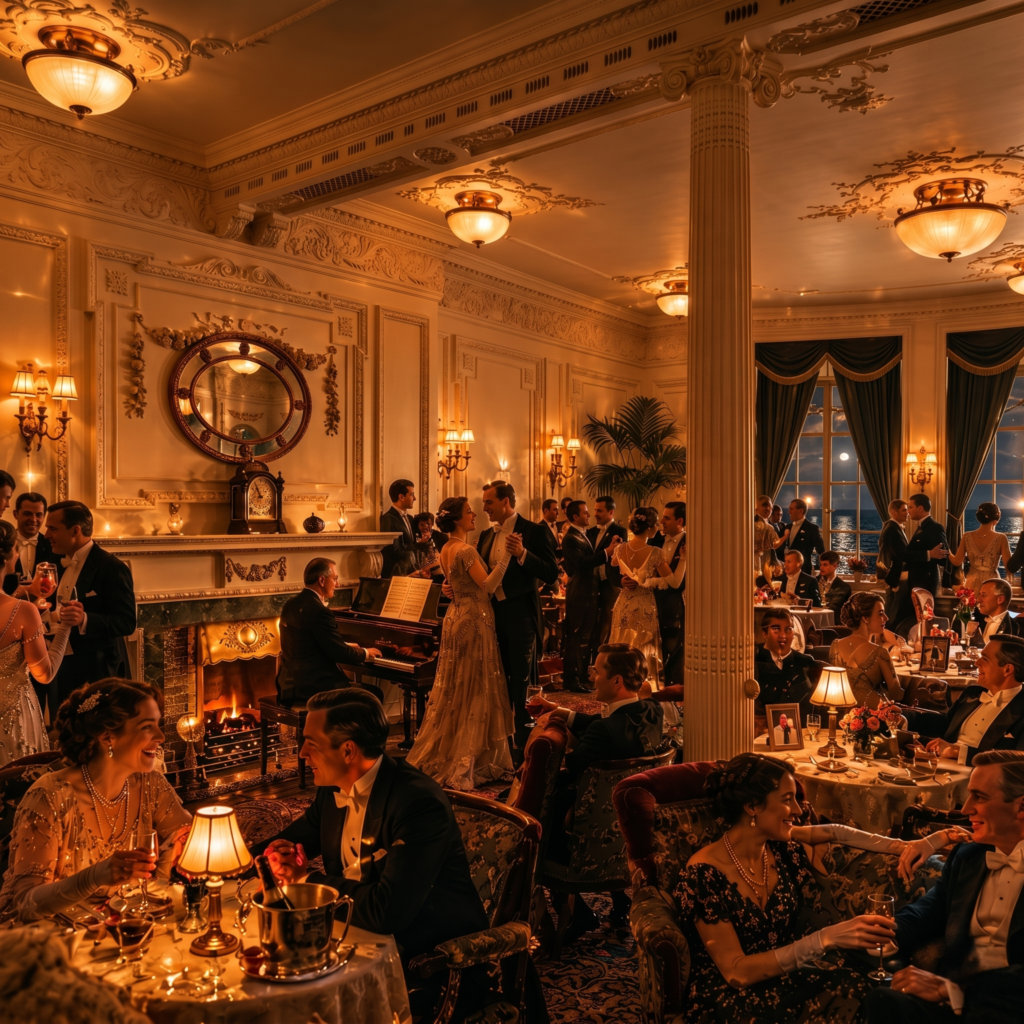
The room glowed gold that night. Wine moved across the tables. Someone laughed near the piano. Somewhere below them, the Atlantic was already waiting.
The second-class dinner menu for April 14, 1912 still exists. Consommé tapioca. Baked haddock with sharp sauce. Curried chicken and rice. Spring lamb with mint sauce. Roast turkey with cranberry sauce. Plum pudding. Wine jelly. American ice cream. Fresh fruit. Coffee.
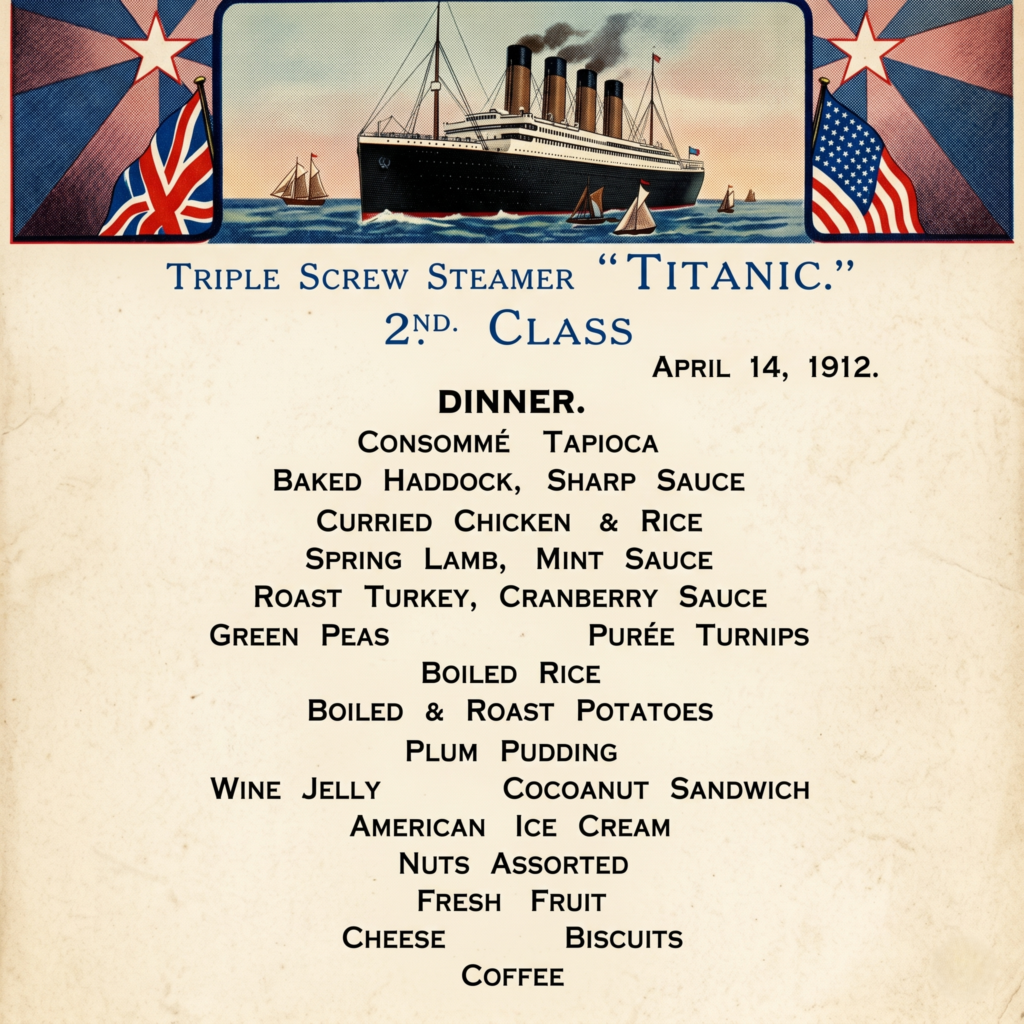
This menu survived. The people who read it did not.
Read that list again. Slowly. Those are the last things the people of Titanic tasted. Roast turkey. Plum pudding. Ice cream. And somewhere nearby, the band was playing.
In first class, the evening was even more elaborate — eleven courses, vintage wines, a reception room that glowed amber beneath crystal chandeliers. Couples danced. Men discussed business they expected to complete in New York the following week. Women in evening gowns moved between tables. The grand staircase, carved by hand in Belfast over hundreds of hours, cast long shadows across passengers descending for after-dinner drinks.
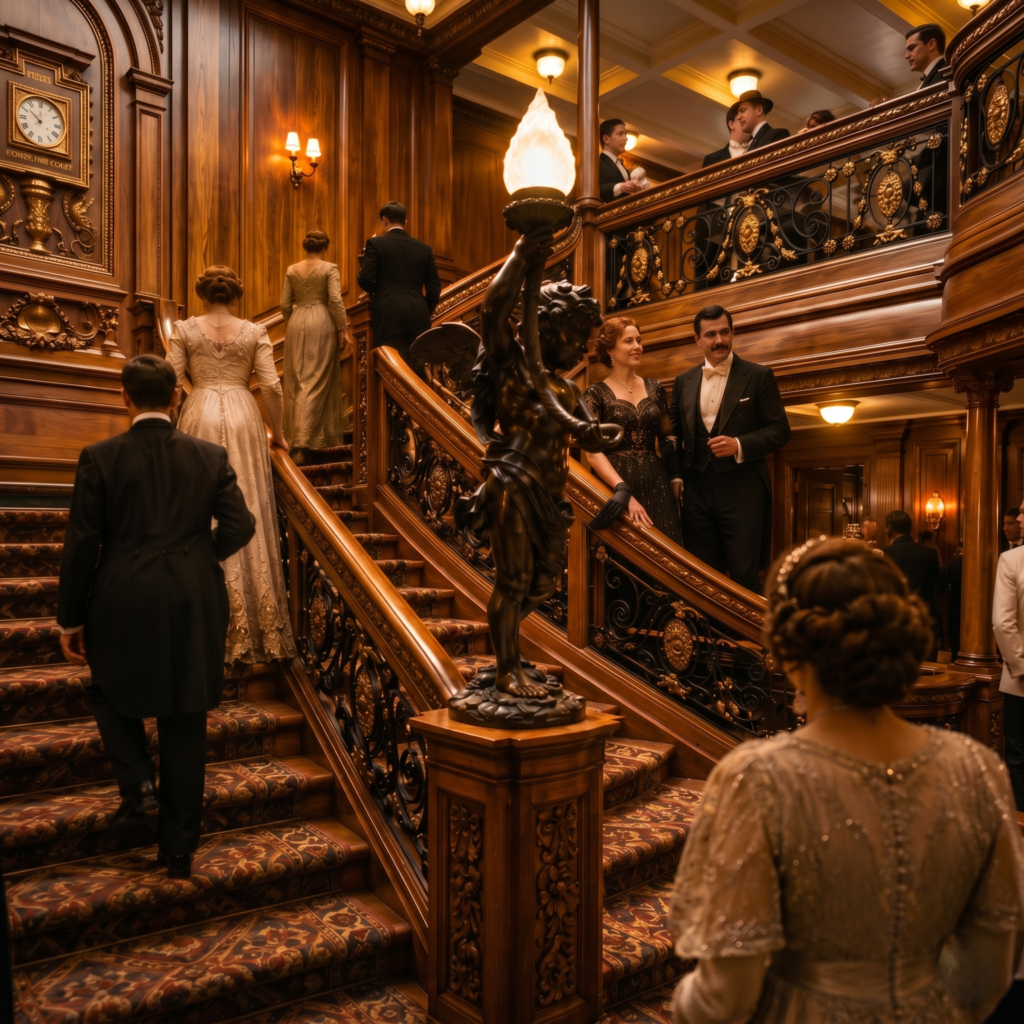
People walked down these stairs carrying wine glasses and conversations about tomorrow. A few hours later, seawater would reach them.
Nobody knew. That is the thing that never stops being brutal. The people on that staircase. The people eating ice cream. The immigrants writing letters home. None of them felt it coming. The music was playing.
The worst nights in history rarely begin with screaming. They begin with ordinary evenings.
11:40 PM: The Sound the Ocean Made
Frederick Fleet was in the crow’s nest when he saw it. No moon that night — the sea was dark and mirror-still, which meant there was no wave action breaking white against the base of the iceberg to give it away. He saw a shape in the darkness approximately 500 meters ahead and rang the warning bell three times. He picked up the telephone to the bridge and said four words: “Iceberg, right ahead.”
First Officer William Murdoch ordered hard-a-starboard. The engines were reversed. The ship began to turn. But at 269 meters long and moving at 22 knots, Titanic needed nearly a mile to stop. There was not a mile. The ship grazed the iceberg along her starboard side for approximately ten seconds. A gentle scraping sound. Some passengers reported hearing it as a long, dull rumble. Others heard nothing at all. Several who were still awake thought the ship had simply slowed its engines.
Thomas Andrews, the designer, was summoned to inspect the damage at once. He walked the lower decks with a measuring tape and a lantern. Within forty-five minutes, he delivered his conclusion to Captain Smith: the first five watertight compartments had been breached. The ship could stay afloat with four flooded. Not five. Andrews told the captain, with the quiet calm of a man delivering a diagnosis he wished were wrong, that Titanic would sink in approximately one hour and forty minutes.
It was now around 12:15 AM on April 15. The temperature of the Atlantic that night was approximately -2 degrees Celsius. The water was cold enough to kill an unprotected person in roughly fifteen minutes. Titanic carried enough lifeboats for 1,178 people. There were 2,224 aboard.
Someone gave the order for the musicians to come up and play.
The Men Who Stayed
The first thing that changed was not the ship. It was the faces. Within thirty minutes of the collision, passengers who had been laughing over dinner were standing in the corridors in their nightclothes, holding life belts they did not know how to fasten, asking crew members questions nobody wanted to answer honestly. The grand saloon, which two hours earlier had glowed with candlelight and conversation, was now filling with a different kind of crowd — people wearing cork life preservers over evening gowns, stewards moving quickly between tables that still held half-finished glasses of wine, a woman clutching a jewelry box as if it explained something about what was happening.
And in the middle of it, the musicians began to play.
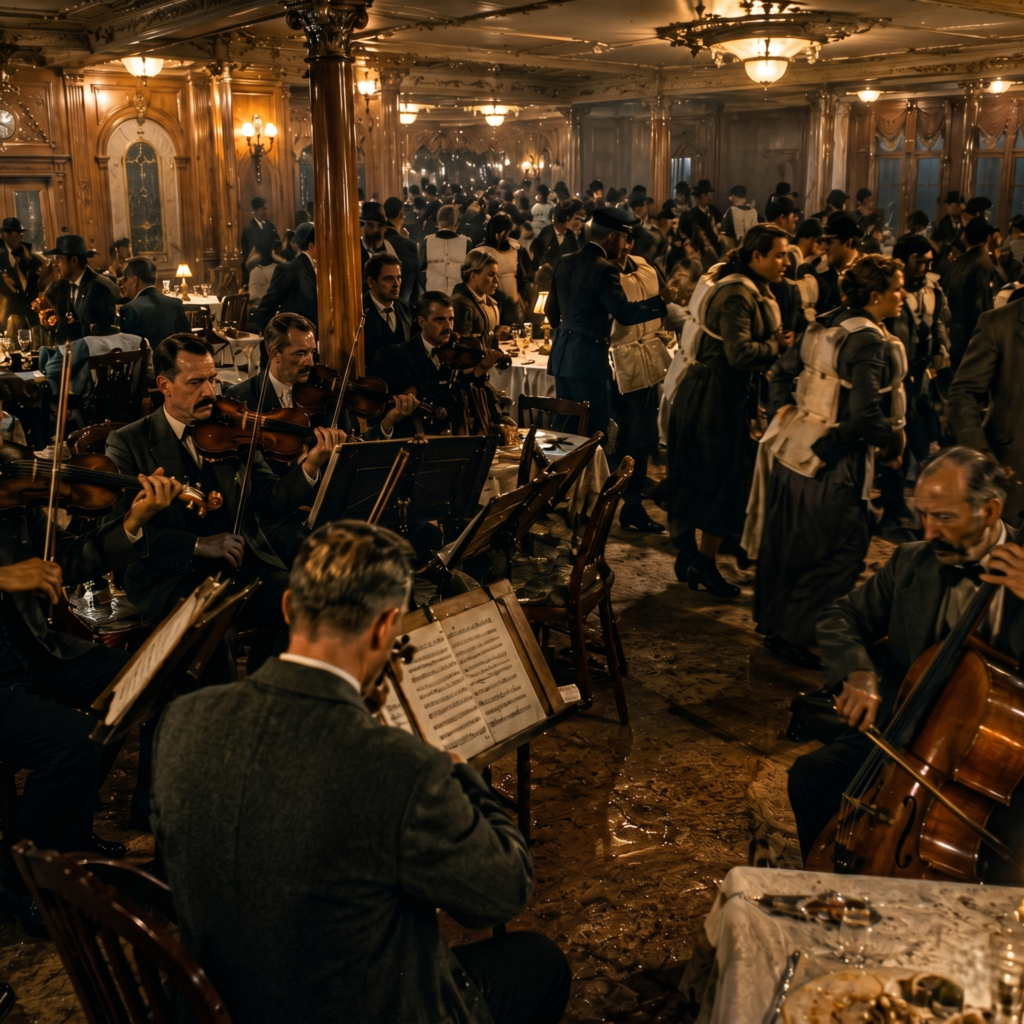
The water was already inside the room. The musicians played anyway.
Survivor accounts place the band inside the ship first — playing in the first-class reception area as passengers gathered, confused and frightened, unsure whether to go up to the boats or go back to their cabins and wait. The music was not loud. It was not triumphant. It was simply there — a human sound in a room that was beginning to feel inhuman. Some passengers stopped walking when they heard it. Some sat down. Not because the music solved anything. Because it was the only familiar thing left in a night that had stopped making sense.
What were they playing? Survivors remembered different things. Some said ragtime — upbeat, deliberately cheerful, the kind of music designed to tell a room that everything is fine. Some remembered waltzes. The hymn most frequently cited in testimony is “Nearer, My God, to Thee” — though whether Hartley chose it in those final hours, or whether it came later, no one can say with certainty. What every account agrees on is simpler than any song title: the music did not stop.
Sometime around midnight, as the bow sank lower and it became clear to anyone paying attention that the ship was not going to recover, the musicians moved outside. They carried their instruments onto the boat deck into air that was well below freezing — approximately -2 degrees Celsius, cold enough that breath came out in visible clouds, cold enough that standing still for more than a few minutes began to hurt. Around them, passengers in life belts pressed against the railings watching lifeboats descend into the black water below. Crew members shouted orders. Women wept. Children cried. The iceberg that had done this still sat visible in the distance, indifferent and enormous.
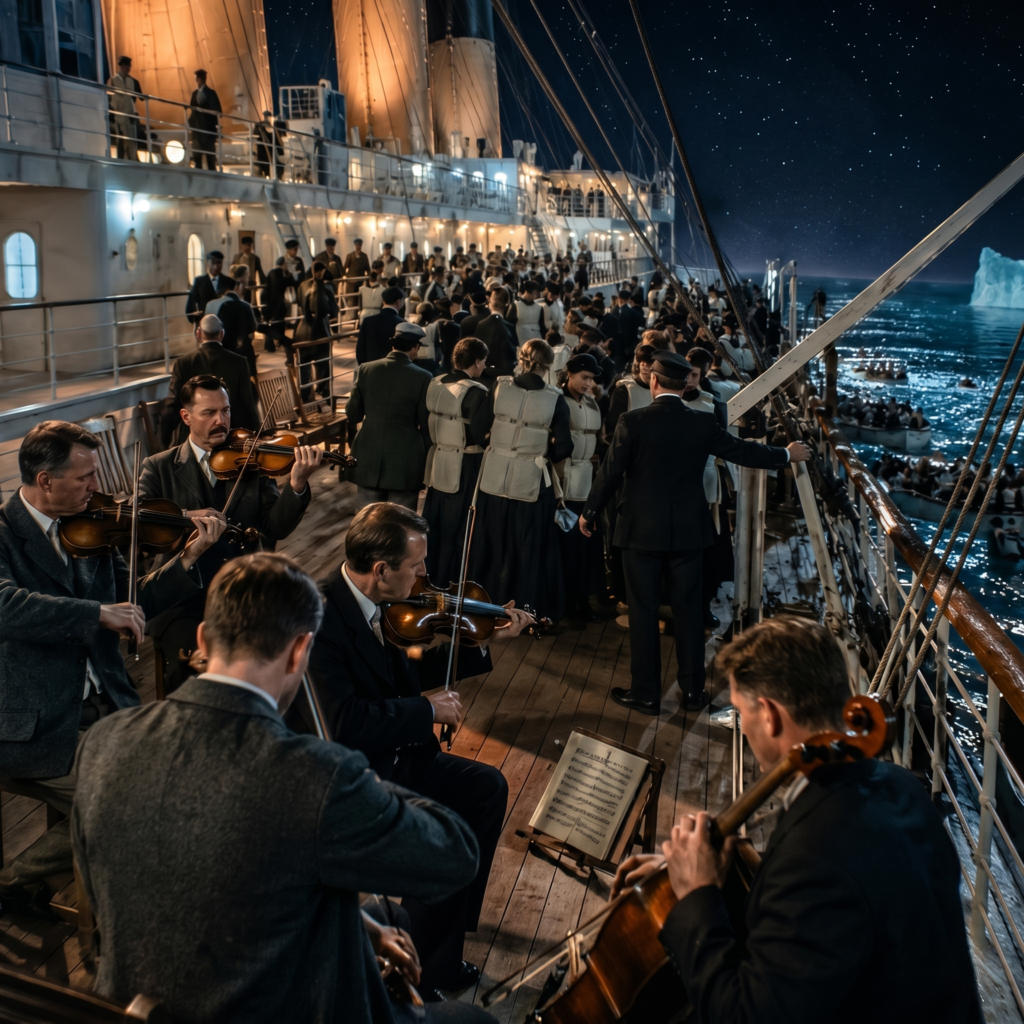
Freezing air. A tilting deck. Lifeboats disappearing into the dark below. And the music did not stop.
Consider what that required. The lifeboats were still loading. There was still time, in those first hours, for a man who moved with purpose to find a place. The musicians were not officers. They had no sworn duty to remain. They were hired entertainers — contracted through an agency, technically classified not even as crew but as second-class passengers. Nobody ordered them to stay. Nobody would have stopped them if they had walked to the railing and climbed into a boat. Not one of them did.
They played. For roughly two hours, as the bow sank lower and the stern rose higher and the deck tilted further beneath their feet, they played. They played while husbands put wives and children into boats they themselves would never board. They played while stewards moved through corridors knocking on doors. They played while the freezing Atlantic crept upward, deck by deck, without hurry.
Survivor Eva Hart was seven years old that night. She lived to be 91. In interviews across seven decades, she returned again and again to the same memory — not the iceberg, not the lifeboats, not the cold. The music. She boarded a lifeboat with her mother. Her father stayed on the ship. She never saw him again. But as the lifeboat pulled away from the hull into the darkness, she remembered the sound of the violins getting quieter. Not stopping. Just getting quieter, as the distance between her and the ship grew wider, until the sound was gone and only the cold remained.
At 2:17 AM, the forward funnel collapsed. At 2:18, the lights went out. Every single one. The ship that had glowed gold through five days of ocean darkness went black in an instant — and then, at 2:20 AM on April 15, 1912, it was gone. The stern rose almost vertical. The hull cracked in two. Both pieces fell separately into the Atlantic, 3,784 meters down, and did not stop falling for nearly four minutes.
What was left on the surface was 1,500 people and -2 degree water. The screaming that followed was something survivors spent the rest of their lives trying to find words for. Most gave up trying. The Carpathia was 58 miles away when she got the signal. She arrived at 4:10 AM.
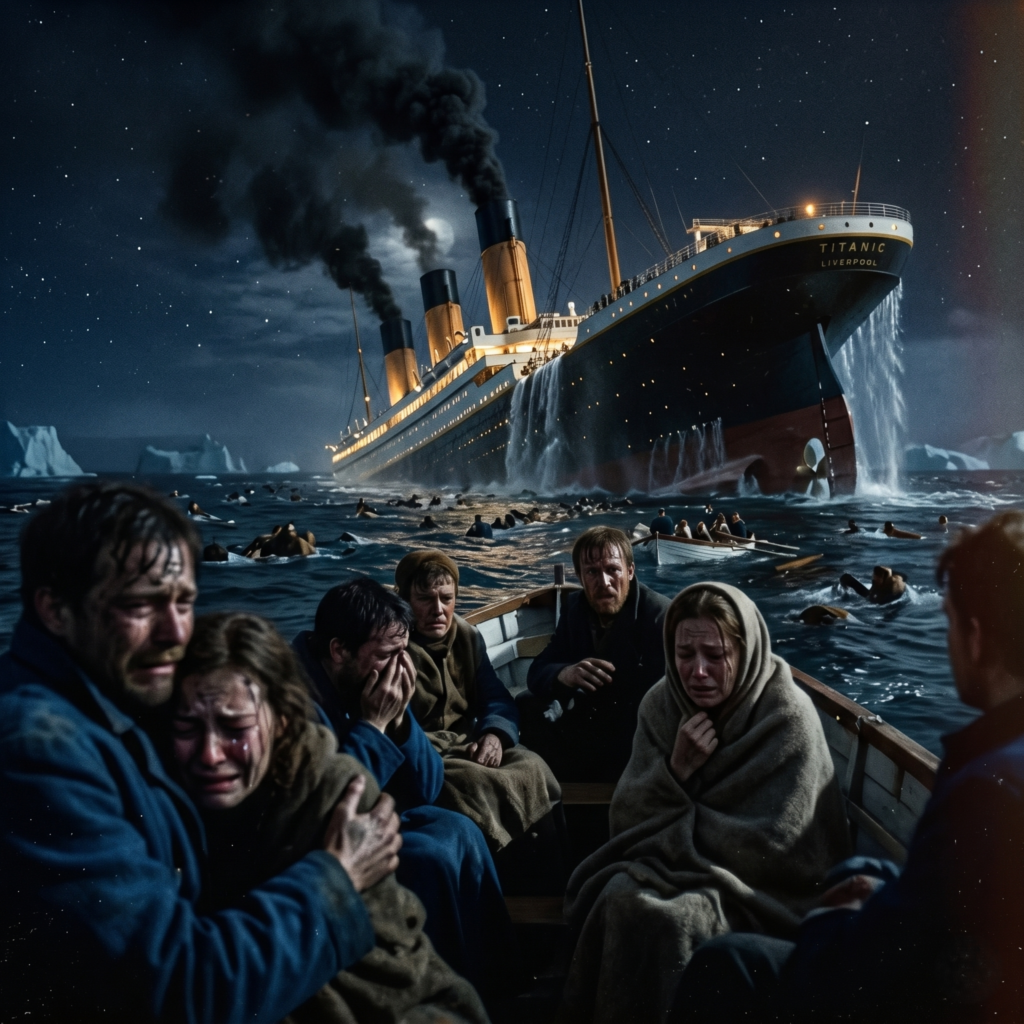
From the lifeboats, the survivors watched. Some covered their eyes. Some could not look away. The ship that had glowed gold two hours earlier was gone. What replaced it was darkness, debris, and a sound from the water that none of them ever fully recovered from hearing. By the time Carpathia arrived, the screaming had stopped. The silence that followed was worse.
The Postcard That Did Not Know
One of the surviving pieces connected to Titanic is a postcard written during the voyage — a woman writing to someone named Ella. She wrote about ordinary evenings aboard the ship — being busy, going out at night, not having had time to write. And then, near the bottom: “I think I will go in the morning.”
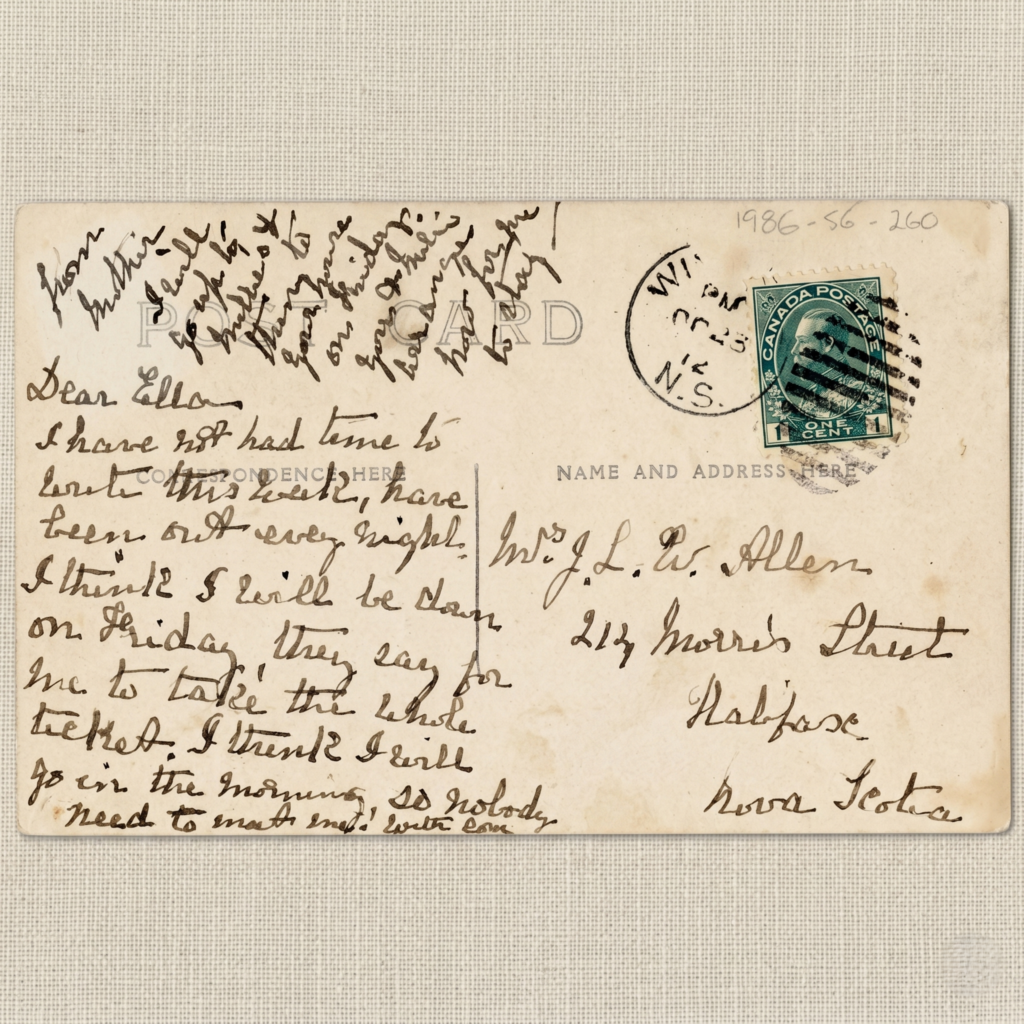
She wrote it casually. Like tomorrow was guaranteed.
I think I will go in the morning. There is no fear in that sentence. No premonition. No heavy goodbye. Just someone speaking naturally about what they intend to do next. The tragedy of that sentence is not in anything it says. It’s in what it doesn’t know.
That is what still makes Titanic feel unbearable more than a century later. The people on that ship were not characters in a disaster film. They were real people with tomorrow on their minds. The immigrants going to start new lives in America. The newlyweds. The businessmen with appointments. The mothers with children. The musicians with their instruments in their cabins, planning to pack up after the final night’s performance and disembark in New York.
None of them knew that for more than 1,500 of them, tomorrow had already ended.
What the World Built For Them
On April 19, 1913 — exactly one year and four days after the sinking — a memorial was unveiled in Southampton, England. It was erected by the Amalgamated Musicians Union, paid for by members and friends who wanted the world to remember not just that the Titanic sank, but that eight specific men had made a specific choice on the night it went down.
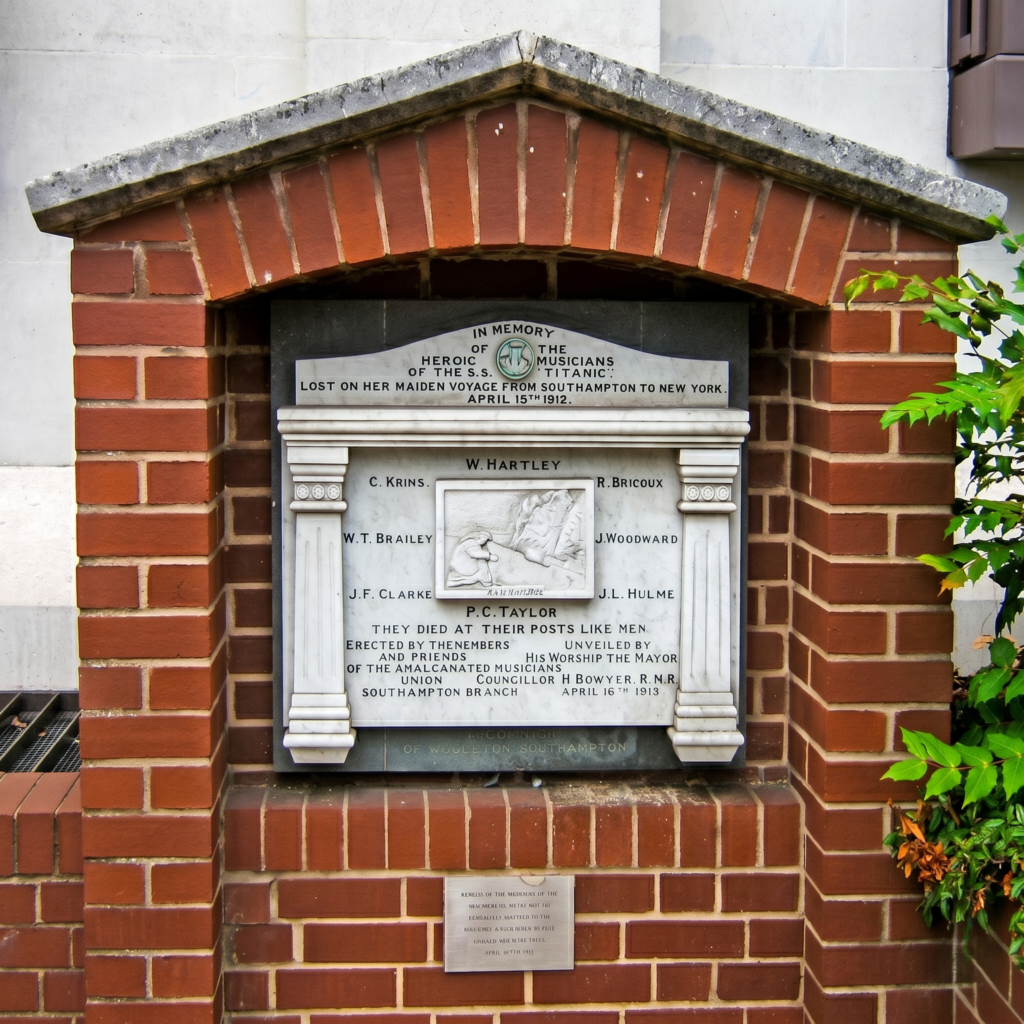
One year later, people carved their names into stone so the sea could not erase them too.
The names are carved in marble:
W. Hartley. C. Krins. R. Bricoux. W.T. Brailey. J. Woodward. J.F. Clarke. J.L. Hume. P.C. Taylor.
And beneath the names, a single sentence that became one of the most famous epitaphs of the twentieth century:
THEY DIED AT THEIR POSTS LIKE MEN.
In 2013, Wallace Hartley’s violin was authenticated as the instrument he played on the night of the sinking. It had been in private possession for decades, having been found attached to his body when it was recovered from the Atlantic by the CS Mackay-Bennett on April 30, 1912 — fifteen days after the sinking. The violin sold at auction for £1.1 million. The buyer kept it. It is the only instrument from that night confirmed to have survived.
The wreck of Titanic was located on September 1, 1985, by a joint American-French expedition led by Robert Ballard of the Woods Hole Oceanographic Institution. It lies at 41°43’57″N, 49°56’49″W, in two major sections approximately 600 meters apart from each other. The bow section is largely intact. The stern was destroyed by implosion as it sank. Scattered across the debris field between them are thousands of objects: shoes, luggage, dishes, wine bottles, a child’s doll, a bronze cherub from the grand staircase.
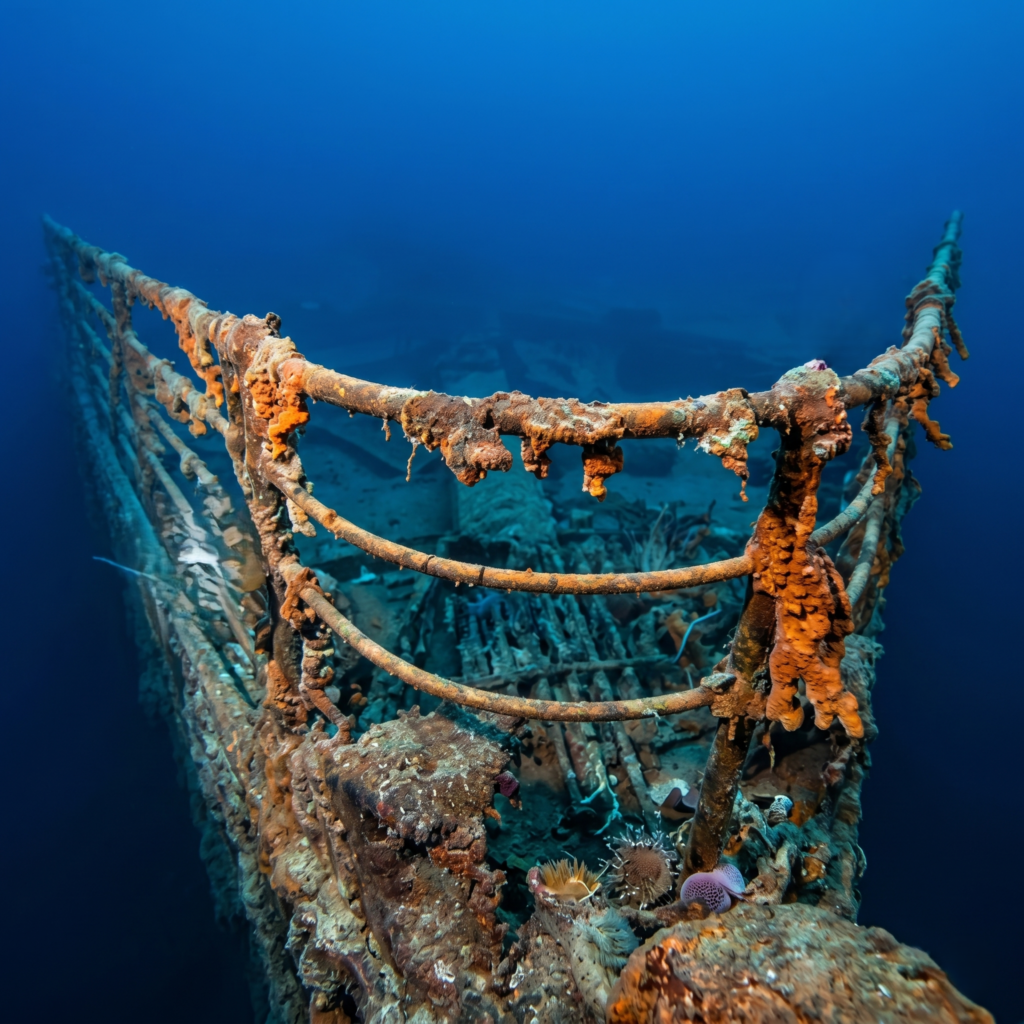
More than 3,700 meters below the Atlantic, the ship is still there. Quiet. Rusting. Waiting in the dark.
The wreck is deteriorating. Iron-eating bacteria have been consuming the hull since the ship went down, producing rust formations called “rusticles” that hang from the structure like frozen waterfalls. Scientists estimate that within the next several decades, the Titanic will be unrecognizable — reduced to a stain on the ocean floor, a mineral deposit where a ship once was.
The ship will vanish. The names carved into that memorial in Southampton will not.
What This Actually Tells Us About Human Beings
Here is the thing that is easy to miss when you focus on the heroism of it: Wallace Hartley and his seven musicians were afraid. They had to be. They were human beings in a life-threatening situation that they fully understood. They were not robots performing a programmed function. They were not saints incapable of feeling fear. They were men in their twenties and thirties — Jock Hume was 21 years old — who looked at the situation, understood exactly what it meant, and made a decision about who they were going to be in the time they had left.
The decision was not to panic. Not to fight. Not to run. The decision was to play.
The ocean won. People remembered the music anyway. Every survivor who mentioned it described the same effect: hearing the music made it possible to keep moving. Made it possible to keep thinking. Made it possible to stay human in a situation designed to make people stop being human. A 32-year-old woman named Madeleine Astor, pregnant, being helped into a lifeboat by her husband who knew he would not see her again — she remembered the music. An Irish immigrant in third class who had spent three days trying to get word that his family in Queenstown would be taken care of — he remembered the music. Not because it solved anything. Because it reminded them, in the worst possible moment, that there was still something worth being calm for.
And more than a century later, people still remember the music.
Frequently Asked Questions
Q. What song were the Titanic musicians playing when the ship sank?
A. No one can say for certain. The most frequently cited piece in survivor testimony is the hymn “Nearer, My God, to Thee,” but others recalled ragtime and waltzes from earlier in the night. Accounts were given by people who were freezing, traumatized, and watching from lifeboats. What they agreed on was not the song title. It was that the music was still playing when they lost sight of the ship.
Q. Did any of the eight Titanic musicians survive?
A. No. All eight musicians — Wallace Hartley, Georges Krins, Roger Bricoux, Theodore Brailey, John Woodward, John Frederick Preston Clarke, Jock Hume, and Percy Taylor — died in the sinking. Their bodies, where recovered, were found in the North Atlantic in the days following the disaster. Hartley’s body was recovered with his violin case still strapped to him. None of the eight made it into a lifeboat, and no survivor accounts describe any of the musicians attempting to board one.
Q. Is it true that Titanic’s musicians were not technically employees of the ship?
A. Yes. The musicians were contracted through an agency and classified as second-class passengers, not crew. When the ship went down, White Star Line initially refused to pay their final wages — on the grounds that employment ended the moment the disaster began. Their families had to fight publicly for compensation. The Musicians Union took up the cause. It became a second scandal inside the wreckage of the first.
What You Now Know
Eight men played music while 1,500 people died around them — not because they didn’t understand what was happening, but because they understood it completely. The ship is gone. The ocean closed over it and moved on without pause. But on a stone wall in Southampton, eight names are still there. Still being read. Still being remembered by strangers who were not born when it happened.
The ship sank. The music stayed.
Tip For Readers
The most comprehensive historical archive of Titanic documentation — including survivor testimonies from the 1912 US Senate inquiry and British Board of Trade investigation — is maintained by the Titanic Inquiry Project. The musicians’ memorial in Southampton can be visited at Guildhall Square and is maintained as a public landmark by Southampton City Council.
Verified Sources
US Senate — “Titanic” Disaster Hearings, 62nd Congress, 2nd Session, 1912
British Board of Trade — Report on the Loss of the SS Titanic, Formal Investigation, 1912
Woods Hole Oceanographic Institution — Discovery of RMS Titanic, Expedition Report, 1985
National Maritime Museum, Greenwich — Titanic Collection, Oral History Archive, various dates
Library of Congress, Prints and Photographs Division — Francis Browne Titanic Photographs, 1912
Amalgamated Musicians Union — Musicians’ Memorial, Southampton, Dedication Records, 1913
Encyclopedia Titanica — Crew and Passenger Biographies, Musicians of the Titanic, ongoing
Image sources: Public domain and Wikimedia Commons historical maritime photographs, period-colorized and editorially composited by the Vella Team for illustrative purposes; editorial images are not documentary photographs and are noted as such within the article.