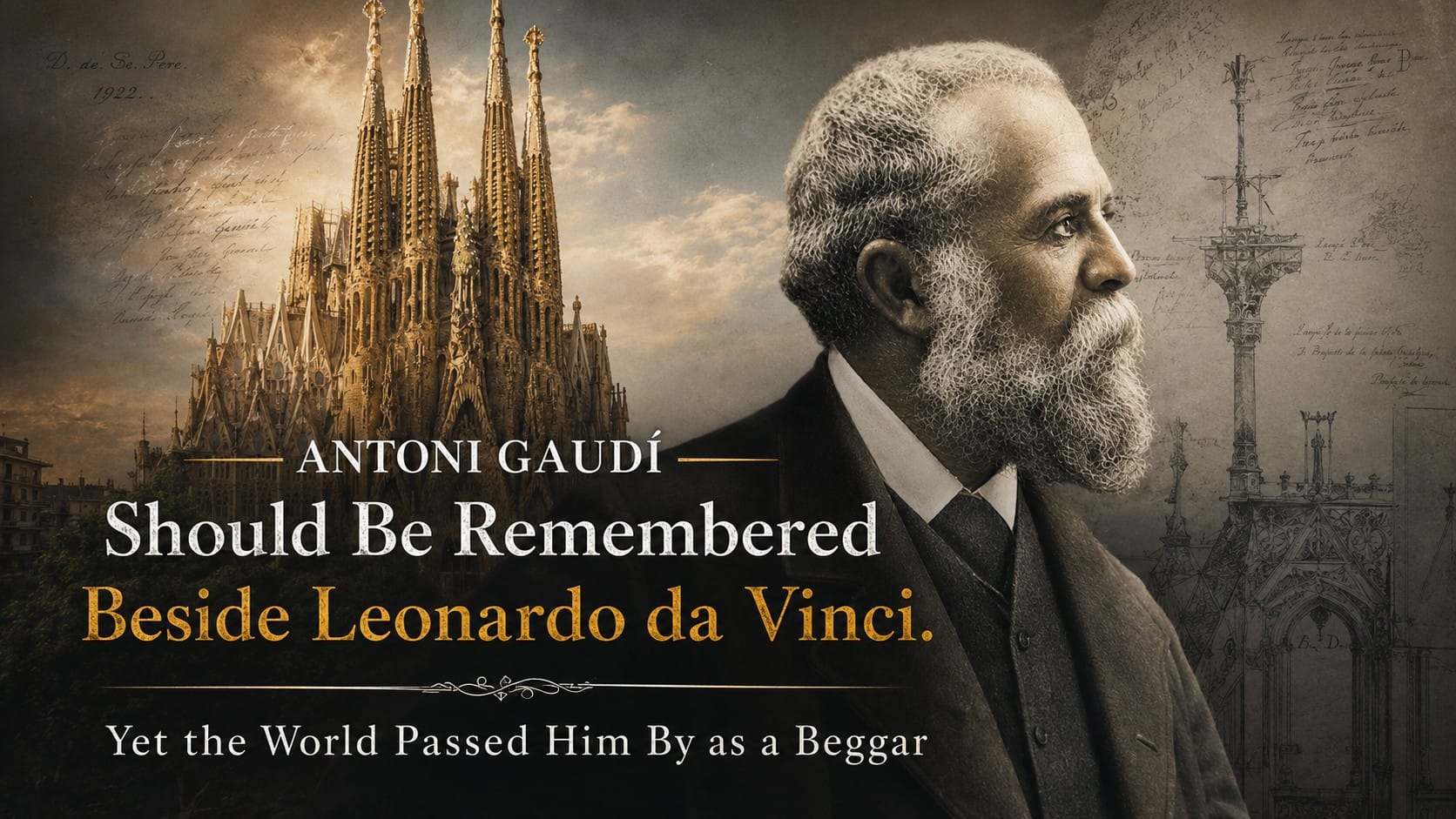
On June 7, 1926, an old red wooden tram rumbled across Gran Via in Barcelona. On its tracks, an old man collapsed.
Three taxis pulled up, one after another, then drove off — all because of how the man looked. His pants were tied at the waist with a worn piece of rope. His shoes were falling apart, patched with scraps of cloth instead of soles. His coat was covered in dust. The drivers didn’t want to get their seats dirty, so they never opened their doors. People walking by looked at him with cold eyes, thinking he was just another homeless man on the street. No one recognized who he was.
The next day, his identity was confirmed. The old man who had fallen was Antoni Gaudí i Cornet. The world called him an architectural genius.
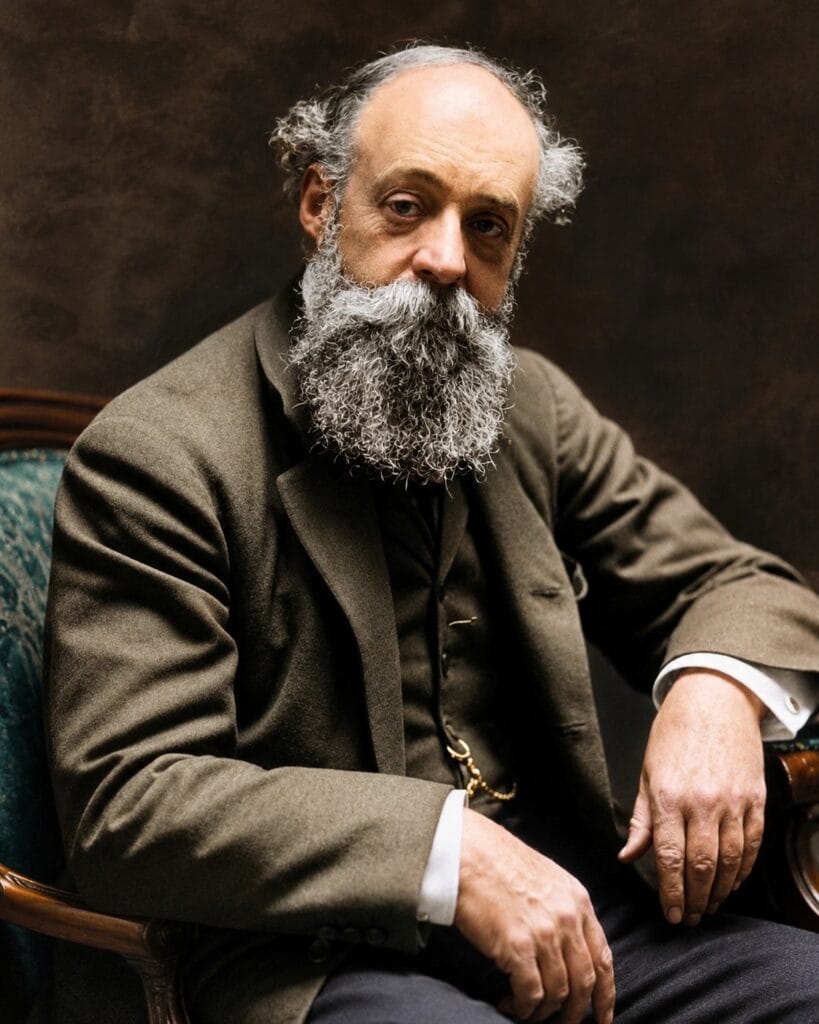
The World Never Really Saw His Name
The world likes to remember a person with one simple word. Gaudí, the architect. Leonardo da Vinci, the painter. But one word can never hold an entire human life. Sometimes, that single word even becomes a cage.
This was true for Gaudí too. Standing in front of his work, the word “architect” feels far too small.
Eyes Made From Pain
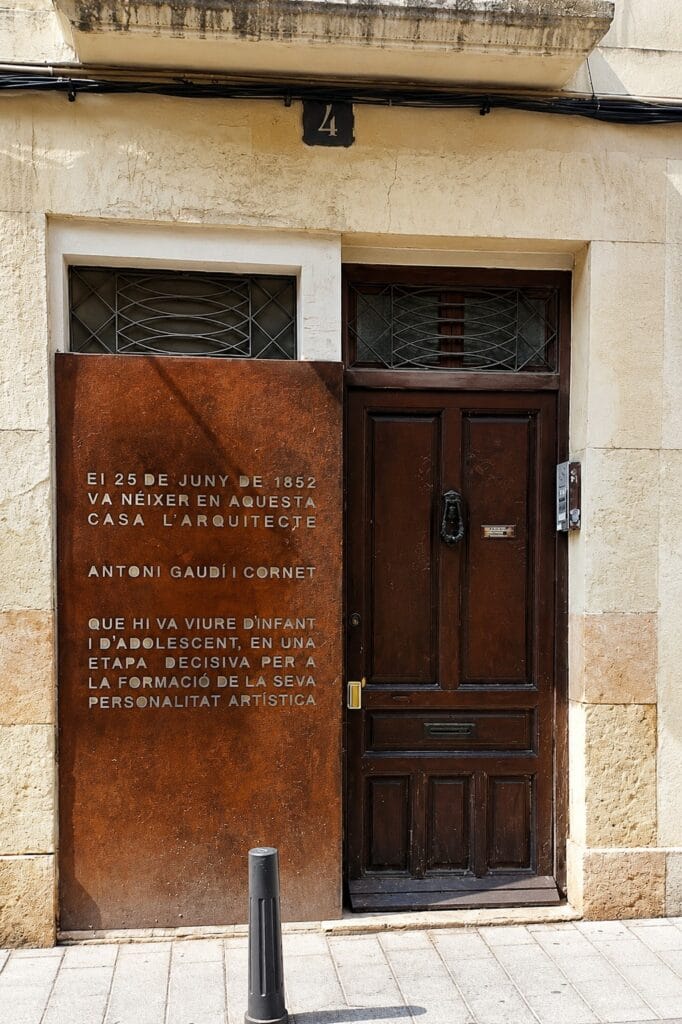
On June 25, 1852, in the small town of Reus in Catalonia, Spain, a copper craftsman’s fifth child was born. They named him Antoni.
Around age six, his joints stopped obeying him. It was a childhood rheumatic illness. While other kids kicked balls and kicked up dust in the alleys, Gaudí sat alone in a corner of the yard. On days he couldn’t walk, a donkey carried him to school.
A boy who couldn’t walk had a lot of extra time. What other kids ran past without noticing became his whole day. The joints of an ant’s leg. The veins running through a leaf. The uneven bumps on a rock’s surface. A branch swaying in the wind. He wasn’t just looking at nature — he was watching how nature builds itself. People would later call it genius. Maybe those long, quiet hours taught him to notice what others simply passed by.
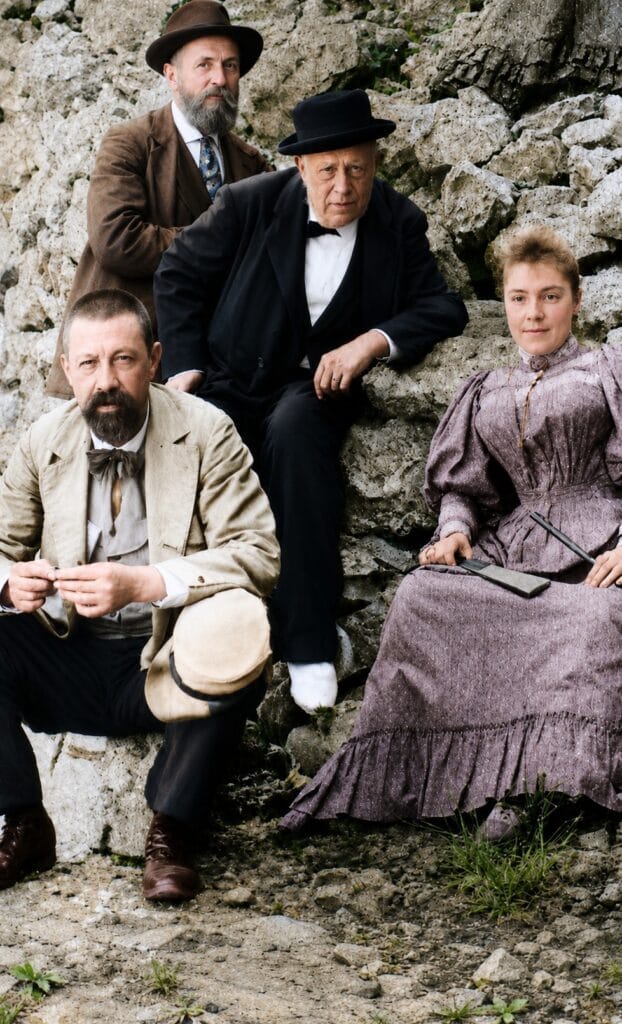
What the Fire and Hammer Taught Him
His father, Francesc Gaudí, was a copper craftsman. The workshop was always full of fire and the sound of hammering. A flat sheet of copper would bend with a single strike, turning into a shape that could hold space. No drawings. No explanations. None were needed. The boy learned it all with his eyes and hands.
The boy learned about three-dimensional shapes with his hands first. Every day, he watched a flat sheet of copper meet fire and hammer, curve, and turn into a real, solid form — and for Gaudí, architecture never started on paper. He imagined the space first. The drawing was simply the final step, putting that idea onto paper.
What he learned that day in the workshop wasn’t really about copper. It was the moment a flat surface turned into a solid shape, right under his fingertips.
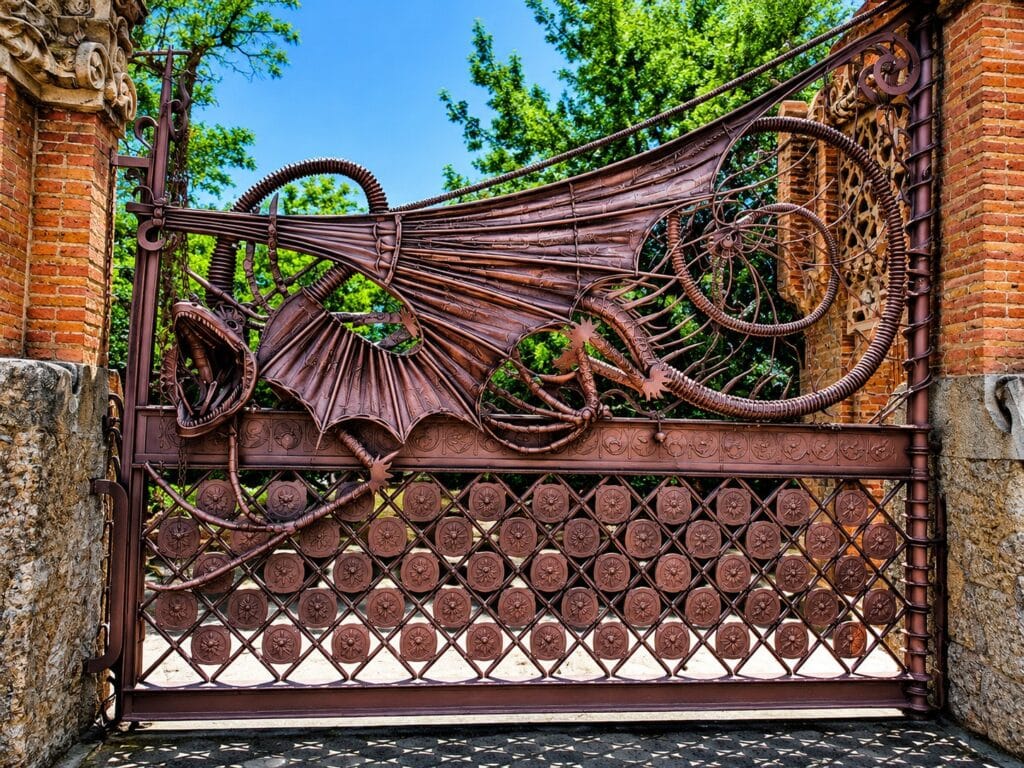
Genius, or Just Crazy?
In March 1878, at the graduation ceremony of the Barcelona School of Architecture, one young man’s name was called out. Antoni Gaudí. He was already known around the school as the strange 26-year-old student. He wasn’t someone who memorized rules — he was someone who kept asking why the rules had to be that way in the first place.
His final graduation drawings were the same way. The lines were too bold. The shapes kept breaking away from the order the school had been teaching. To some people, it looked reckless. To others, it looked like a possibility no one had ever seen before.
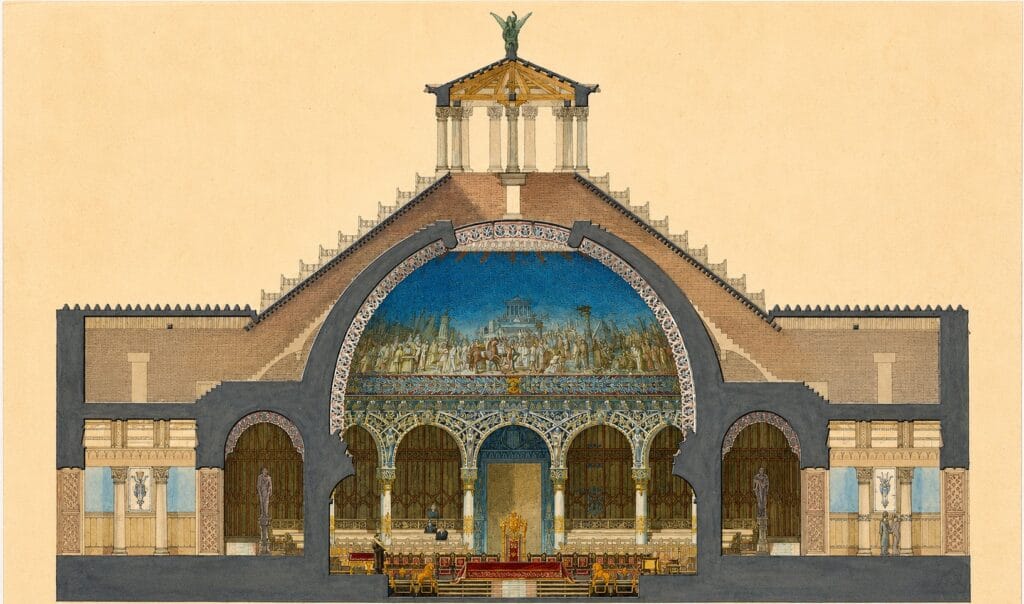
That’s why the school director, Elies Rogent, handed him his diploma with these words: “We don’t know if the person we’re giving this diploma to is a genius or a madman. Only time will tell.”
That wasn’t just a joke. Gaudí’s drawings weren’t the kind of answer sheet the school had taught. They were closer to a question no one had solved yet.

Standing in a Master’s Shadow
Before graduating, Gaudí worked as an assistant to architect Joan Martorell, a master of medieval Gothic architecture. Gaudí drew his master’s plans by hand and, in the process, learned with his own hands how an arch carries weight and how a column holds up a space. But he wasn’t just interested in copying the rules.
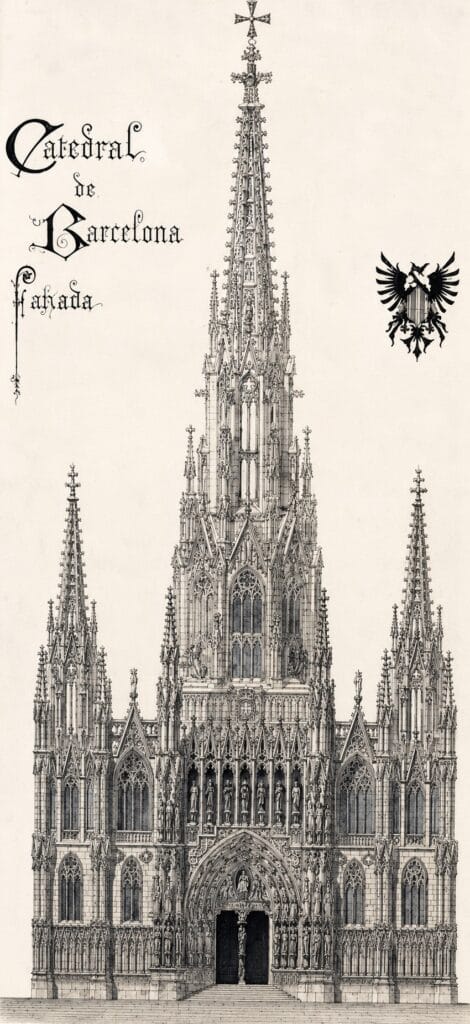
Working on the facade of the Barcelona Cathedral became another kind of school for him. He saw up close just how great Gothic architecture could be. At the same time, he saw exactly where it stopped. Its spires reached up toward the sky, but nature never grew that way. From that moment on, Gaudí stopped being someone who perfected Gothic style. He became someone searching for what came after it.
Furniture Shaped Like the Human Body
Tell someone the first thing to understand Gaudí by isn’t a cathedral, but a chair, and most people will tilt their heads in confusion.
The wooden chairs he carved never fought against the human body. The backrest curved to follow the shape of a spine. The seat gently held the hips. He studied the human body closely, and that understanding later flowed straight into the spaces people would live in. What made his architecture so special wasn’t that he thought about the building first — he thought about the person who would live inside it first. And that all started not with a giant cathedral, but with a small chair made for one human body.

Even the City’s Nights Were His Work
In 1878, 26-year-old Gaudí got his first public project. What Barcelona’s city council gave him wasn’t a building. It was the night of a public square — the hours when people came and went and lingered.
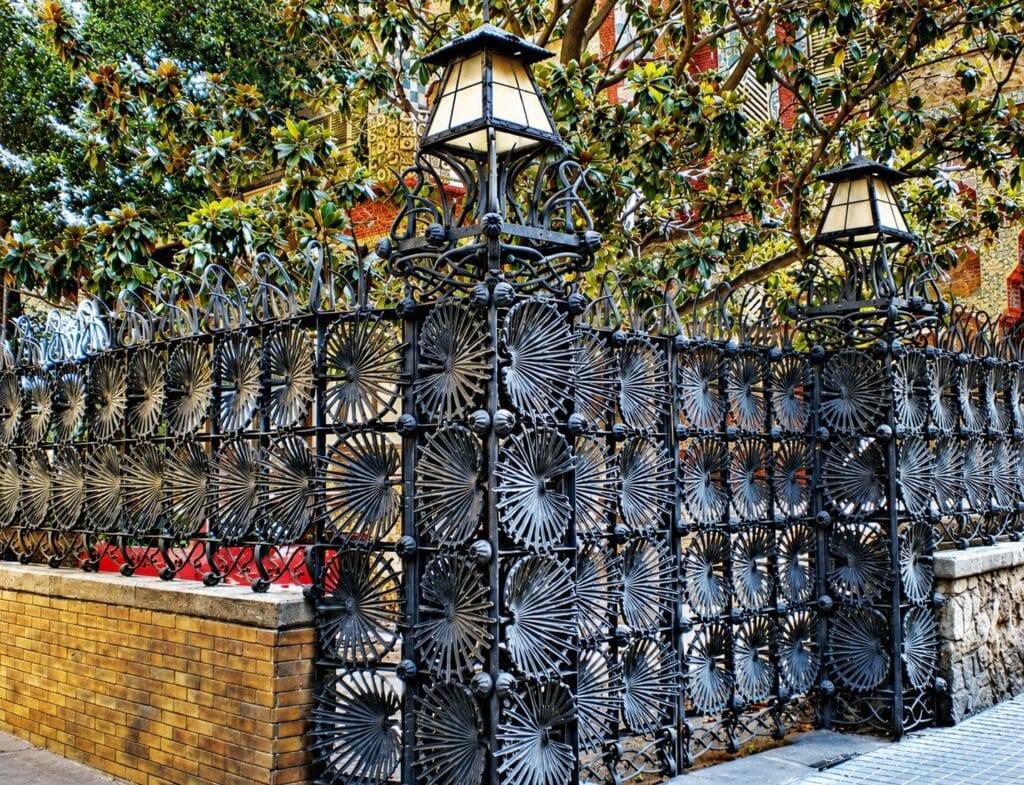
The street lamps he made weren’t just poles holding up light. Iron grew like vines. Snakes climbed up the posts. When night fell, the light and shadows themselves became part of the art. People probably looked at the sculpture standing in the middle of the square before they even noticed it was a lamp lighting their path.
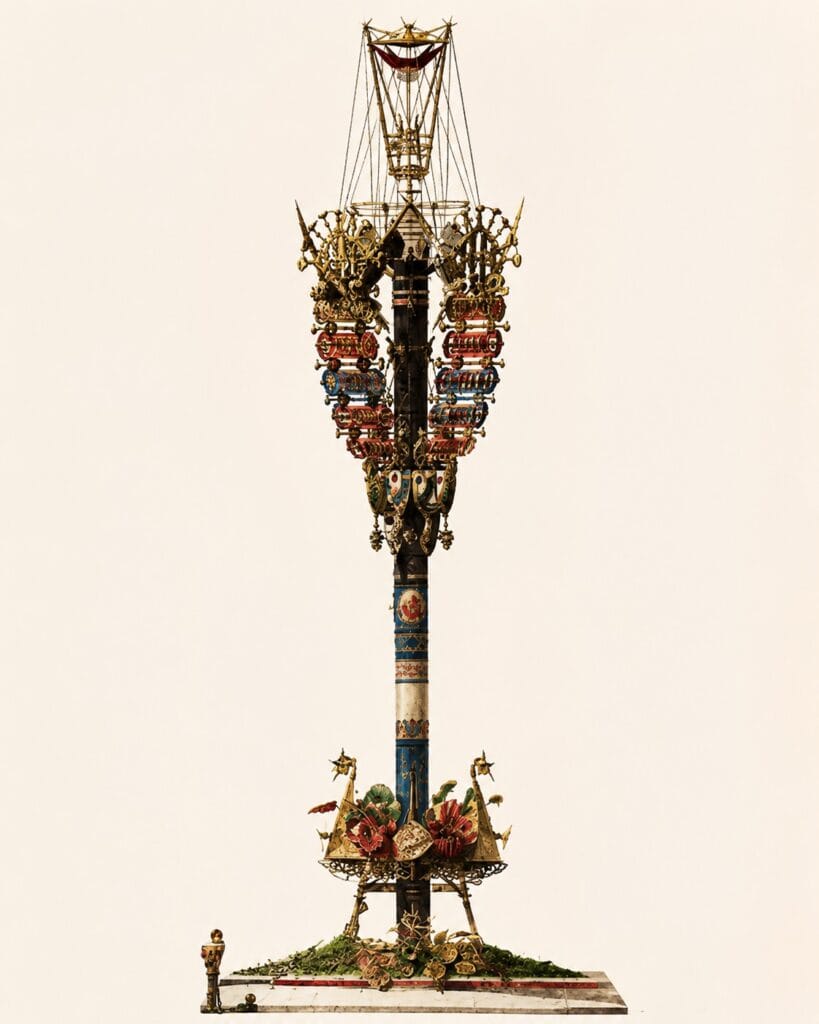
But his pencil had already moved on from the square. On paper, a giant electric lamp tower was rising along Barcelona’s sea wall, Muralla de Mar. The whole structure, dozens of meters tall, was designed to become one single source of light. It never became real. But the drawing survived — showing exactly what kind of city he wanted to build at night.
Iron Had to Feel Alive
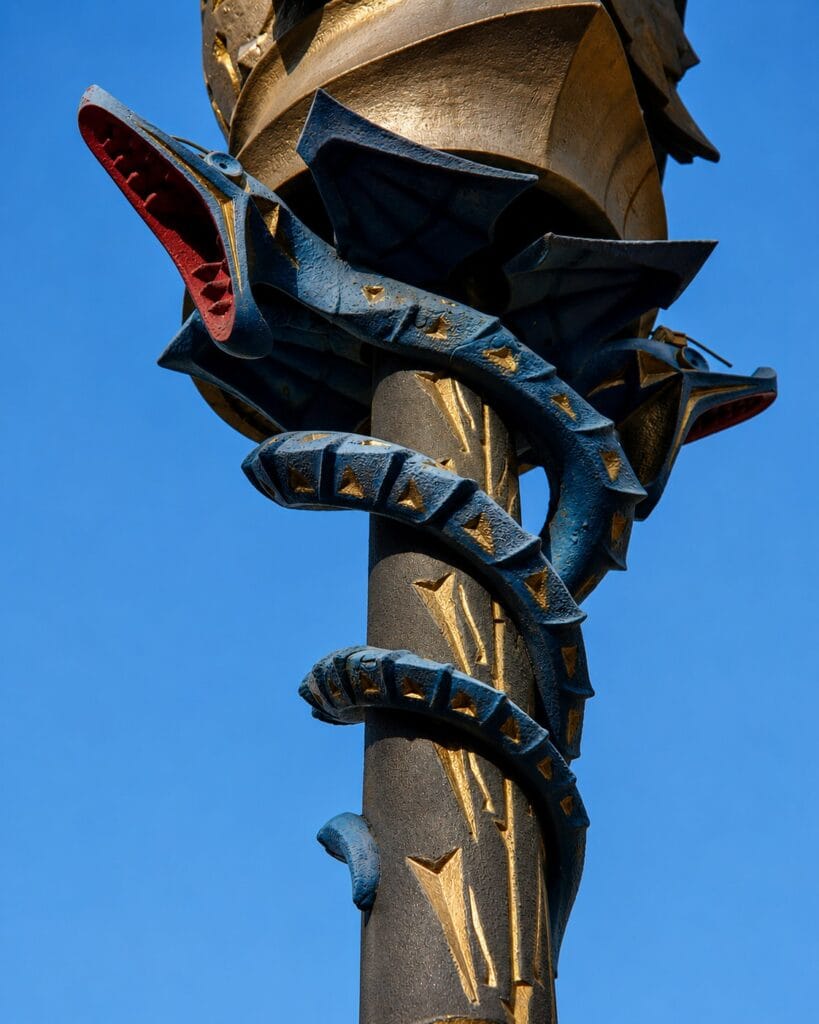
For him, iron wasn’t just a material that held a building up. It was another living thing that had to move.
His iron never followed a straight line. It twisted like a vine, split like the veins of a leaf, and rose upward like a branch chasing the wind. Cold metal, somehow, started to look like a part of nature.
These Weren’t Blueprints — They Were Paintings
Most people, seeing Gaudí’s original drawings for the first time, react the same way: “Wait, this was a blueprint?”
Those papers don’t feel cold. They don’t look like something drawn only with a ruler and compass. Some lines shake. Some blur. Some sit there faintly, like a dream that hasn’t fully formed yet. They feel less like documents explaining a building, and more like paintings made by someone who saw the architecture before it existed in the real world.
It wasn’t always this way. As a student, Gaudí drew the way his school demanded. Columns looked like columns, entrances looked like entrances, decorations looked like decorations. But even then, something strange was already showing. His lines weren’t just explaining structure. They were showing, ahead of time, what mood a building should give a person standing in front of it.
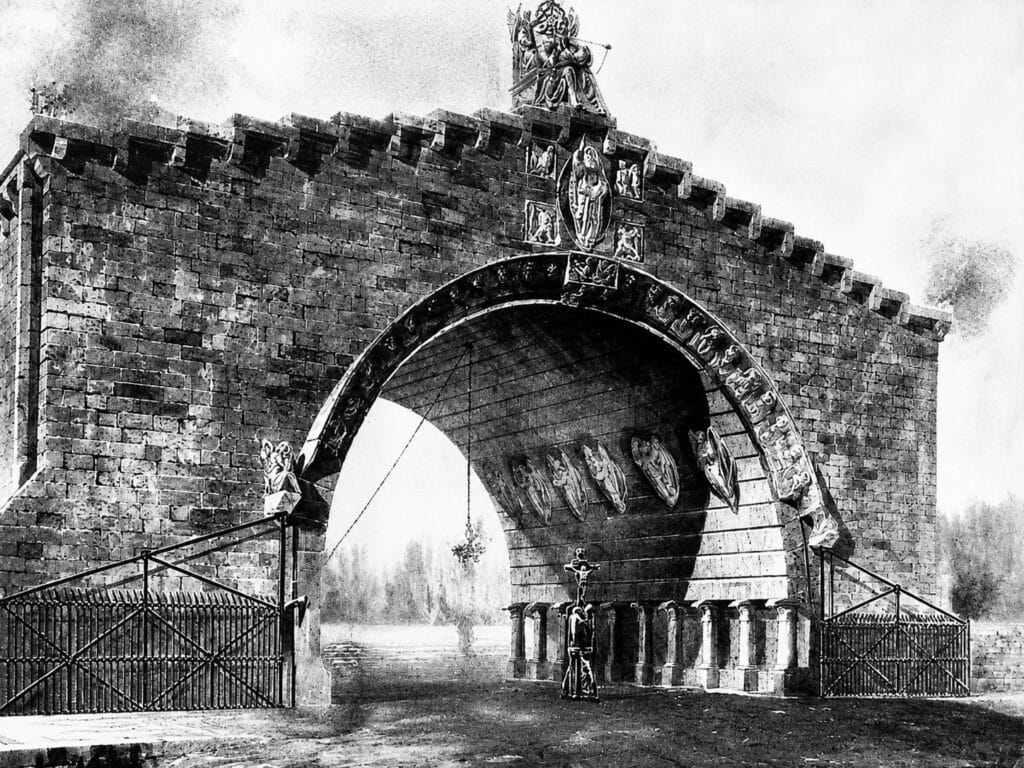
This drawing is the work of a young student. But the building it shows is already more than a simple entrance. A door standing at the end of a road, a boundary into the world of the dead, and a symbol placed above it — all drawn as one single scene. Gaudí wasn’t just drawing structure. He was trying to put the exact feeling a person would get, standing in front of it, onto the paper.
As time passed, his drawings stopped looking like school assignments. Color started climbing onto the lines. Columns and decorations weren’t drawn as flat cross-sections anymore — they were painted like real objects. The architectural pieces weren’t broken apart to be explained. They stood on the page like sculptures already touched by light.
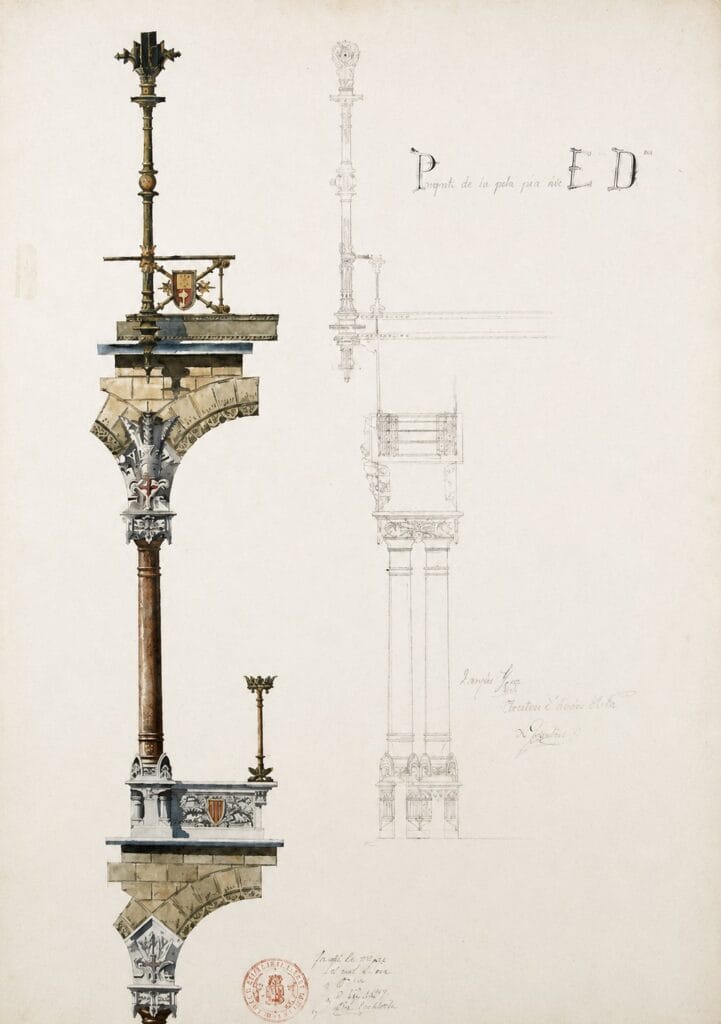
It looks like a painter’s work. He showed the weight of stone through color, and the strength of a column through shadow. His lines weren’t boundaries for measuring size anymore — they showed the direction a shape was growing in. The building hadn’t been built yet, but on paper, it already felt like real material.
His drawings kept getting bolder. His lines no longer existed just to explain a building. On paper, shapes moved like they were alive, and light and shadow blended together like a landscape. Even before the real building existed, the drawing was already a finished piece of art.
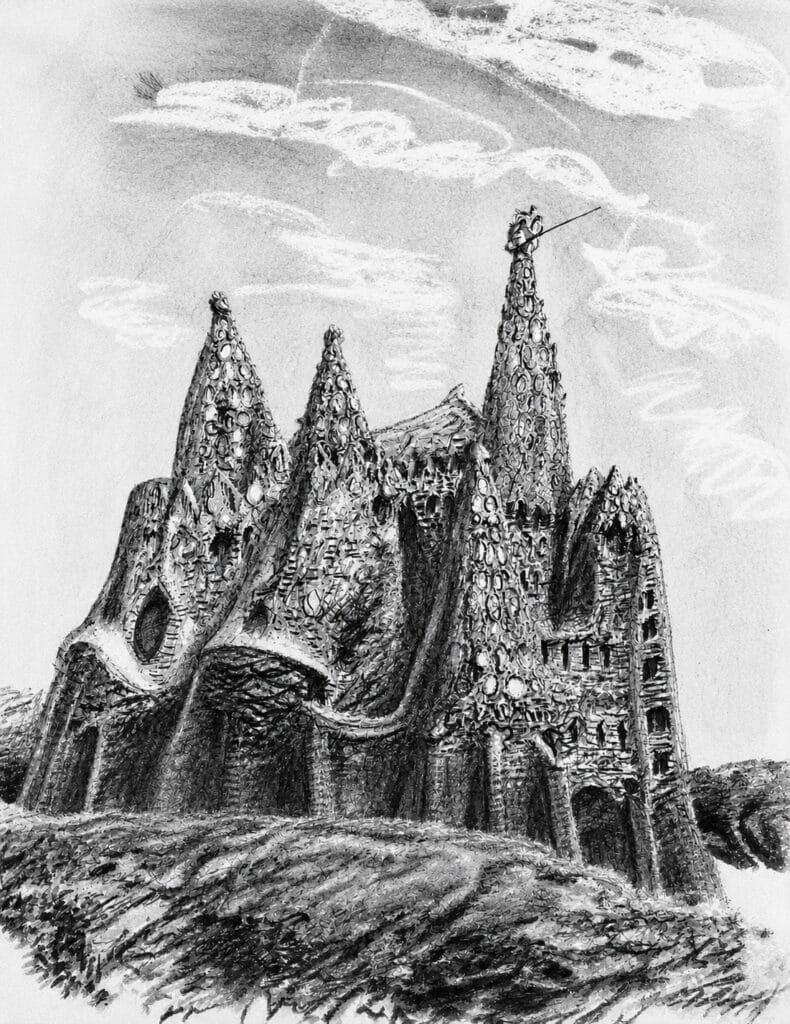
Standing in front of this drawing, you notice the painter in him before the architect. He wasn’t trying to show exact measurements — he was capturing the mood of a space that hadn’t been built yet. His blueprints weren’t tools for calculation. They were a canvas for imagining a world that didn’t exist yet.
An Entire City Became a Sculpture
The moment you step into Park Güell, the architect Gaudí disappears. Instead, a sculptor named Gaudí shows up. A bench becomes a curve. A column becomes a forest. Water flows along a sculpted path. He didn’t just build buildings — he shaped an entire city into one giant work of art.
Someone seeing it for the first time wouldn’t even think it’s a bench. It looks like one huge sculpture running endlessly along the edge of the plaza. Only when you walk closer do you notice people are actually sitting on it. Gaudí didn’t make a bench for sitting. He made people sit inside a work of art.
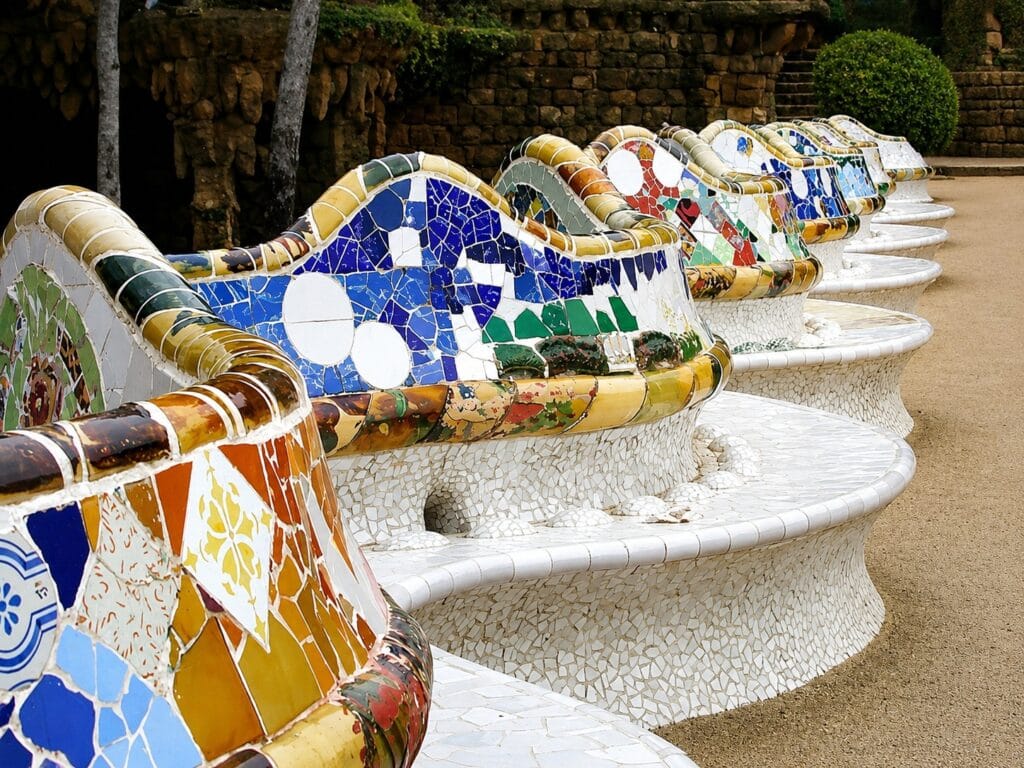
Get close, and you realize the bench is made from thousands of tiny broken tile pieces. Cracked pottery and tile, each holding its own color, somehow flowed together into one shape under Gaudí’s hands. Pieces that would have been thrown away became a bright mosaic, and every day, people sat and leaned against a work of art without even thinking about it.
The plaza that this bench wraps around seems to float in the air. Underneath sit 86 columns. They hold up the entire plaza, but they don’t look like ordinary structural supports. They repeat like tall tree trunks, and the ceiling stretches out like the shade of a forest.
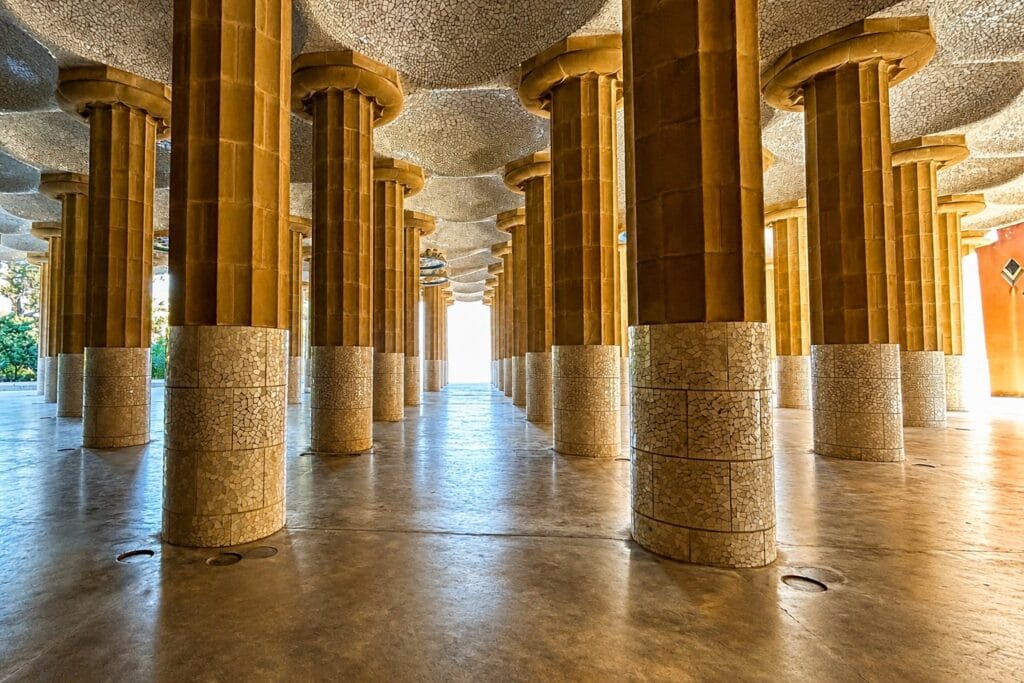
The further you walk between the columns, the more the light keeps shifting, and even though they’re the same columns, no two views ever look alike. Walking through it doesn’t feel like walking through a building — it feels like passing through a forest made of stone.
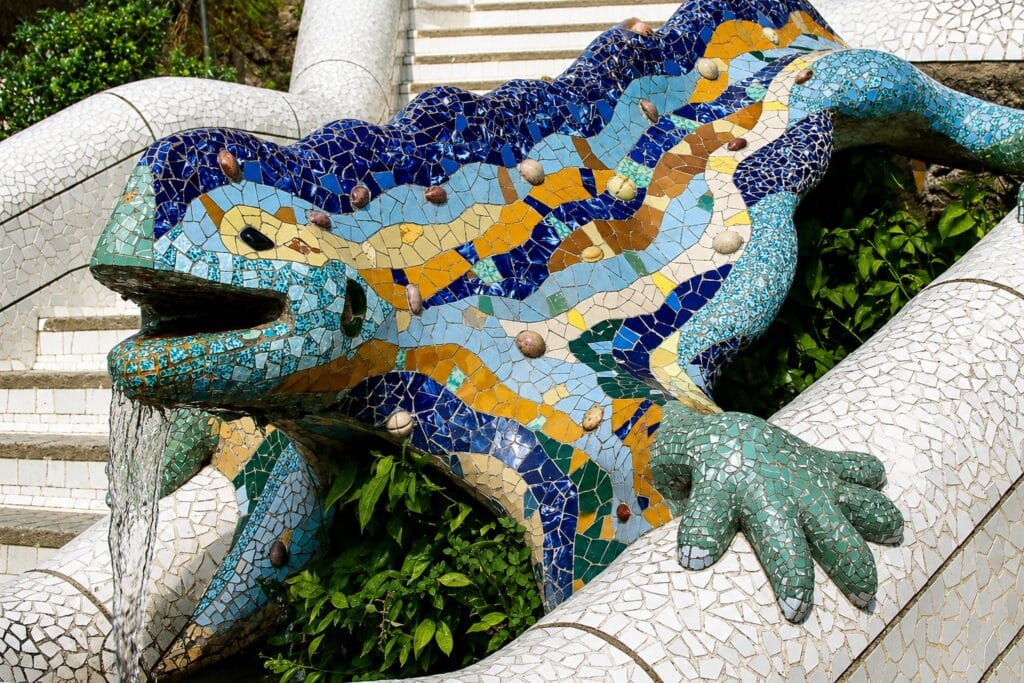
In the middle of the stairway sits a mosaic lizard, called El Drac. Its body, covered in broken tile pieces, catches the light and flashes different colors, and water pours out of its mouth. It’s made of stone and ceramic, but the moment the water starts flowing, it looks like a living creature.
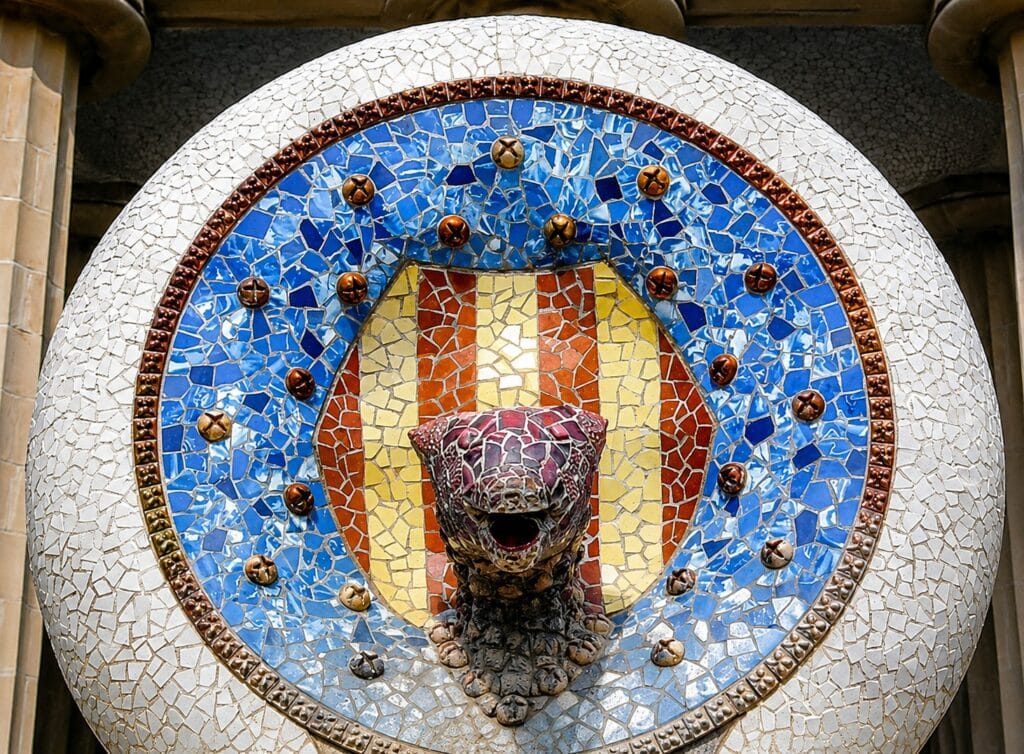
Climb a little further up the stairs, and the coat of arms of Catalonia appears. The yellow and red mosaic isn’t just decoration — it’s a piece of art that carves this land’s symbol right into the middle of the stairway.
“Architect” Was Never Enough of a Word
Even a friend’s guestbook carries his touch. He never just signed his name and walked away. He left a drawing, even on a single small sheet of paper.
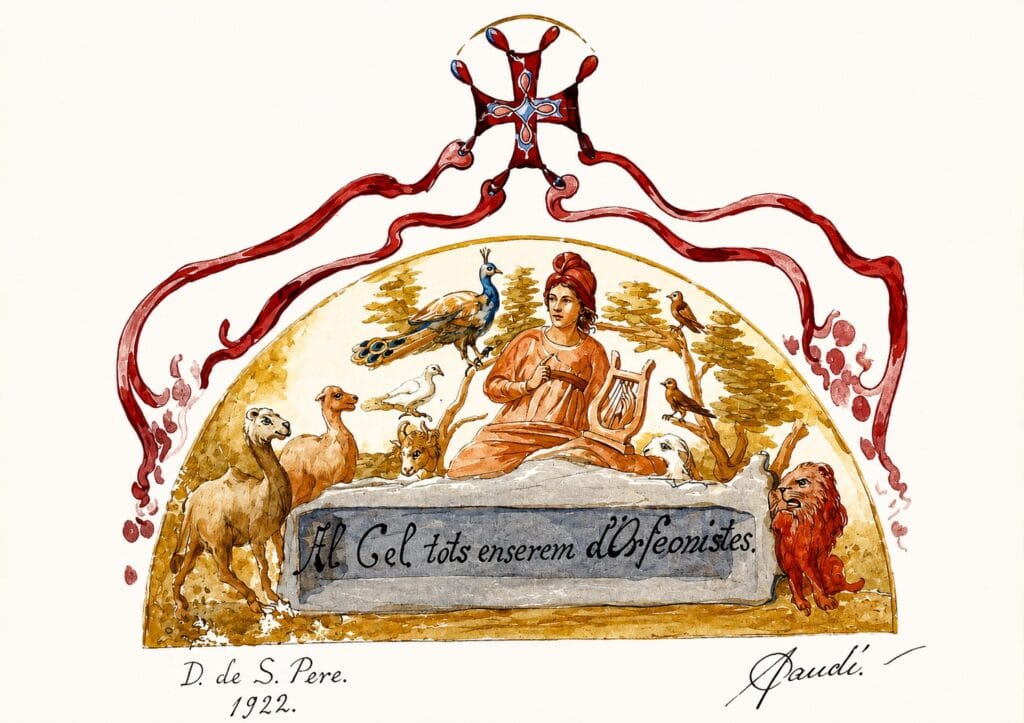
A peacock, a lion, a sheep, a bird, a figure holding an instrument, and handwriting all flow naturally together in one frame. The drawing and the writing don’t just decorate each other — together, they become one piece of art. Even a single page of a guestbook, he turned into a space for art.
In front of glass, he was no different. He didn’t just make a window that let light through. He drew the light itself.
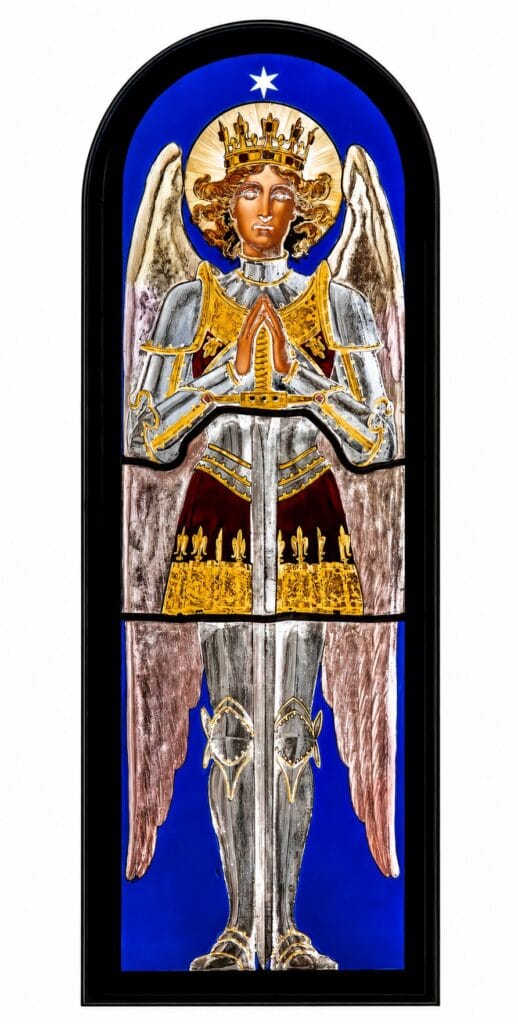
An angel standing against a blue background isn’t just religious decoration. Gold and blue take on a new expression every time sunlight hits them. He chose glass instead of paint, and a window instead of a canvas.
Even a single circle became a work of art in his hands.
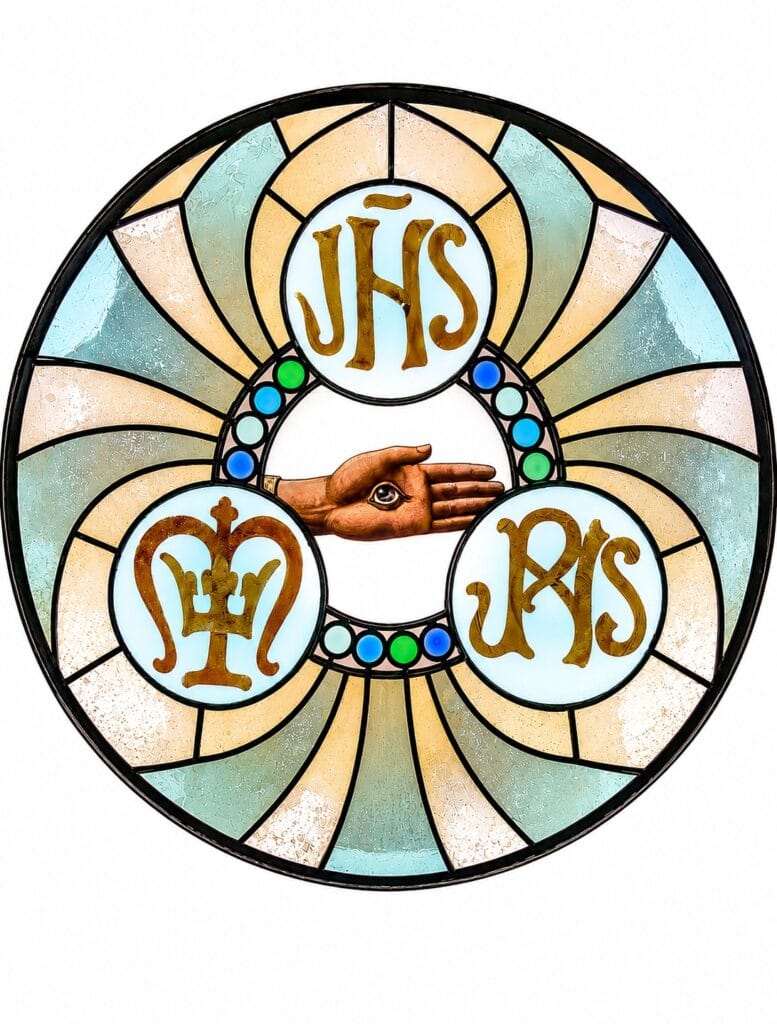
Inside the round glass, letters, symbols, colors, and light form one single order. The piece reveals a new look every time sunlight passes through. Gaudí didn’t just design the shape — he designed the exact moment light would settle into it.
The World Was Already Looking for Him
At some point, Gaudí’s name could no longer stay inside Barcelona. He never went out looking for the world. But his drawings and his work were already crossing the city’s borders on their own. People weren’t looking for him to build a building. They were looking for the kind of world only Gaudí could make.
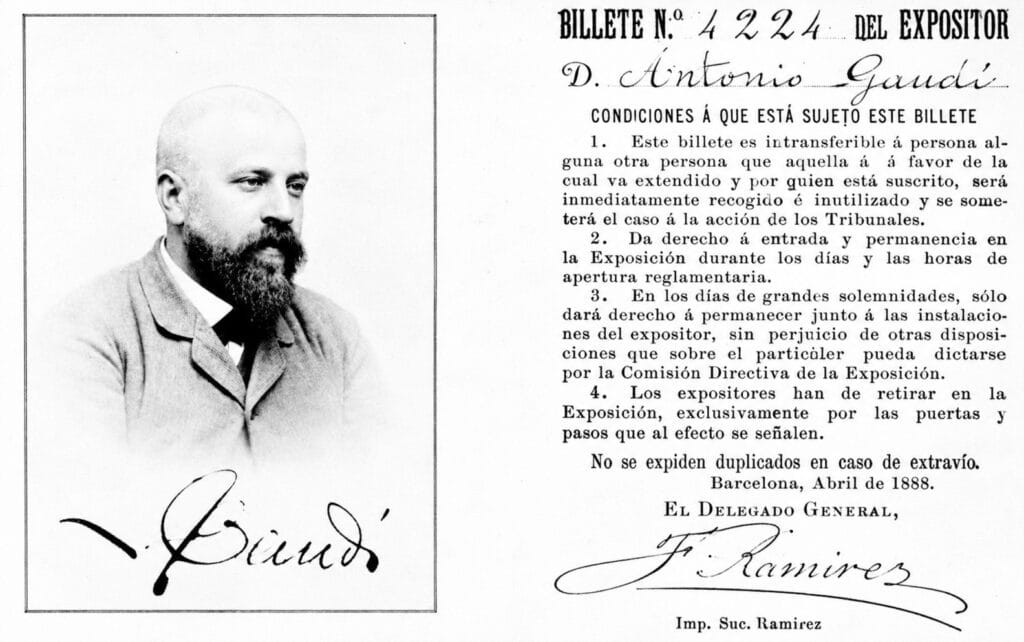
At the 1888 Barcelona Universal Exposition, a young Gaudí stood there as an official exhibitor. His face still carries the nervous look of a man whose world was just starting to open up. No one could have imagined yet that this same man would one day give up everything else for a single building.
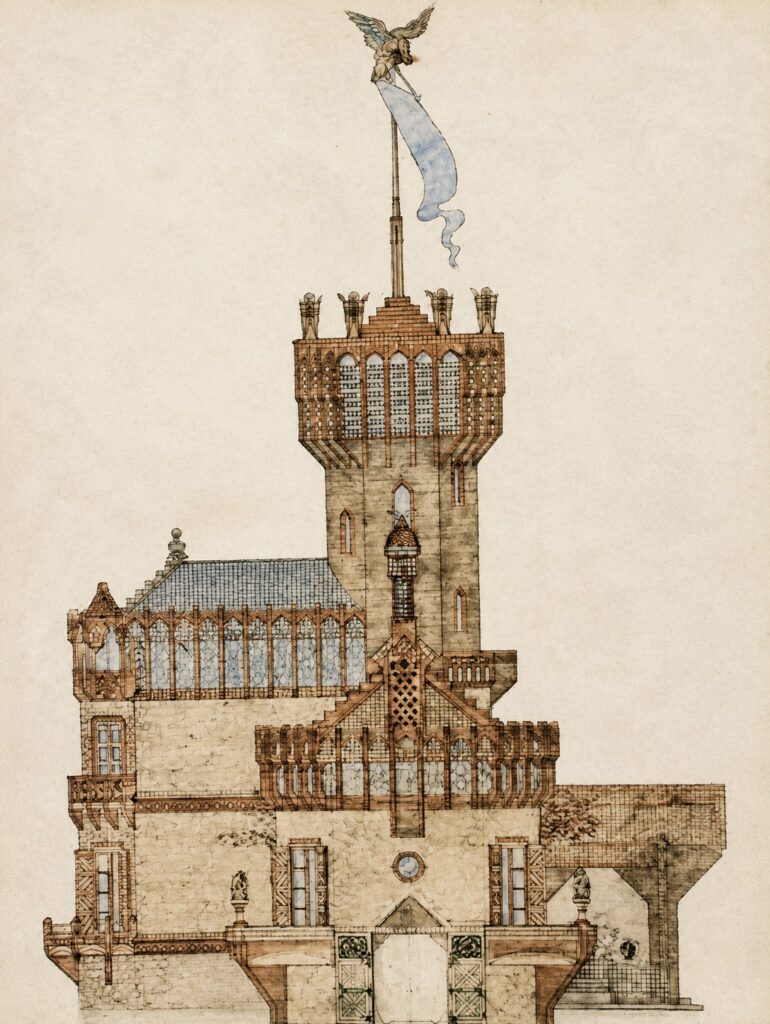
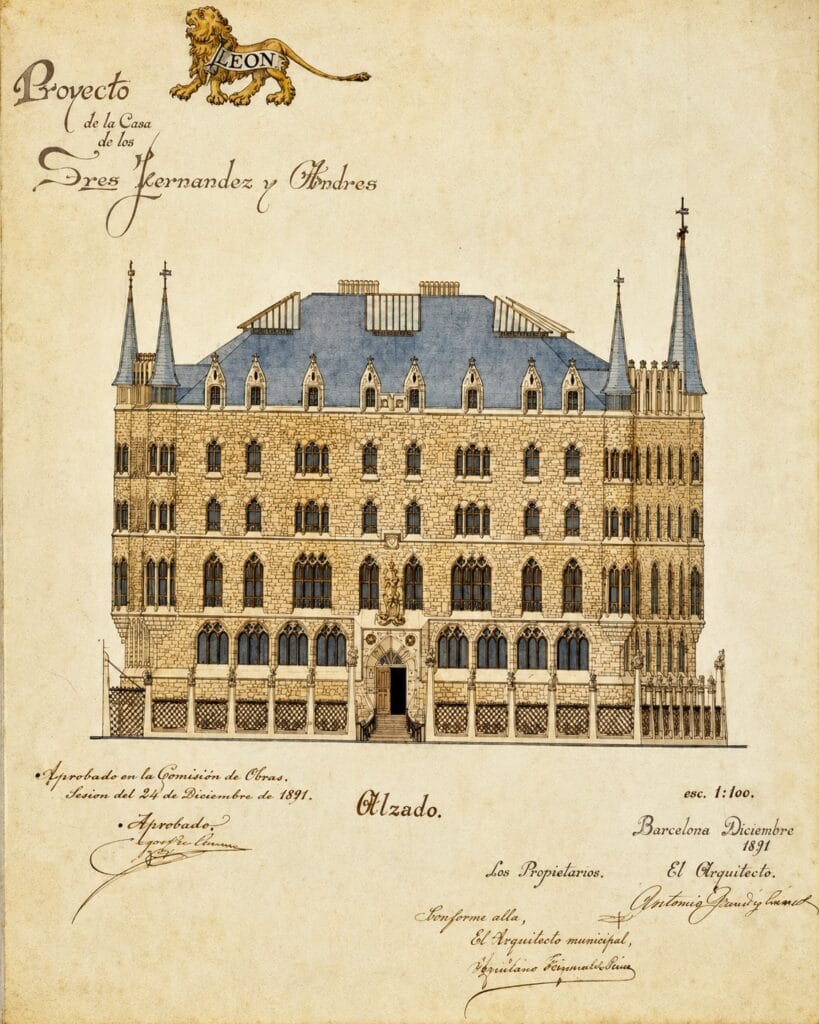
Around that time, Gaudí’s work started to reach beyond Catalonia too. Casa Botines in León, Spain. A different city was the one reaching out to a Barcelona architect first. On paper, the building wore a clean Neo-Gothic exterior, but Gaudí’s own art was already slipping into its corner towers and decorations.
Casa Botines showed that Gaudí’s name had reached beyond Barcelona.
Even further away, people were looking for him. In 1892, a Franciscan mission building was planned for Tangier, Morocco. People were now searching for him not just beyond Barcelona, but as far as Africa. The plan was never built. But in the surviving drawings, spires that already hint at the future Sagrada Família were quietly growing.
The plan never became reality. But on paper, the towers were already reaching toward the sky.
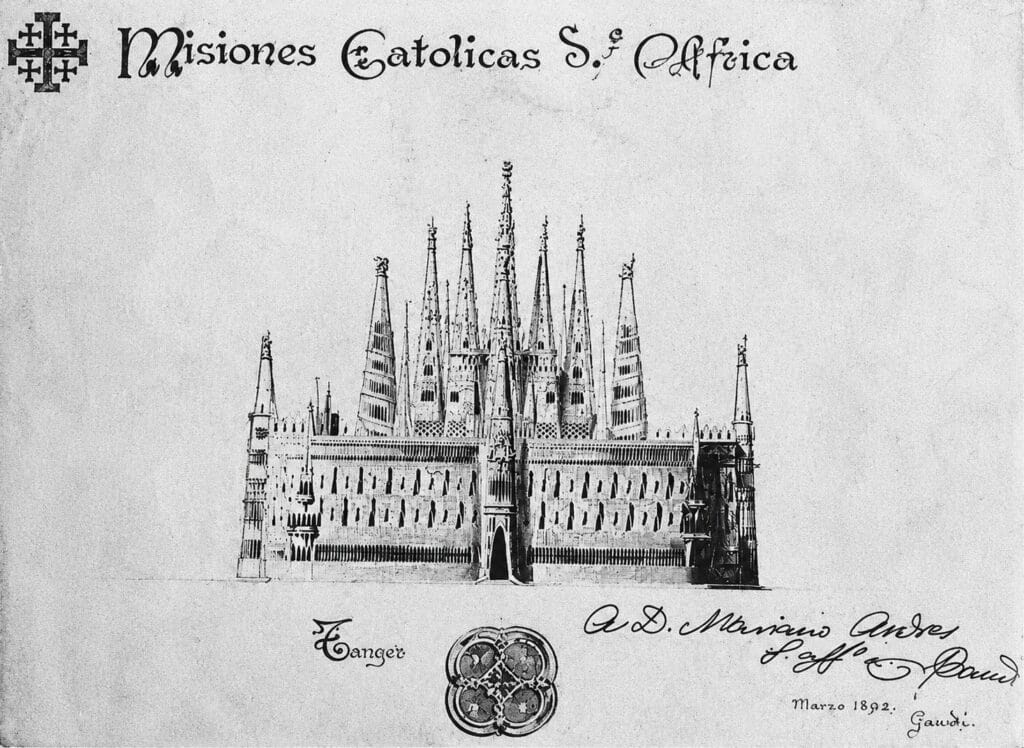
By then, people weren’t just looking for an architect from Barcelona anymore. They were looking for the name Gaudí itself.
The Sagrada Família Began as a Small Chapel
Around that same time, Gaudí was deep in another project. Colònia Güell. On the surface, it was just one small chapel. But inside it, every structural experiment that would later hold up the Sagrada Família was already taking shape.
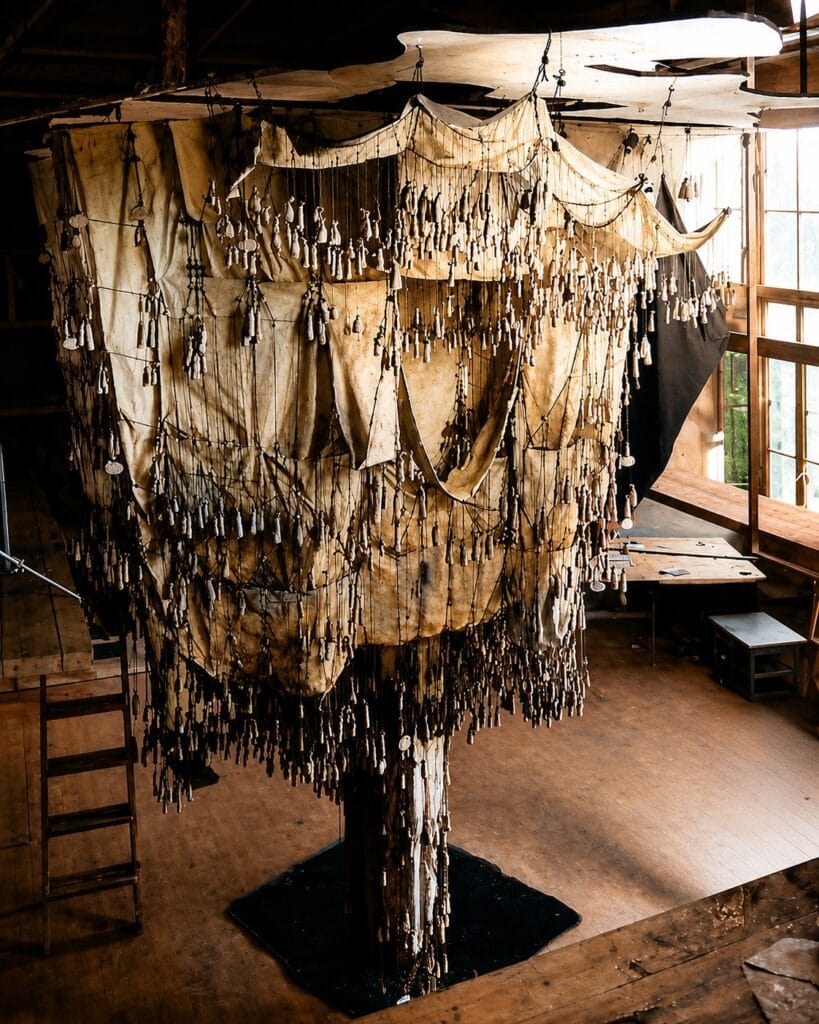
What he was searching for wasn’t a beautiful curve. It was the most stable curve nature could make on its own. He hung threads from the ceiling and attached small weights to them, one by one. Under gravity, the threads settled into their most natural shape, and Gaudí flipped the whole model upside down. What had drooped downward became columns and arches rising upward. He was taking a structure nature had already calculated and turning it into architecture.
Colònia Güell was the most important structural testing ground that would later lead to the Sagrada Família.
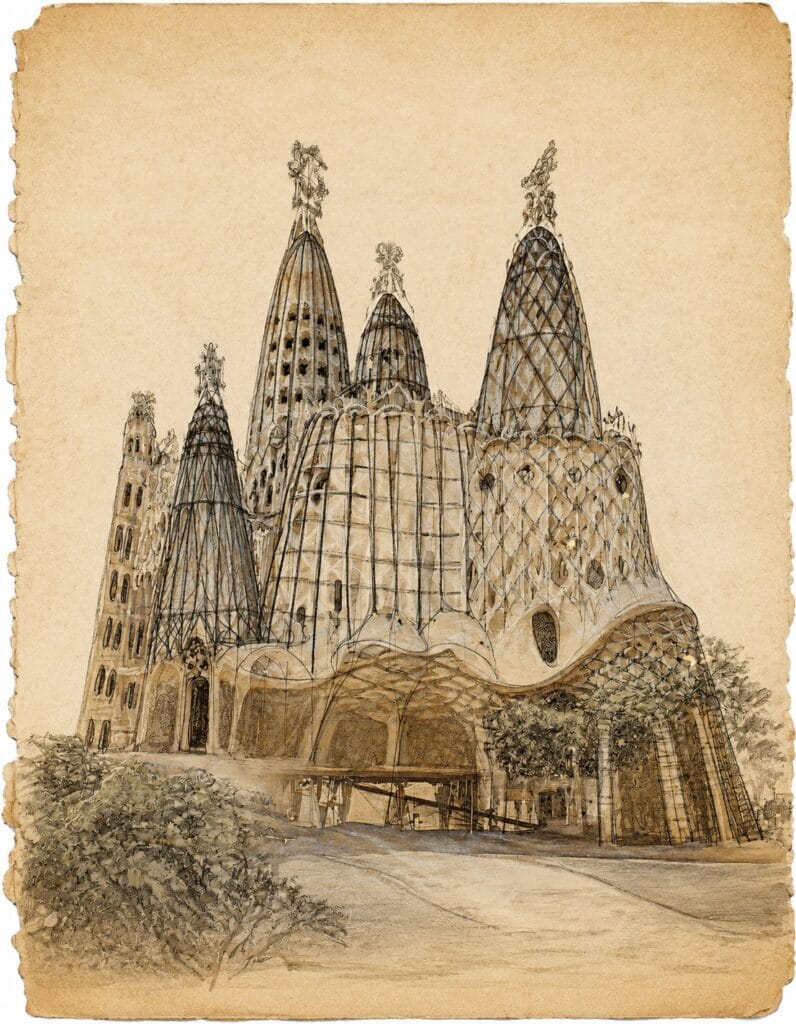
Colònia Güell was the first result of moving a structure nature had built into a real, physical space. The columns, arches, and curves he tested here would later reappear in the Sagrada Família, on a far bigger scale. People were looking at one small chapel. Gaudí was already walking toward his final work.
Silence
At some point, Gaudí began speaking less.
He stopped mingling with people the way he used to. He no longer opened himself easily to new commissions. The world called his name louder than ever, but he took one step back from people at a time.
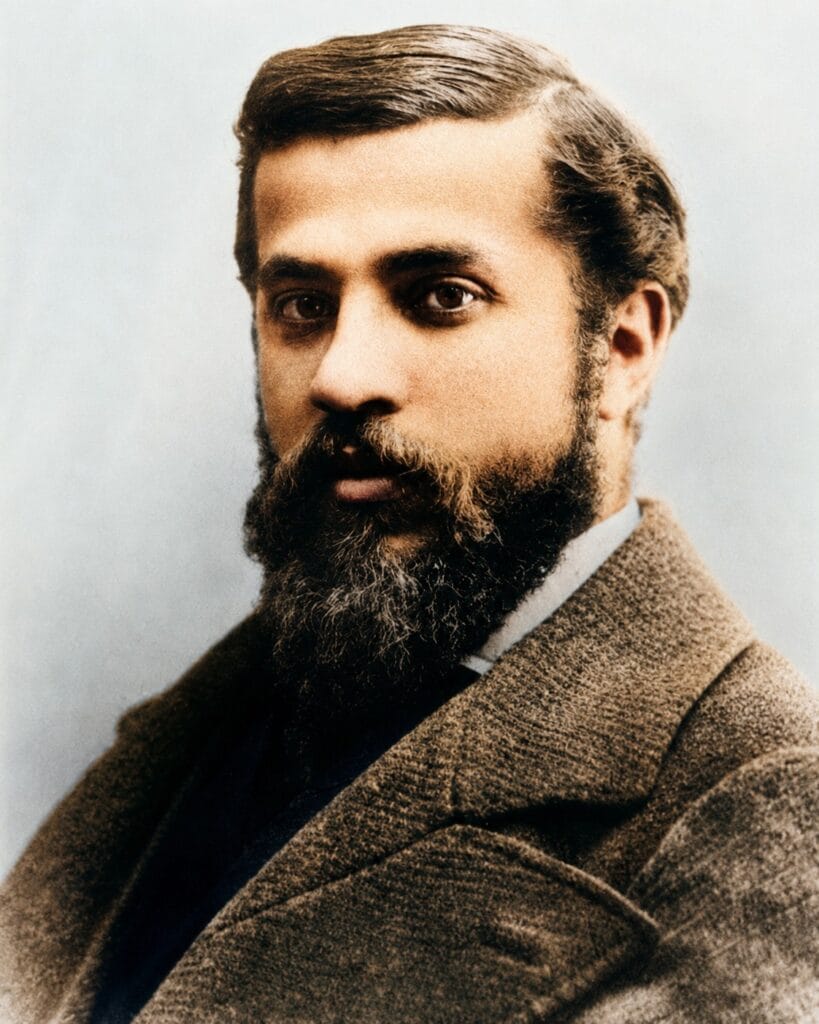
In this photo from his younger years, he’s still wearing a neat suit. The world believed even bigger success was waiting for this young man. And it was right. But no one knew it yet: the man who had climbed the highest was already starting to walk toward the deepest place.
One Rejection, a Lifetime of Loneliness
Around 1885, Gaudí, already a promising young architect, fell in love with someone — a teacher named Pepita Moreu. He carried that feeling for a long time. After months of hesitation, he finally found the courage to speak. But her answer had already been decided before he even asked. She had already promised herself to someone else in marriage.
It’s said that Gaudí couldn’t say a word. This was right when the world was starting to notice his talent. People saw a new kind of architecture rising from his hands, but the one heart he truly wanted, he never won.
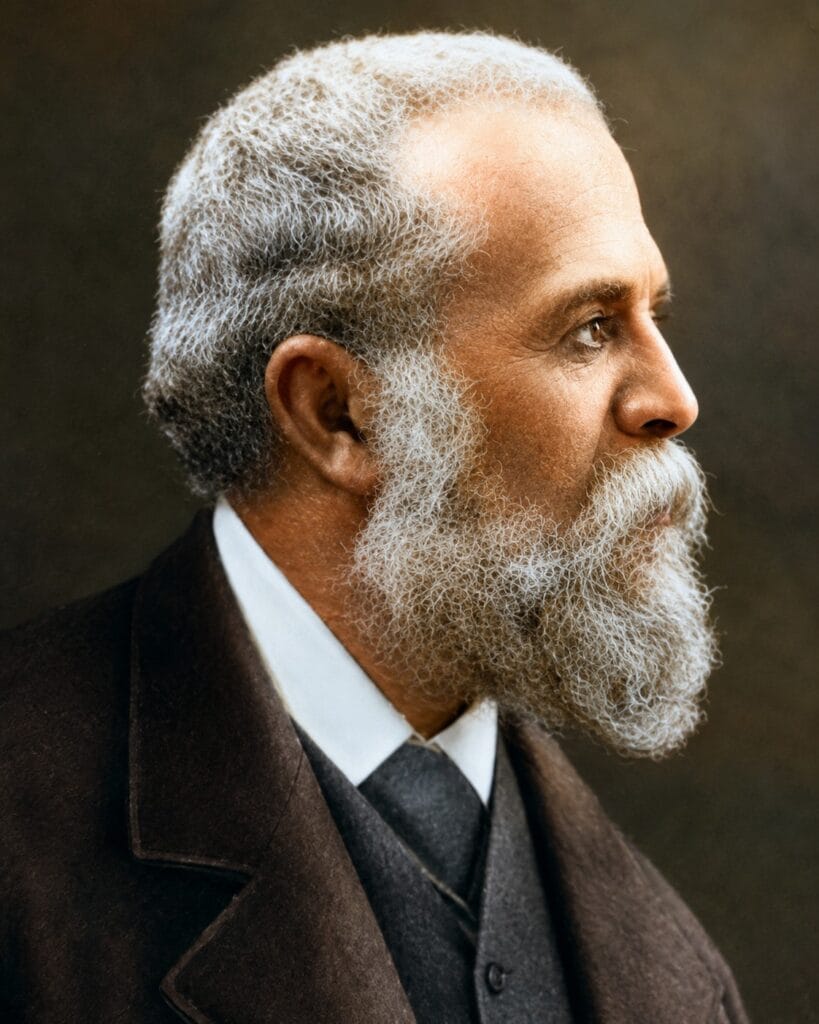
After that, Gaudí never married.
Twenty years passed.
Thirty years passed.
He drew thousands of blueprints.
But there was never anyone by his side to draw a future together with.
Left Alone in the World
As a child, Gaudí couldn’t walk far.
His mother, Antònia, took her son’s hand and led him out to the farms near Reus. She showed him flowers, let him touch leaves, and looked at insects and birds with him. The boy who couldn’t walk instead became a boy who looked at things for a long time — and maybe the fact that his cathedral later resembled a forest started with those memories, out in that field.
If his mother had held his hand outside the house, then in Barcelona, it was his older brother Francesc who never let go of his. Francesc, studying medicine, brought a 16-year-old Gaudí to live with him, sharing a small rented room. During the day, they went to different schools. In the evening, they came back to the same room to grow their own separate dreams. The brother dreamed of becoming a doctor who saved lives. The younger one dreamed of becoming an architect who breathed life into stone. For a physically weak Gaudí, his brother was his strongest support before he was even a brother.
In 1876, Francesc finally became a doctor. A life he had spent years preparing for was just about to begin. But that beginning was far too short. In an instant, it took away a 25-year-old man’s entire future — a man who had studied his whole life to save others, gone before he ever got the chance to actually work as a doctor. Gaudí had to stand in front of his brother’s coffin and watch the future they had dreamed of together get buried first.
But the grief didn’t stop there. His mother, Antònia, who had spent her whole life watching over her son, couldn’t bear the shock of losing her son the doctor. About two months later, the family had to bury her too. At 24 years old, Gaudí buried both his brother and his mother within the same year. At a table where they had recently sat together, laughing over meals, two seats suddenly stood empty — and those seats were never filled again. The house looked the same, but the world inside it was no longer the same world.
In 1879, his sister Rosa also passed away. After the funeral, all that remained in the house was her three-year-old daughter, Rosita. The girl’s father had left, leaving his daughter behind. The only people left to raise young Rosita were her uncle Gaudí, who never married, and her grandfather, who had already lost his wife. One was the busiest young architect in the world. The other was an old craftsman who had spent his whole life hammering copper.
So the three of them held on together, through time. The child grew into a girl, then into an adult. Seasons changed over and over, and every day Gaudí went out to build his cathedral, then came home to the same house in the evening. His father was always there. Rosita was always there. Thirty-three years passed that way.
Then grief came again. In 1906, not long after moving with his father and niece into a new house at Park Güell, his father passed away. His father’s death sent Gaudí into deep depression.
And six years later, in 1912, Rosita — who had lived with him for thirty-three years — also died, at the age of thirty-six.
All his time seemed to stop.
His mother, who once held his hand as a child. His brother, who dreamed of the future with him in that shared room in Barcelona. His sister. His father, who stayed by his side until the very end. And Rosita, whom he had held as a three-year-old and lived alongside for thirty-three years. All of them were gone.
The world watched the Sagrada Família rise a little higher into the sky, bit by bit. But no one watched Gaudí’s house grow a little emptier, bit by bit. The chairs around his table disappeared one by one. The laughter faded away with the seasons. And after the last member of his family was gone, only Gaudí was left in that house, completely alone.
Two years later, he left that house and began giving the rest of his life to the Sagrada Família.
Maybe, since he couldn’t choose death, he gave the rest of his life to his work instead.
The Man Who Kept Drawing the Passion
In 1911, Gaudí had to write his will.
His illness was more serious than people thought. A severe fever kept coming back, and his body grew weaker by the day. The rheumatism that had troubled him since childhood returned as well, making it hard for him to even walk. People thought this time, he really might not make it back.
But even at death’s door, his hand never let go of the drawing pen.
He began sketching the Passion Façade of the Sagrada Família.
Those carved figures look strangely thin and worn. Bone shows before flesh does. Suffering shows before life does. It’s a work about the suffering of Jesus, but if you look at it long enough, it feels like it also holds the time of one man who never put down his pencil.
People later said it looked as if the time he had endured was carved straight into the stone.
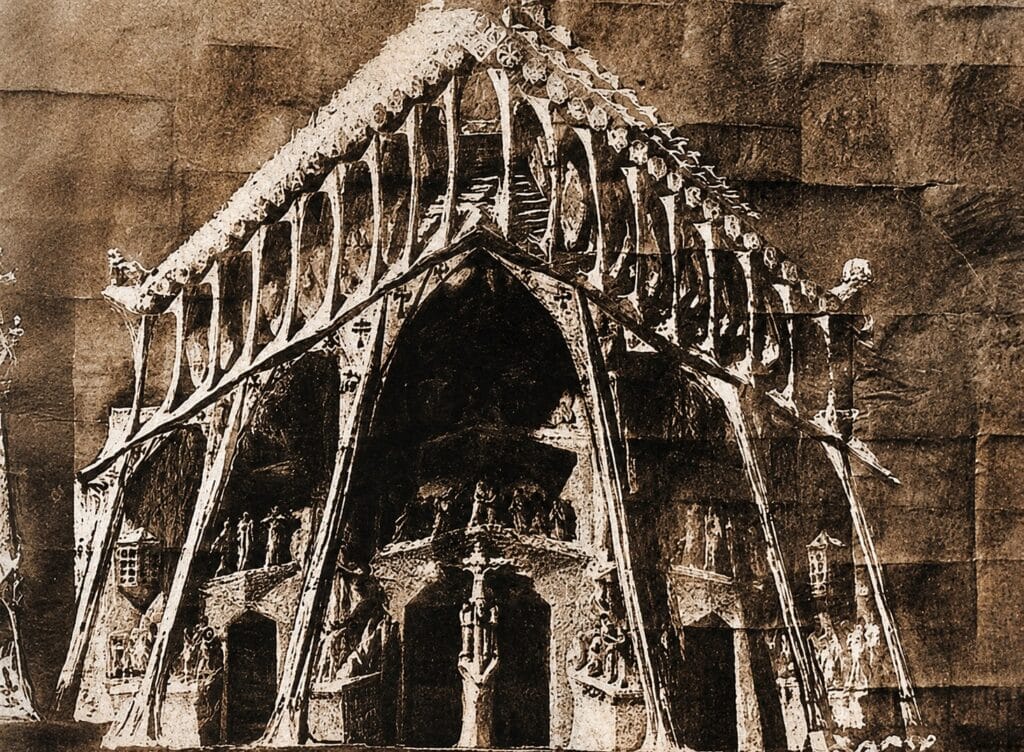
He fought off death that time. But soon after, his lifelong friend would leave him.
The Prisoner Beneath the Cathedral
In 1918, Güell passed away — his last patron, and a lifelong friend, gone.
Forty years earlier, at the Paris Universal Exposition, he had been the first person to notice a young Gaudí’s talent, standing in front of a small glove display stand. He believed in Gaudí even when the world couldn’t understand his architecture, and no matter what Gaudí imagined, he never once tried to set limits on it. Living as neighbors inside Park Güell, they talked about art and faith together and watched over each other’s lives from the closest possible distance. When even this last friend was gone, Gaudí lost the final thread connecting him to the world.
He stopped accepting new architecture commissions. He began giving his time and his life to the Sagrada Família alone, and as time passed, he spent fewer and fewer days at home and more and more time at the cathedral. After his family, his friends, and his patron were all gone, the only thing left by his side was an unfinished church. The underground workshop at the construction site slowly became his home.
In one corner of that cold, dark basement workshop sat an old army cot, surrounded by layers of dusty plaster models and blueprints. Instead of a belt, he tied his pants with worn rope. His worn-out shoes were patched with fish skin and scraps of cloth so he could keep wearing them. Breakfast was a glass of milk; lunch was whatever was cheapest at the market. People saw a shabby old man, but it wasn’t because he was poor. It was because everything that came into his hands went right back into building the cathedral.
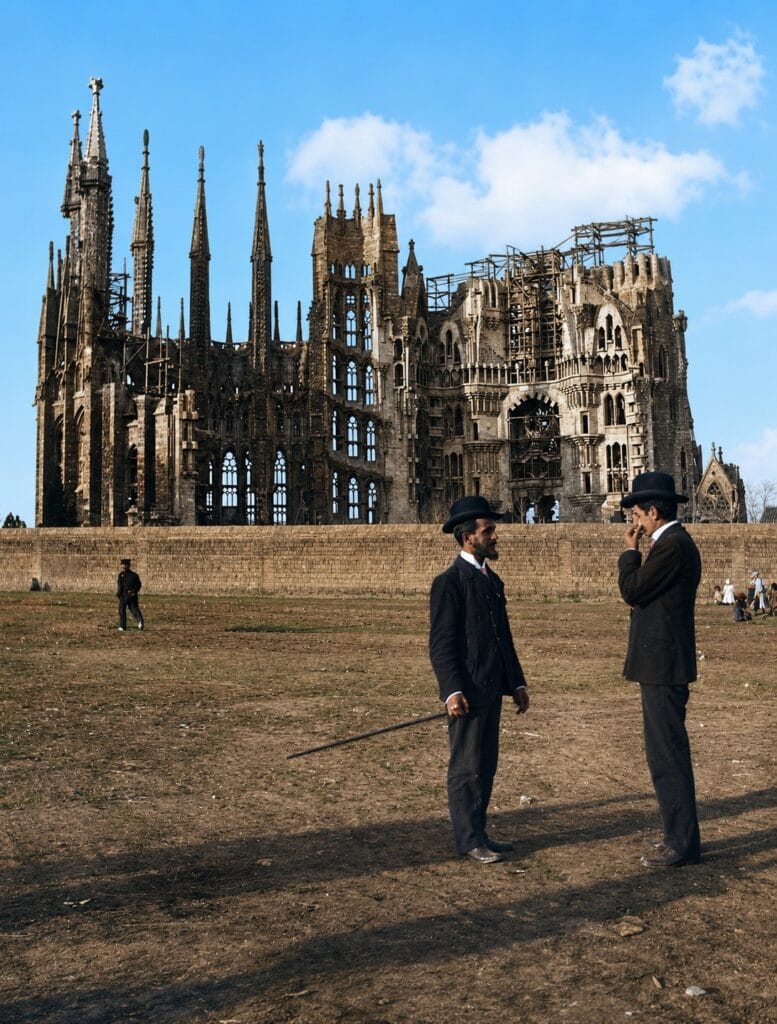
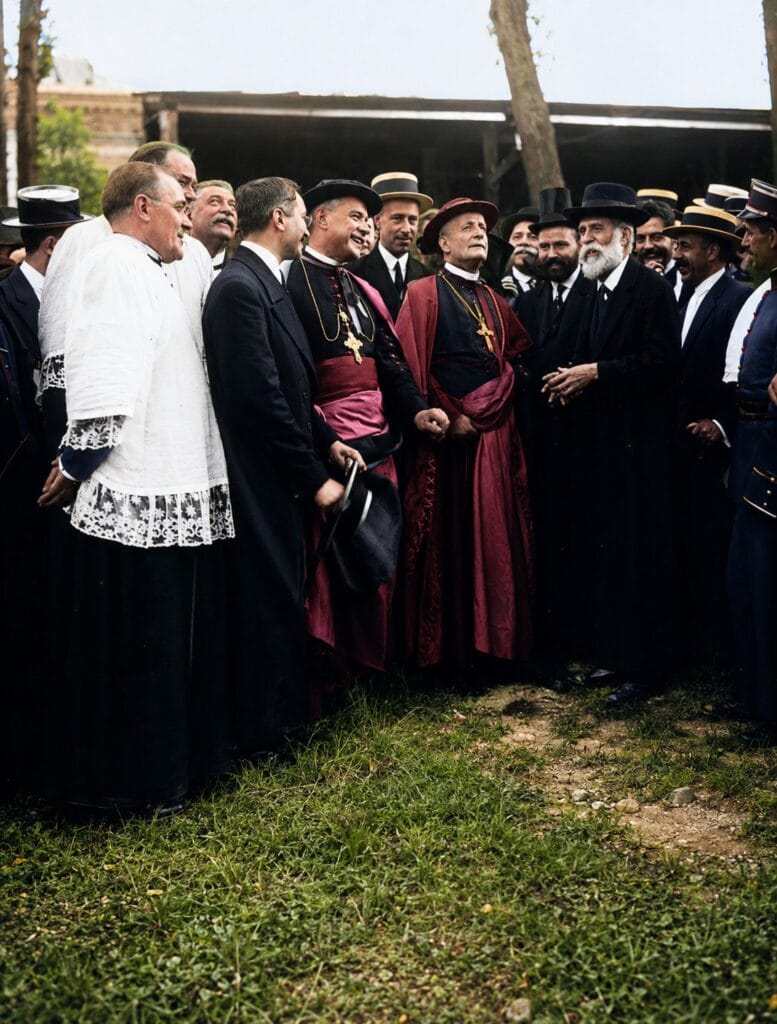
In 1915, when the papal nuncio Francesco Ragonesi visited the church, Gaudí guided him personally. In the photo, he looks like a well-dressed gentleman welcoming a guest. But once the tour ended, he went right back down to the basement workshop, back to his old army cot among the dusty blueprints and plaster models.
A Life That Poured Everything Left Into One Cathedral
People seeing the Sagrada Família for the first time often can’t decide what they’re actually looking at — a cathedral, a giant forest, or a mountain of rock. The stone columns split apart like tree trunks, reaching up toward the sky, and the ceiling fills the space like sunlight pouring through a forest.
Gaudí was no longer building architecture that carried his own name. People say he lived inside the cathedral, but maybe what he was really doing was slowly moving what was left of his own life into the building, piece by piece.
What he dreamed of was a cathedral that had never existed before — not a building made by humans, but a space that felt like stepping into nature made by God. He wanted stone to become trees, columns to become a forest, and light to become a living thing that moved all day long as it passed through stained glass. What he wanted to build for his whole life wasn’t just a building. It was nature itself.
He once said,
“There are no straight lines in nature.”
He believed that since God’s world has no straight lines, there was no reason a house built for God should be full of them.
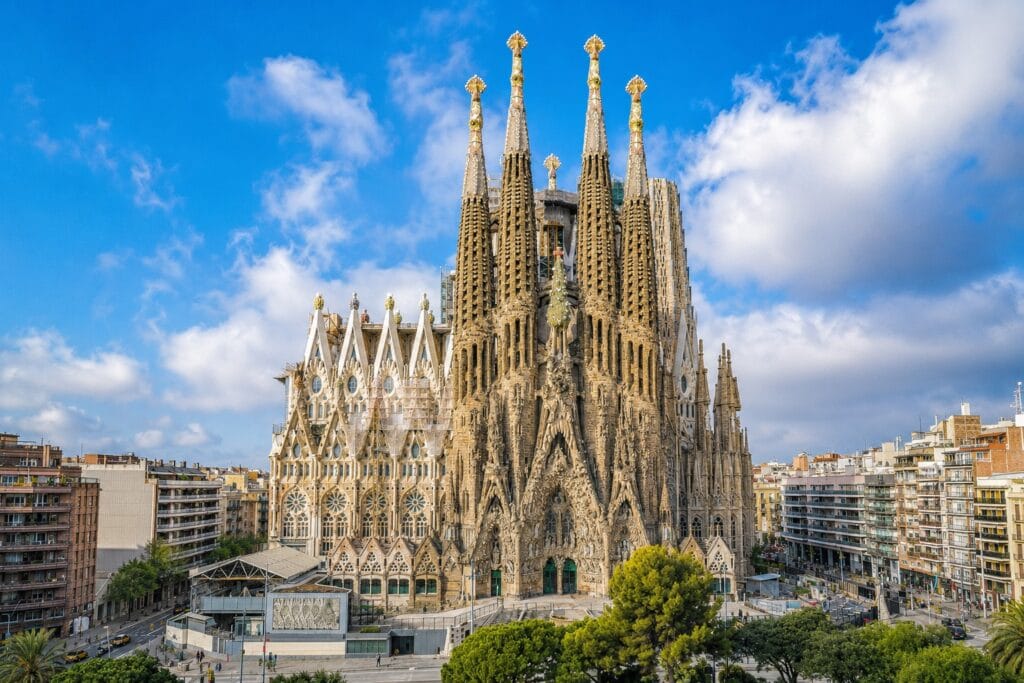
That belief was carved first into the church’s first face, the Nativity Façade. Gaudí insisted that this one façade absolutely had to be finished during his lifetime. He hoped that even after he was gone, and even if his drawings were lost, future architects could look at just this one façade and understand the exact principle the whole cathedral needed to keep growing by. To him, the Nativity Façade wasn’t just an outer wall. It was a textbook that would let the cathedral keep growing, even after he was gone.
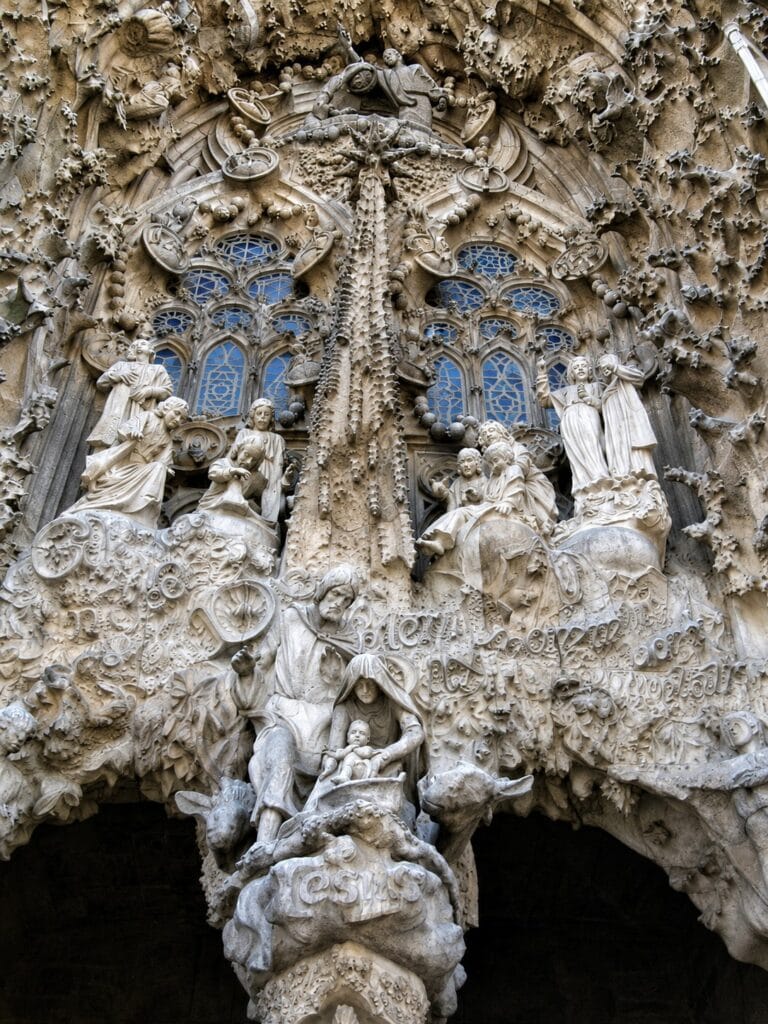
Carved into it are countless scenes from the birth of Jesus, the visit of the Three Wise Men, and the joy surrounding that first Christmas. But Gaudí didn’t make these figures purely from imagination. He had real people pose as models, took plaster casts of them, and carried those lifelike shapes directly into the stone.
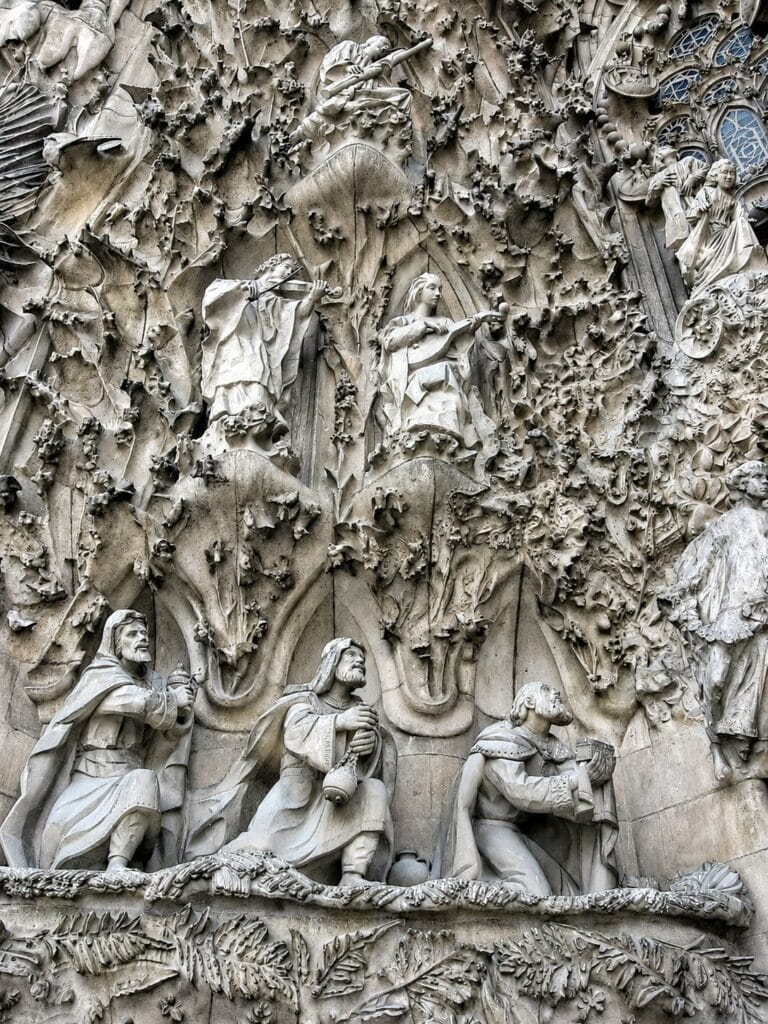
In that way, the Nativity Façade became more than just one part of the cathedral. It became the place where everything Gaudí had held onto his whole life — his faith, his love of nature, his ideas about architecture — came together first, most tightly. He hoped that even if he himself disappeared one day, the cathedral would keep on growing.
All of it started from a single drawing. He poured the rest of his life into those lines, and as time went on, the cathedral stopped being just his work — it became his life itself.
Age 73, His Last Walk
On the afternoon of June 7, 1926, 73-year-old Gaudí left the Sagrada Família and headed toward the Church of Sant Felip Neri, a path of prayer he walked almost every single day. Past the Barcelona Cathedral, through the Plaça Reial, across Gran Via, and back to the church again — a route his feet had walked countless times over decades.
To him, that walk was nothing special. The world remembers a great architect, but his daily life looked closer to that of an ordinary pilgrim, starting at the same hour, walking the same streets. He worked at the church, prayed, and walked back to the church again. That was how he lived, for decades.
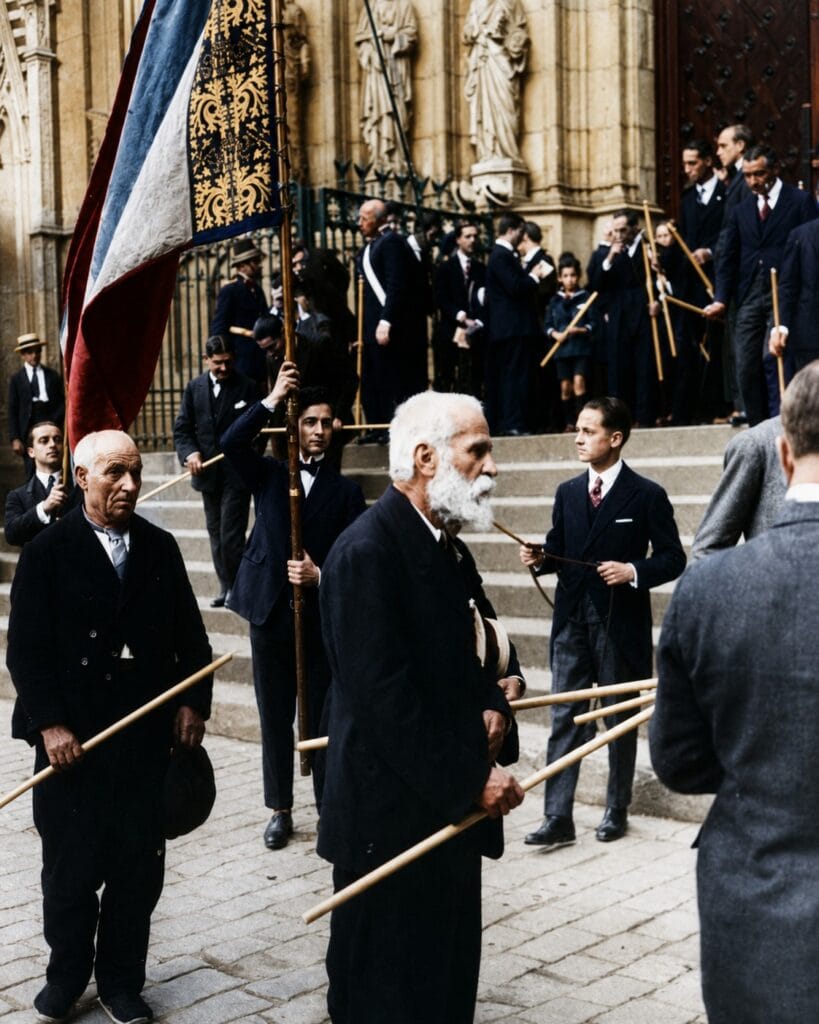
With his white beard and worn coat, he could have passed for any ordinary old man on any street. Nothing in his clothing showed a trace of the world-famous architect he was. A man who had spent his whole life being watched by so many people had, by the end, become the person who stood out least in a crowd.
That day, too, he finished his usual prayer and walked his usual, familiar street — one he had crossed countless times over decades. No one knew that this ordinary day would become his final pilgrimage.
A Bed in a Hospital for the Poor
On the afternoon of June 7, 1926, as Gaudí was walking back to the Sagrada Família, he was struck by a speeding red wooden tram while crossing Gran Via. He fell onto the road, and people passing by gathered around the bleeding old man. But no one recognized who he was.
His pants tied with worn rope, his coat covered in dust, his shoes patched with scraps of cloth — people looking at his shabby clothes assumed he was homeless. Several taxis simply drove past, and it was a long time before he was finally taken to Santa Creu Hospital, a hospital for the poor.
It wasn’t until the next day that people from the Sagrada Família heard about the accident and rushed to the hospital. In a run-down ward with a stained ceiling, Gaudí lay on an old, worn bed with his eyes closed.
News spread across all of Barcelona. The mayor rushed over. Priests rushed over. Everyone urged that he be moved to a better hospital. Gaudí opened his eyes faintly and said, “Don’t move me. I want to stay here, among the poor.”
Three days later, on June 10, 1926, he took his last breath. The man who had devoted his life to one of the world’s greatest cathedrals faced his final moment quietly, in the corner of a run-down hospital room.
The Empty Pockets
On the old wooden table at the hospital’s front desk, his belongings were laid out one by one. As they emptied the pockets of a nameless old man, hospital staff quietly wrote down their final record.
One worn leather Gospel book.
A dirty rosary with a cross.
A handkerchief.
A small key.
That was all.
The pockets of a man who had built, with his own hands, one of the greatest cathedrals in the world held no money, no medals, and nothing to prove his honor. All that was left were the ordinary, everyday traces of a life lived alongside faith.
That small key wasn’t a key to a fancy mansion door. It was the key to the underground workshop of the Sagrada Família, the room filled with dusty blueprints, plaster models, and an old army cot. After his family and friends were all gone, it was the last key leading back to the one place he had stayed the longest.
Maybe his own life resembled that key. He left almost nothing behind for himself. His money went to the cathedral. His time went to the cathedral. His talent went to the cathedral. The only thing that stayed by his side until the very end was one small key, leading back to that same place.
Barcelona in Black
On Saturday, June 12, 1926, Gaudí’s funeral procession moved slowly toward the Sagrada Família.
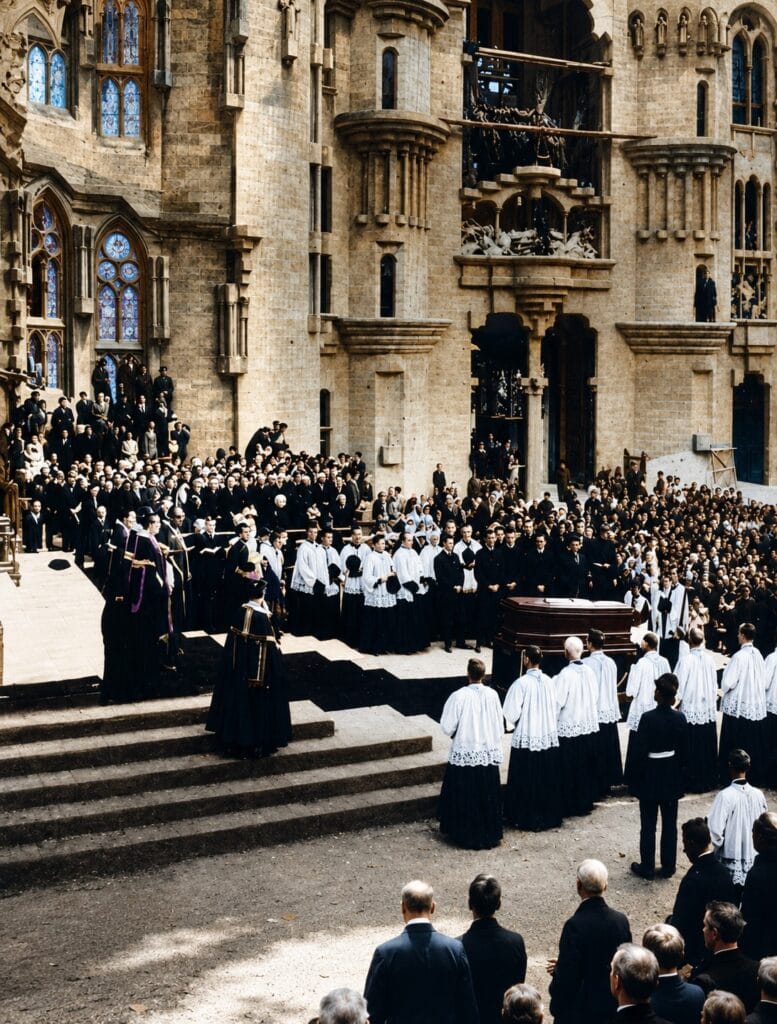
Tens of thousands of citizens filled the streets. Black mourning clothes, black ribbons, an endless silence. Just days earlier, people had walked right past him because of his worn-out clothes. Now, an entire city walked behind him on his final journey.
Gaudí was laid to rest in the crypt beneath the Sagrada Família, the deepest part of the cathedral he had shaped with his own hands. In life, he gave the church all his time. In death, he left himself inside it.
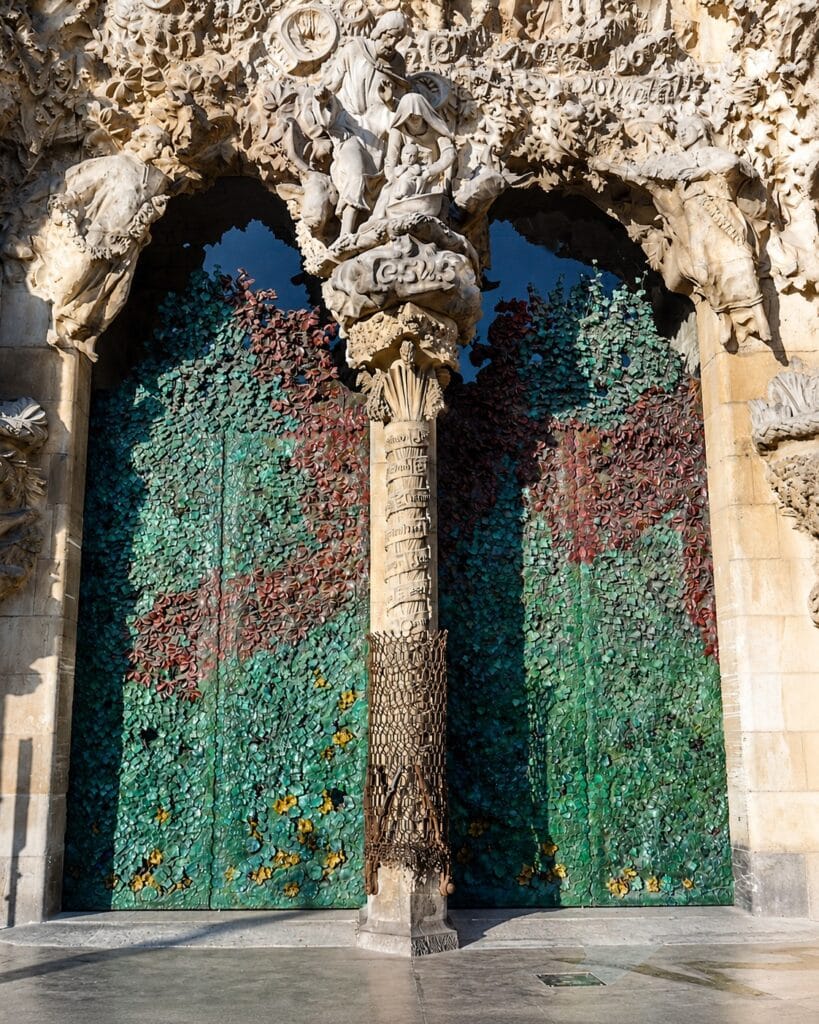
Even today, millions of people visit the Sagrada Família. They look up at columns that split apart like a forest, walk slowly through light filtered by stained glass, and take in the sight of the massive cathedral.
Gaudí never got to see the Sagrada Família finished. But the drawings, plaster models, and the Nativity Façade he left behind were passed on to the hands of the next generations, and even a century later, the cathedral is still slowly growing toward the direction he first dreamed of.
Even today, someone walks into that cathedral, and someone else walks out of it. And in its deepest place, a man who chose the cathedral over himself for his entire life has been quietly resting there for a hundred years.
Reading about Gaudí, it’s hard not to think of Vincent van Gogh. One man left his whole life inside a cathedral. The other left his inside 903 letters. Neither one, while alive, ever knew how long what they left behind would stay in people’s hearts. Both were people who put their work before themselves, right to the end. And if you want to meet another person who emptied his entire life for the sake of others, there’s also Fridtjof Nansen, a Nobel Peace Prize winner who left almost nothing in his bank account on the day he died — yet whose name still lives on today, in the history of people who lost their nations.
Archive Notes
Did all of Gaudí’s blueprints survive?
No. When the Spanish Civil War broke out in 1936, the Sagrada Família’s workshop caught fire, and countless blueprints, plaster models, and calculations Gaudí had left behind were destroyed along with it. Construction today continues based on the drawings that did survive, old photographs, broken pieces of plaster models, and the architectural principles Gaudí left behind. The surviving original materials and related records are currently preserved and studied by the Junta Constructora del Temple Expiatori de la Sagrada Família and related archival institutions.
Has the Sagrada Família been completed?
In 2026, marking one hundred years since Gaudí’s death, the Tower of Jesus Christ, the symbolic centerpiece of the Sagrada Família, was completed, giving the cathedral all the core structures Gaudí had originally envisioned. This marked an important milestone in a massive, 144-year construction project that began in 1882. That said, some artistic finishing work, including the sculptures and decorations of the Glory Façade and the grand staircase, is expected to continue.
Is Gaudí buried inside the Sagrada Família?
Yes. Antoni Gaudí was laid to rest in the crypt of the Sagrada Família on June 12, 1926. Interestingly, he isn’t the only one resting there. Josep Maria Bocabella, the man who first started the movement to build the Sagrada Família, is also buried in the same crypt. One man began the dream. The other gave the rest of his life to it. In the deepest part of the Sagrada Família, the man who started the dream and the man who held onto it until the end now rest together.
What You Now Know
The world doesn’t remember Leonardo da Vinci as just a painter. It remembers him as an all-around creator who crossed between art, science, engineering, and anatomy. The same is true for Antoni Gaudí. Calling him just an architect shrinks his life just as much as calling Leonardo da Vinci a painter who only painted the Mona Lisa.
Tip For Readers
If you visit Barcelona, try not to rush through the Sagrada Família. Spend real time looking at the Nativity Façade, the one part Gaudí finished with his own hands during his lifetime. Then head down to the Museu de la Sagrada Família in the basement and take a look at his hanging-chain models, restored plaster models, and design materials. Walk back into the cathedral after that, and it will feel like an entirely different space than it did the first time. You can find visiting information, exhibits, and official guides at https://sagradafamilia.org.
Verified Sources
Basílica de la Sagrada Família (Official) — History, construction records, architectural documentation, and official visitor information
Arxiu Nacional de Catalunya — Antoni Gaudí archival records and historical collections
Ajuntament de Barcelona — Historical municipal records and public heritage documentation
Casa Museu Gaudí — Museum collections and historical materials related to Antoni Gaudí
Universitat Politècnica de Catalunya (UPC) — Historical architectural records and academic resources
Càtedra Gaudí — Academic research and publications on Gaudí’s architecture and design philosophy
Real Acadèmia Catalana de Belles Arts de Sant Jordi — Historical records and institutional collections
Historical photographs and illustrative materials sourced from public-domain archives, museum collections, official institutional resources, and open-access repositories including Wikimedia Commons.
To help today’s readers experience historical people and places with greater clarity and a stronger sense of reality, some historical images have been digitally restored, colorized, cleaned, composited, or editorially redesigned by FramedTruth. These visual restorations are based on authentic historical source materials and are intended to improve historical understanding, not to replace or alter the original historical record.