
May 1930. Norway’s most famous man was dead.
Then came the shock. When the family opened his bank account, they froze.
Arctic explorer. Nobel Peace Prize winner. Father to millions of refugees. The newspapers put his name at the very top of the front page. The government prepared a state funeral. The whole world stopped to mourn.
But inside that legend’s bank account, there was nothing. Not a single cent.
He Refused to Make His Own Funeral a Big Deal
He hated grand gestures. Always had.
He made it clear before he died — no church burial. No long speeches. No rows of honor guards lining the streets. What he wanted was quiet. The kind of quiet you find when no one is performing for anyone.
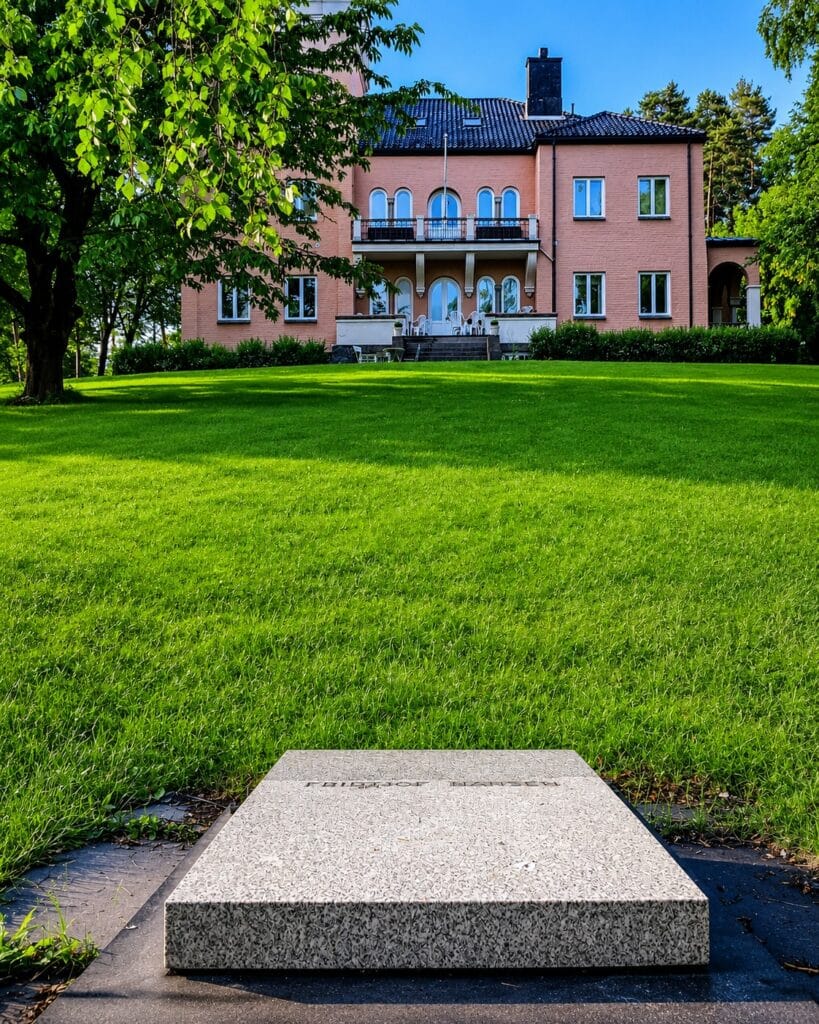
His body was cremated. But Norwegian law at the time forbade burial outside of official cemeteries. So it took six full years for his ashes to finally reach the garden of his own home. In October 1936, in a small ceremony attended by the King of Norway, he was laid to rest in the lawn of Polhøgda — the house he had drawn the blueprints for himself.
The legend was laid beneath a stone so small, it looked like a footstep in the grass.
The Safe Was Empty. But the Drawer Held Something Else.
The funeral was over. The guests had all gone home. His family began going through the house, room by room.
They expected to find something. The Nobel Prize money. Royalties from his bestselling expedition books, translated into languages across the world. Decades of lecture fees from packed auditoriums in Europe and America. Some kind of fortune — earned over a lifetime of fame.
The safe, the bank account — both were entirely empty.
They checked the numbers again. And again. It had to be a mistake. The man who crossed the Arctic on skis. The man who held the world record for farthest north. The man who shook hands with kings.
The numbers stared back at them. Cold, hard, and absolute. Zero.
That’s when they found something else — inside the top drawer of his desk. A worn, old diary. Written on Arctic sea ice in 1895. They flipped through the pages and stopped at one entry. It wasn’t the record of a hero. It was the question of a man who wasn’t sure he deserved to be there at all.
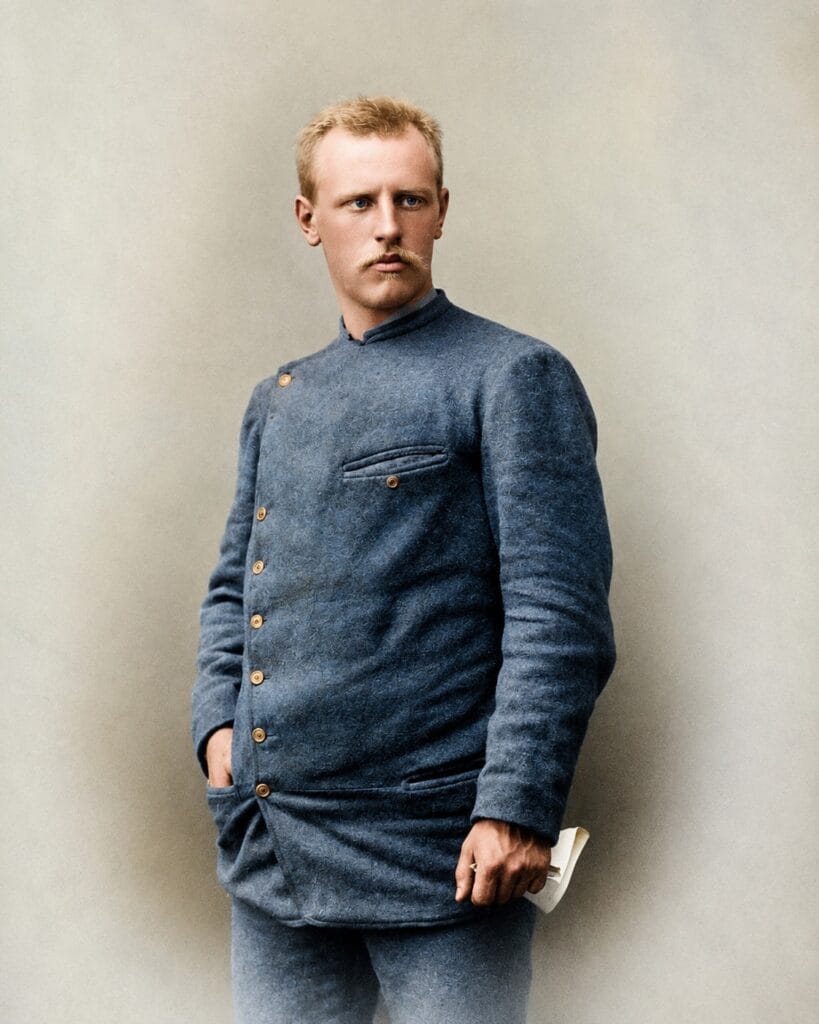
To Understand Him, You Have to Go Where No Human Should Be
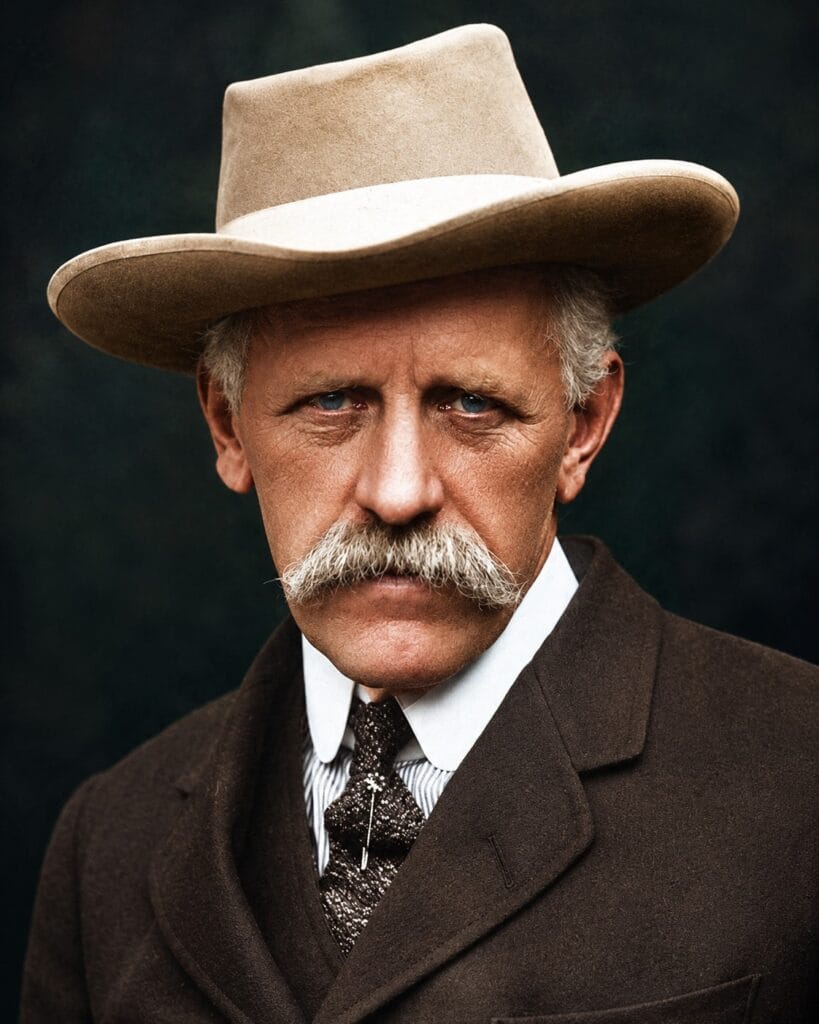
The world remembers Nansen as a humanitarian. But he first became famous for something simpler and far more terrifying — walking straight into places humans were never supposed to survive.
In 1888, he led the first-ever crossing of Greenland’s interior on skis. No one had done it before. Most people thought no one could. He did it anyway and came back alive. It made him a national hero at 26.
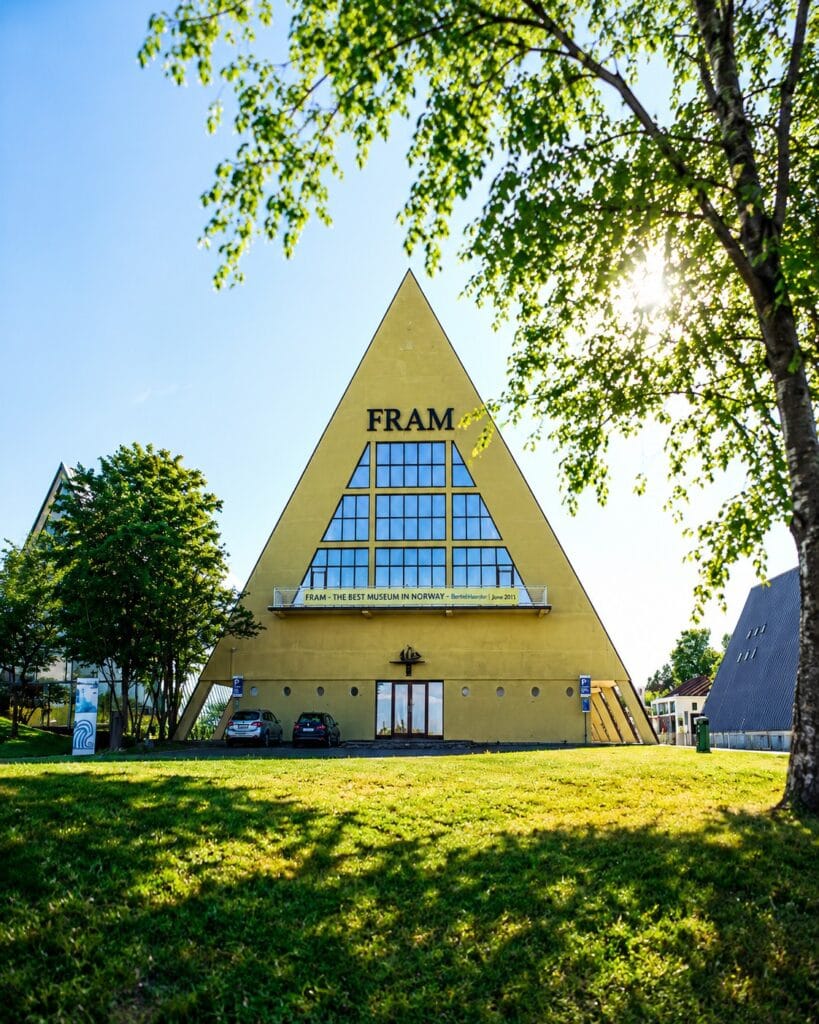
Then in 1893, he came up with something that made the Greenland crossing look reasonable. He planned to let his ship get deliberately trapped inside Arctic sea ice. On purpose. Every expert said the same thing: the ice would crush the hull and send the ship straight to the bottom. Nansen thought the opposite. If the hull could ride up on the pressure instead of resisting it, the ocean currents would carry them straight toward the Pole. He designed the vessel himself. He named it Fram — the Norwegian word for “Forward.”
Minus forty degrees. Months of total polar darkness. The loneliest stretch of ocean on earth.
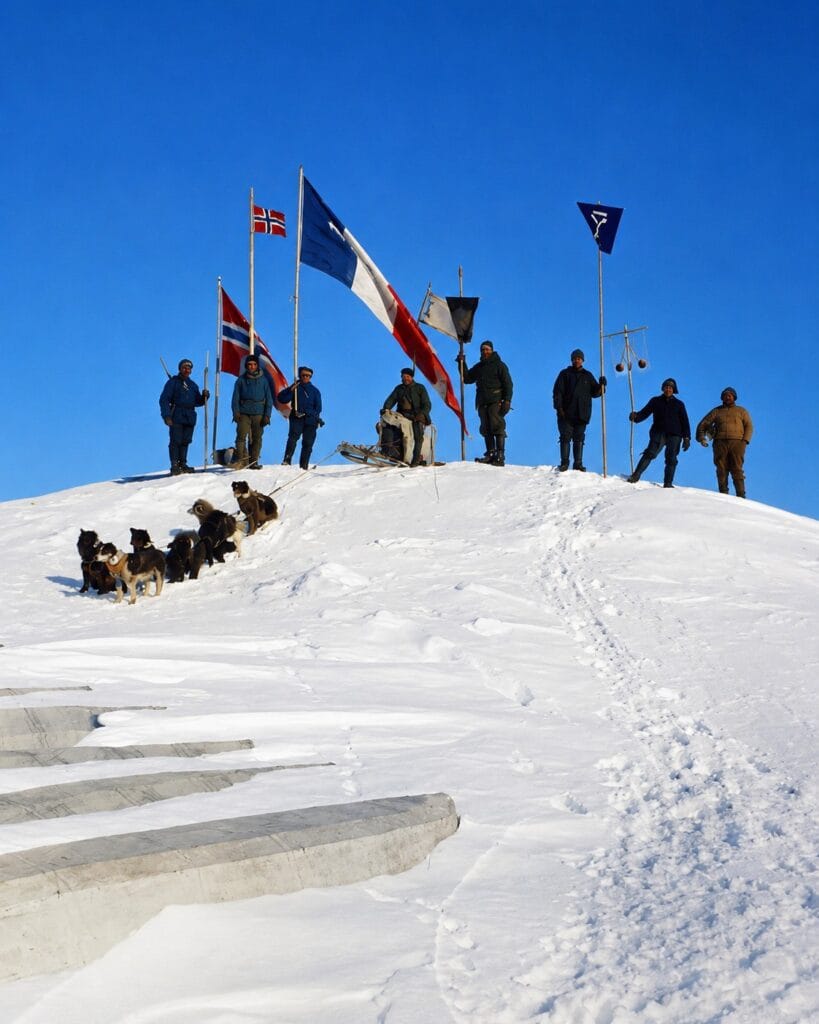
He Showed Everyone the Way. And Got Lost Inside Himself.
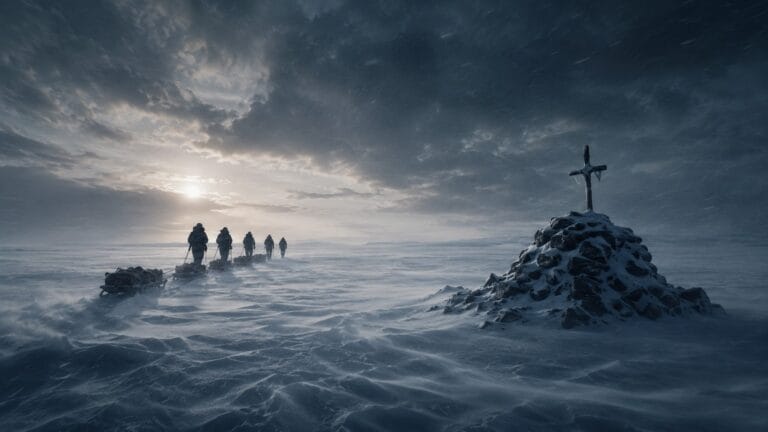
When the Fram didn’t drift far enough north on its own, Nansen left the ship. He and one crewmate, Hjalmar Johansen, abandoned the vessel mid-expedition and set out on foot across the ice, dragging heavy sleds toward the North Pole.
They reached 86 degrees, 14 minutes north latitude. Farther north than any human being had ever stood. But the Pole itself stayed out of reach. The window to return was closing fast. They turned back and survived one more Arctic winter camped on the ice before they could finally get home.
Minus forty degrees. Outside, it had been dark for months.
He had spent nearly three years drifting on the Fram, watching the Arctic ice groan and shift around him. He had mapped the depths and measured the freezing currents — but none of that made it into his diary that night.
He opened his diary. He sat there for a long time and couldn’t write anything. Then, finally, he managed one line.
Why am I here.
He stared at that sentence for a long time. Then he wrote nothing else.
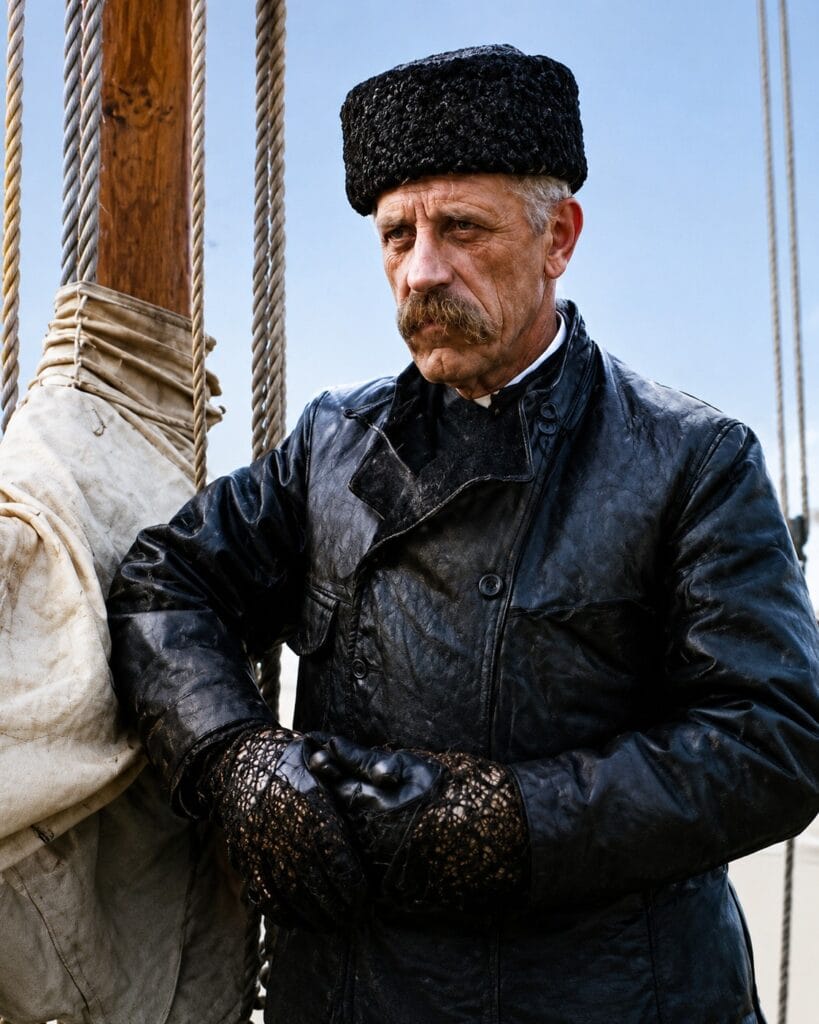
Back to the Desk in 1930
The bank account was empty. But the desk was buried under paper.
Bills. Receipts. IOUs. Freight charges. Medical supply invoices. Food purchase records. The printing costs for identity documents issued to people who had no country left to claim them. And on every single page, the same handwritten signature. Fridtjof Nansen.
His father wasn’t rich. His father was in debt — to the entire world.
To understand where every last coin went, you have to travel back nine years. To a place that was quietly dying while the rest of the world looked the other way.
1921. The Volga Was a River That Couldn’t Keep Anyone Alive.
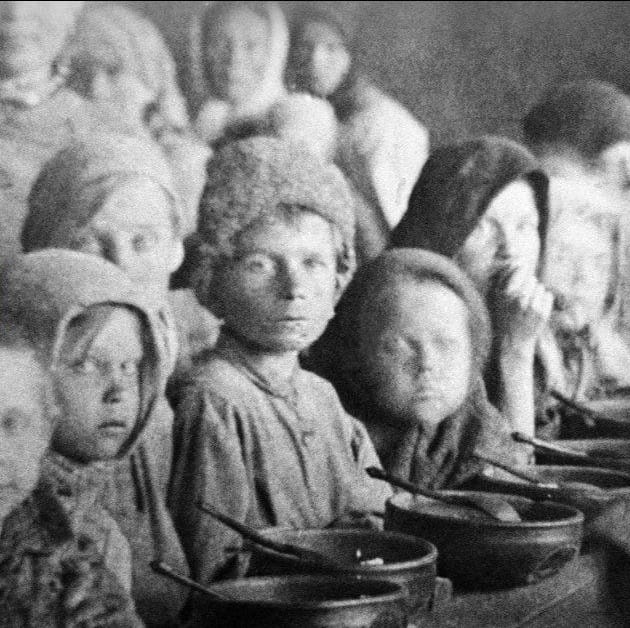
Russia’s Volga River region, 1921. The Volga didn’t just flow; it swallowed the living.
Years of drought had turned the farmland to dust. The First World War, followed by civil war, had gutted the countryside — horses gone, tools gone, the rail lines barely moving. Then the new government arrived and took the grain. Not just the food people needed to eat through winter. The seed grain too — the supply kept aside to plant next year’s crops. No seed meant no next harvest. No next harvest meant no next year.
Thirty million souls stood on the precipice of starvation. Five million plunged straight into the grave. And the cruelest part — the part that is almost impossible to sit with — is that food was not the problem. In the United States, unsold wheat was rotting in warehouses. But Europe wouldn’t move. Too afraid that helping Soviet Russia might look like endorsing the revolution. The meetings dragged on. The resolutions stalled. Children kept dying along the Volga.
“Is There Anyone Here Willing to Let Twenty Million People Starve?”
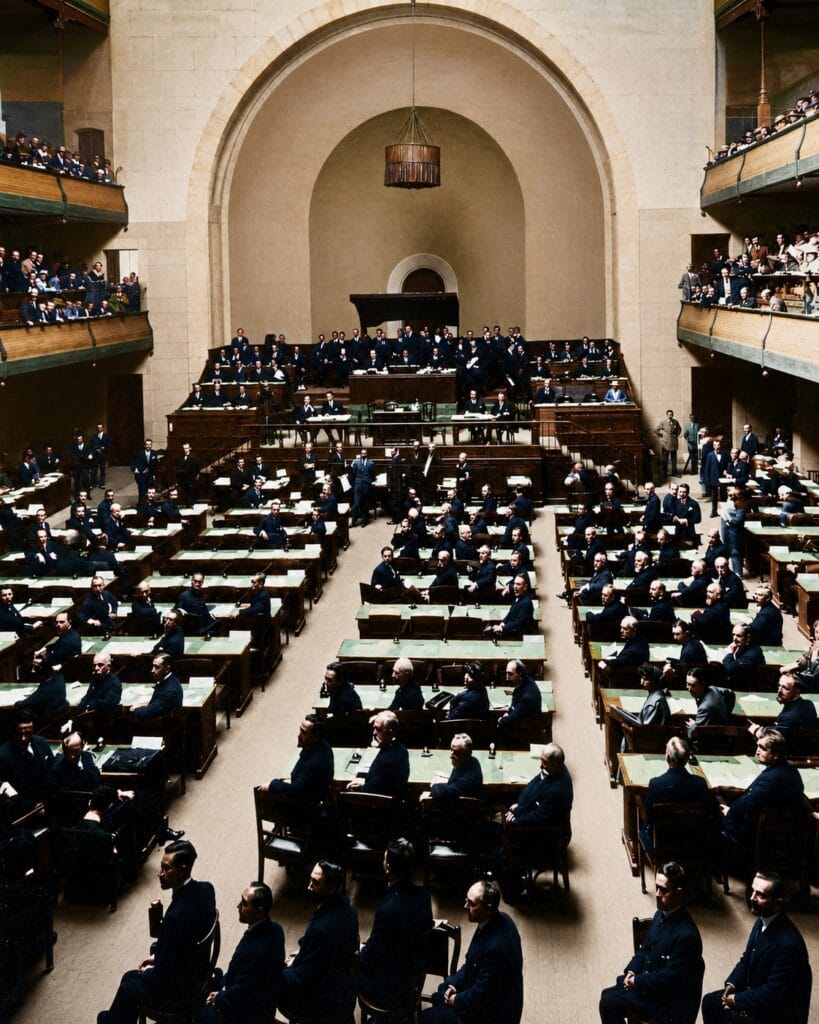
Geneva, Switzerland. A vast formal hall filled with government delegates from across Europe. Nansen was in the room.
In August 1921, a conference of 13 governments and 48 Red Cross and relief organizations had appointed him High Commissioner to lead the famine relief effort. He had already brought 450,000 prisoners of war home after World War I. He understood what bureaucracy could do — and what it refused to do when politics got in the way.
He asked the League of Nations for a loan of ten million British pounds. That money could save millions of lives. The grain existed. The ships were sitting idle. The infrastructure to move food was already in place. All that was missing was the decision.
The answer was no. Helping the Soviet government — even indirectly — might send the wrong political signal.
That’s when Nansen stood up and asked something the room would not forget. He wanted to know if there was a single delegate in that hall prepared to say, out loud, that they would rather let twenty million human beings starve than risk looking sympathetic to the Soviets.
The grand hall suffocated in silence. But silence couldn’t put bread in a dying child’s mouth.
So He Walked Out and Opened His Own Wallet
Nansen stopped waiting for permission.
He took the stage in cities across Europe and America. He screened footage he had filmed himself in the Volga region — not graphs or statistics, but actual faces. Hollow eyes. Children too weak to stand. The gap left by governments began — slowly, painfully — to close with donations from ordinary people. Of all the European governments, only his home country of Norway came through with a loan.
He poured nearly his entire Nobel Prize money into the relief operation. His bank account went to zero. He took on personal debt to keep the supply lines moving.
That money bought food. The food reached the children. Medicine crossed into Russia. The relief trains started rolling through the snow again.
About 450,000 People Got a Piece of Paper — and Became Human Again
The famine wasn’t the only crisis waiting for him. And it wasn’t the only one he had already been fighting. Even before the Russian famine broke open, Nansen had spent the years immediately after World War I working to bring home prisoners of war scattered across Europe and Asia. By 1921, he had brought home 450,000 prisoners from 26 countries. Men forgotten by peace treaties that ended the war on paper, but left them rotting in camps. He did it with a skeleton staff, almost no budget, and sheer persistence.
The famine came next. And after the famine, the refugees. In the chaos of the Russian Revolution, roughly two million people had lost their countries entirely. No passports. No nationality. No government that claimed them. On paper, they simply didn’t exist. Without documents, no border would open. They were invisible — trapped in a legal void the modern world had no framework to handle.
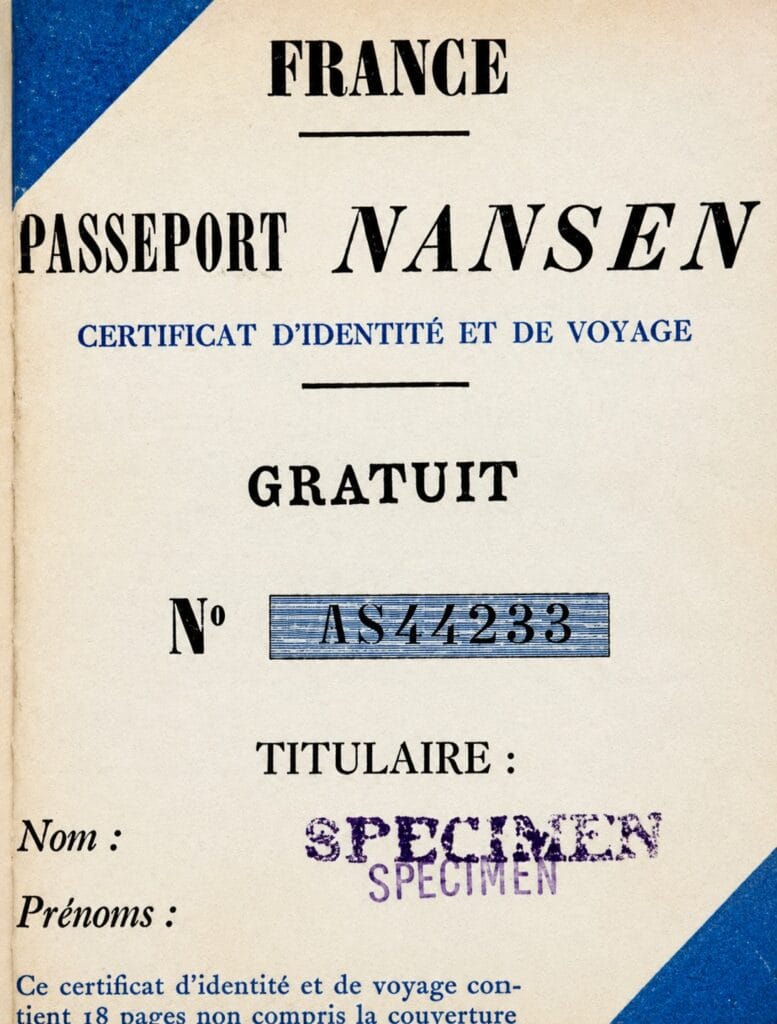
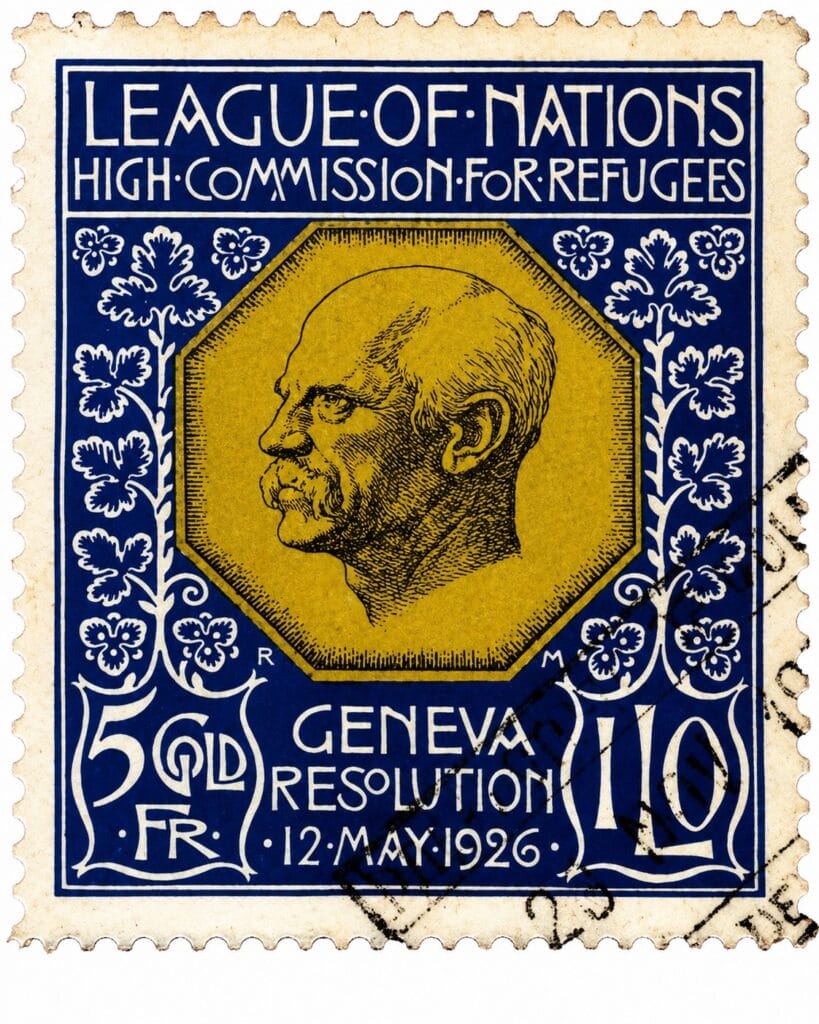
Nansen built the framework. He created an internationally recognized identity document for stateless refugees. It became known as the Nansen Passport. At its peak, 52 countries accepted it. Around 450,000 people received one.
“Nationality?” The guard’s voice was steel. The woman couldn’t answer — her country had vanished. All she could push across the cold counter was a single trembling sheet of paper. A Nansen Passport.
The guard stared at it for a long moment. Then he stamped it. The barrier lifted.
That day, for the first time in years, she was a person again. Legally. Officially. A human being with a name that a border would recognize. That moment happened hundreds of thousands of times.
The following year, the world gave him the Nobel Peace Prize. But his bank account kept draining.
He Was Never a Hero. He Was a Man Who Fell Apart Every Day.
It would be easy to turn him into a saint. He wasn’t one.
He was driven by ambition — the kind that could get people hurt. He pushed his crew into the ice chasing a record, and they paid the price alongside him. When his first wife Eva died in 1907, he fell into a grief so heavy he could barely function for years. The man who had faced down the Arctic didn’t know how to get through some mornings.
That’s what makes everything else worth paying attention to. Not that he was made of steel. He wasn’t. He cracked all the time. He just kept going anyway.
In his Nobel Prize lecture, Nansen didn’t celebrate. He confessed: “When one has stood face to face with death by starvation itself, then surely one’s eyes are opened.”
He doubted why he’d gone to the ice. He wasn’t sure his ambition was anything more noble than ego. And yet every single time a starving child appeared in front of him, he opened his wallet. Without hesitation. Every time.
What he left behind wasn’t the Fram. It wasn’t the Arctic record. It wasn’t the Nobel Prize.
What Remained
1930. The family was going through his desk.
The bank account was empty. The safe was empty. All that remained was paper.
For a long time, no one said anything.
Then someone spoke, quietly. “Why did Father live like this?”
No one answered. But no one was surprised either. Because they already knew.
He hadn’t failed to hold onto his money. He hadn’t lost it.
That money became bread. It became medicine. It became a piece of paper that made a border lift. It became a new name — an official, legal, recognized name — for people who had lost theirs.
Every answer was still alive. Living inside the people he had saved.
Archive Notes
Is the Nansen Passport still used today?
The Nansen Passport was introduced in 1922 and recognized by 52 countries at its peak. Around 450,000 stateless refugees received one before the program ended in 1942. It’s no longer issued, but it’s considered the direct ancestor of the refugee travel documents that the UN Refugee Agency (UNHCR) administers today — making Nansen’s idea one of the most durable foundations in modern international law.
Where is Nansen actually buried?
Nansen was cremated after his death in May 1930. Norwegian law at the time prohibited burial outside of official cemeteries, so his ashes couldn’t be placed at Polhøgda right away. After a six-year legal delay, he was finally laid to rest in the garden of his home in October 1936, in a quiet ceremony attended by the King of Norway. The house has served as the Fridtjof Nansen Institute since 1958, and both the garden and the grave are open to visitors.
Did his Arctic expedition actually succeed?
The Fram expedition of 1893–1896 set out to prove that Arctic ocean currents could carry a ship naturally toward the North Pole. In 1895, Nansen and crewmate Hjalmar Johansen left the ship and reached 86 degrees 14 minutes north — farther north than any human had ever been. The Pole itself stayed out of reach, but his theory about Arctic currents was confirmed, and the latitude record held for years after the expedition returned.
Nansen wasn’t the only one who gave everything and never asked for anything back. A British explorer in Antarctica wrote his final diary entries not in triumph but in total defeat — and became more human for it than any winner ever could. And on a sinking ship in the North Atlantic, a group of musicians kept playing until the water reached them. Greatness doesn’t belong to the ones who won. It belongs to the ones who didn’t stop.
What You Now Know
His bank account was empty.
The people weren’t.
Tip For Readers
To explore the history of the Nansen Passport and international refugee protection, the UN Refugee Agency (UNHCR) maintains detailed records on refugee travel documents and stateless persons — from Nansen’s era to the present day.
Verified Sources
The Nobel Foundation — Fridtjof Nansen, Nobel Peace Prize (1922)
League of Nations Archives, Geneva — High Commissioner for Refugees (Nansen Fonds)
UNHCR — Fridtjof Nansen and the Nansen Passport
Fridtjof Nansen Institute, Polhøgda (Norway)
Roland Huntford — Nansen: The Explorer as Hero (1997)