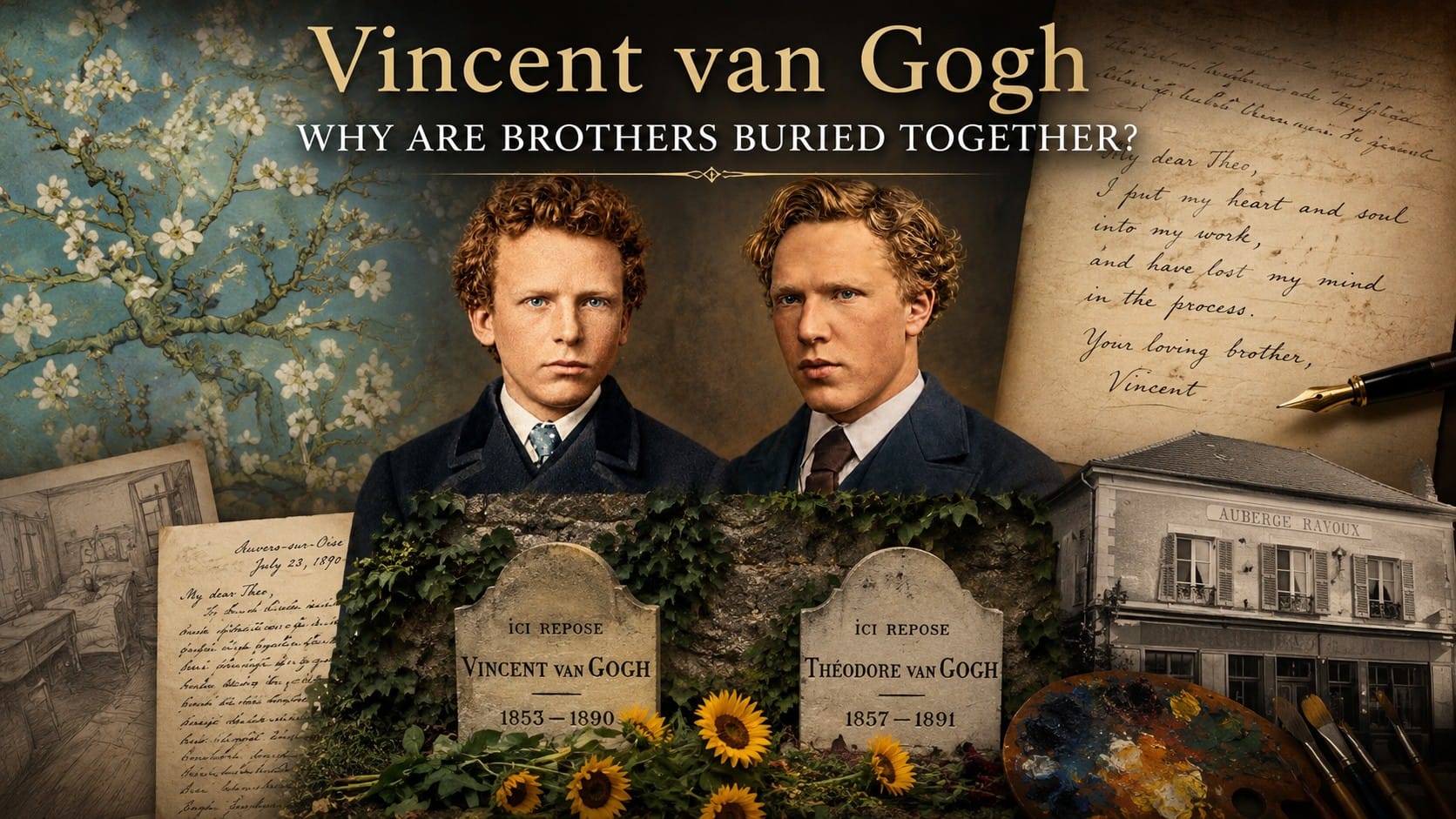
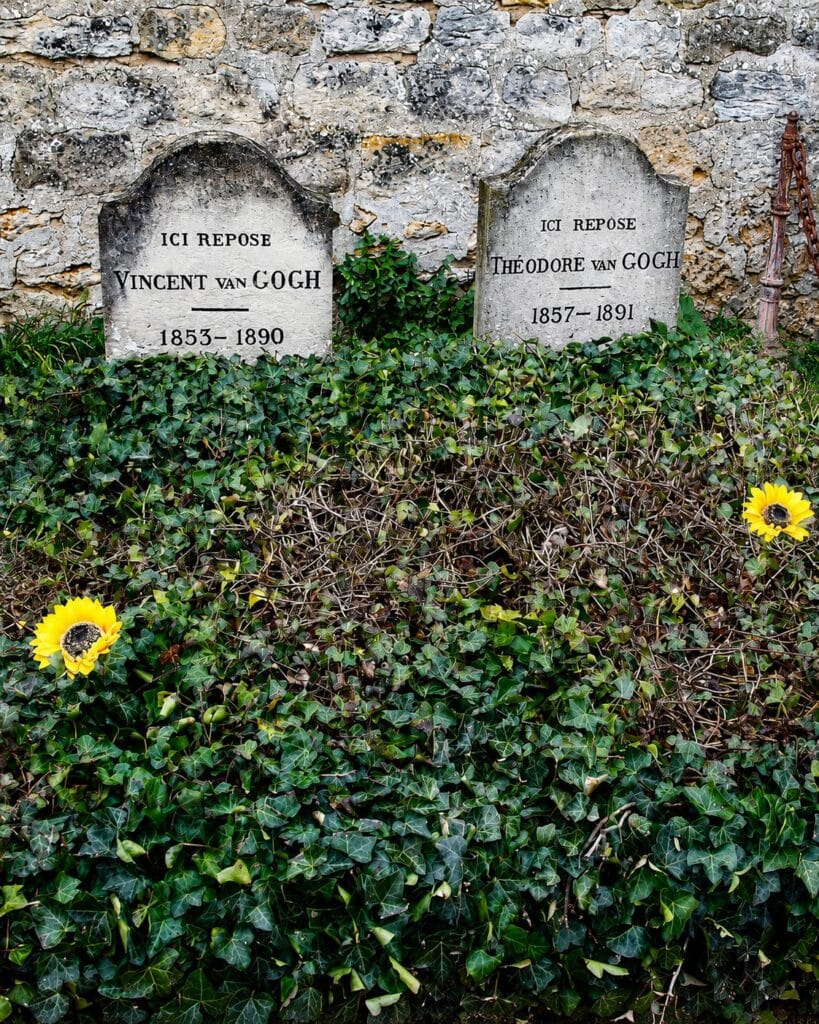
There are two graves here. Not a husband and wife. Two brothers. Ivy quietly covers both headstones, and a sunflower rests in front of each one.
The left stone reads Vincent van Gogh (1853–1890). The right one reads his brother Theo van Gogh (1857–1891). Exactly six months after Vincent died, Theo followed. And twenty-three years later, in 1914, Theo’s wife dug up his remains and moved them next to his brother. Why did the younger brother end up buried beside the older one?
This story doesn’t start with a painting. It starts with a letter.
When the First Letter Was Written, He Wasn’t a Painter Yet
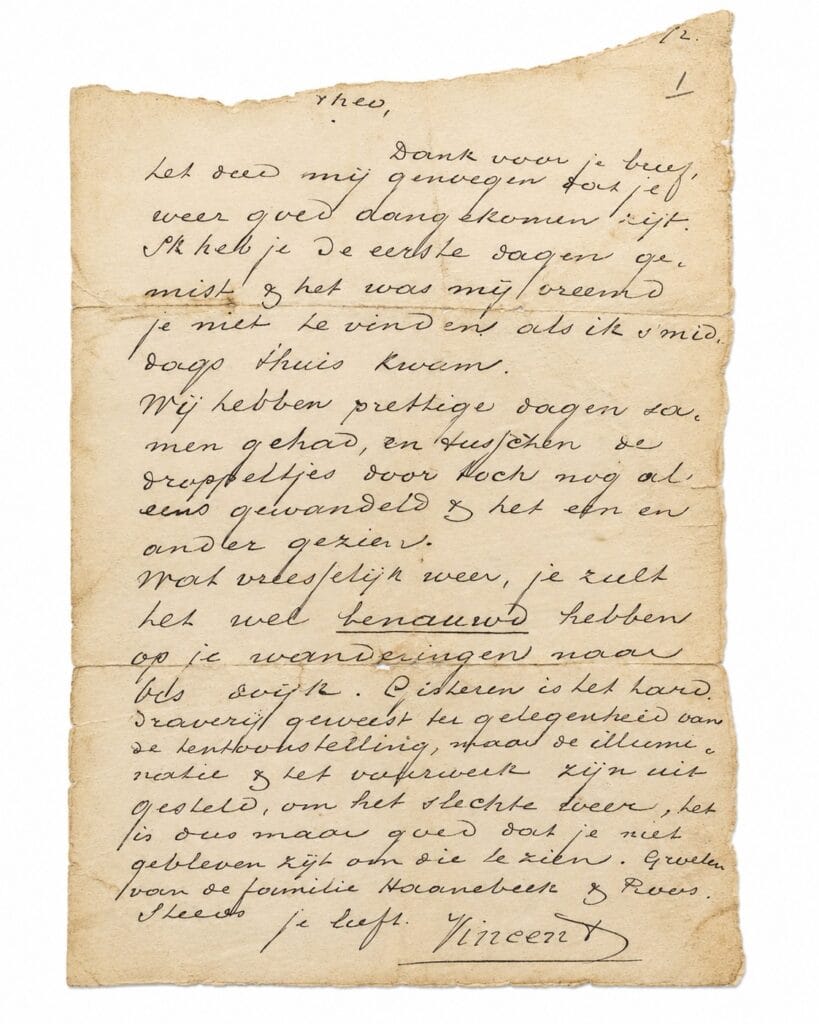
September 1872. The Hague. A 19-year-old named Vincent wrote to his 15-year-old brother Theo. “Theo, thanks for your letter. Glad you made it back safely. The first few days felt strange without you. When I came home in the afternoon, you weren’t there.” According to the Van Gogh Museum’s official records, this is the first letter Theo ever kept.
Vincent wasn’t a painter at this point. He was a young guy working at an art dealership called Goupil & Cie in The Hague. The letter was just a simple check-in. An older brother who missed his little brother. Nobody knew it then — that this short, casual note would be the first of 903 letters.
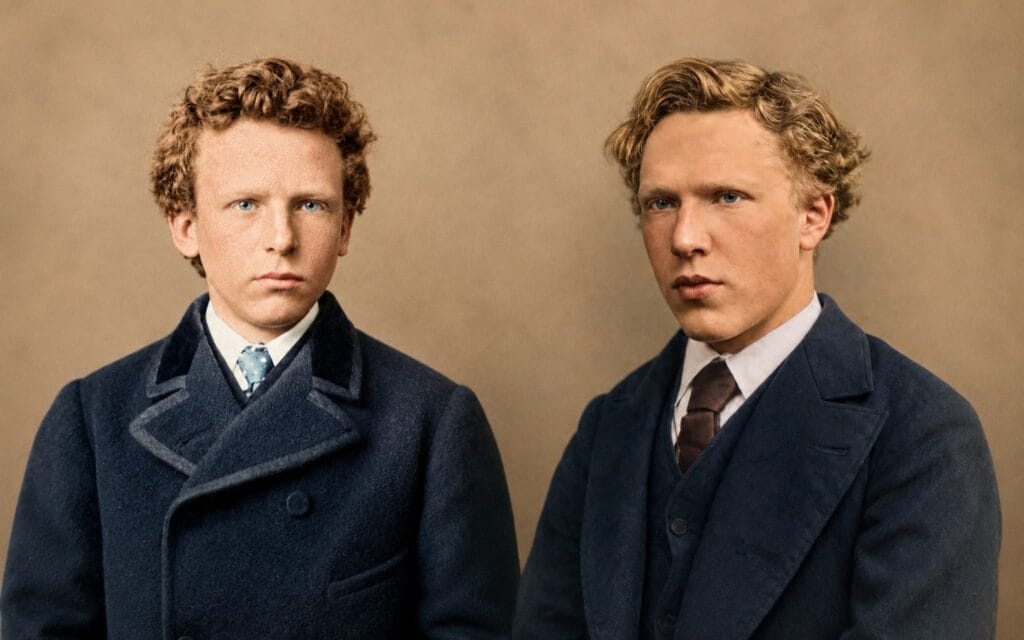
The brothers were four years apart. Vincent joined Goupil first, and Theo followed. In the beginning, Vincent was the one leading the way. But Vincent gradually lost interest in the job and got fired in 1876. Meanwhile, Theo was doing well, earning recognition at the Paris branch and moving up. Somewhere along the way, the older brother started falling apart while the younger one found his footing.
“You Paint. I’ll Handle the Money.”
1880. Vincent made an announcement. He was going to be a painter. He was 27. He’d already quit the art dealership, given up on theology, and failed as a missionary in the Belgian coal mines. By every measure the world cared about, he was a total failure.
Theo didn’t hesitate. He said he’d send Vincent a monthly allowance. And he kept that promise until the day Vincent died. According to the Van Gogh Museum, the amount Theo sent was more than what the postman Joseph Roulin earned to support his wife and three kids.
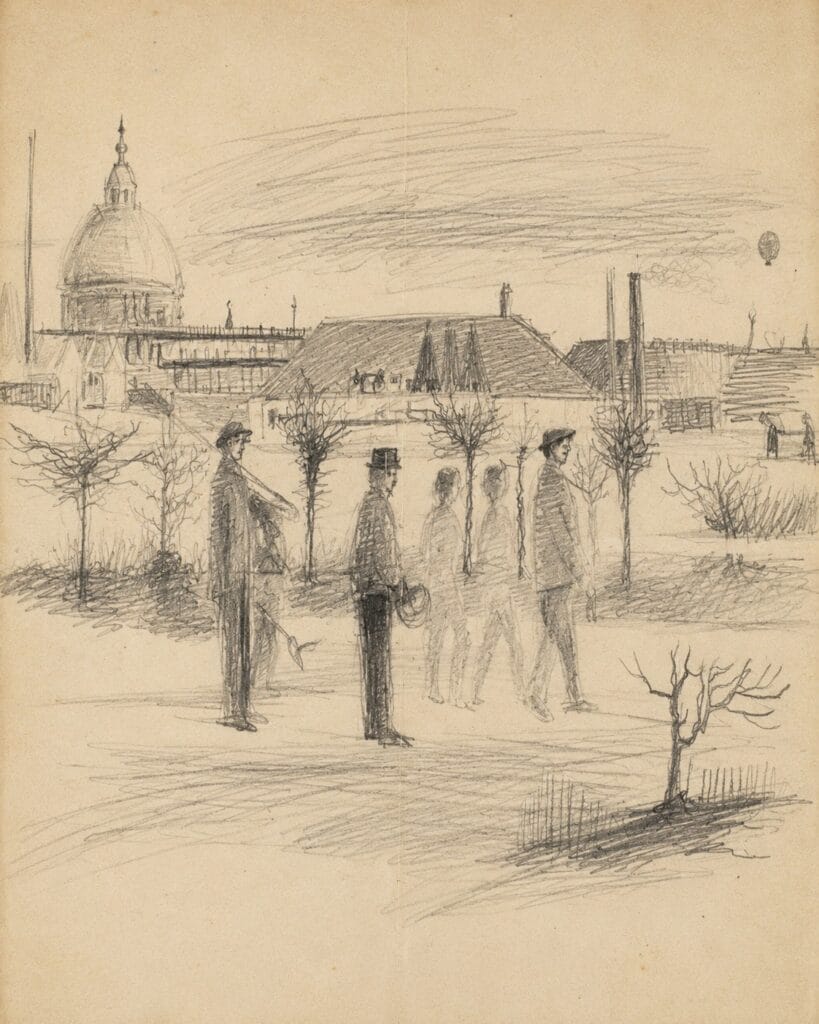
Vincent used that money to buy paint. And he wrote letters. More than 240 of those letters had sketches tucked inside them. Instead of sending photos, he drew what he was working on and slipped it into the envelope. “I’m not messing around — this is what I’m doing right now. Your money isn’t going to waste.” Those letters were the most honest work log he ever kept.
Living Together, and a 750km Night Train
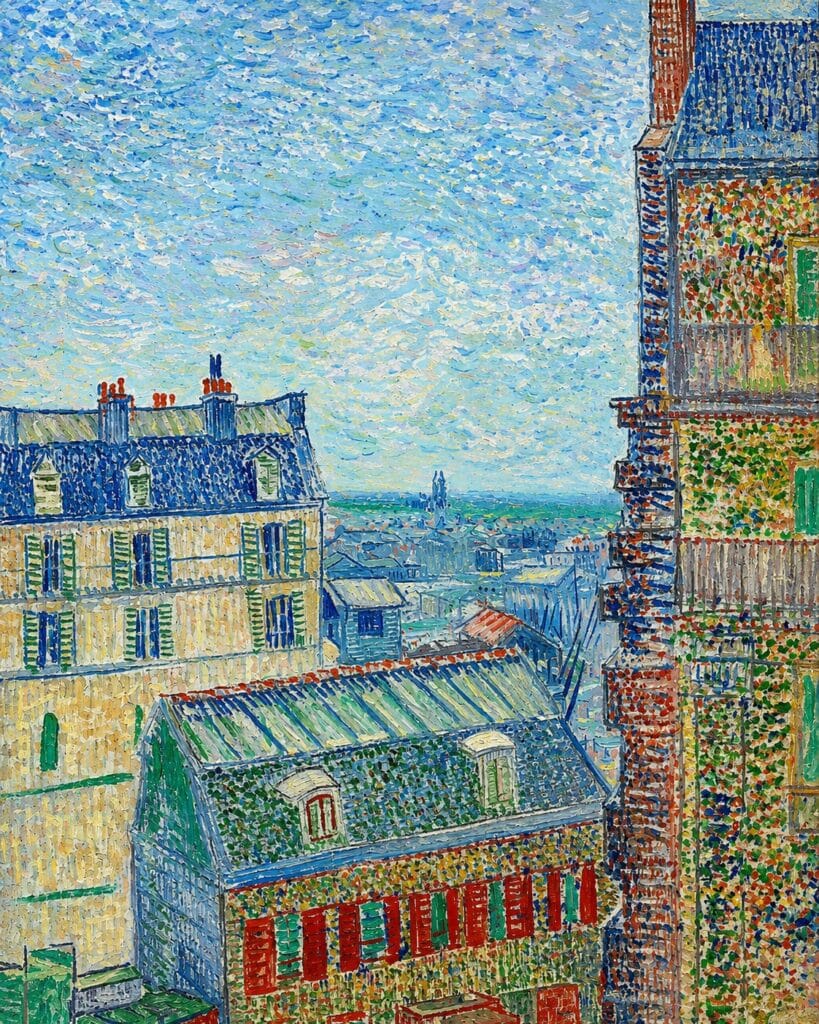
1886. Vincent showed up in Paris. At Theo’s place. The two brothers lived together in an apartment on Rue Lepic for two years. Vincent painted the view from the window — the rooftops and chimneys of Paris, right outside where they slept. This is when his work started to change. He met the Impressionists. His colors got brighter.
But living with Vincent wasn’t easy. Theo wrote to their sister Willemien: “There are times when it’s impossible to be at home. It’s like there are two people inside him — one who’s incredibly gifted, gentle, and sensitive, and another who’s selfish and cold.” Even so, Theo didn’t leave.
In 1888, Vincent headed south to Arles. Theo paid for the train. And the rent. Vincent rented a yellow house and invited the painter Paul Gauguin to come stay with him. Theo paid for Gauguin’s travel and living expenses too.
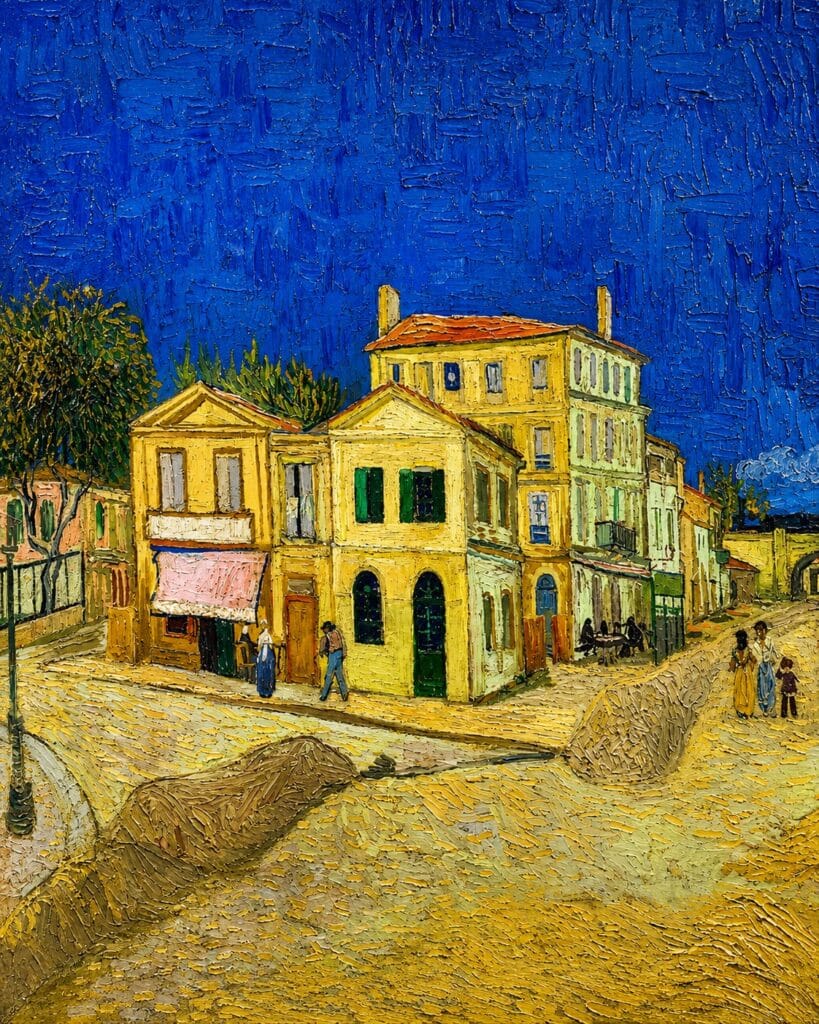
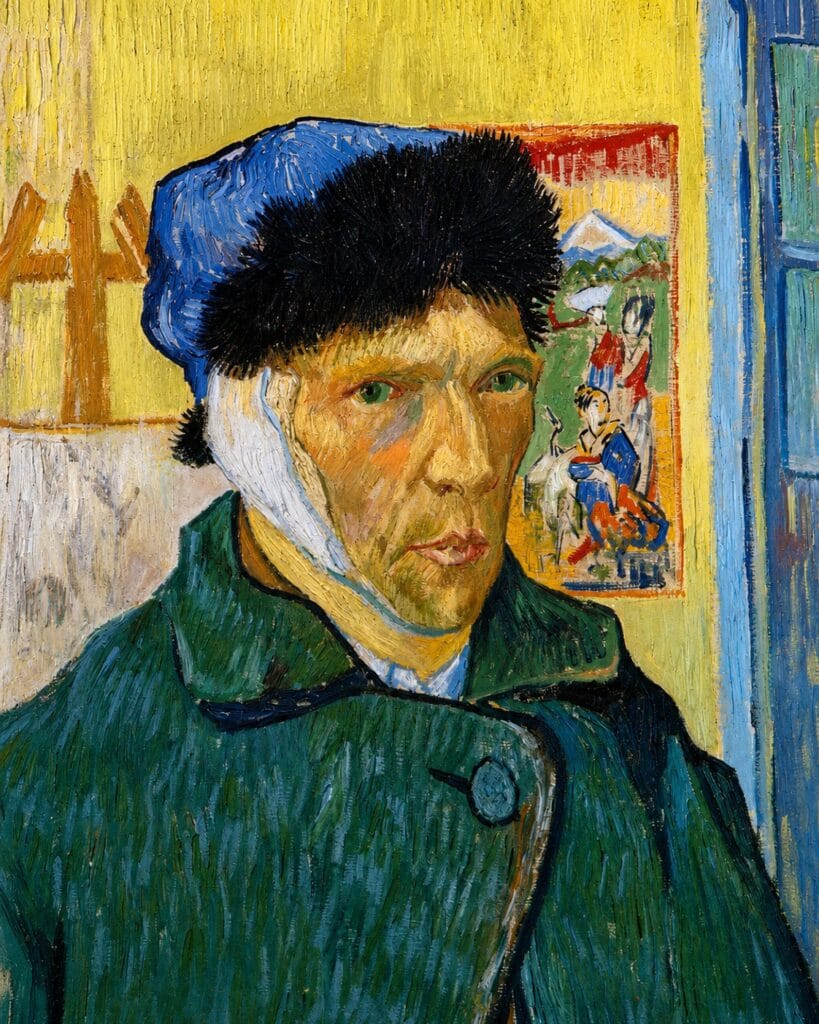
Christmas Eve, 1888. Theo was supposed to spend the evening with his fiancée Jo. Then a telegram arrived from Arles — Vincent had cut off his own ear. Theo got on the night train that same night. 750 kilometers. Paris to Arles. He never even got to say goodbye to Jo.
He Painted a Blessing for the Baby — and Called Himself a Burden
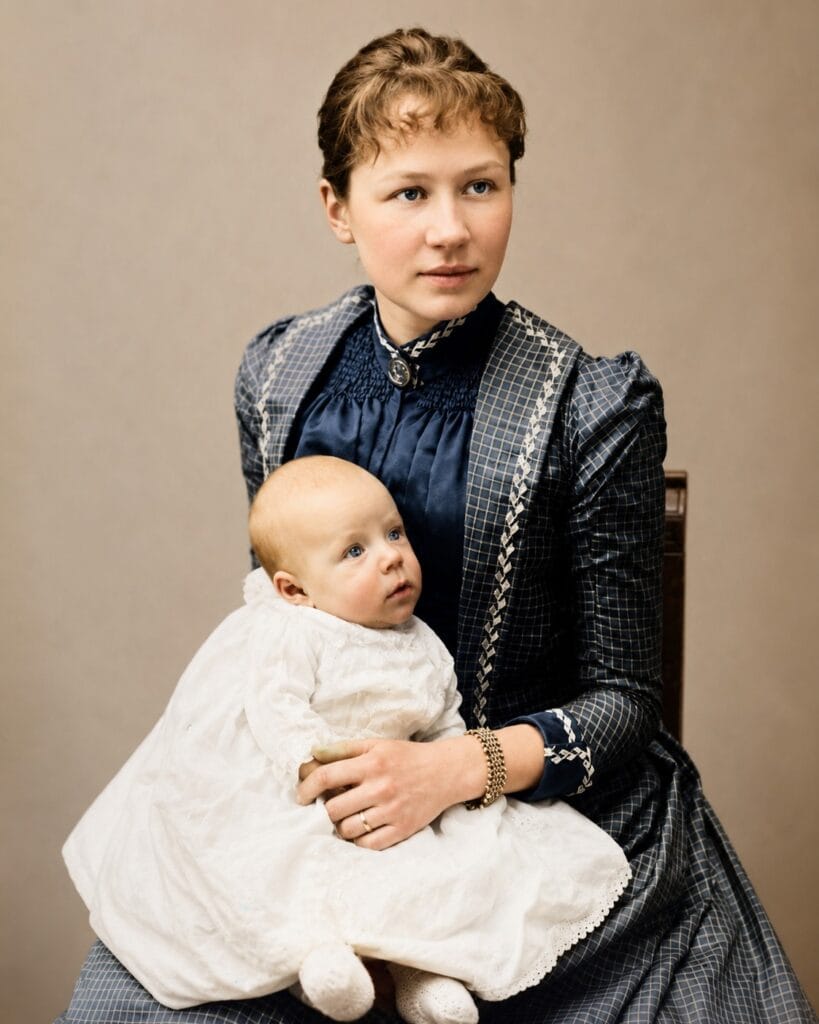
January 1890. A letter arrived from Theo. He had a son. The baby’s name: Vincent Willem van Gogh. Theo named his firstborn after his older brother. The custom at the time was to name your son after his father — but Theo chose Vincent’s name instead.
Vincent responded by painting. Almond branches in full bloom against a vivid blue sky. Almond Blossom. The Van Gogh Museum officially notes that this painting was created as a gift for his newborn nephew. It’s one of the rare works Vincent completed without a crisis, in a moment of genuine calm.
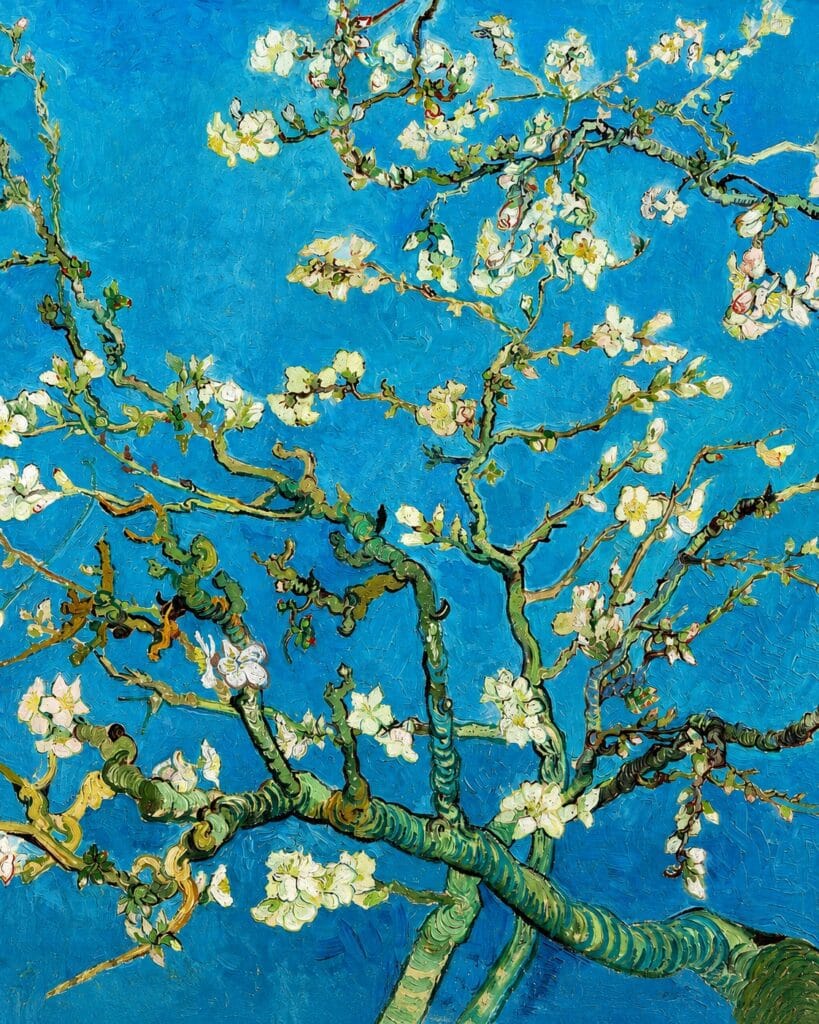
But around the same time, a different kind of writing was building up in his letters to Theo. “I can’t stand the thought that my existence is a burden to you and your family.” Now that Theo was married with a child, Vincent was terrified the money would stop. He was painting something beautiful for a baby — while quietly convincing himself he was a weight dragging his brother’s family down.
The Sunflowers Were Painted with Theo’s Money, for Gauguin
When most people think of Van Gogh, they think sunflowers. But not many people know why he painted them. Before Gauguin arrived at the yellow house in Arles, Vincent painted sunflowers to decorate his guest’s room. According to the Van Gogh Museum, it was a welcome gift for a fellow artist. Those flowers only existed because Theo kept sending money for paint.
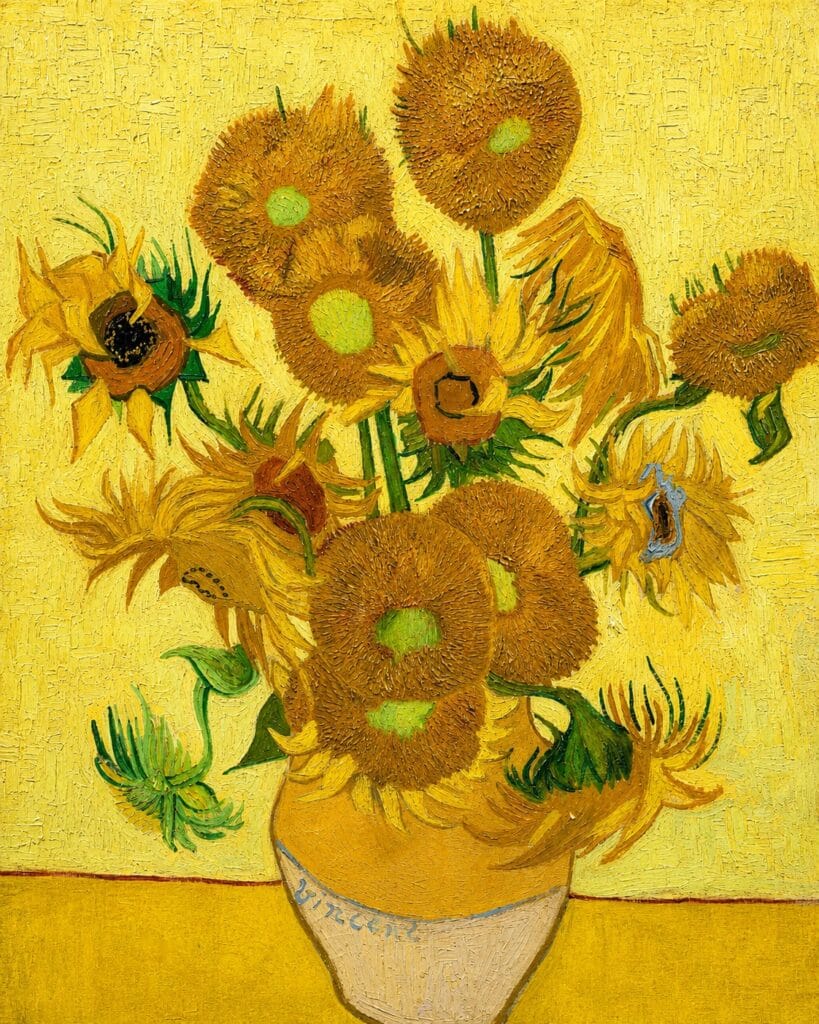
Theo spent his whole life trying to sell Vincent’s work. He pushed dealers, chased exhibitions, kept making the case. In Vincent’s lifetime, only one painting ever sold. Theo never stopped trying anyway. And on the day of Vincent’s funeral, Theo arranged sunflowers around his brother’s coffin — the same flowers Vincent had loved most. That’s what covered him at the end.
Six Days Before He Died, He Slipped Sketches Into a Letter
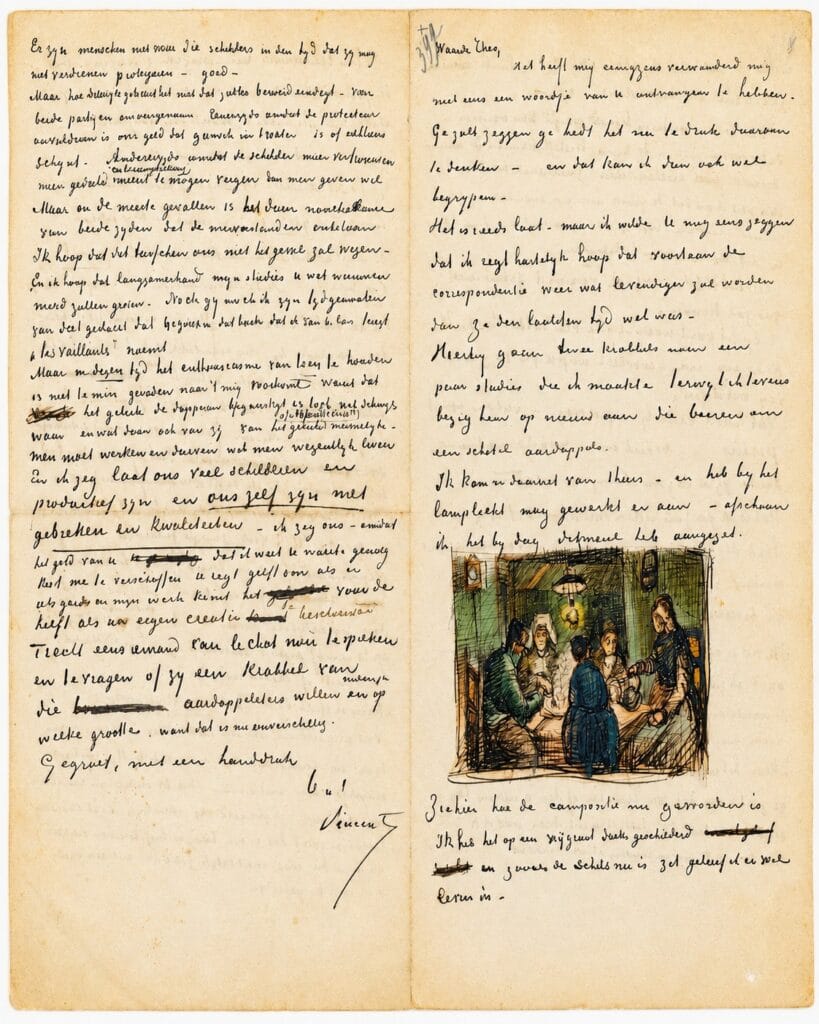
July 23, 1890. Auvers-sur-Oise. This was the last letter Vincent sent to Theo — letter 902. The Van Gogh Museum notes that the letter included rough sketches of paintings he had recently finished. Even in the depths of his pain, he was still trying to tell his brother: “I’m still here. I’m still working.”
Four days after writing that letter, Vincent suffered the gunshot wound that would end his life.
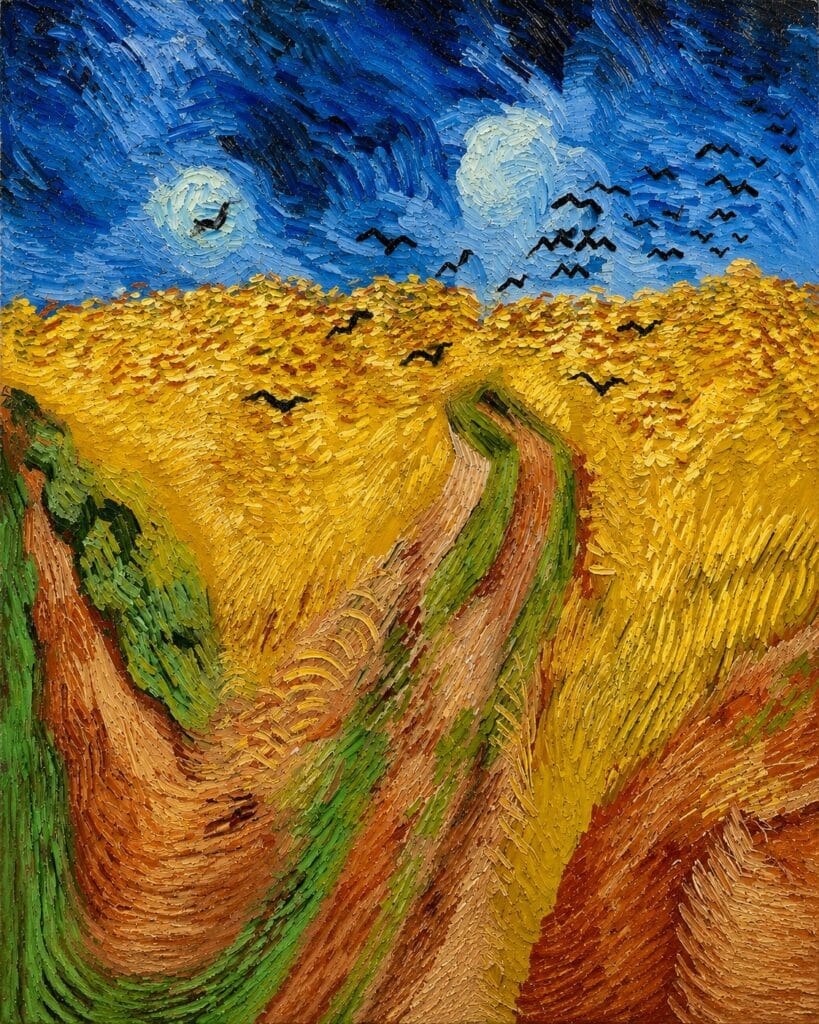
Wheatfield with Crows. Three paths cut through a yellow field and disappear. Three directions, none of them clear. Crows rising into a heavy, pressing sky. Vincent wrote to Theo about the paintings from this period: “I wanted to express sadness. And extreme loneliness.” That’s this painting.
A 7-Square-Meter Room, and One Last Brushstroke
Afternoon, July 27, 1890. Vincent was found with a gunshot wound to the chest and made his way back to the Ravoux Inn. Room 5. About 7 square meters. Barely enough space for a bed. The man who made paintings now worth hundreds of millions of dollars spent his last hours in a room like that.
Theo rushed from Paris when he heard. He arrived on July 28. He held his brother’s hand. At 1:30 in the morning on July 29, Vincent was gone. Theo was right there. Theo later recalled Vincent’s final words:
“La tristesse durera toujours.”
“The sadness will last forever.”
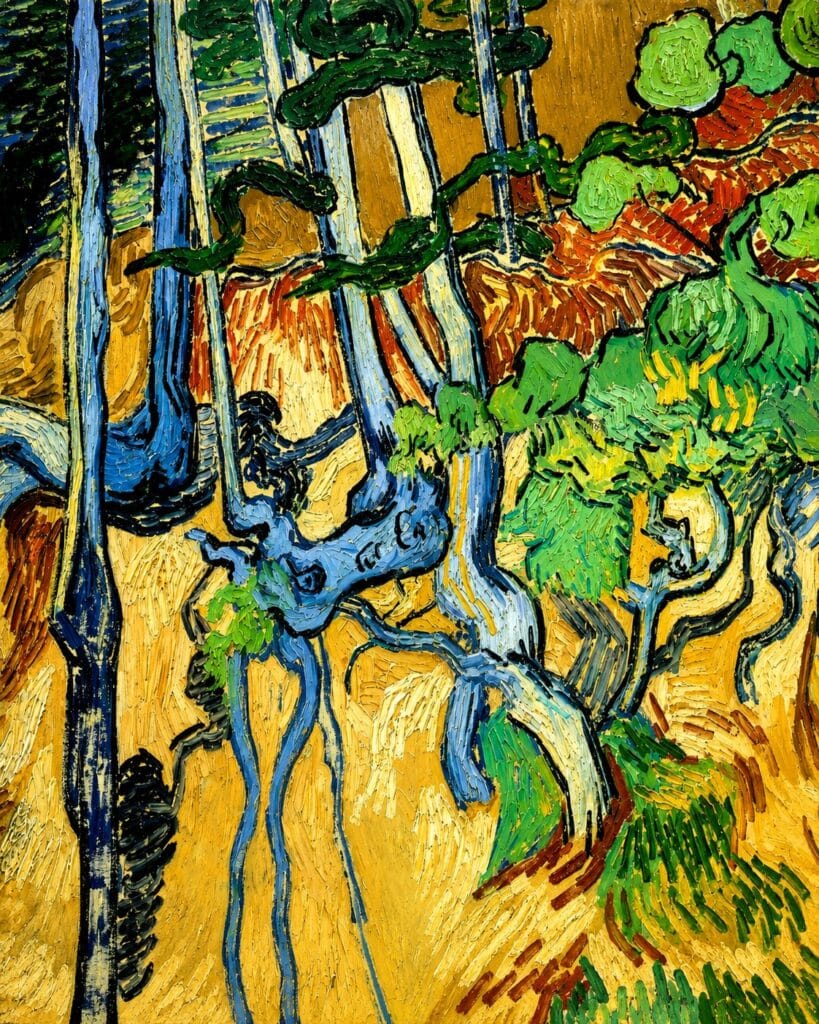
Most people don’t know what Vincent was doing in the hours before he walked into that field. According to recent analysis by Van Gogh Museum researchers, he was in front of a canvas. Tree roots twisting up out of the earth. Tree Roots. He was holding a brush until there was nothing left to hold.
She Read Her Husband’s Brother’s Letters — and Dug Up the Grave
After Vincent died, Theo fell apart. His health had already been failing, and the loss pushed him over the edge. Six months later, on January 25, 1891, Theo died at 33. In a letter to his mother, he had written: “The grief of losing him is immense. He was more than a brother to me.” What Jo was left with: a baby, an empty bank account, and hundreds of paintings nobody wanted to buy.
From Jo’s perspective, Vincent had drained her husband dry for years and ultimately taken him down with him. She could have thrown everything out. Instead, she sat down and started reading — every letter the two brothers had ever written to each other.
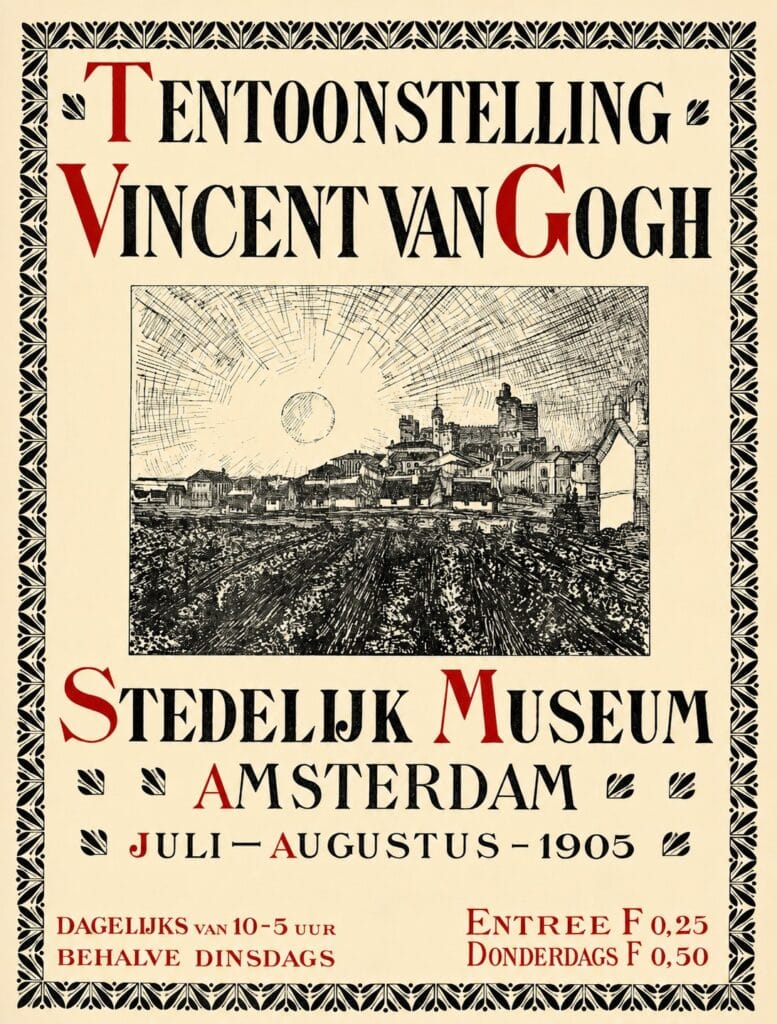
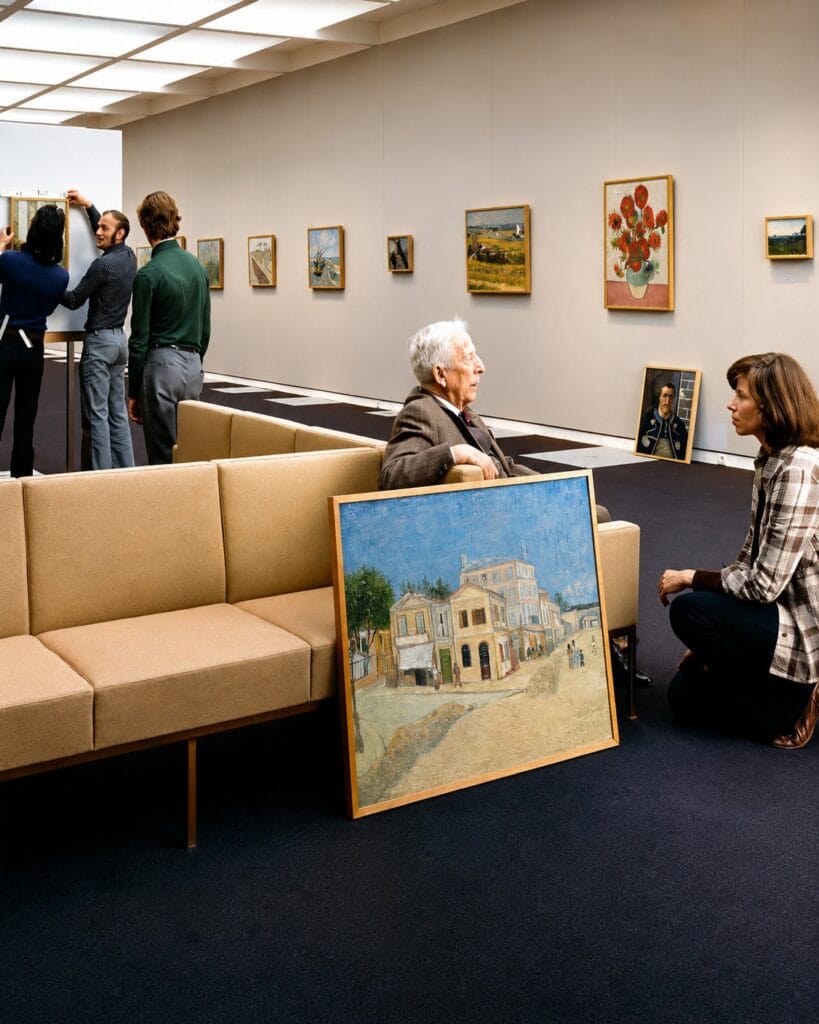
By the time she finished, she understood something she hadn’t before. These two men couldn’t be separated. Theo’s whole life had been built around his brother. She spent the rest of her life making sure the world knew who Vincent was. In 1905, she organized the largest Van Gogh retrospective ever held at the Stedelijk Museum in Amsterdam — over 480 works on display.
Then in 1914, she made her final decision. She had Theo’s remains dug up from Utrecht and moved to the cemetery in Auvers-sur-Oise — right next to Vincent. It was a wife’s decision to honor the bond between two brothers. Because of that, both graves are still there today, side by side, wrapped in the same ivy.
The Paintings Were for the World. The Letters Were for Theo.
903 letters isn’t a romantic number. For Vincent, writing was how he stayed alive. In a 7-square-meter room, painting all day without speaking to anyone, the only thing left to do at night was write.
For Theo, those letters were weight. Every single one had something about money in it. Need more paint. Out of canvas. This month’s rent. Theo must have felt the pressure every time he opened one. And he kept every single letter anyway.
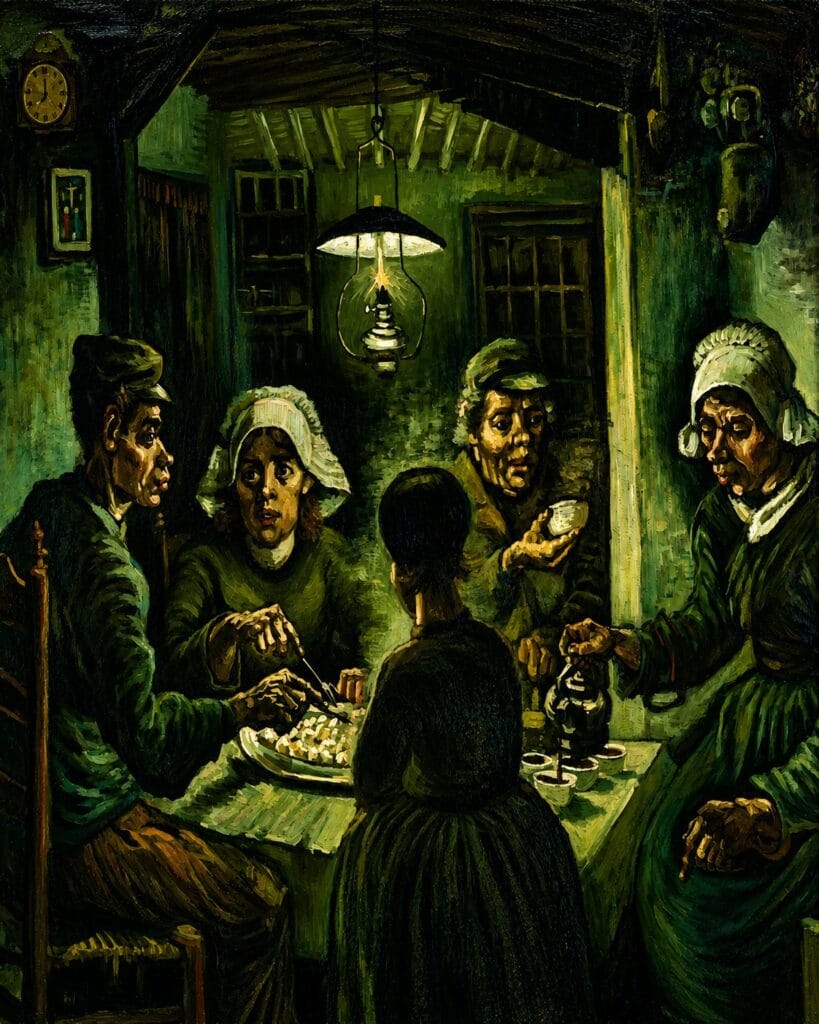
In April 1885, Vincent sent Theo The Potato Eaters with this explanation — directly from the Van Gogh Letters archive: “I wanted people to get the idea that these folk, who are eating their potatoes by the light of their little lamp, have tilled the earth themselves with these hands they are putting in the dish, and so it speaks of manual labour — that they have thus honestly earned their food.” He spent the entire winter studying the hands and faces of farmers before he painted it. Nobody bought it. Vincent considered it his best work for the rest of his life.
There’s another line from his letters that stays with you. “People see smoke coming from me and think, huh, there’s some smoke. But there’s a fire burning inside me. Nobody comes close enough to warm themselves by it.” Theo was the one person who stayed close to that fire, all the way to the end.
These two men held each other up their entire lives. Vincent with his paintings, Theo with his money and belief. That love between brothers is what 903 letters are made of. And if Theo hadn’t kept them, if Jo hadn’t read them, if their son hadn’t built a museum — none of us would know Van Gogh’s name today.
There’s something that connects to this — the way certain people refuse to put the pen down no matter what. Mary Queen of Scots kept writing letters while she waited to be executed, and those letters outlived everything else about her story. And the way Van Gogh kept showing up for his brother even when it cost him everything is the same impulse you see in the musicians on the Titanic who kept playing until the very end — not because anyone told them to, but because it was the only thing left that felt true.
Archive Notes
How many letters survived — and how many were lost?
The Van Gogh Museum records 903 surviving letters — 820 written by Vincent and 83 sent to him. More than 650 of those were addressed to Theo. But researchers estimate Vincent likely wrote over 2,000 letters in total. The rest were lost because Vincent himself threw them away or burned them. What we have today is what Theo chose to keep.
Why did Theo die just six months after Vincent?
Theo had already been suffering from serious physical and neurological illness before Vincent died. According to the Van Gogh Museum, Vincent’s death accelerated his decline. Theo died on January 25, 1891, at 33, in a care facility in Utrecht. In 1914, his wife Jo had him reinterred in Auvers-sur-Oise, beside Vincent.
What was Van Gogh’s actual last painting?
For a long time, Wheatfield with Crows was considered his final work. But recent research by Van Gogh Museum scholars suggests Tree Roots is more likely the last painting he completed — finished in the hours before he walked into the wheat field on July 27, 1890.
What You Now Know
Van Gogh’s paintings didn’t sell until after he was dead. But his letters reached Theo every single day while he was alive. The paintings were for the world. The letters were for one person. And because Theo kept them, because Jo read them, because their son built a museum — that’s why we know who Van Gogh is.
Tip For Readers
All 903 letters are available for free at the Van Gogh Letters official archive — with full annotations in English and Dutch. The Van Gogh Museum’s complete archive on the brothers’ relationship is at vangoghmuseum.nl.
Verified Sources
Van Gogh Museum (Amsterdam, Netherlands) — Official Archives, Collection Records, Letters, Family History, and Research Publications
Van Gogh Letters Project (vangoghletters.org) — Complete Digital Edition of Vincent van Gogh’s Surviving Correspondence (903 Letters)
Wikimedia Commons — Public Domain Historical Images and Archival Material (Images restored and optimized by the Vella Team for publication purposes)