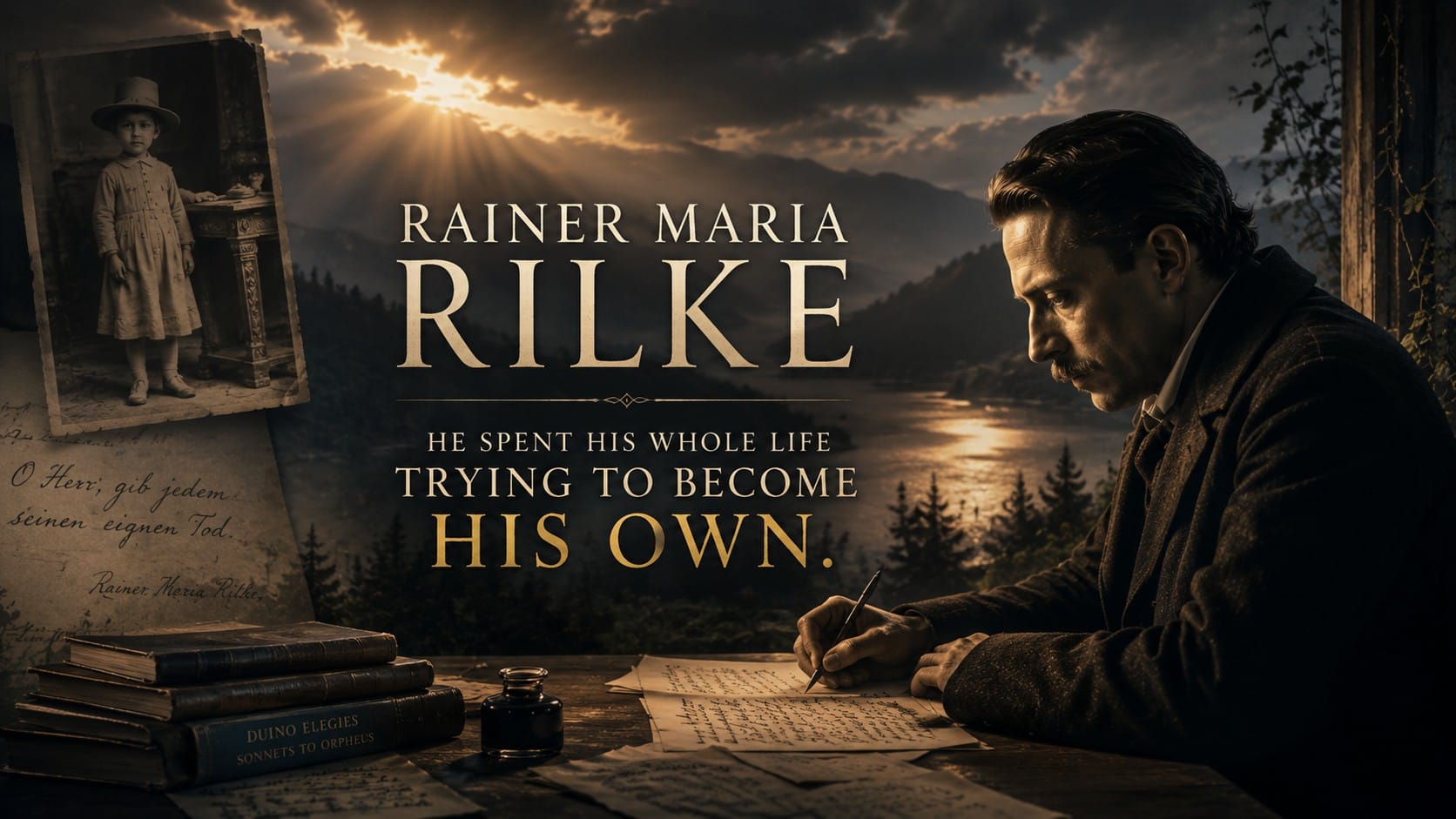
On December 4, 1875, René Karl Wilhelm Johann Josef Rilke was born in Prague. His mother, Sophie, had already lost a daughter only weeks after the child’s birth. Perhaps that was why she let her son’s hair grow long and dressed him in girls’ clothes.
The world remembers him as the poet who left behind Duino Elegies, Sonnets to Orpheus, and Letters to a Young Poet. But before any of that, he was a boy who had little control over how he looked or how he lived. His mother wanted him to live as a girl. His father demanded the opposite. He sent Rilke to a military school, and the boy had to endure a childhood of uniforms and discipline meant to turn him into an officer.
He never became an officer. Once he left the military school and began writing poems, he slowly started taking his life back. He changed his name, moved between Russia, Paris, and Switzerland, fell in love, and married — but chose to leave his family behind and write alone. Beside the sculptor Rodin, he learned to look at things for a long time, only to be fired in the end. And for nearly ten years, he locked himself in deep isolation, unable to finish a poem he had started in Duino.
On December 29, 1926, Rilke died of leukemia in Switzerland. Some say a rose thorn caused his death. Others say he refused painkillers until the very end. The final moments of a poet who wanted even death to be truly his own still remain somewhere between legend and record.
Rilke’s Childhood: Dressed as a Girl in the Shadow of a Lost Sister
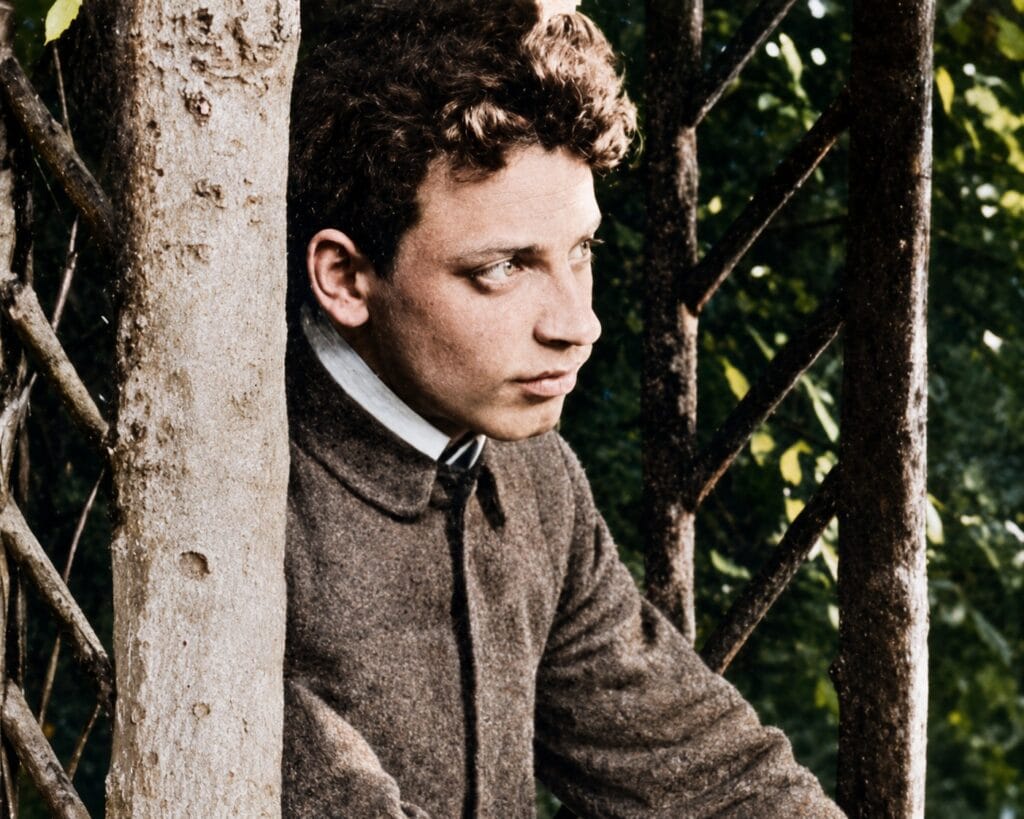
Before Rainer Maria Rilke was born, his mother Sophie lost her first daughter just weeks after birth. That grief carried over onto the son who came after. Sophie named him René, dressed him in girls’ clothes, and let his hair grow long.
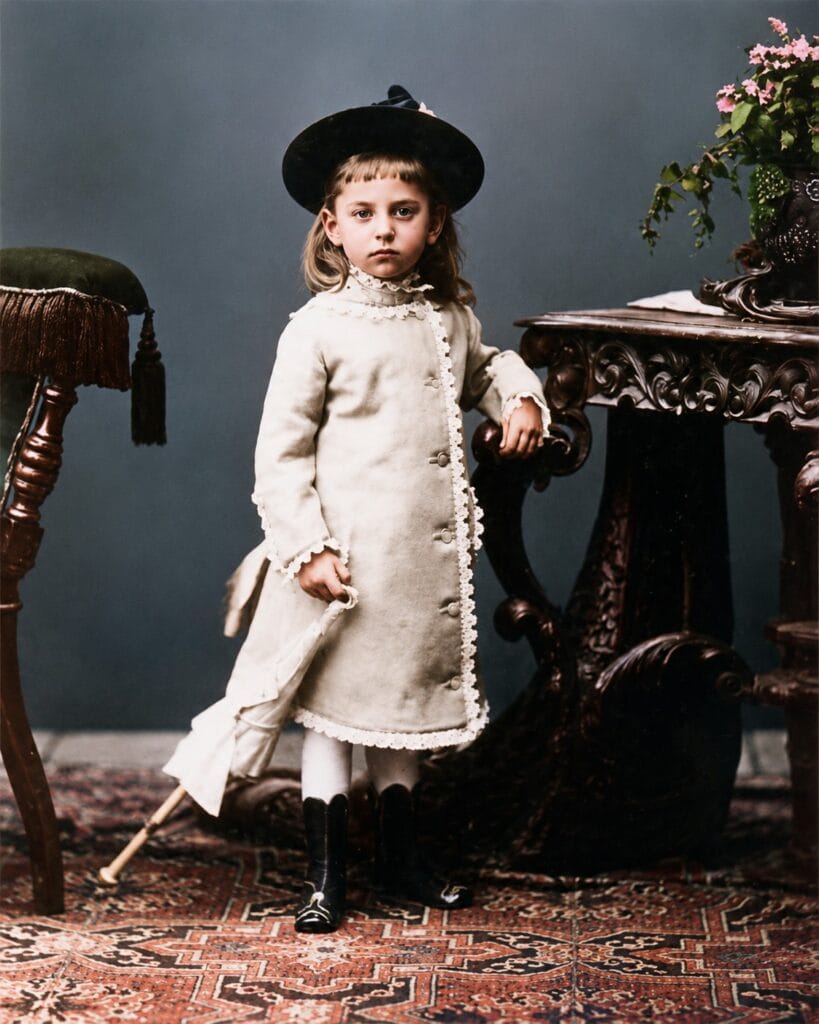
In the photograph, the boy stands before the camera with long hair and lace clothing. From birth, even his name and his appearance were never his own choice.
When Rilke was around nine, his parents separated.
His father, Josef Rilke, had served in the military but left without ever becoming an officer. He wanted his son to finish the dream he himself had failed to finish, so he sent ten-year-old Rilke to a military school in Austria. The boy who once wore long hair and a skirt now had to put on a uniform and train to become an officer.
His mother dressed him as a daughter. His father dressed him as a soldier. Before Rilke could imagine a life of his own, he had to live, one after another, the lives his parents had chosen for him.
Military School Took Rilke’s Body and His Time
In 1886, ten-year-old René Rilke entered a military school in Sankt Pölten, Austria. From the moment he woke until he went to sleep, every part of his day was fixed. Roll call, classes, drills, and meals followed the same schedule.
The school taught the boys obedience before it taught them anything else. They had to move on command, sleep in the same room, and repeat set motions again and again. There was almost no time to be alone. For René, who was frail and unused to military training, each day there became something he simply had to endure.
In 1890, he was moved to a more advanced military school in Mährisch-Weißkirchen. But his body still could not keep up. The next year, poor health forced him to stop his military training, and with it, his father’s plan to make him an officer came to an end.
Taking off the uniform did not mean his own path suddenly appeared. Rilke enrolled in a business school in Linz, then dropped out again, and went back to Prague to study with private tutors while preparing for university. He had escaped the officer’s path his father had set for him, but he still did not know what he wanted to become.
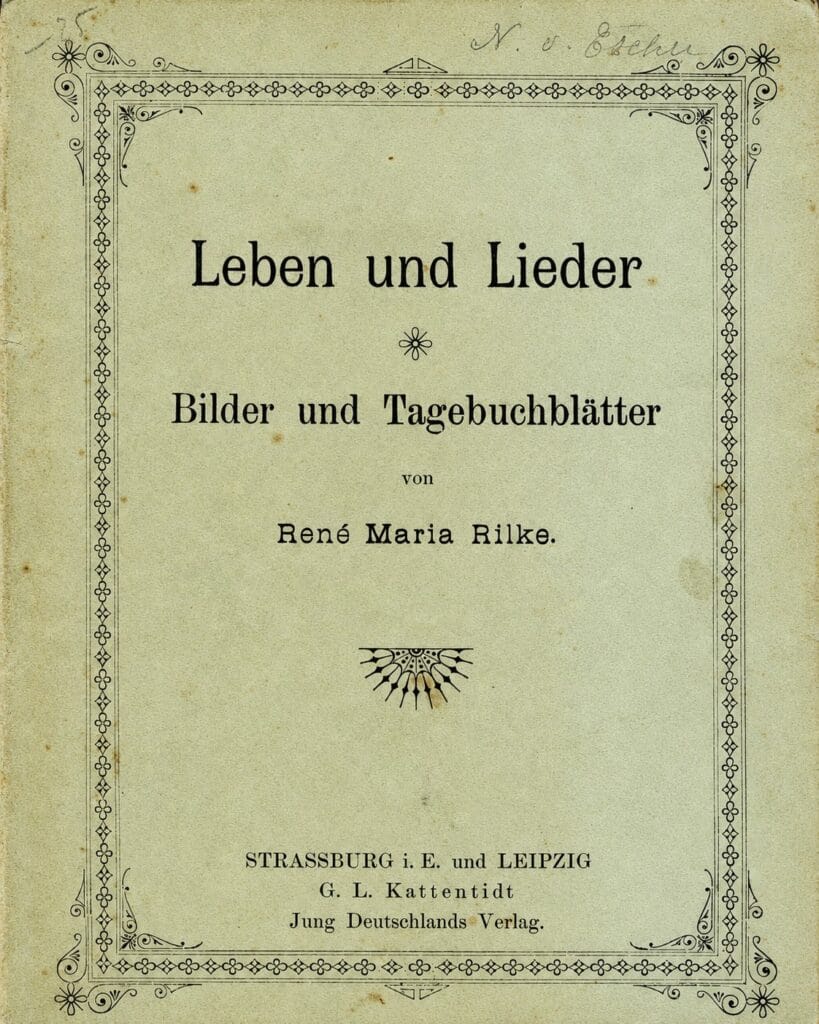
Around that time, René began studying literature and art history and started writing poems. In 1894, he published his first poetry collection, Leben und Lieder, under his own name. After living through the shape his mother had chosen and the future his father had chosen, he had, for the first time, put his own words out into the world.
O könnt ich nicht singen und sagen
O könnt ich nicht singen und sagen – traun,
ich glaube, ich müßte vergehn.
Wie sollt ich denn schweigend den Frühling schaun
und das Lispeln der Lüfte verstehn?
Oh, if I could not sing and speak
Oh, if I could not sing and speak — truly,
I feel I would simply fade away.
How could I watch the spring in silence
and still make out the whisper of the wind?
But soon, even the name René written beneath those lines would be changed by a woman.
Lou Salomé Gave René the Name Rainer Maria Rilke
In May 1897, twenty-one-year-old René Rilke met Lou Andreas-Salomé in Munich. Salomé was fifteen years older than him and had already published several books. René showed her his poems, and Salomé looked past the words, all the way down to the name written beneath them.
She told him to use Rainer instead of René. She thought it stronger, and better suited to his writing. René agreed. The name his mother had given him disappeared from the page, and in its place, the name Rainer Maria Rilke began to appear.
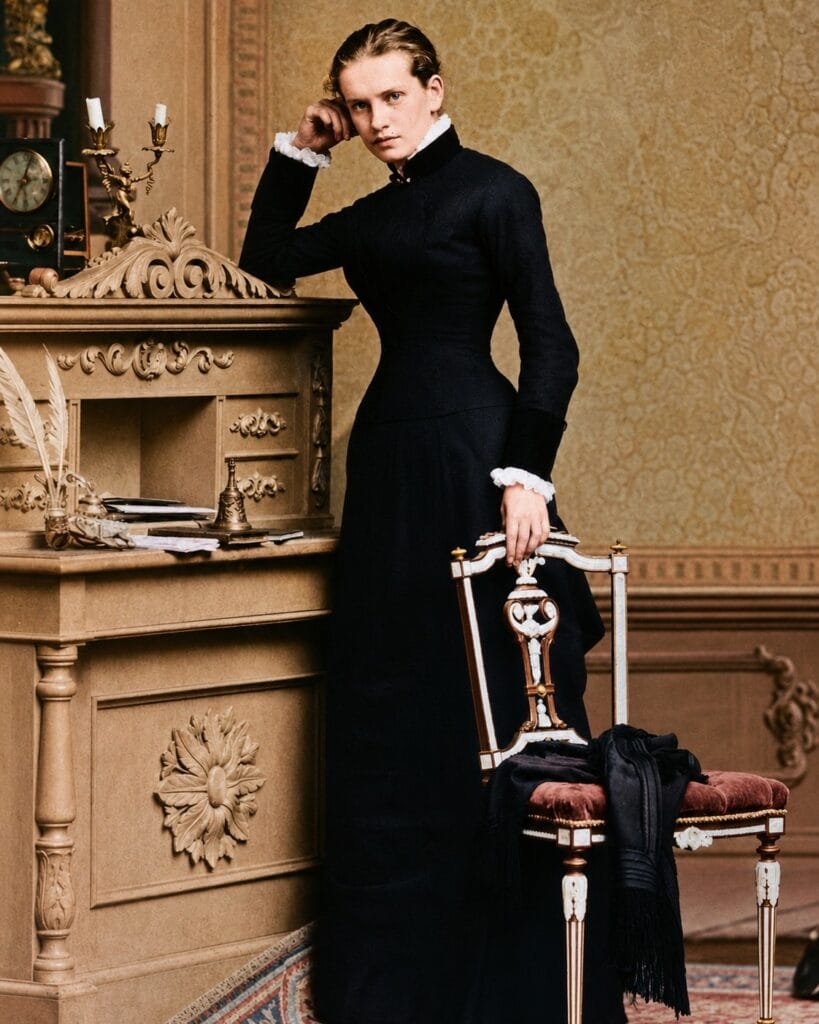
Salomé read his poems and letters and urged him to cut lines that felt overly ornate. It became routine for Rilke to send her a revised draft and wait for her reply.
In 1899, Rilke traveled to Russia with Salomé and her husband, Friedrich Carl Andreas. The following year, he went to Russia again with Salomé, and at Yasnaya Polyana they met the great writer Leo Tolstoy. A young poet still finding his literary voice stood before an old master who had already produced an enormous body of work. What Rilke experienced in Russia later flowed into his Book of Hours.
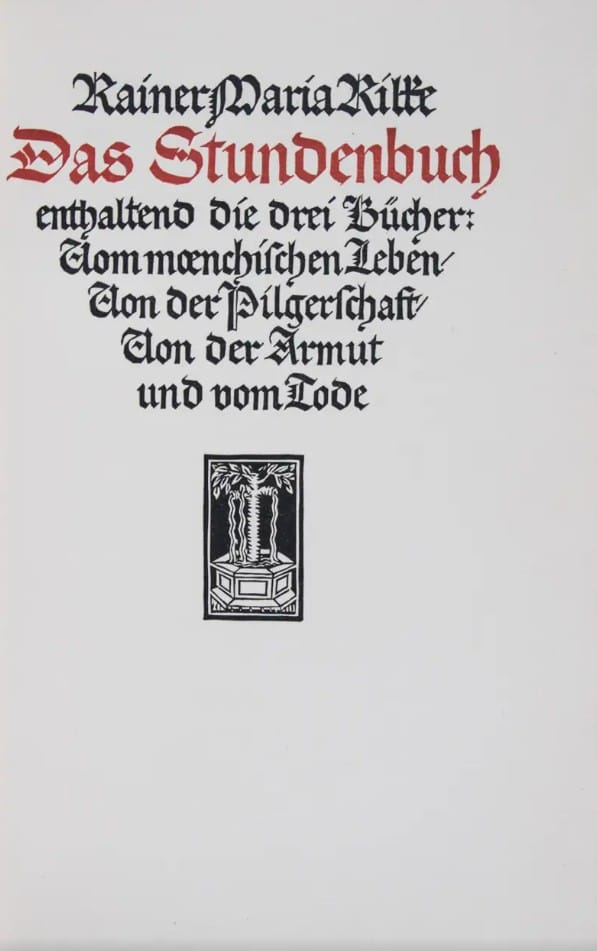
Ich lebe mein Leben in wachsenden Ringen,
die sich über die Dinge ziehn.
Ich werde den letzten vielleicht nicht vollbringen,
aber versuchen will ich ihn.
I live my life in circles that keep growing wider,
spreading out over everything around me.
I may never finish the last one,
but I mean to try and reach it anyway.
The boy who once had to obey other people’s orders at military school was now writing poems in his own voice, out of what he himself had seen.
At Every Turning Point, Rilke Wrote to Lou Andreas-Salomé
In his twenties, Rilke kept nothing from Salomé, not his poems, not his thoughts. Whenever he wrote something new, he sent it to her first, then rewrote it once her reply came back. Salomé, who had kept some distance at the start, came to accept his honesty and his talent, and the two became lovers.
The two kept writing letters even after they broke up. Salomé remained his oldest friend and the first reader of everything he wrote. Even after Rilke moved to other cities, married, and was living alone again, his letters kept arriving at her door. Together, they left behind nearly two hundred letters.
In February 1922, Rilke finished Duino Elegies, a work he had failed to complete for almost ten years. That same day, he wrote to Salomé. To the woman he had first shown his poems to at twenty-one, the forty-six-year-old Rilke now announced the joy of finishing the piece he had held onto the longest.
On December 13, 1926, from his hospital bed, Rilke wrote to Salomé once more. His body was breaking down from leukemia. He wrote to her about the pain and the treatment he was going through.
Und nun. Er deckt mich zu. Er löst mich ab.
Tag und Nacht! Woher den Muth nehmen?
Liebe, liebe Lou,
Proschaj, Dorogája mojá,
Now the pain covers me over.
It pushes me aside and takes my place.
Day and night! Where can I find the courage?
My dear, dear Lou,
Farewell, my beloved.
Twenty-nine years since they first met… and this was the last letter he ever sent her.
Rilke’s Marriage to Clara Westhoff: A Home He Could Not Stay In
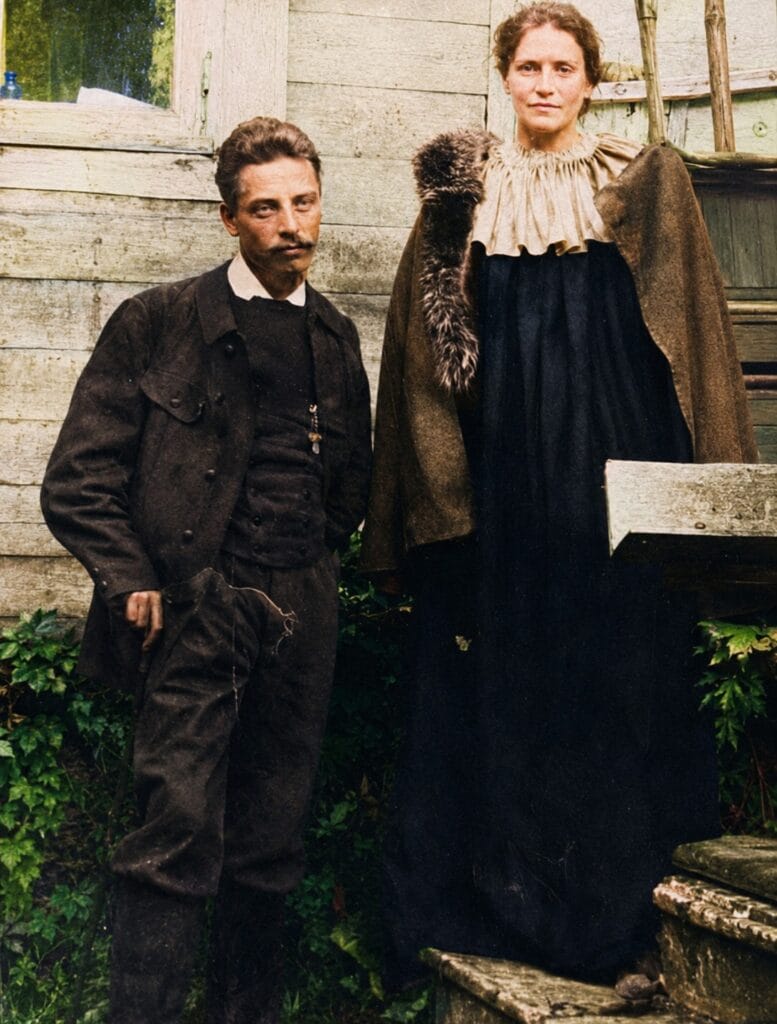
In 1900, Rilke met the sculptor Clara Westhoff in Worpswede, an artists’ village in northern Germany. Clara was a young sculptor who had studied under Auguste Rodin, and Rilke was writing there alongside the painters and sculptors of the village.
The two grew close naturally and married the following spring. After setting up a home near Worpswede, in Westerwede, they kept a separate studio each, under the same roof. Clara worked with clay and plaster, while Rilke sat at his desk writing poetry and prose.
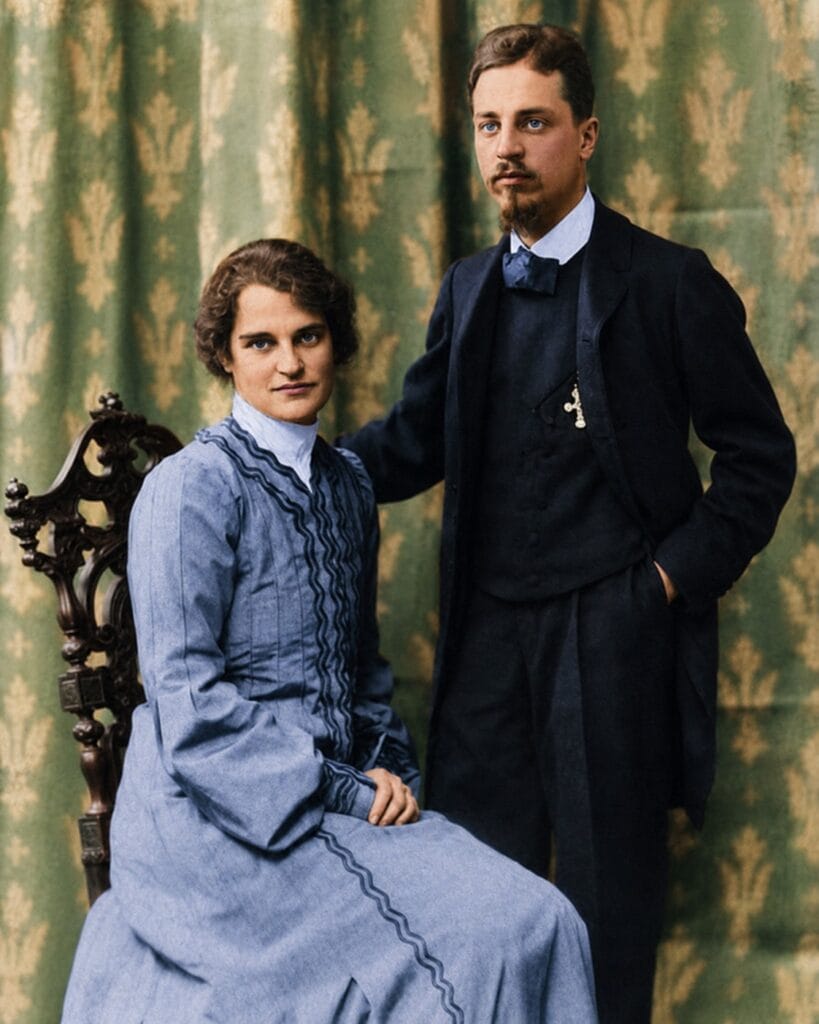
In December 1901, their daughter Ruth was born.
It became harder and harder to live off their art alone. Money was short, and Rilke kept needing time and a place to be alone so he could write.
In 1902, Rilke left for Paris. He had gone to write about Auguste Rodin.
Not long after, Clara followed him to Paris. She picked up her sculpting tools again, and their daughter Ruth was left in Worpswede with Clara’s parents.
In Paris, the two did not live together. Each went off to a separate studio.
After that, Rilke kept moving between Paris, Rome, and Sweden. Clara kept sculpting, and Ruth grew up at her mother’s family home. What passed between Rilke and Clara from then on was mostly sentences about work and money, news of their daughter, and questions about each other’s health.
Rodin Taught Rilke to Work Instead of Waiting for Inspiration
In August 1902, twenty-six-year-old Rilke arrived in Paris carrying a request to write a short book about Auguste Rodin. Rodin was sixty-two. An unknown young poet stood at the door of the studio of the most famous sculptor in Europe.
Rilke waited several days even after reaching Paris. On September 1, he finally went to see Rodin’s studio. Rodin welcomed him and they talked, and the next day Rodin invited him to his home and studio in Meudon, on the outskirts of Paris.
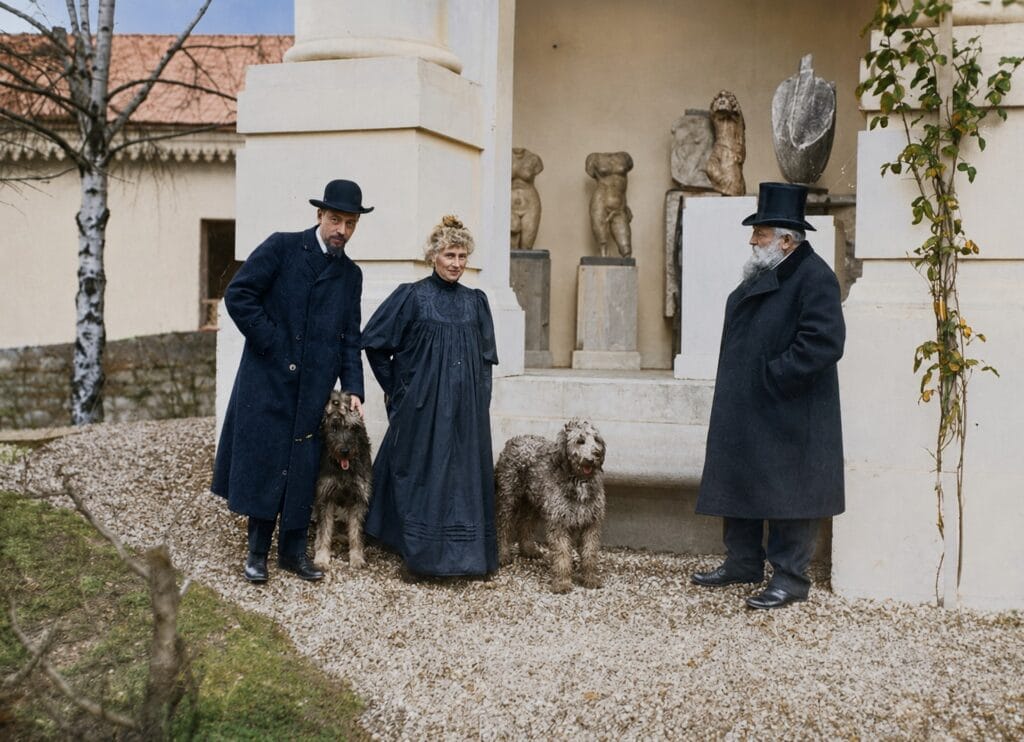
The studio at Meudon held more than finished sculptures. Clay and plaster sat on the floor, and many bodies, hands, and faces waited there, each caught at a different stage. From morning on, Rodin moved among them, pressing clay on, pulling it off, and looking again.
For several days, Rilke kept coming back. He watched Rodin study a model’s body, shape the clay with his hands, and go back to touch up a form he had already finished. Before a young poet who was still waiting for inspiration to arrive, the old sculptor simply worked in the same spot, every single day.
Not long after arriving in Paris, Rilke wrote a letter to Rodin.
Ce n’est pas seulement pour faire une étude que je suis venu chez vous,
c’était pour vous demander : comment faut-il vivre ?
Et vous m’avez répondu : en travaillant.
Et je le comprends bien.
Je sens que travailler, c’est vivre sans mourir.
I did not come to you only to write a study.
I came to ask how one should live.
You told me: by working.
Now I understand what that means.
I feel that to work is to live without dying.
In the letter, Rilke admitted that up until then he had been living while he waited for rare bursts of inspiration. There were weeks when he wrote nothing at all, simply waiting for the moment to create to arrive on its own.
That winter, Rilke finished his manuscript on Rodin. The book came out in the spring of 1903. He had gone to Rodin to write a short study of the sculptor, but by the time the book was finished, his own way of working had changed.
In 1905, Rilke went back to Meudon. Rodin gave him a room in a small building on the grounds, and Rilke offered to help with his work. Before long, he became Rodin’s official secretary, paid 200 francs a month.
Every morning, Rilke opened the letters that had arrived for Rodin. He wrote replies, arranged meetings with visitors, and copied out manuscripts. Once the work was done, he went back to his own room and wrote poems.
In May 1906, one reply Rilke had sent under Rodin’s name caused trouble. Rodin was furious that he had not been told first, and fired him on the spot.
Rilke left Meudon, but he did not erase Rodin’s name from his life.
In 1908, Rilke rented a room at the Hôtel Biron in Paris. Looking over the old building and its wide garden, he thought it would suit Rodin’s sculptures well. That same day, he wrote to Rodin and told him to come see it himself.
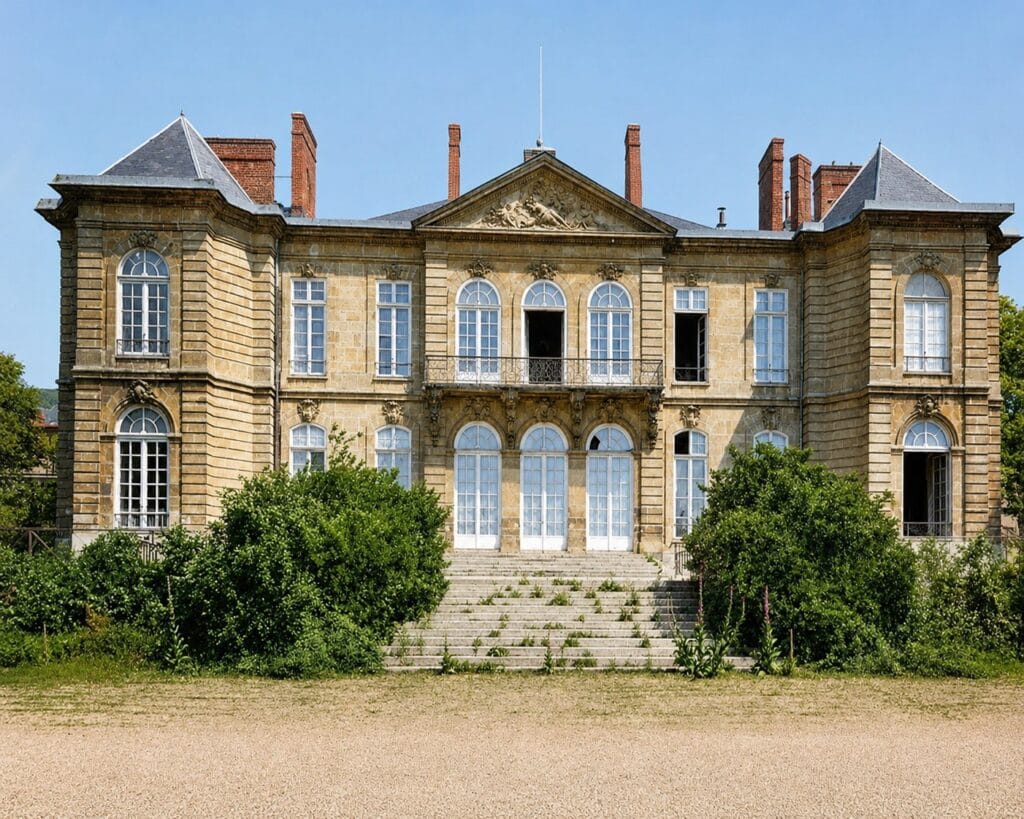
Rodin got Rilke’s letter and came to see the Hôtel Biron. He rented a room there and began moving his sculptures in. The same Rodin who had let Rilke go at Meudon now set up a studio in this old mansion, because of Rilke’s letter. That mansion later became the Musée Rodin.
Rilke carried what he had learned at Rodin’s side into his own poems: work every day, look for a long time at what stands in front of you, and keep looking until a shape once invisible finally comes into view.
Rilke Turned Rodin’s Way of Seeing Into “The Panther”
In 1902, Rilke stood in front of a big cat’s cage at the Paris botanical garden. Behind the bars, a panther paced the same ground. Each time its front paw touched down, its shoulder dropped, and the muscles along its back slowly rolled forward. A few steps later, it was already back where it had just been.
Strength still lived in the panther’s body. But that strength went nowhere. Its soft, sure steps traced the smallest possible circle inside the cage, and every time its head turned, another bar crossed its view.
Rilke never wrote that the panther was lonely, or that it had lost its freedom. He set down only the bars, the steps, the muscles, and the eyes he saw in front of the cage. The finished poem, “The Panther,” appeared in New Poems in 1907 and later became one of Rilke’s best-known works.
Sein Blick ist vom Vorübergehn der Stäbe
so müd geworden, daß er nichts mehr hält.
Ihm ist, als ob es tausend Stäbe gäbe
und hinter tausend Stäben keine Welt.
His eyes have grown so tired from the bars
sliding past that they can hold nothing anymore.
A thousand bars seem to line up before him,
and behind those thousand bars, no world remains at all.
Der weiche Gang geschmeidig starker Schritte,
der sich im allerkleinsten Kreise dreht,
ist wie ein Tanz von Kraft um eine Mitte,
in der betäubt ein großer Wille steht.
The strong steps move on, soft and smooth,
circling round the smallest ring there is.
It looks like a dance of strength around a center,
where a great will stands frozen, unable to move.
Rilke never wrote that the panther deserved pity. He left only the bars and the footsteps, and a body that could not move forward.
Letters to a Young Poet: Rilke on Solitude and Choosing for Yourself
In February 1903, an envelope holding a few poems arrived for Rilke. It came from Franz Xaver Kappus, a twenty-year-old officer cadet at a military school in Austria. He asked Rilke to read his poems, and to tell him whether he had what it took to become a poet.
The name of the school on the envelope was not strange to Rilke. He too had slept in a military school bed from age ten, worn the uniform, and moved on a fixed schedule. Even after leaving because his body couldn’t keep up, that time never stopped weighing on him.
Rilke did not send Kappus’s poems back marked up with corrections. He did not say which lines were good or bad. He wrote that Kappus should stop asking other people whether his poems were good. That was a question no one else could answer for him.
Gehen Sie in sich. Erforschen Sie den Grund, der Sie schreiben heißt; prüfen Sie, ob er in der tiefsten Stelle Ihres Herzens seine Wurzeln ausstreckt. Fragen Sie sich in der stillsten Stunde Ihrer Nacht: Muß ich schreiben?
Go into yourself. Search for the reason that drives you to write, and check whether its roots reach into the deepest part of your heart. Ask yourself, in the quietest hour of the night: must I write?
Rilke told him to also ask whether he could go on living if writing were taken away from him entirely. If the answer came from deep inside, he wrote, then build your whole life around that answer.
As the letters went back and forth, Kappus opened up about love, loneliness, and fear over his future career. Whenever Kappus tried to force an answer, Rilke told him not to pry open a question that was not yet ready to be opened. He told Kappus to live beside that question, the way one lives beside a closed room.
Between 1903 and 1908, Rilke sent Kappus ten letters in all. He did not write them for publication. Kappus kept the letters and their envelopes, and three years after Rilke died, in 1929, he published them under the title Letters to a Young Poet.
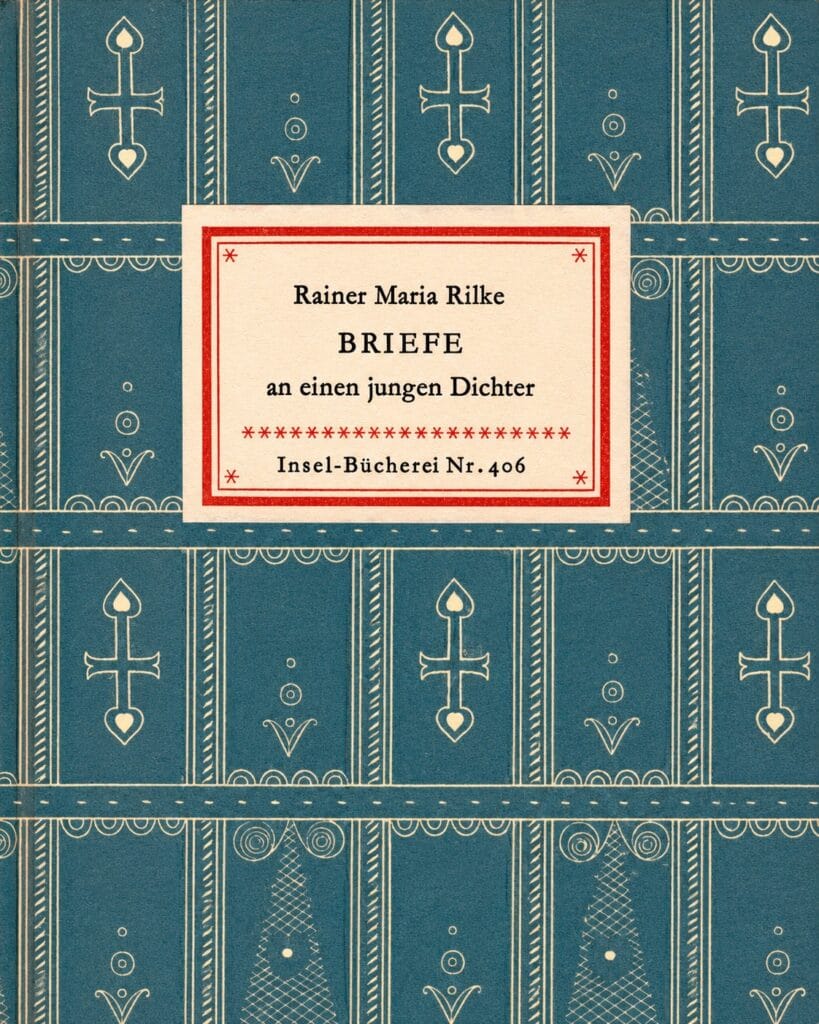
In the end, Rilke never told Kappus whether he could become a poet. All he left him was this: decide for yourself, without asking anyone’s permission.
Kappus later became a soldier, and Rilke’s letters stayed in his drawer. The world only got to read those replies after Rilke had died.
A Poem Begun in the Wind at Duino Castle Went Unfinished for Ten Years
In October 1911, Rilke was invited by Princess Marie von Thurn und Taxis, who had supported him for years, and went to stay at Duino Castle. The princess gave him a room in the castle, and Rilke spent the winter there, writing letters and reading books.
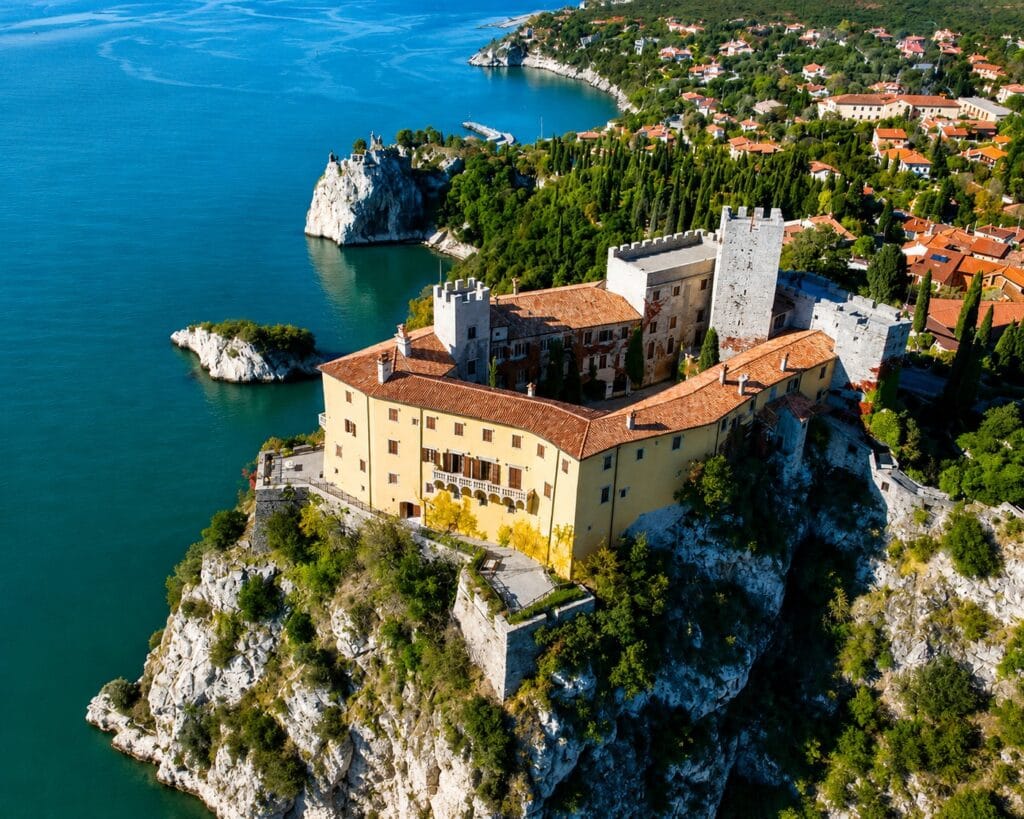
One day in January 1912, Rilke was walking along the cliff path outside the castle. As a strong wind blew in off the sea, a line came to him. He stopped walking and wrote it down.
Back in the castle, Rilke continued writing from that first line. What became the First Elegy held an angel beyond the reach of the human voice, and a beauty edged with terror that a person could barely endure.
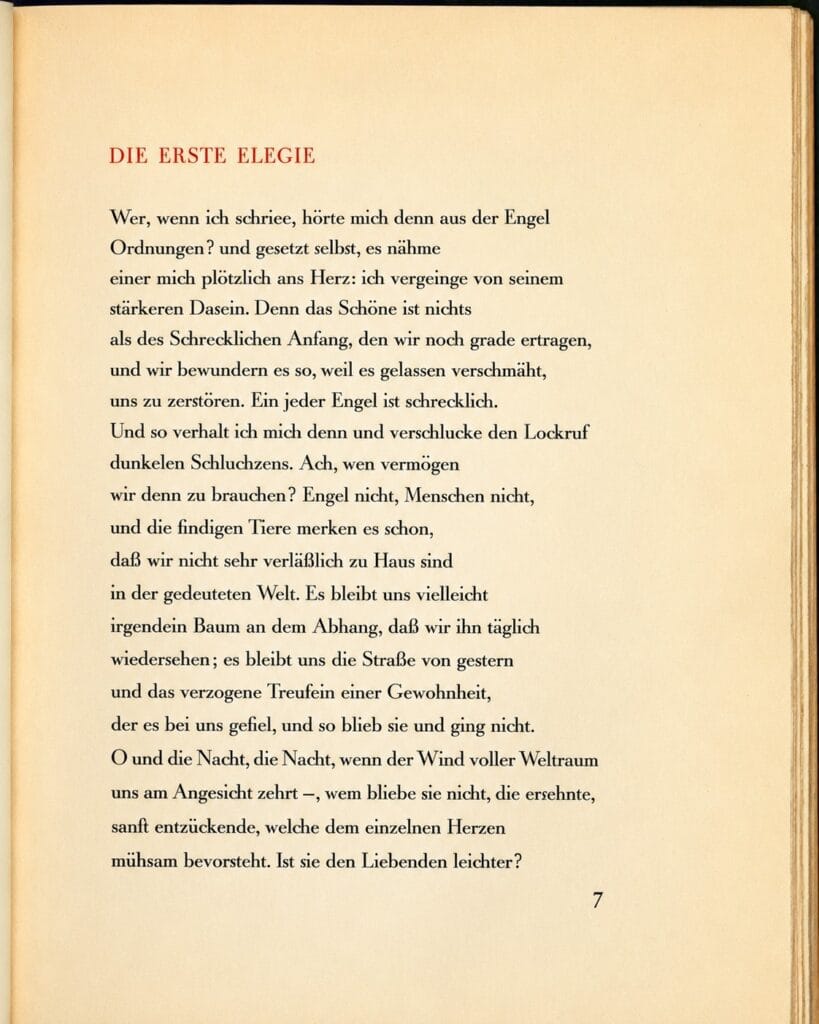
Wer, wenn ich schriee, hörte mich denn aus der Engel
Ordnungen? und gesetzt selbst, es nähme
einer mich plötzlich ans Herz: ich verginge von seinem
stärkeren Dasein. Denn das Schöne ist nichts
als des Schrecklichen Anfang, den wir noch grade ertragen,
und wir bewundern es so, weil es gelassen verschmäht,
uns zu zerstören. Ein jeder Engel ist schrecklich.
Who, if I cried out, would hear me
among the ranks of angels?
Even if one of them suddenly pulled me to its chest,
I would vanish before its greater strength.
Beauty is nothing
but the beginning of a terror we can just barely stand,
and we admire it so
because it calmly refuses
to destroy us.
Every angel is terrifying.
Rilke wrote the First Elegy and the Second Elegy that January and February. He also set down parts of the Third and the Sixth on paper.
When Rilke left Duino, his manuscript held two finished elegies and several pages of drafts. He added more in 1913 and 1915, but each time, he stopped again partway through.
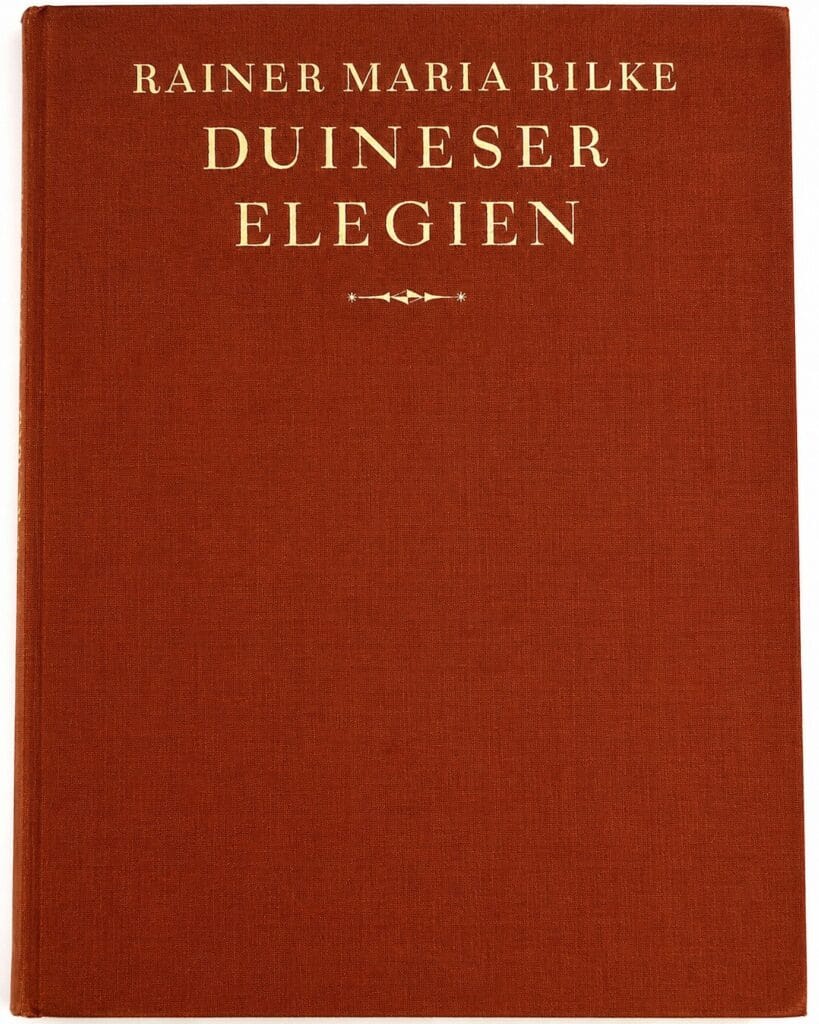
Rilke never threw away the manuscript he had begun at Duino. Every time he moved to a new city, a new room, the unfinished pages moved with him. Ten years passed between the first line he wrote on the cliff path and the last line of the tenth elegy.
World War I Put Rilke Back in Uniform and Stalled the Duino Elegies
In the summer of 1914, when the First World War broke out, Rilke was in Germany. With the borders closed, he could not go back to Paris.
Rilke spent most of the war years in Munich. In November 1915, he wrote the Fourth Elegy, but the ten-poem cycle he had begun at Duino still remained unfinished.
At forty years old, Rilke received his call-up notice from the Austro-Hungarian army. He had to put on a uniform again in Vienna.
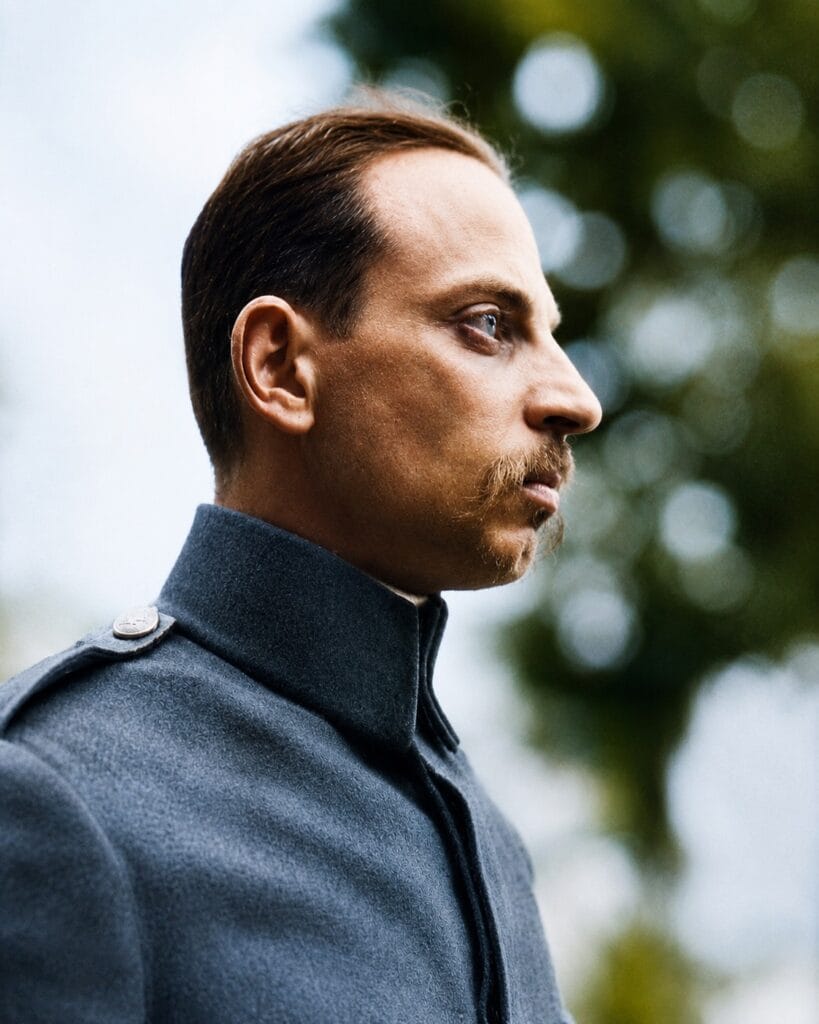
Rilke was not sent to the front. He was moved to the war records office, where he sorted military records and papers. In uniform, sitting at a desk, he spent his days copying other men’s war onto paper.
In June 1916, Rilke was released from military service and returned to Munich. He sat back down at his desk, but Duino Elegies remained almost untouched.
Even after the war ended, he did not stay long in Munich. In 1919, after receiving invitations to give readings in Switzerland, he left Germany.
He could not settle in one place in Switzerland either. Rilke moved from place to place, unpacking and repacking his bags each time. Duino Elegies, still unfinished, traveled inside his luggage with him.
Château de Muzot: Completing the Duino Elegies and Sonnets to Orpheus
In the summer of 1921, Rilke moved into Château de Muzot, an old stone building set above the vineyards of Valais, Switzerland. His patron, Werner Reinhart, had arranged the house for him.
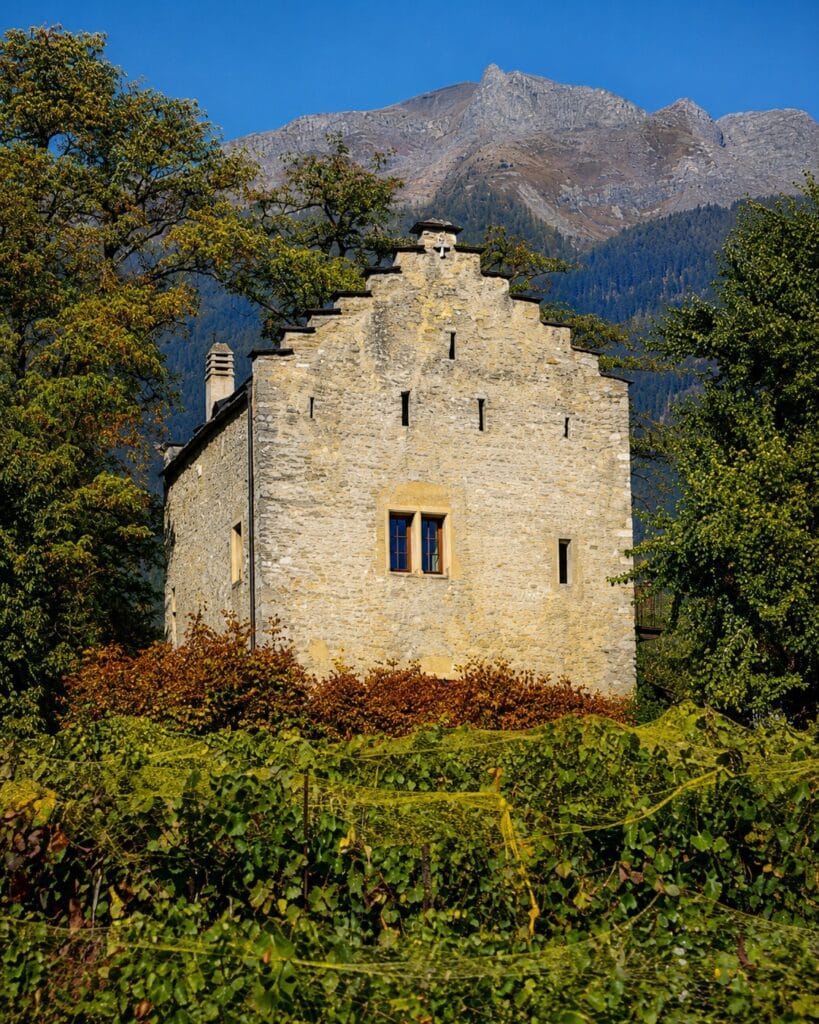
Rilke began writing poems for Wera Ouckama Knoop. Wera had been a young dancer who knew Rilke’s daughter Ruth. Illness stopped her dancing, and she died at nineteen.
Trees and animals, song and dance followed one after another, and as the sequence neared its end, Wera’s body appeared again.
Dich aber will ich nun, dich, die ich kannte
wie eine Blume, von der ich den Namen nicht weiß,
noch ein Mal erinnern und ihnen zeigen, Entwandte,
schöne Gespielin des unüberwindlichen Schrei’s.
Now I want to call you back again,
you whom I knew like a flower whose name I never learned.
I want to remember you once more and show you to others,
you who were taken from us,
beautiful playmate of a cry no one could ever defeat.
Tänzerin erst, die plötzlich, den Körper voll Zögern,
anhielt, als göß man ihr Jungsein in Erz;
trauernd und lauschend —. Da, von den hohen Vermögern
fiel ihr Musik in das veränderte Herz.
You who danced, then suddenly stopped,
your young body full of hesitation,
as though it had been poured into bronze.
Grieving, listening — and then, from somewhere high above,
music fell into your changed heart.
In just a few days, twenty-six sonnets piled up. Rilke left Wera’s name on that manuscript. It was not a grave for a dead girl, but a poem that set her dancing body moving again.
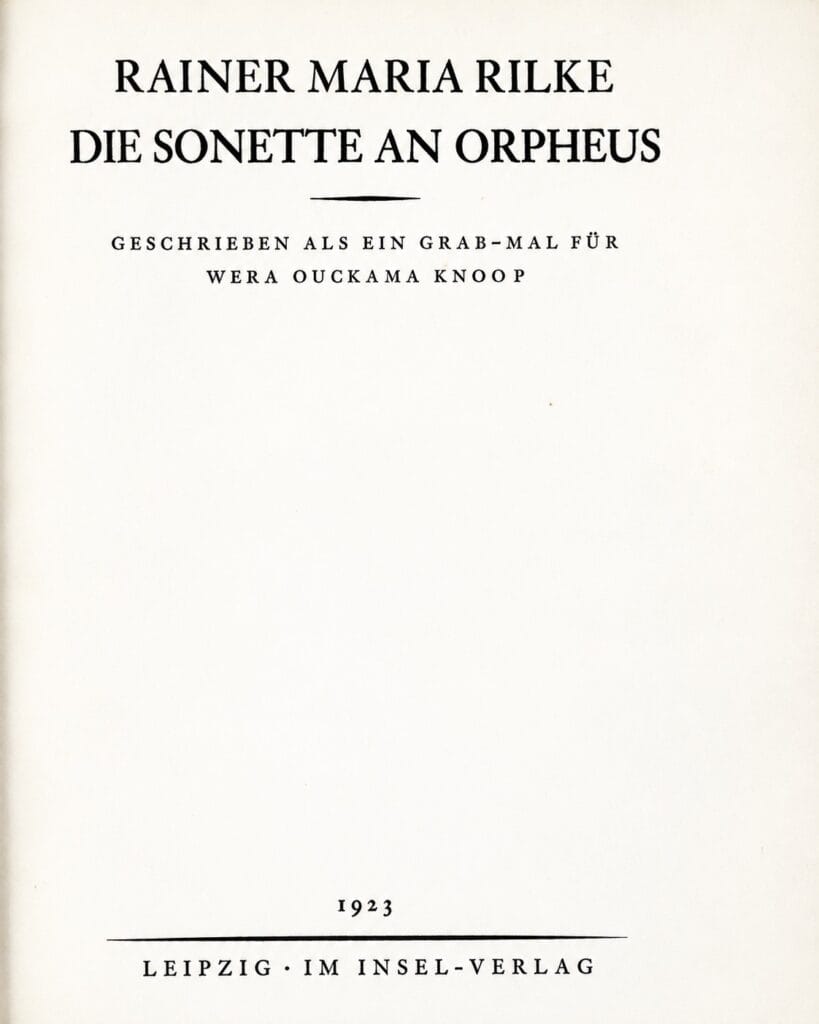
On the title page of the first edition, published in 1923, Wera’s name stayed right at the center: “GESCHRIEBEN ALS EIN GRAB-MAL FÜR WERA OUCKAMA KNOOP.” Rilke described these fifty-five sonnets as “written as a grave-marker for Wera Ouckama Knoop.”
The hand that had been writing sonnets moved to the old manuscript sitting on one corner of the desk. It was the elegy he had left unfinished for ten years, ever since that first line on the cliffs of Duino. Rilke reread the lines he already had, and wrote new poetry into every gap that remained.
At six in the evening on February 11, 1922, Rilke wrote the last line of the Tenth Elegy and put down his pen. Right away, he wrote to Salomé.
Lou, liebe Lou, also: in diesem Augenblick, diesem, Samstag, den elften Februar um 6, leg ich die Feder fort, hinter der letzten vollendeten Elegie, der zehnten.
Lou, dear Lou, so: at this very moment, this Saturday, February 11, at six o’clock, I am putting down my pen, right after finishing the last elegy, the tenth.
He first told the woman who had urged him to change his name at twenty-one, traveled through Russia with him, and continued receiving his letters long after their love had ended. He wrote that for days, a storm strong enough to break and bend everything inside him had passed through.
Rilke Believed Each Person Needed a Death That Grew From Their Own Life
Long before leukemia ever appeared in his body, Rilke had already asked God for one thing in the Book of Hours. Not a death handed out the same way to everyone, but a death that had grown out of the particular life a person had loved and endured.
O Herr, gib jedem seinen eignen Tod.
Das Sterben, das aus jenem Leben geht,
darin er Liebe hatte, Sinn und Not.
O Lord, give each of us our own death.
Give us the dying that grows out of that life
in which we loved, found meaning, and knew need.
A few years later, in The Notebooks of Malte Laurids Brigge, Rilke looked at the city through the eyes of Malte, a young poet living alone in Paris. The city was filled with hospitals and night shelters, people collapsing in the streets, and sick children. Each person had lived a different life, but the deaths they met in the city were starting to look more and more alike.
And Rilke wrote this.
Der Wunsch, einen eigenen Tod zu haben, wird immer seltener.
Eine Weile noch, und er wird ebenso selten sein wie ein eigenes Leben.
The wish to have a death of one’s own is growing rarer and rarer.
A little longer, and it will be just as rare as a life of one’s own.
In the Book of Hours, Rilke had asked that each person be given their own death. Years later, in The Notebooks of Malte Laurids Brigge, he wrote that such a death was disappearing.
Behind the Legend of the Rose, Rilke’s Body Was No Longer His Own
In the winter of 1926, Rilke had left his desk at Château de Muzot and now lay in a bed at the Val-Mont sanatorium. The hands that had finished ten elegies and fifty-five sonnets now carried more marks of treatment than of writing.
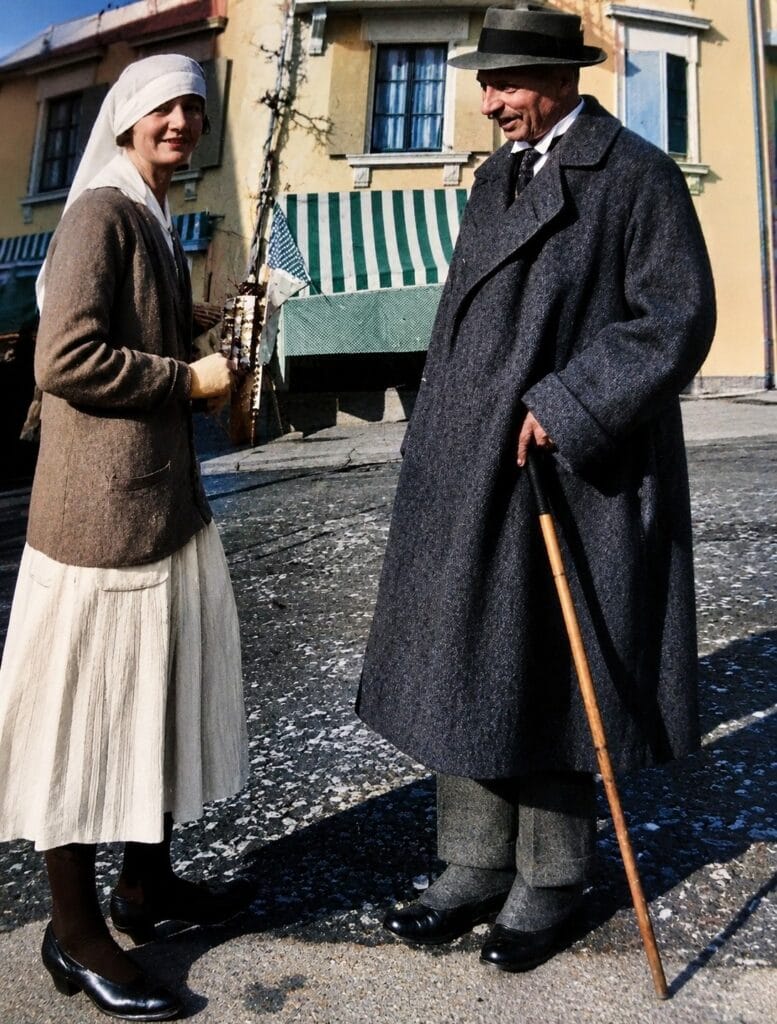
Sores in his mouth made it hard even to speak or swallow. His gums and the tissue inside his mouth bled, and once the bleeding began, it would not stop easily. Dark red marks began to show beneath his skin as well.
When the pain came, he had to set down whatever letter he was reading. The wounds did not ease through the night, and each morning he woke weaker than the day before.
Facing death, Rilke wrote a final few lines on paper. He called the pain inside his body “the last thing I finally accept.”
Komm du, du letzter, den ich anerkenne,
heilloser Schmerz im leiblichen Geweb:
wie ich im Geiste brannte, sieh, ich brenne
in dir; das Holz hat lange widerstrebt,
der Flamme, die du loderst, zuzustimmen,
nun aber nähr’ ich dich und brenn in dir.
Come, you, the last thing I finally accept.
Pain sunk deep into my flesh, with no cure.
Just as my spirit once burned,
see, now I burn inside you.
For a long time this body resisted your flame,
but now I feed you, and I burn within you.
The boy who had first been dressed in girls’ clothes and then placed in a uniform had changed his name, left home, and written his own words. But in the bed at Val-Mont, the only thing still under his control was his ability to place a few lines on paper.
On December 29, 1926, Rilke died at the Val-Mont sanatorium in Switzerland. By then, even speaking and swallowing had become difficult, and his body no longer obeyed his will.
Rilke, who had once written that a person’s death must grow out of the life they lived, found that at Val-Mont, his final days became a time when even his own body was no longer his to command.
One thing remained his to choose, right to the end: the ground where he would lie. The coffin that left Val-Mont headed for the hills of Raron.
Rilke’s Final Resting Place in Raron and His Chosen Epitaph
On January 2, 1927, the coffin carrying Rilke left the Val-Mont sanatorium and traveled along the Rhône valley toward Raron. The road climbed through winter vineyards, and at the top of the hill stood the old Church of St. Romanus and a low cemetery wall.
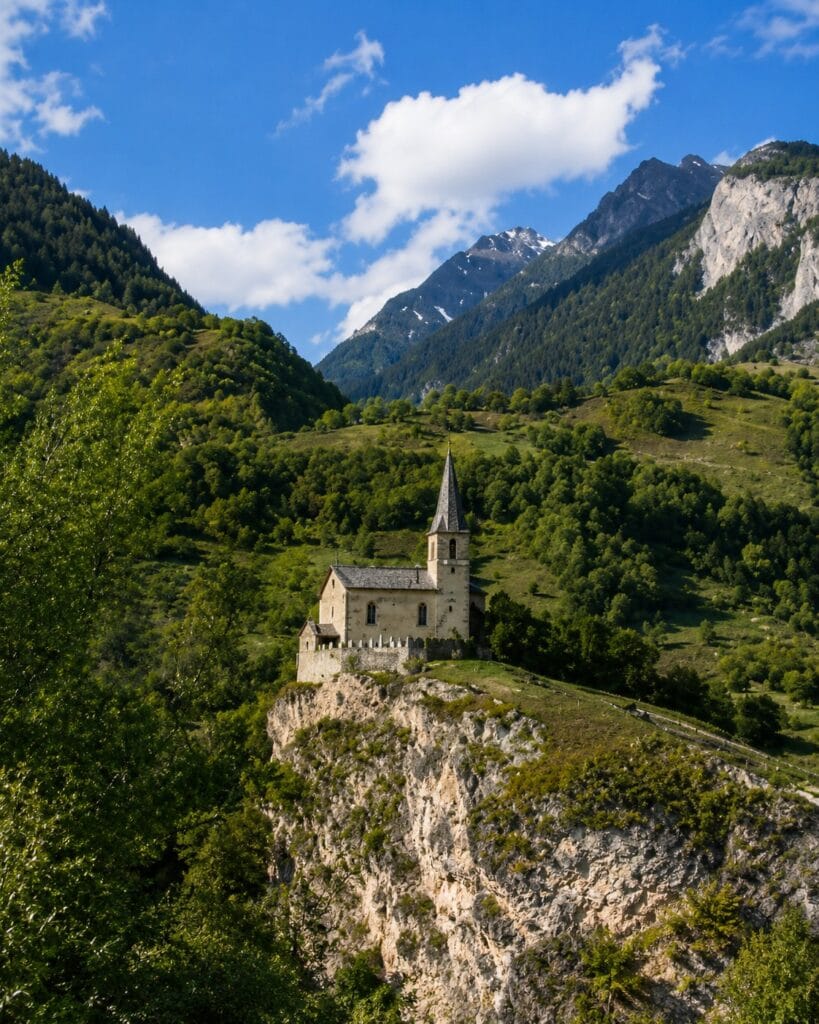
Rilke had climbed this hill once before, a few years before his death. From behind the church, the Rhône River and the mountains of Valais spread out below in a single view. He chose a spot a little apart from where people usually walked, beside the south wall, as the place where he wanted to lie.
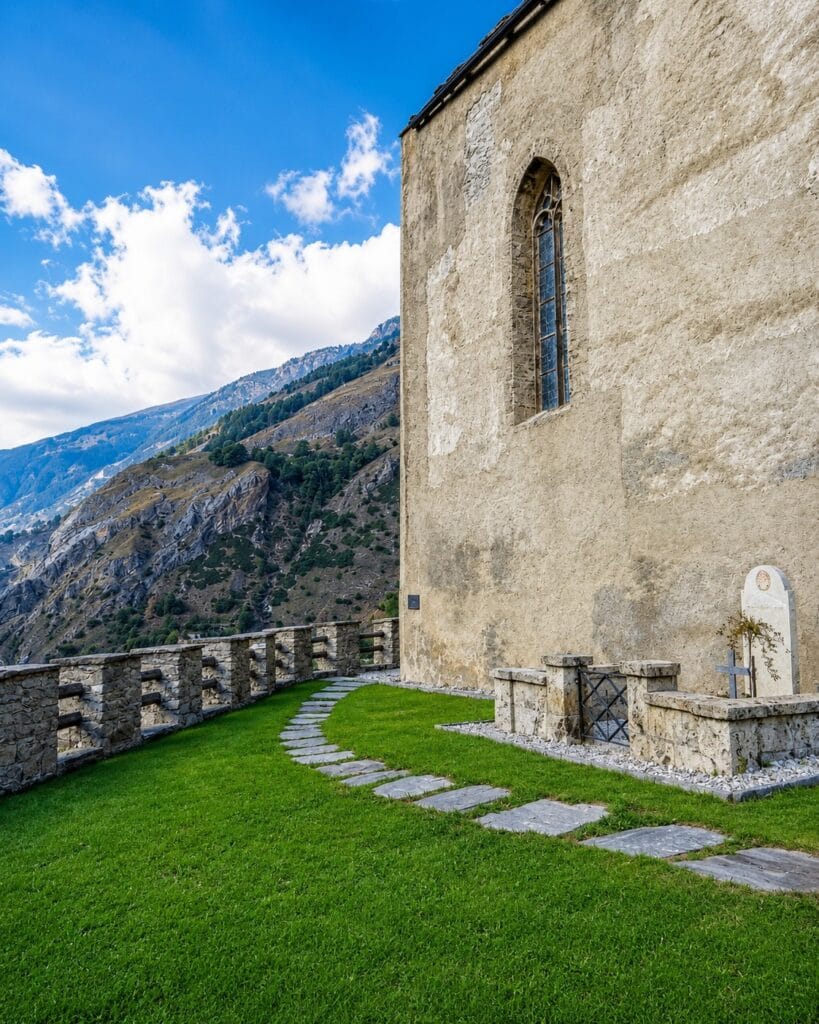
No elaborate carving was placed on his grave, and no image of the poet’s face. On the white stone, only his name and the years of his birth and death were cut into the surface.
Below his name were carved three lines of poetry Rilke had chosen himself, for his own gravestone.
Rose, oh reiner Widerspruch, Lust,
Niemandes Schlaf zu sein, unter soviel
Lidern.
Rose, oh pure contradiction, joy
of being no one’s sleep
beneath so many eyelids.
In his hospital room, the rose had become a legend used to explain his death. On the stone at Raron, the rose remained the final poetic image Rilke himself had chosen.
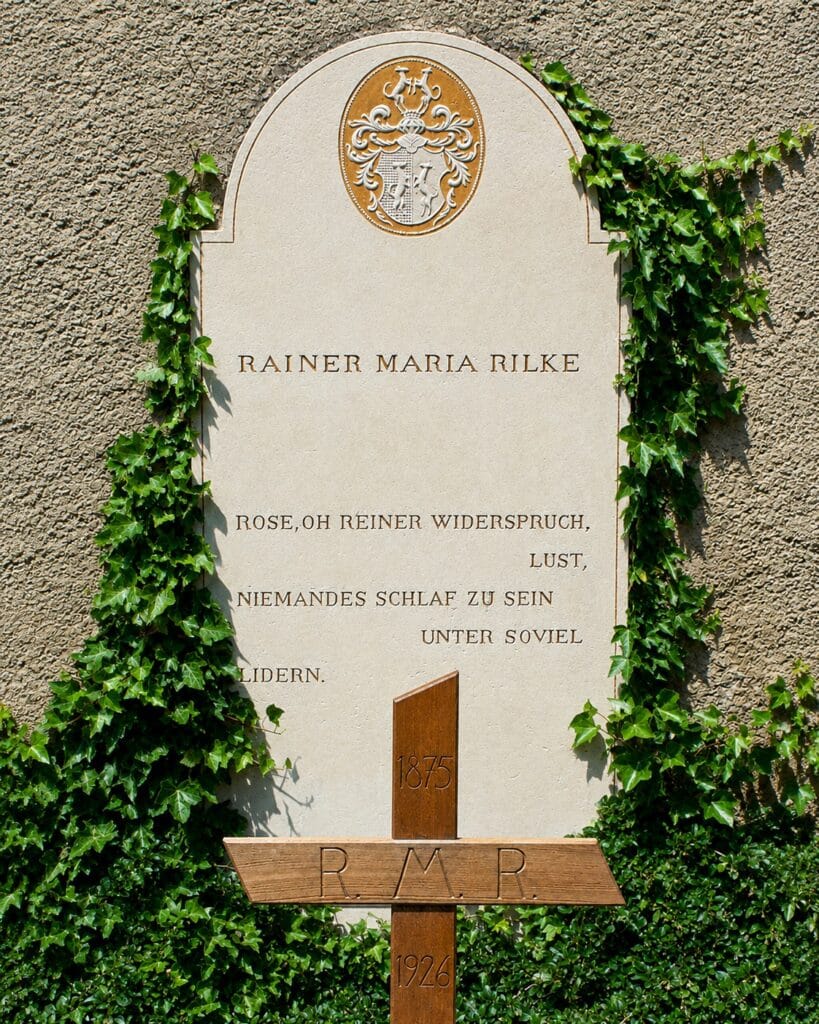
Beside the church’s south wall, the view opened onto the Rhône, the mountains, and the winter vineyards below. On the white stone were carved the three lines about the rose that Rilke himself had chosen.
Below it lay the ground he had chosen, and on the stone remained the three lines he had chosen.
At last, a death wholly his own…
More Stories from FramedTruth
Another man who lost his lifelong home but never surrendered his own words was Dante. He could have returned to Florence, but he refused the conditions that would have required him to confess to crimes he denied. Even while moving through other people’s houses and unfamiliar cities, he held on to his language. Rilke made a place for his life on paper; Dante preserved the homeland he could never enter again inside a single book. Read more about Dante’s story.
Another man who never found a lasting place of his own, yet preserved himself in letters and paintings, was Vincent van Gogh. He found little stability or recognition during his lifetime, but the letters he sent to his brother Theo and the paintings he continued making still hold the life he was unable to secure elsewhere. Read more about Vincent van Gogh.
The Life of Rainer Maria Rilke
Rainer Maria Rilke was born on December 4, 1875, in Prague, then part of the Austro-Hungarian Empire, and died on December 29, 1926, at the Val-Mont sanatorium in Switzerland. He was a German-language poet and novelist. His birth name was René Karl Wilhelm Johann Josef Rilke, and besides his poems and novel, he left behind a vast number of letters.
His literary career began with the poetry collections of the 1890s, moved through the Book of Hours and New Poems, then the novel The Notebooks of Malte Laurids Brigge, and reached its later peak with Duino Elegies and Sonnets to Orpheus. He wrote and published while moving among Prague, Munich, Berlin, Paris, other European cities, and the homes of patrons who supported his work.
Rilke lived through travels in Russia, years in Paris, military service during the First World War, and a move to Switzerland once the war ended. In his final years, he made Château de Muzot in Switzerland his main home. He died at fifty-one while being treated for leukemia. He is buried in the cemetery of the Church of St. Romanus in Raron, in the Swiss canton of Valais.
Rainer Maria Rilke’s Most Famous Works
No single book can represent the full range of Rainer Maria Rilke’s work. He kept circling back to the same questions in very different forms: short poems that stare at a single object, a long cycle of poems about human death and existence, and a novel filled with the fear and memory of life in Paris.
The work that stands for Rilke’s later poetry is Duino Elegies. Angels and humans, beauty and terror, love and death run through it across ten long poems. It holds Rilke’s thinking and his poetic language at their most concentrated, but its symbols and sentences are complex, which also makes it the hardest of his books for a first-time reader.
In Sonnets to Orpheus, the mood shifts. Even while dealing with death and loss, images of song and dance, trees and fruit, breath and change move quickly through the poems. If Duino Elegies asks about the weight of existence a person must carry, these sonnets show how something disappearing can be turned into song.
If you want to start with Rilke’s shorter poems, “The Panther” and “Archaic Torso of Apollo,” both from New Poems, make a good place to begin. In “The Panther,” you follow the gaze and the body of an animal circling endlessly inside its cage. In “Archaic Torso of Apollo,” a damaged statue turns the viewer’s attention back onto their own life. Both poems show, more clearly than anywhere else, how Rilke revealed human truth through objects instead of confessing his own feelings directly.
If you want to meet Rilke through prose, Letters to a Young Poet is the easiest way in. He does not teach a young hopeful how to succeed. Instead, he talks about bearing loneliness, not rushing toward answers, and waiting until the writing rises up from somewhere inside you. This book is still widely read today mainly because its lines feel less like a theory of literature and more like a way for one person to hold onto their own life.
The Notebooks of Malte Laurids Brigge lets you experience Rilke’s world through a novel. Through the eyes of a young poet living in Paris, scenes of street poverty, hospitals, death, and childhood memory pass by in fragments. Rather than a traditional novel that follows a clear plot, it reads more like a record of one person’s senses and memories growing uneasy inside a city.
If you want to see Rilke’s religious language and his early poetic world, you can read the Book of Hours. Here, God feels less like a being explained by doctrine and more like someone a person keeps speaking to and keeps building a relationship with. The sentences are simpler than in his later work, but questions about loneliness, inner life, death, and an unseen presence had already begun to take shape in this early period.
The Themes and Style of Rainer Maria Rilke’s Poetry
Loneliness, love, death, objects, and unseen presences appear again and again in Rainer Maria Rilke’s poems. Rather than explaining these themes directly, he showed them through the shape and movement of animals, statues, roses, and trees. In “The Panther,” you follow the steps and the gaze of an animal circling inside a cage. In “Archaic Torso of Apollo,” a damaged statue turns the viewer back toward their own life. This approach is associated with the German tradition of the Dinggedicht, often translated as the “thing-poem” or “object poem.”
Death also sits at the center of Rilke’s work. He never treated death only as something that suddenly arrives from outside of life. He saw it as something that grows out of the time and experience a person has lived through, until it finally comes to belong to that one person. That is why, in his poems, death is never simply an ending or a disappearance.
In Rilke’s later poems, figures like angels and Orpheus appear, beings that connect the visible world to the unseen one. They are less symbols meant to explain religious doctrine than shapes that reveal a beauty and terror people cannot reach directly. Rilke’s angels are not comforting guardians. They are beings too complete, too intense, for a person to fully withstand.
Rainer Maria Rilke’s Epitaph: Original German and Meaning
Rilke’s epitaph is only three lines, yet it resists being carried whole into a single sentence in translation. At its center stands a rose, and around it, contradiction and joy, sleep and eyelids overlap as separate images.
Rose, oh reiner Widerspruch, Lust,
Niemandes Schlaf zu sein, unter soviel
Lidern.
Translated, it becomes: “Rose, oh pure contradiction, the joy of being no one’s sleep beneath so many eyelids.” But that translation alone cannot hold every meaning the German original leaves open.
The opening phrase, “reiner Widerspruch,” means “pure contradiction.” A rose opens its petals wide even as it folds them, layer upon layer, hiding what lies within. It looks open and closed at once, blooming and yet as if asleep. Rilke does not resolve this into a single explanation; he simply leaves it, held together, inside the word “contradiction.”
“Lust” carries joy, delight, and desire all at once. In this line, it comes closest to “joy,” though no single word can fully stand in for what the German original holds.
“Niemandes Schlaf zu sein” translates literally as “to be no one’s sleep.” The sleep here could be actual sleep, or it could be an image that calls to mind death or the grave. At the same time, it hints at a state that belongs to no one, though Rilke never pins the meaning down to just one reading.
The final word, “Lidern,” means “eyelids.” It is an image of the rose’s layered petals seen as eyelids, but simplifying it to “petals” would strip away the strangeness of the original image. What remains is a picture of countless closed eyelids, beneath which no one’s sleep can be found.
This epitaph is not a sentence that explains Rilke’s death. It sets the rose, sleep, eyelids, and contradiction side by side, and closes none of them into a single meaning. So these three lines read less like an answer than like a question that has kept being asked, long after Rilke himself died.
Verified Sources
Fondation Rilke, Sierre
Swiss National Library, Swiss Literary Archives
Deutsches Literaturarchiv Marbach
Musée Rodin, Paris
Rainer Maria Rilke, Duino Elegies
Sonnets to Orpheus
Letters to a Young Poet
Selected poems, prose works, and letters by Rainer Maria Rilke in the original German
Historical images were sourced from public-domain archives and open-access institutional collections. Some images were digitally restored, colorized, cropped, or redesigned for editorial and storytelling purposes.