John Glenn was already inside the capsule. The rocket was fueled. The machine had already answered. But Glenn was waiting for a human being.
It was February 20, 1962. IBM’s 7090 — a computer the size of a living room — had processed the orbital trajectory and returned its verdict: safe. Every engineer in the building was ready. The countdown clock was running. And Glenn, strapped into Friendship 7 seventy feet above the Florida coast, asked for one specific person. Not about fuel pressure. Not about weather. A person. And he made it plain: if she didn’t check the numbers herself, he wasn’t going anywhere.
Her name was Katherine Johnson. And almost nobody outside that building knew she existed.
The Building Had Two Americas Inside It
Langley Research Center in Hampton, Virginia looked like one place. It was not. There were two cafeterias. Two sets of bathrooms. Two sides of the same American dream, separated by a painted sign that read “Colored Computers.” That sign hung on a door at the end of a hallway. Behind it, a group of Black women did the same mathematics as the white men across the building — and in many cases, did it better.
Katherine Johnson arrived at Langley in the summer of 1953. She had graduated from West Virginia State College at eighteen, summa cum laude, with degrees in both mathematics and French.
She had taught school for years. She was, by any measure, one of the most capable mathematical minds the National Advisory Committee for Aeronautics had ever hired. None of that changed where she was allowed to eat lunch.
Every morning, Johnson walked the length of a corridor — approximately 800 meters round trip — to use the bathroom designated for Black women. On cold mornings, she felt it in her fingers. On rainy afternoons, she felt it in her shoes. She never complained about it publicly. She went to the bathroom, she came back, and she kept working. According to NASA’s own biographical records and Margot Lee Shetterly’s research, the segregated facilities at Langley were not formally abolished until 1958, when NACA became NASA.
The system was comfortable. The math kept coming out right. Nobody had to change anything.
She Wasn’t Supposed to Be in the Room — So She Never Left
In 1958, Johnson was temporarily assigned from the all-Black West Area Computing pool to assist a flight research team. The assignment was supposed to last a few weeks. It lasted the rest of her career. She had asked to attend the team’s technical briefings. Women didn’t attend those briefings. She kept asking. According to NASA’s archival records, she was eventually allowed in — and she never stopped going.
The system wasn’t broken for Johnson. It was working exactly as designed. She was paid less. She was excluded from credit. In 1960, she co-authored a research report with engineer Ted Skopinski on orbital spaceflight trajectories — the first time a woman in the Flight Research Division received authorship on a Langley technical paper. One paper. After years of calculations that had already shaped the early space program.
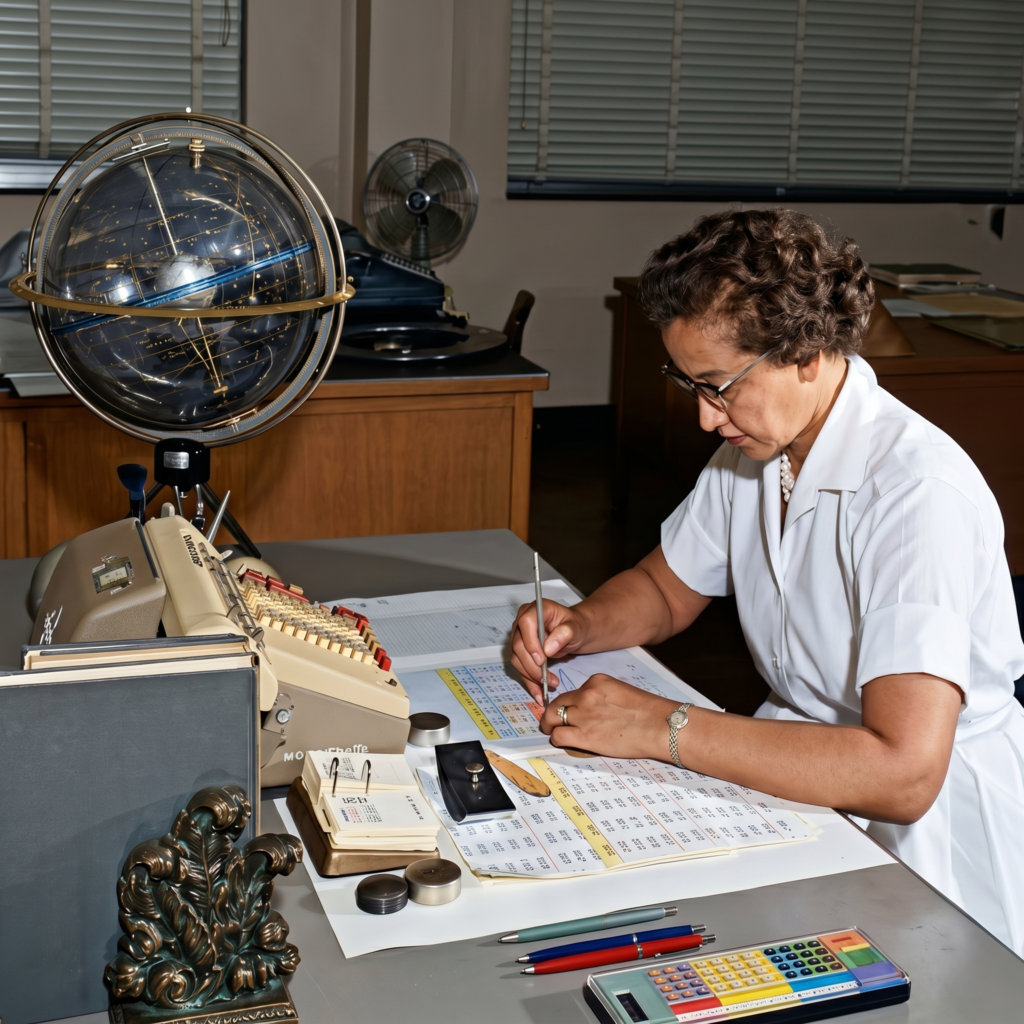
Her specialty was trajectory analysis. Where a spacecraft needs to be, how fast, at exactly what re-entry angle so it lands in the recovery zone instead of burning up or skipping into permanent orbit. Get it slightly wrong — a fraction of a degree, a rounding error compounded across orbital mechanics — and the capsule doesn’t come home.
Some nights, after everyone else had gone, she stayed. The hallway outside went quiet. The cleaning crew came through. She turned back to the page. Erased something. Wrote it again. The numbers had to be right, and she was the only person in that building who could know for certain whether they were.
“Get the Girl” — Four Words That Stopped a Countdown
The phrase was recorded. Glenn’s own account, preserved in NASA oral history archives and confirmed in Shetterly’s research, is that he told supervisors: “Get the girl to check the numbers.” In 1962, in the language of that building, “the girl” meant Katherine Johnson specifically. The engineers knew exactly who he meant.
IBM’s 7090 had calculated the trajectory correctly given the data it received. Johnson’s job was to verify that the data, the equations, and the assumptions behind both were actually correct. She worked through the same calculations by hand, on a mechanical desktop Frieden calculator, cross-referencing the computer’s output against her own derivations. She confirmed the numbers. Glenn flew. Three orbits. Safe return.
The machine was faster. She was right.
In 1962, the most advanced computing technology the United States government operated was not trusted by its own astronaut unless a Black woman with no title on her door confirmed it.
Glenn had passed hundreds of people inside that building. Most of them he would never remember. But before climbing into space, there was one person he trusted enough to bet his life on. Nobody in that room asked him to.
The Moon Landing Was a Calculation Before It Was a Moment
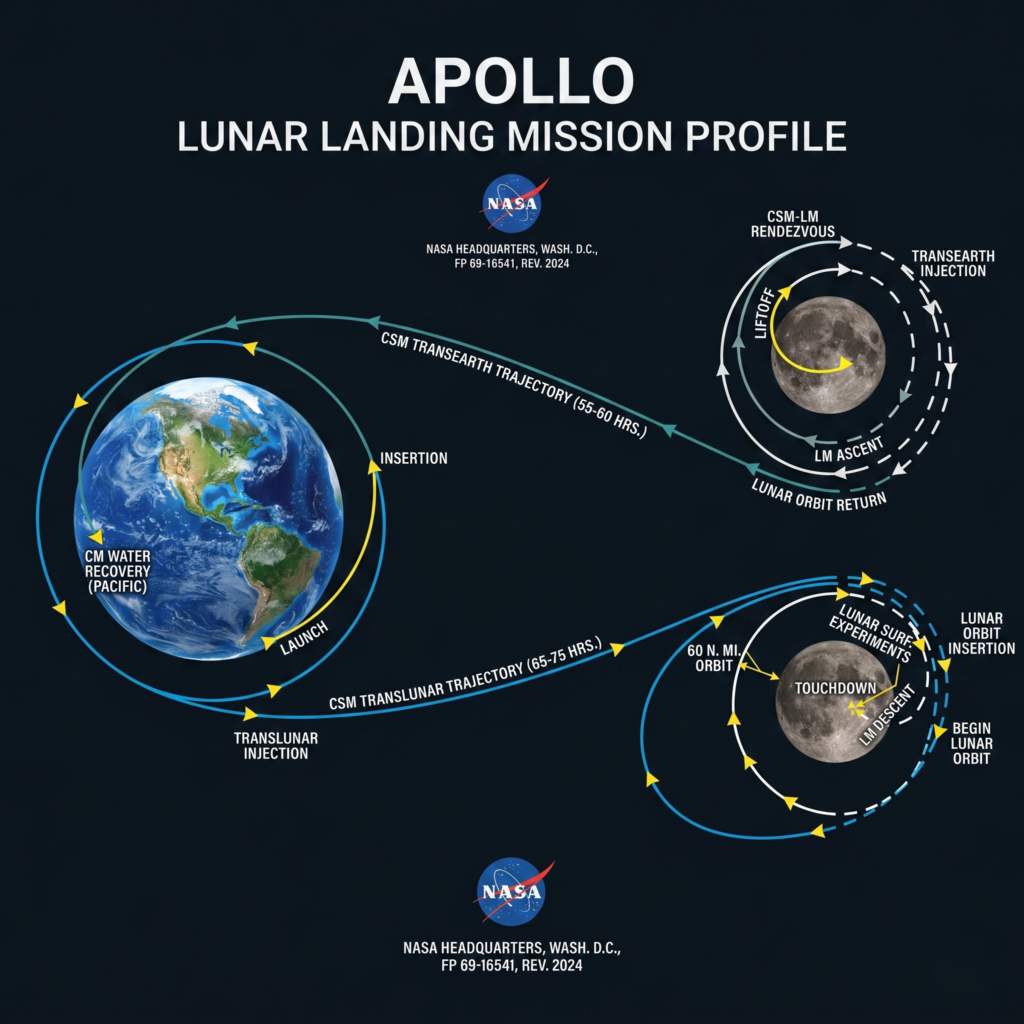
By 1969, Johnson had been at NASA for sixteen years. Her specific contribution to Apollo 11 — confirmed by NASA’s own mission documentation — was the trajectory that allowed the lunar module Eagle to lift off from the moon’s surface, rendezvous with the command module Columbia in lunar orbit, and return to Earth on a path precise enough to hit the re-entry corridor. Miss that corridor in either direction and the spacecraft either burns or bounces. There is no second attempt from 240,000 miles away.
The mathematics already existed before Apollo 11 had a launch date. Johnson had worked out the rendezvous path on paper, at a desk in Hampton, Virginia, while the mission was still a political speech and a budget request. The lunar module ascent engine would fire for approximately seven minutes. The burn had to place Eagle into a trajectory intersecting with Columbia — a target moving at roughly 3,700 miles per hour, 60 nautical miles above a surface no human had ever touched.
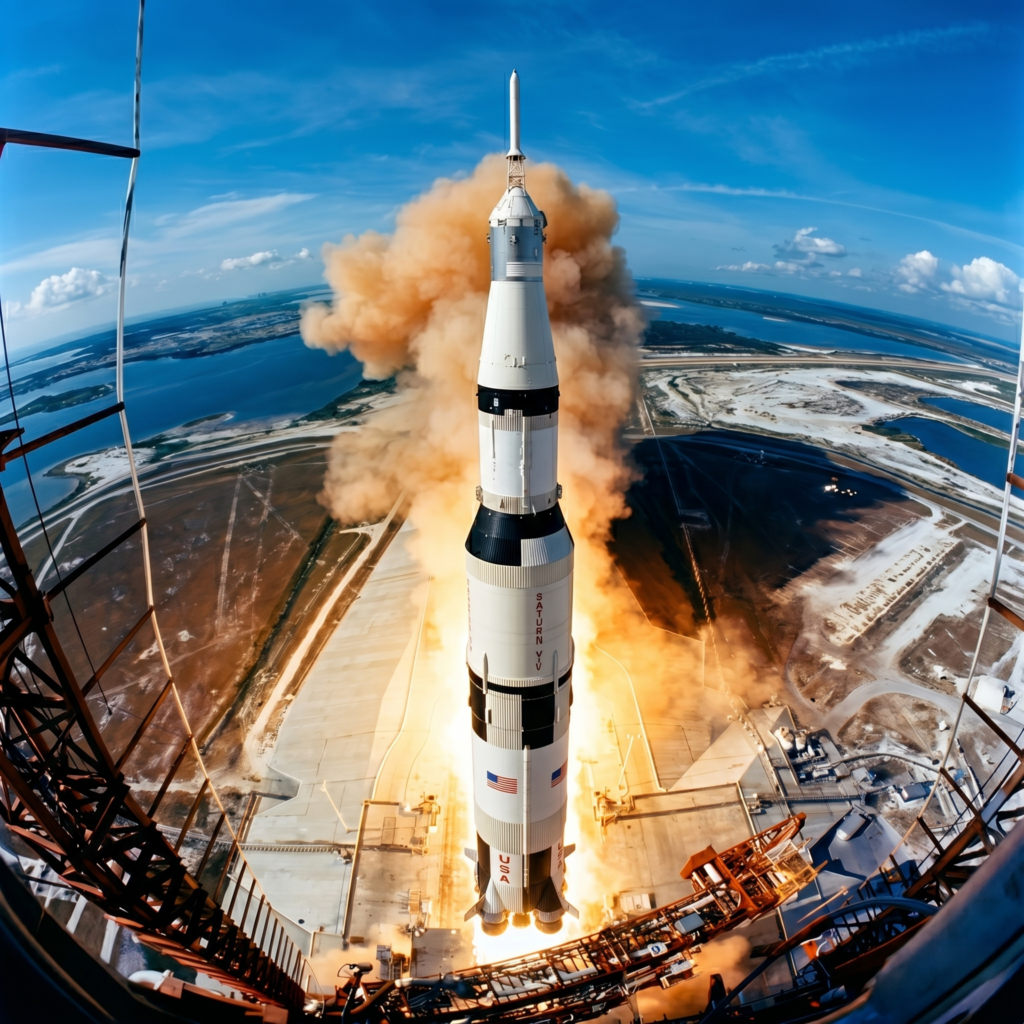
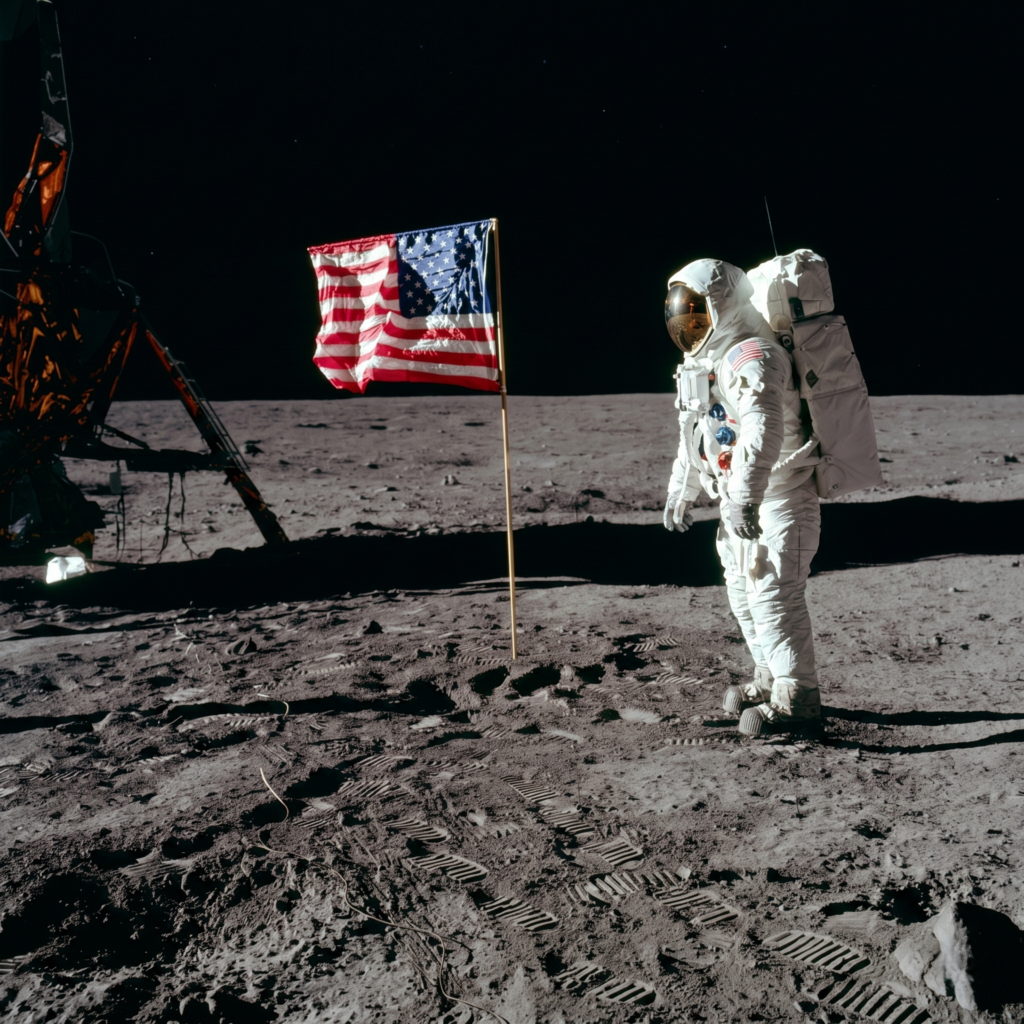
Neil Armstrong stepped onto the lunar surface on July 20, 1969. The moment was broadcast to an estimated 530 million people, according to NASA historical records. Photographs of his bootprints became some of the most reproduced images in human history. Johnson was not in the photographs. She was not in the broadcast. She was a name on a technical report that most people who watched the moon landing had never heard.
The world watched the moon. She stayed with the calculations. She was usually still inside the building long after sunset.
The decisions that kept men alive in space were not made in front of cameras. They were made at a desk covered in pencil shavings, with the eraser worn down to nothing.
The Recognition Came. Decades After the Work Was Already Done.
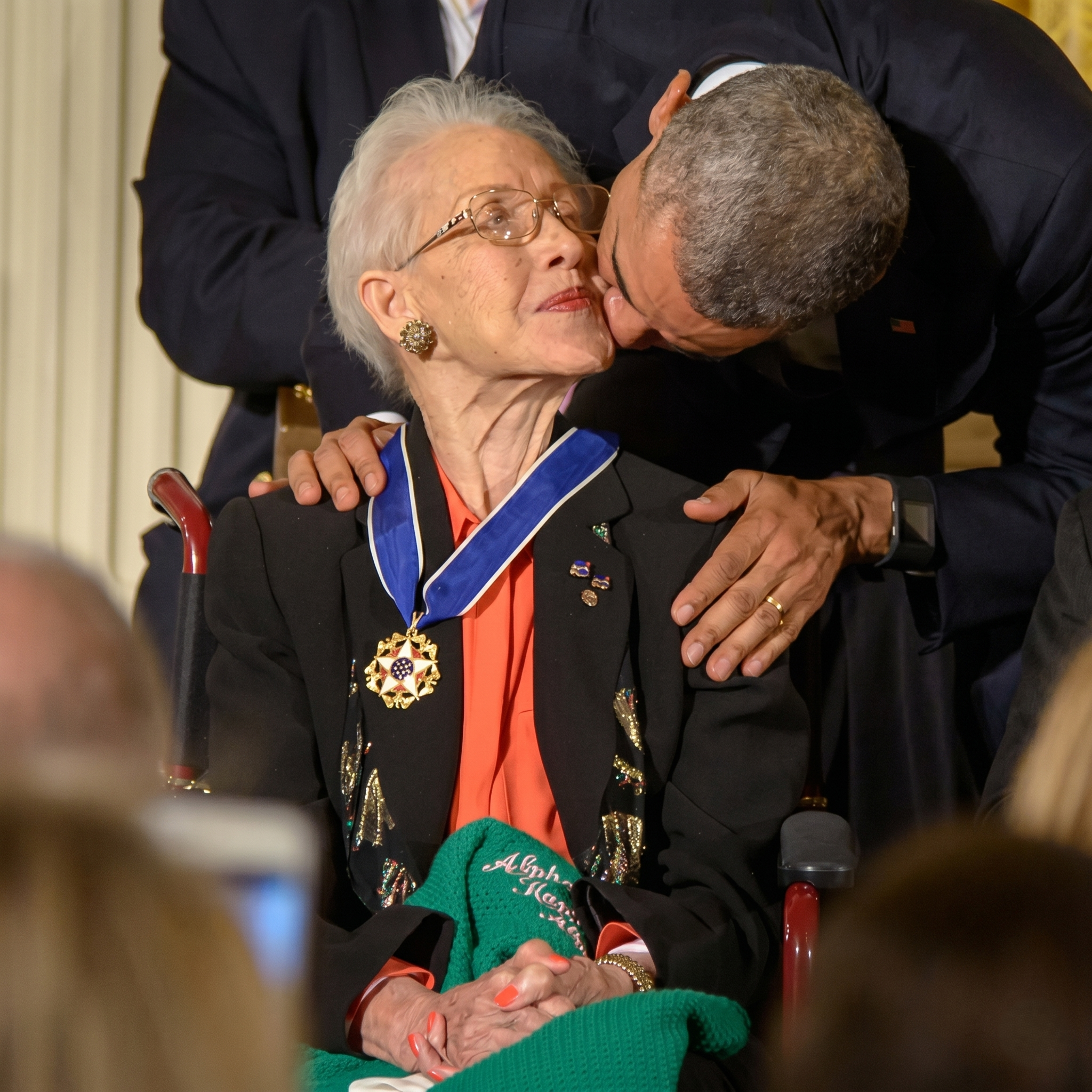
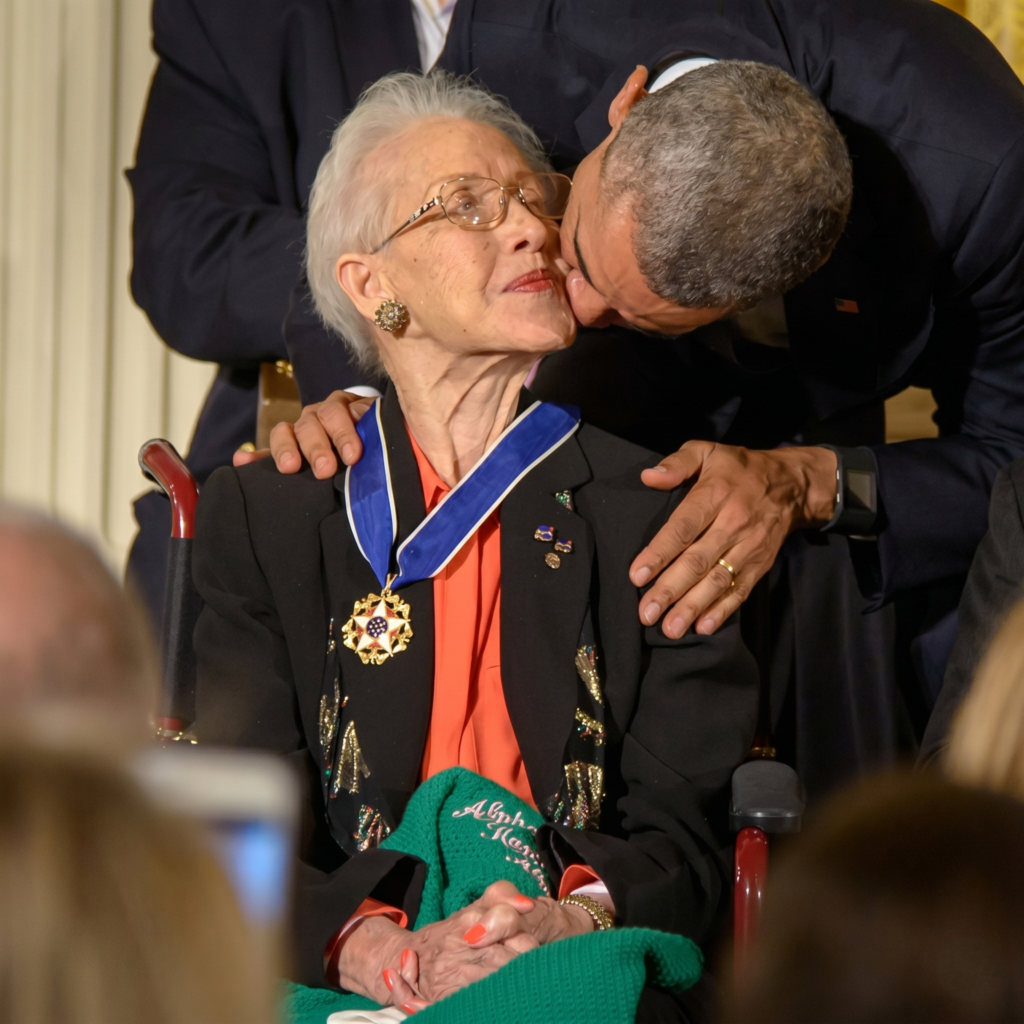
In 2015, President Barack Obama awarded Katherine Johnson the Presidential Medal of Freedom — the highest civilian honor in the United States. She was 97 years old. She arrived in a wheelchair. The room gave her a standing ovation.
Johnson spent 33 years at NASA, from 1953 to 1986. The Presidential Medal of Freedom arrived 29 years after she retired. The Congressional Gold Medal — awarded to Johnson, Dorothy Vaughan, Mary Jackson, and Christine Darden — came in 2019, when Johnson was 100 years old. The building named after her at Langley, the Katherine G. Johnson Computational Research Facility, was dedicated in 2016.
A society that allows a person to do the work for three decades, then waits another three to say thank you, has not simply overlooked someone. It has made a choice about whose contributions are urgent and whose can wait.
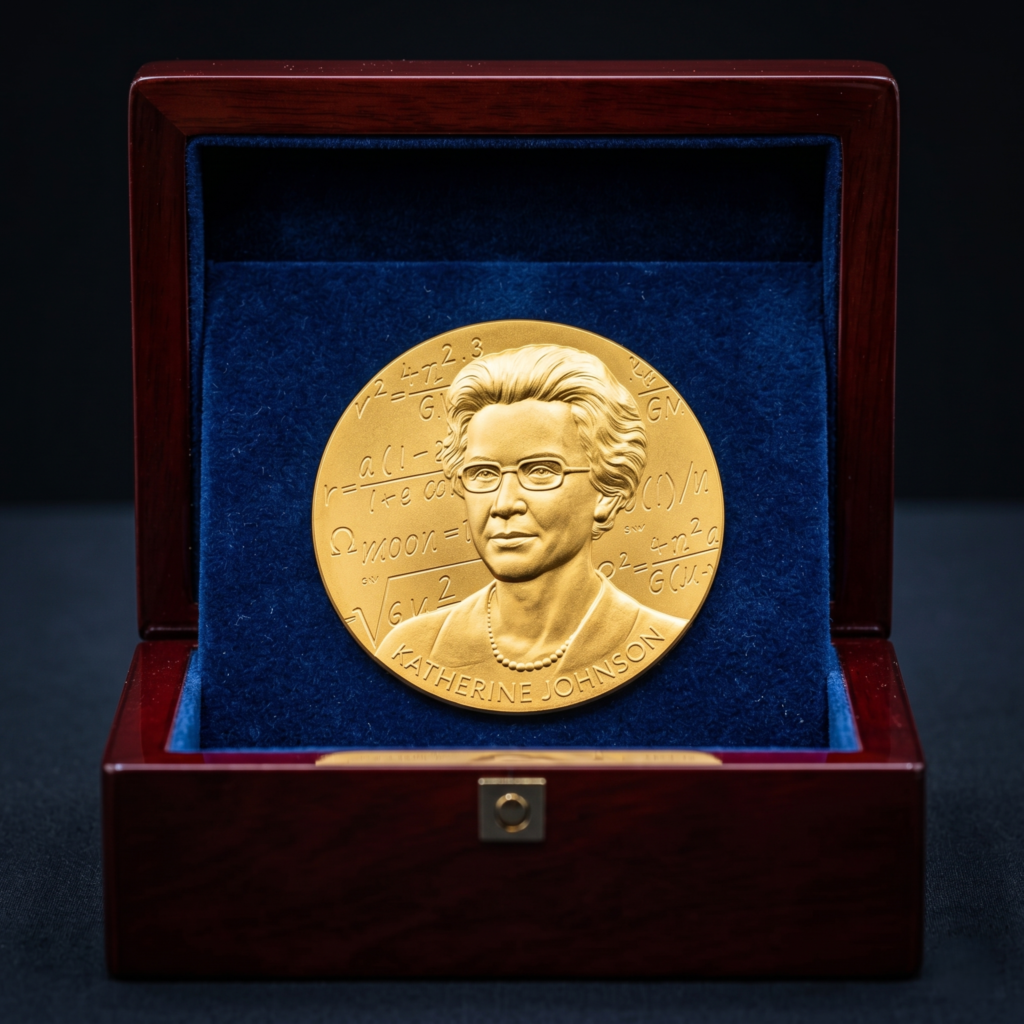
The medal exists. The math existed first. Thirty-three years of it, written by hand, in a building that made her walk 800 meters to find a bathroom with her name on it. Congress awarded the gold in 2019. The calculations were done in 1953. The distance between those two dates is not an oversight. It is a record.
Where the Story Gets Complicated — and Why That Matters
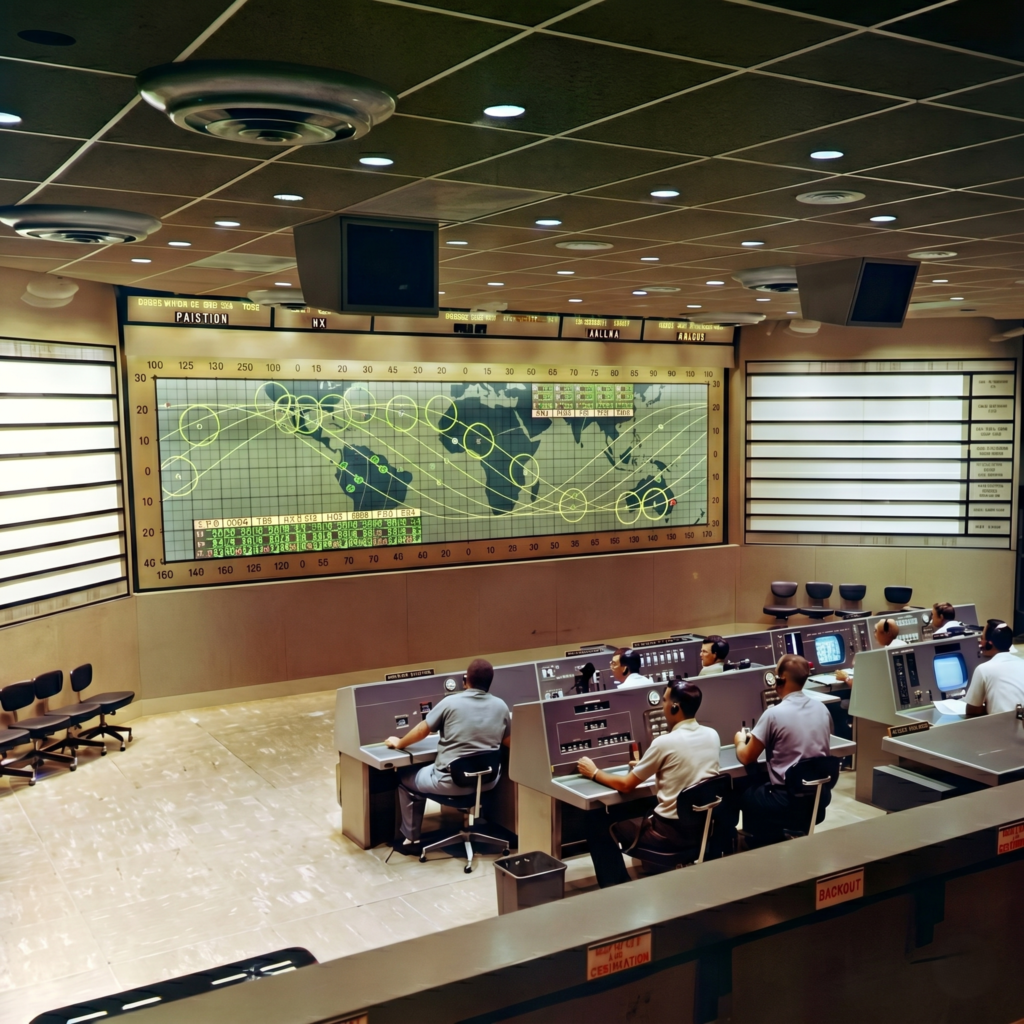
The story of Katherine Johnson has been amplified significantly since the 2016 film Hidden Figures, and that amplification has introduced distortions worth naming. The film depicts Johnson manually delivering calculations to a control room during Glenn’s live countdown. The historical record, including the Smithsonian National Air and Space Museum’s own editorial assessment, indicates the verification process happened in the days before launch — not during the countdown itself. The Mercury Control Center was located at Cape Canaveral in Florida, not at Langley in Virginia, as the film implies.
None of this changes the core fact. Glenn requested Johnson’s verification. She performed it. He flew. The calculation was hers.
The response followed a familiar pattern. When a story about a marginalized person gains cultural traction, there is often a reflexive effort to locate the inaccuracies and use them to diminish the whole. The inaccuracies in Hidden Figures are real and minor. The central truth — that a Black woman’s mathematics played a critical role in American human spaceflight, and that her name was absent from the public record for decades — has not been disputed by any credible historical source.
Archive Notes
Did John Glenn really refuse to fly without Katherine Johnson’s confirmation?
Yes. According to NASA’s official biography of Johnson and Glenn’s own recorded accounts, he requested that she personally verify the IBM computer’s trajectory calculations before his February 1962 Friendship 7 mission. His stated position, documented in NASA oral history archives, was that if Johnson confirmed the numbers were correct, he was ready to go. She confirmed them. He flew.
What exactly did Katherine Johnson calculate for Apollo 11?
Johnson calculated the trajectory for the lunar module’s ascent from the moon’s surface, its rendezvous with the command module in lunar orbit, and the transearth injection burn that placed the spacecraft on its return path to Earth. According to NASA’s Apollo mission records, she also developed backup navigation charts that astronauts could use if electronic systems failed — contingency work that proved critical during Apollo 13’s emergency return in 1970.
When did NASA stop segregating its facilities?
Segregated facilities at NASA’s Langley Research Center — including separate bathrooms, cafeteria sections, and the designated West Area Computing office for Black women — were formally abolished in 1958 when NACA became NASA. Dorothy Vaughan had been appointed supervisor of the West Area Computing unit in 1949, becoming the first Black supervisor at NACA. The segregation had been in place for approximately fifteen years from when Black women were first hired in significant numbers during World War II.
The Calculation Behind the Moon
The moon landing was not one moment. It was thousands of calculations, most of them made by people whose names were never projected onto any wall. No camera pointed at her desk when it happened. Katherine Johnson’s pencil reached the moon before any rocket did — and the country that sent her to that bathroom 800 meters away was the same country that could not have gotten there without her.
Tip For Readers
Johnson’s original technical reports are publicly available. Her 1960 paper co-authored with Ted Skopinski — Determination of Azimuth Angle at Burnout for Placing a Satellite Over a Selected Earth Position — is accessible through the NASA Technical Reports Server. Reading the actual document is a different experience than reading about it.
Verified Sources
NASA Langley Research Center — Katherine Johnson Official Biography, compiled by Margot Lee Shetterly, 2016
NASA History Division — Mercury-Atlas 6 Mission Record (Friendship 7), February 20, 1962
NASA History Division — Apollo 11 Mission Report, 1969
NASA Technical Reports Server — Skopinski, T.H. and Johnson, K.G., “Determination of Azimuth Angle at Burnout for Placing a Satellite Over a Selected Earth Position,” 1960
Smithsonian National Air and Space Museum — “Katherine Johnson, Hidden Figures, and John Glenn’s Flight,” editorial analysis, 2017
NASA Science — Katherine Johnson (1918–2020), official career record, 2020
White House Office of the Press Secretary — Presidential Medal of Freedom Ceremony, November 24, 2015
United States Congress — Congressional Gold Medal Act, Public Law 116-9, 2019
All images sourced from NASA public domain archives. Images 1, 2, 4, 7 digitally colorized for editorial illustration purposes by Vella Team; not part of the original scientific or photographic record. Image 3: NASA Headquarters official mission profile diagram, unmodified. Image 5: NASA/Neil Armstrong, Public Domain. Image 6: AI-generated conceptual illustration based on the Congressional Gold Medal awarded to Katherine Johnson, 2019; not a photograph of the physical object. No Getty, AP, or agency-watermarked images were used.